
Crash cushion
a cushion and crash technology, applied in roadway safety arrangements, roads, construction, etc., can solve the problems of limiting the ability to deploy the system and adding to the overall cost of the system, and achieve the effects of shortening the footprint, absorbing a greater amount of energy, and being convenient to us
Patent Information
- Authority / Receiving Office
- US · United States
- Patent Type
- Applications(United States)
- Current Assignee / Owner
- Publication Date
- 2015-07-09
Smart Images
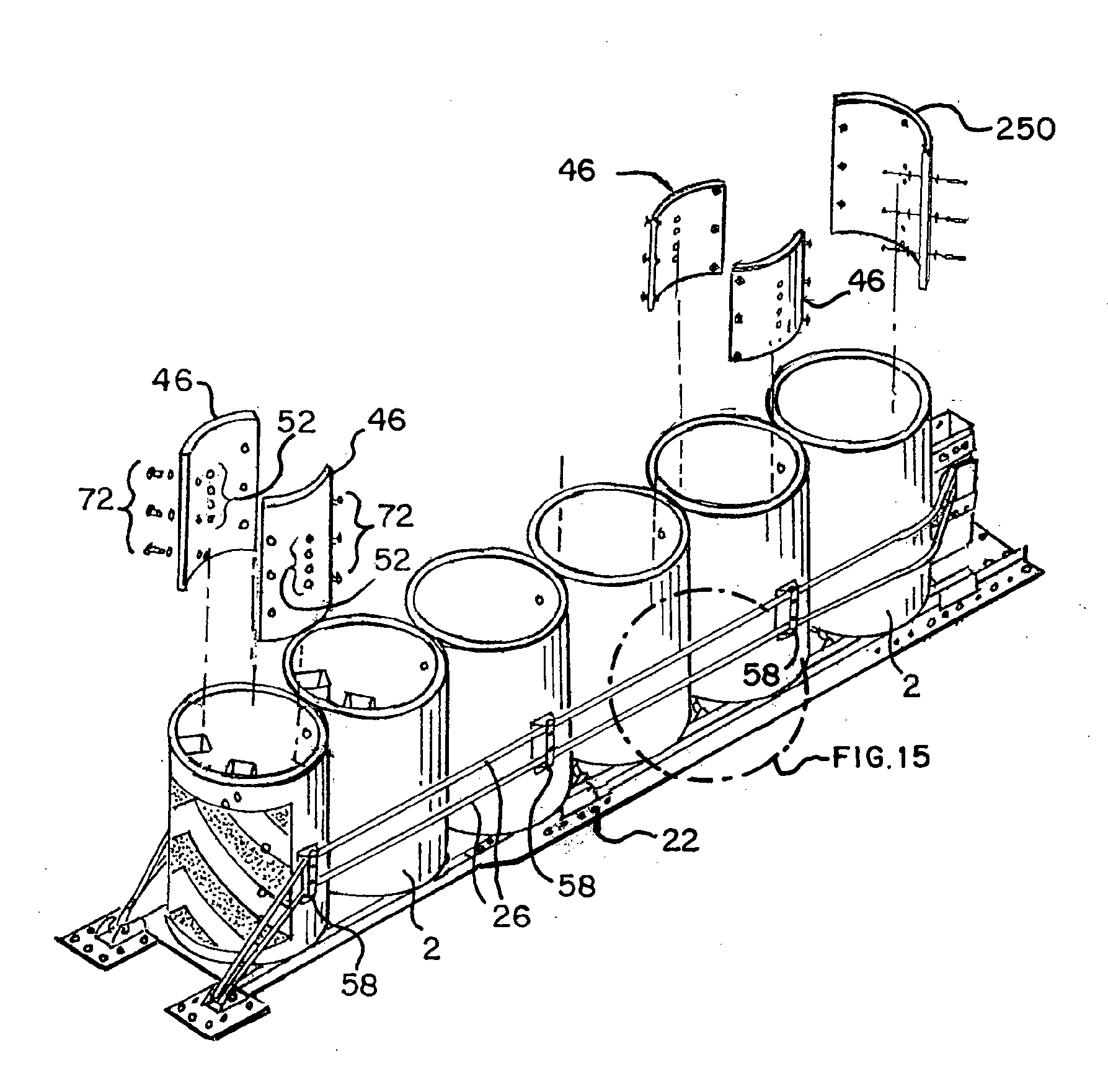
Figure 1 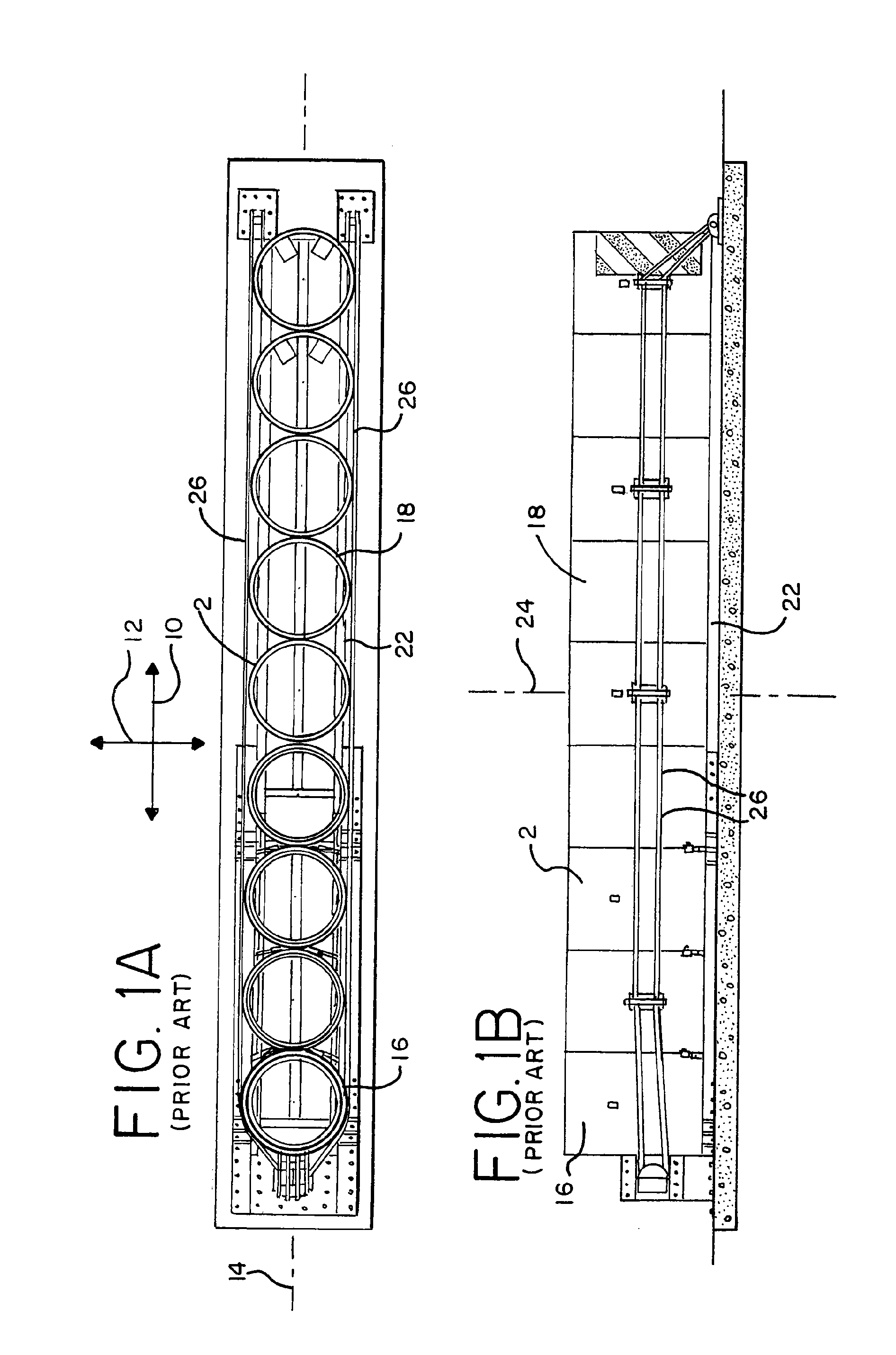
Figure 2 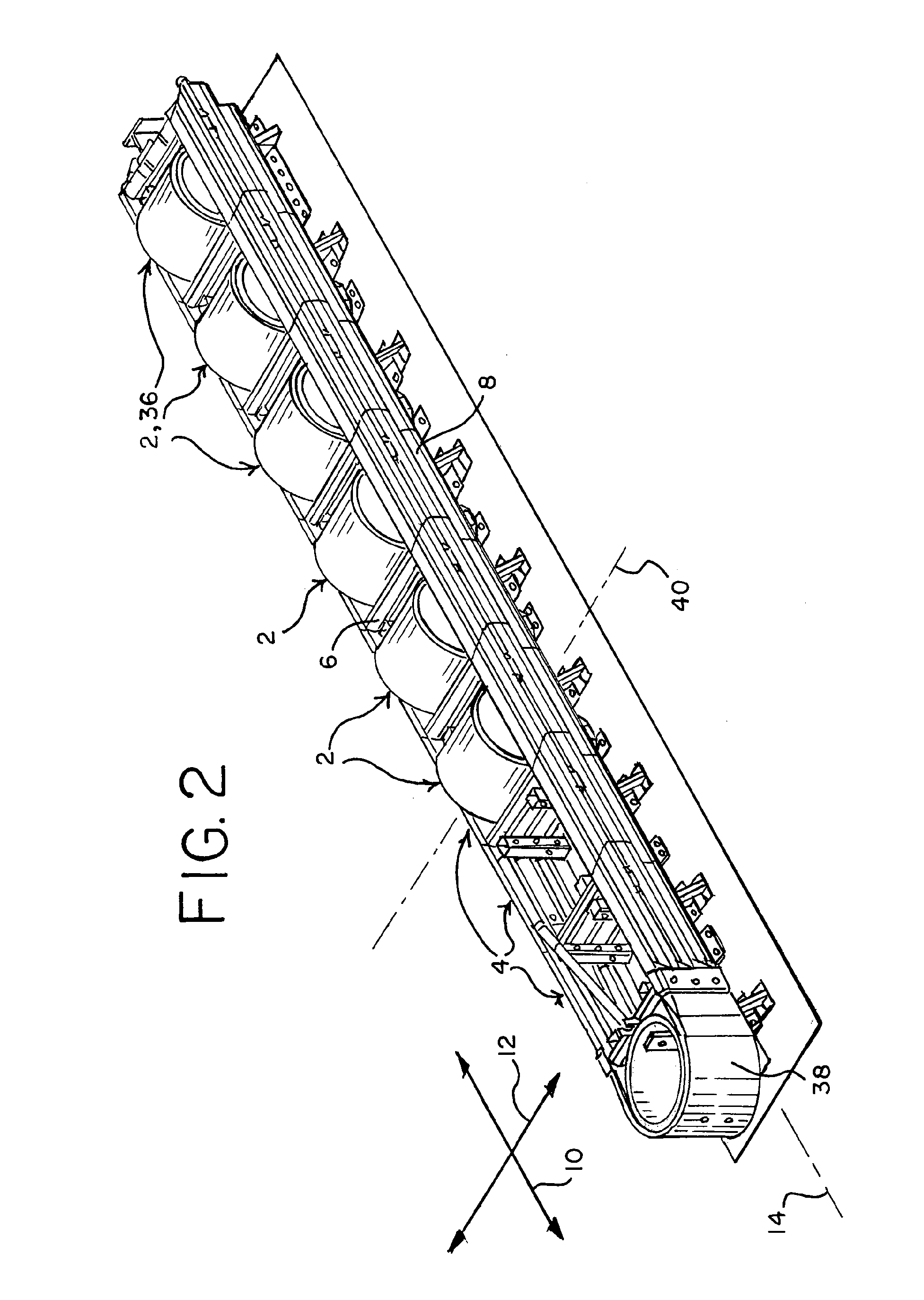
Figure 3
Abstract
Description
[0001] This application is a continuation of U.S. application Ser. No. 13 / 290,550, filed Nov. 7, 2011, which application claims the benefit of U.S. Provisional Application 61 / 413,798, filed Nov. 15, 2010, the entire disclosures of which are hereby incorporated herein by reference.FIELD OF THE INVENTION
[0002] The present invention relates generally to a crash cushion, and in particular, to a crash cushion configured with at least one tube reinforced with a resilient segment.BACKGROUND
[0003] Crash cushions may be used alongside highways in front of obstructions such as concrete walls, toll booths, tunnel entrances, bridges and the like so as to protect the drivers of errant vehicles. Various types of crash cushions may be configured with a plurality of energy absorbing elements, such as an array of resilient, self-restoring tubes, which facilitate the ability to reuse the crash cushion after an impact. The tubes 2 may be exposed, as configured for example in the REACT 350® impact attenua...
Examples
Embodiment Construction
[0029]It should be understood that the term “plurality,” as used herein, means two or more. The term “longitudinal,” as used herein means of or relating to length or the lengthwise direction 10 of the crash cushion, or assembly thereof. The term “lateral,” as used herein, means directed between or toward (or perpendicular to) the side of the crash cushion, for example the lateral direction 12, further defined below. The term “coupled” means connected to or engaged with, whether directly or indirectly, for example with an intervening member, and does not require the engagement to be fixed or permanent, although it may be fixed or permanent. The term “transverse” means extending across an axis, and / or substantially perpendicular to an axis. It should be understood that the use of numerical terms “first,”“second,”“third,” etc., as used herein does not refer to any particular sequence or order of components; for example “first” and “second” connector segments may refer to any sequence o...