
Method of manufacturing rotogravure cylinders
Patent Information
- Authority / Receiving Office
- US · United States
- Current Assignee / Owner
- Publication Date
- 2015-09-17
Smart Images
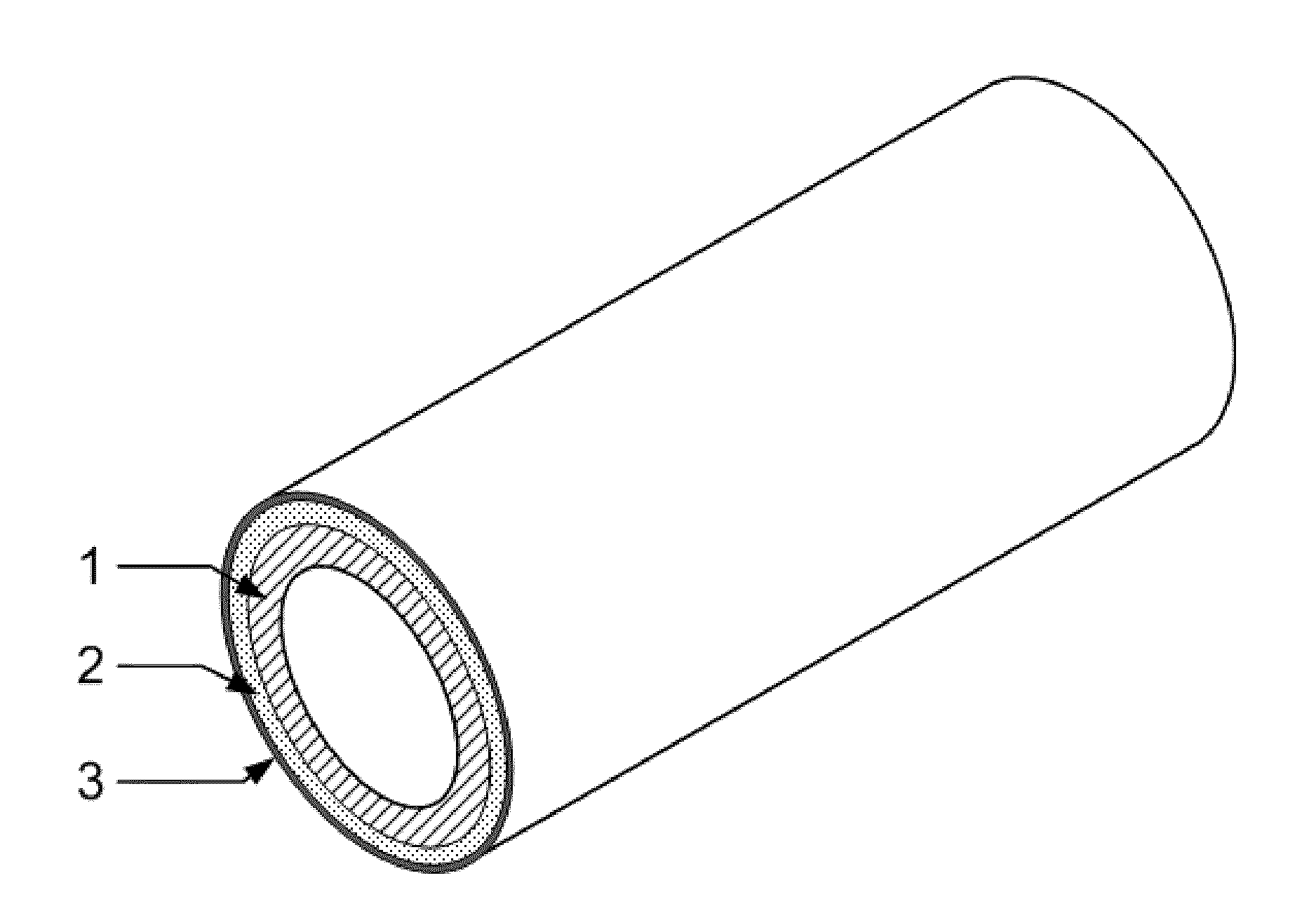
Figure 1 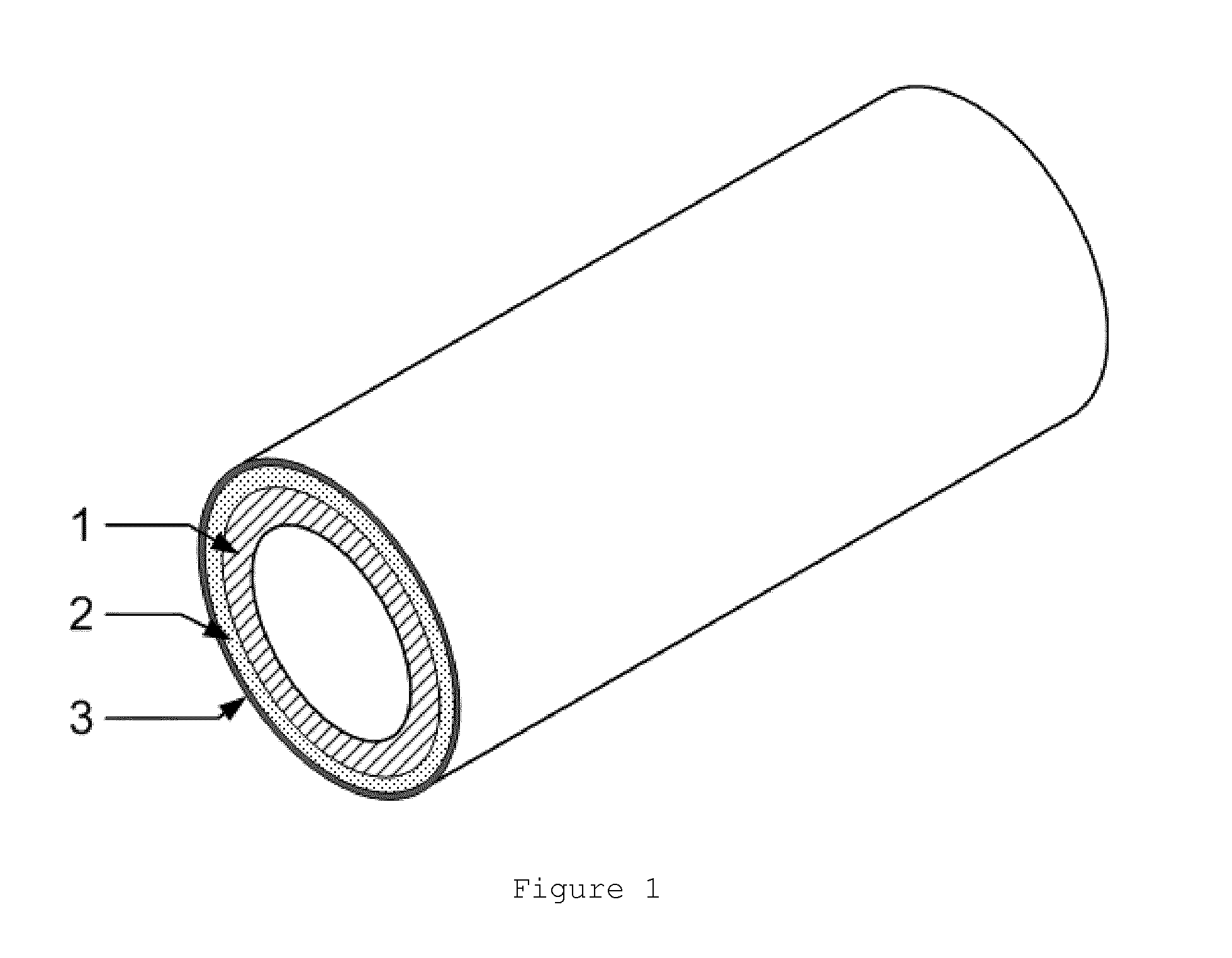
Figure 2 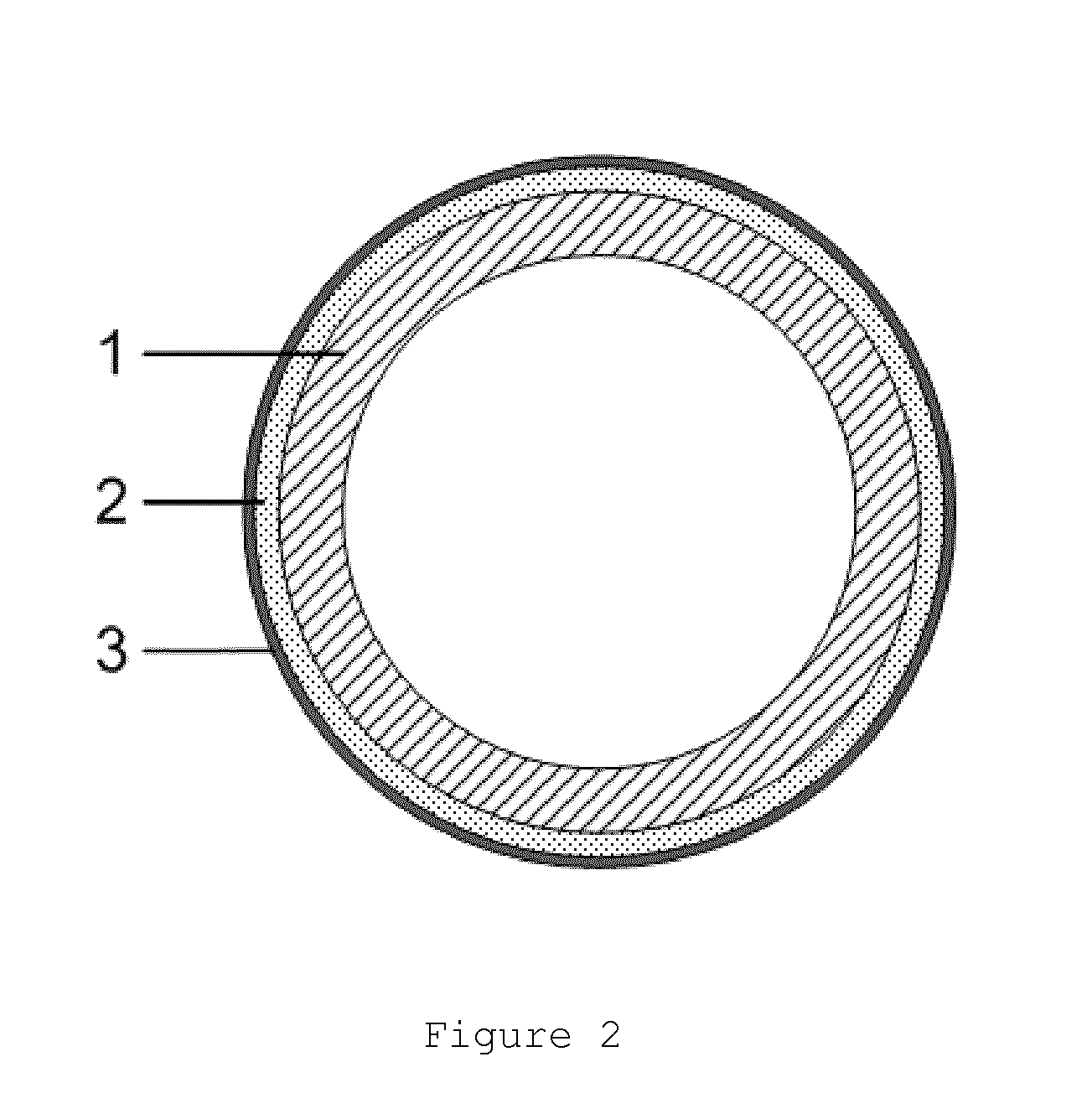
Figure 3
Abstract
Description
FIELD OF THE INVENTION
[0001] The present invention refers to a method for manufacturing rotogravure or gravure cylinders.
[0002] The invention also relates to the thus obtained rotogravure cylinders
[0003] The invention further relates to the use of the rotogravure cylinders in the printing industry for the printing of packaging materials (by transfer of ink from the printing cylinder to the packaging material), such as for instance Intaglio printing processes.BACKGROUND OF THE INVENTION
[0004] Gravure cylinders consist of the base of the cylinder (see FIG. 1 which shows such a cylinder), which is usually made of steel or aluminum (1, FIGS. 1 and 1, FIG. 2), a copper layer (2, FIGS. 1 and 2, FIG. 2) usually 0.5 to 1 mm thick and a protection layer, which is usually a chromium layer typically of 6 to 8 μm thick (3, FIGS. 1 and 3, FIG. 2).
[0005] The copper layer is electroplated on the base of the cylinder and forms the surface which is engraved or etched either by chemical or electromechanic...
Examples
Embodiment Construction
[0032]The FIGS. 1, 2 and 3 are not drawn to scale and they are only intended for illustrative purposes. Equal reference numerals in different figures refer to identical or corresponding figures.
[0033]The term ‘rotogravure cylinders” relates herein to rotogravure cylinders and / or any gravure cylinders used in the printing industry, particularly for the printing of packaging materials. The length of such cylinders is typically at least 1.0 meter, more preferably in the order of 1.5-2.5 meter.
[0034]The term ‘cylindrical base’ as used in the context of the present invention does not require the base to be a block-like material. Rather the base may be hollow. Alternatively, the base may comprise several layers, such as a steel core and an aluminium top layer.
[0035]The term aluminum in the present invention refers to pure aluminum, aluminum with small addition of other materials or aluminum alloys. Likewise, the term copper refers to pure copper, copper with small addition of other materi...