
Automated orthodontic bracket positioning system and method
Patent Information
- Authority / Receiving Office
- US · United States
- Current Assignee / Owner
- Publication Date
- 2016-01-07
- Estimated Expiration
- Not applicable · inactive patent
Smart Images
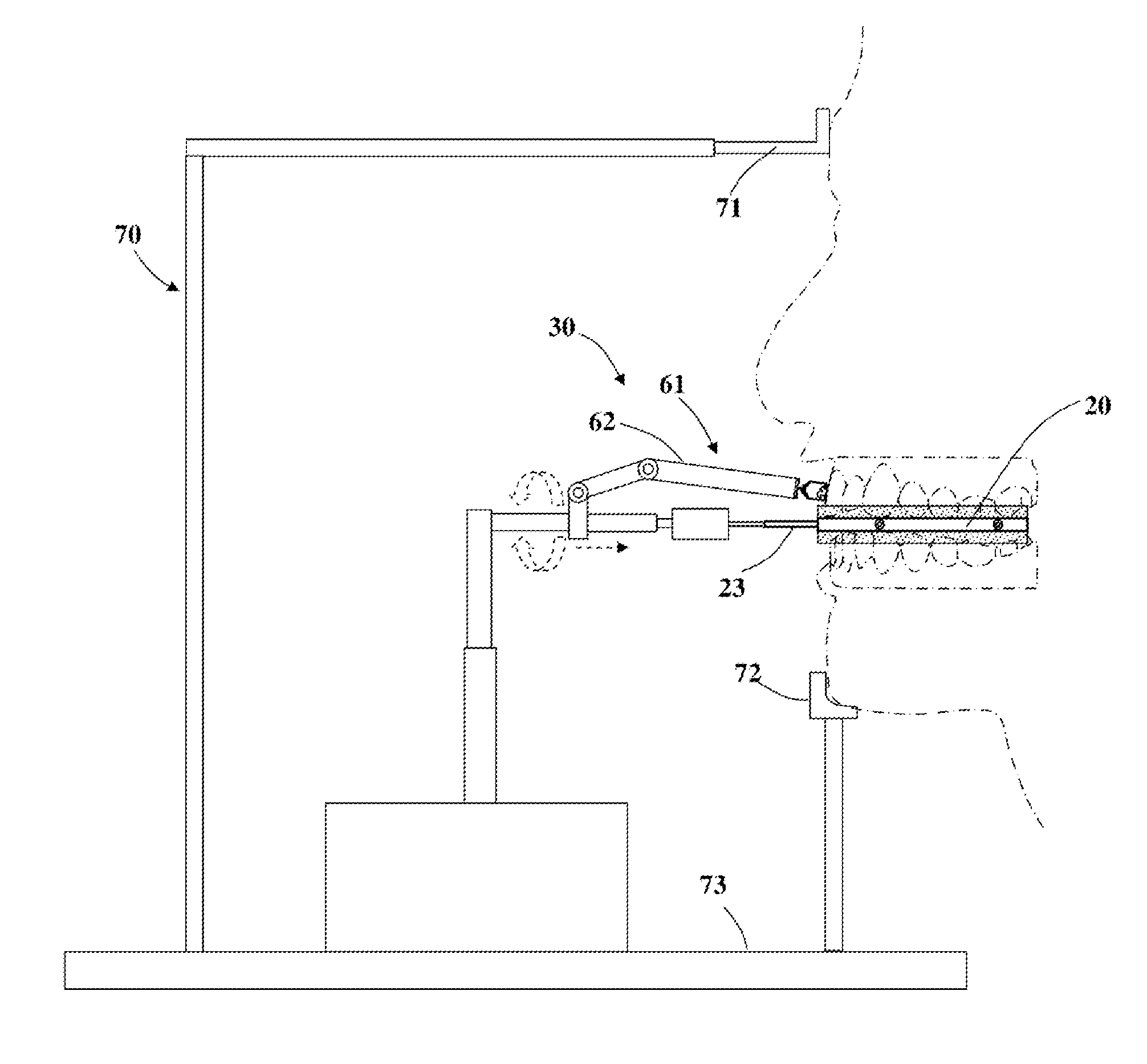
Figure 1 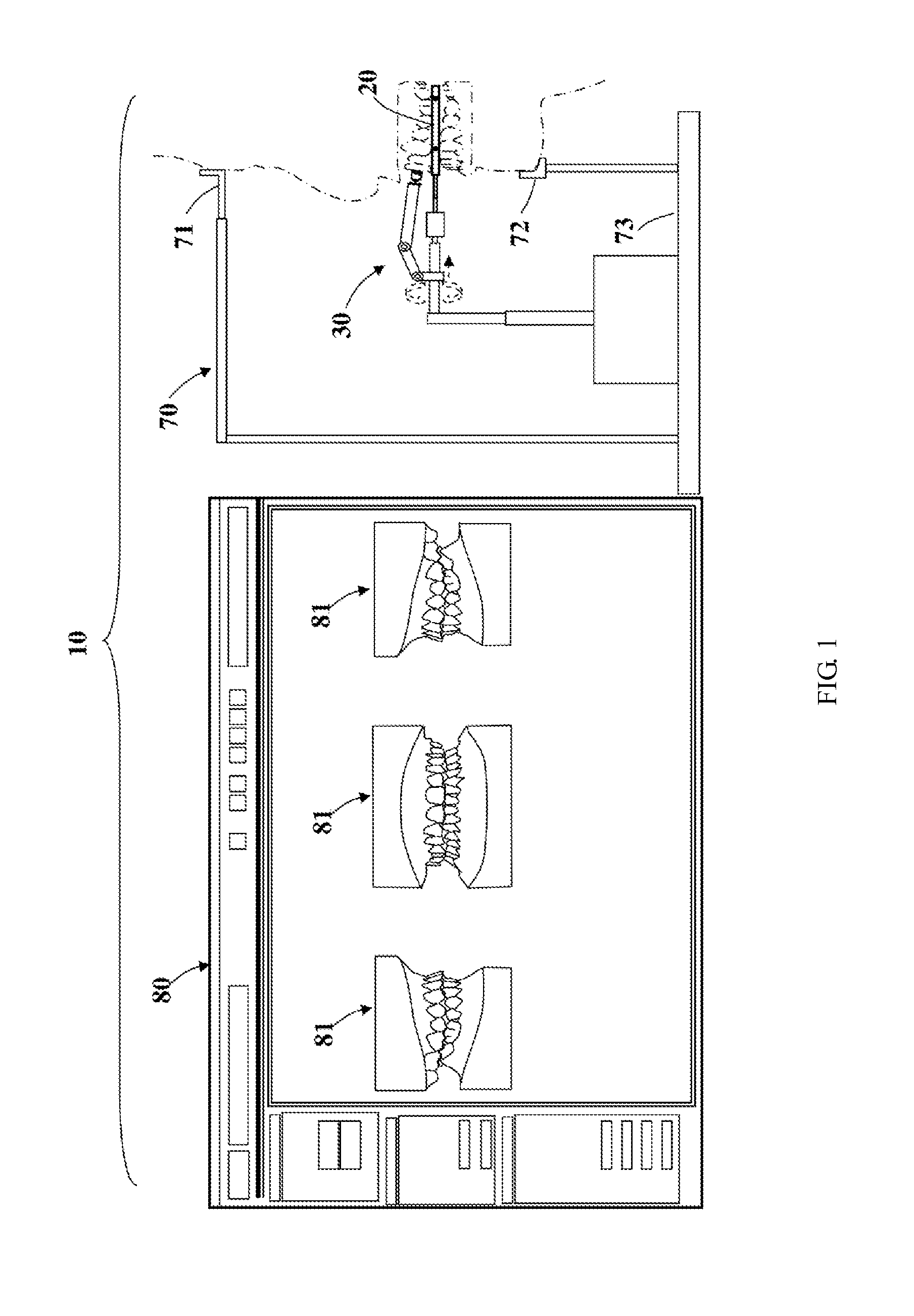
Figure 2 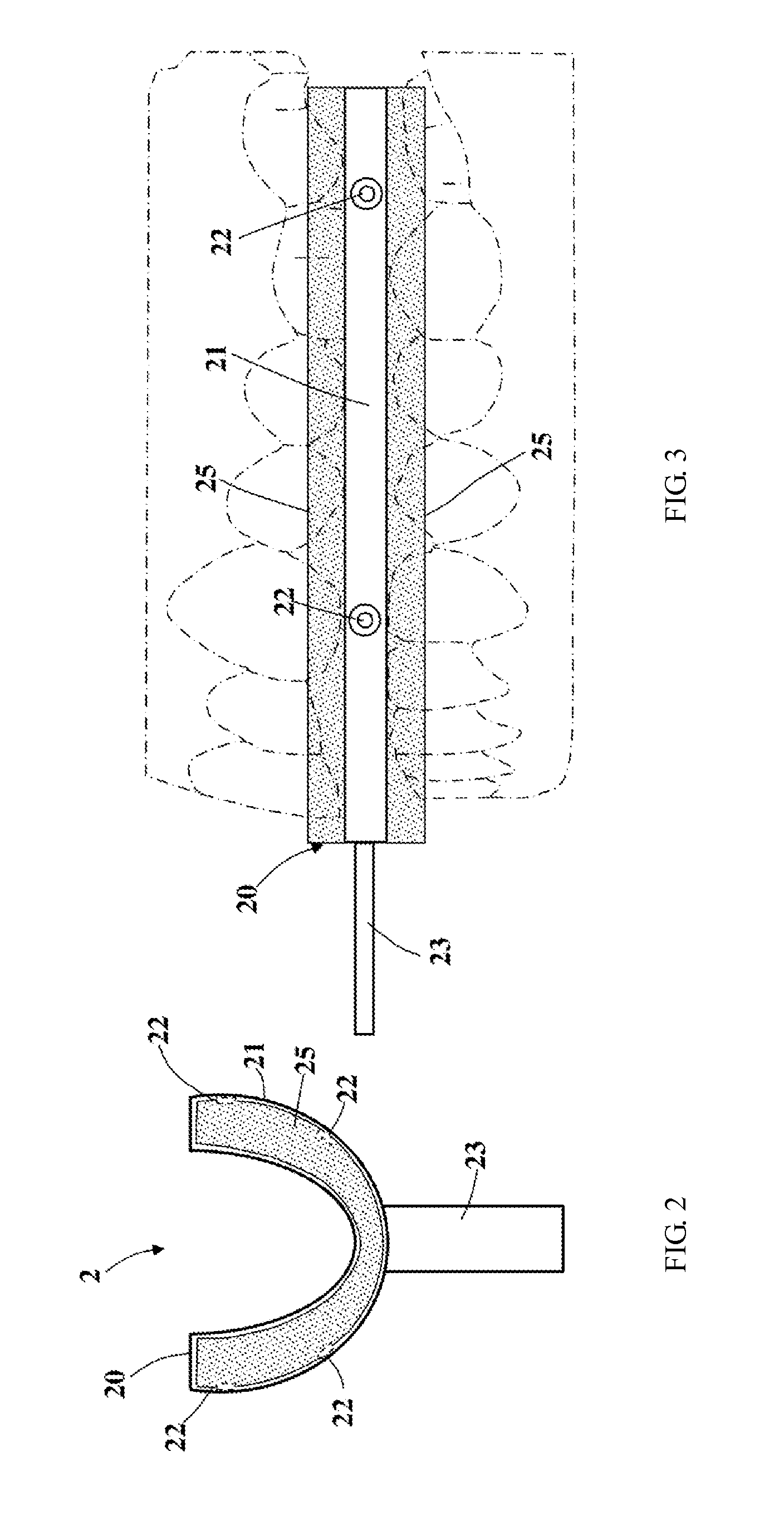
Figure 3
Abstract
Description
CROSS-REFERENCE TO RELATED APPLICATION
[0001] This application claims the benefit of China Patent Application No. 201410316398.X, filed on Jul. 4, 2014, the disclosure of which is incorporated herein in its entirety by reference, in the State Intellectual Property Office of the People's Republic of China.BACKGROUND OF THE INVENTION
[0002] 1. Field of the Invention
[0003] The present disclosure relates to an orthodontic field, more particularly to an automated system capable of accurately positioning orthodontic brackets on the patient's tooth surfaces or surfaces of a dental model.
[0004] 2. Description of the Related Art
[0005] In orthodontic dentistry, it is found that the malocclusion of teeth affects development of normal function of the patient's mouth and reduces mastication efficiency of teeth, which results in problem of swallowing, indigestion and gastrointestinal disease. Severe tooth misalignment also affects growth of facial skeleton, temporo-mandibular joint and muscle, and cause...
Examples
Embodiment Construction
[0033]Reference will now be made in detail to the exemplary embodiments of the present disclosure, examples of which are illustrated in the accompanying drawings. Therefore, it is to be understood that the foregoing is illustrative of exemplary embodiments and is not to be construed as limited to the specific embodiments disclosed, and that modifications to the disclosed exemplary embodiments, as well as other exemplary embodiments, are intended to be included within the scope of the appended claims. These embodiments are provided so that this disclosure will be thorough and complete, and will fully convey the inventive concept to those skilled in the art. The relative proportions and ratios of elements in the drawings may be exaggerated or diminished in size for the sake of clarity and convenience in the drawings, and such arbitrary proportions are only illustrative and not limiting in any way. The same reference numbers are used in the drawings and the description to refer to the ...