
Stator for an electrical machine and method for production of a stator
a technology for stators and electrical machines, applied in the direction of electrical apparatus, dynamo-electric machines, structural associations, etc., can solve the problems of limiting the area of stators of the above-described type intended to be used in vehicles, thick cable harnesses, and increasing the space requirements of electric machines
Patent Information
- Authority / Receiving Office
- US · United States
- Current Assignee / Owner
- Publication Date
- 2002-04-09
- Estimated Expiration
- Not applicable · inactive patent
Smart Images
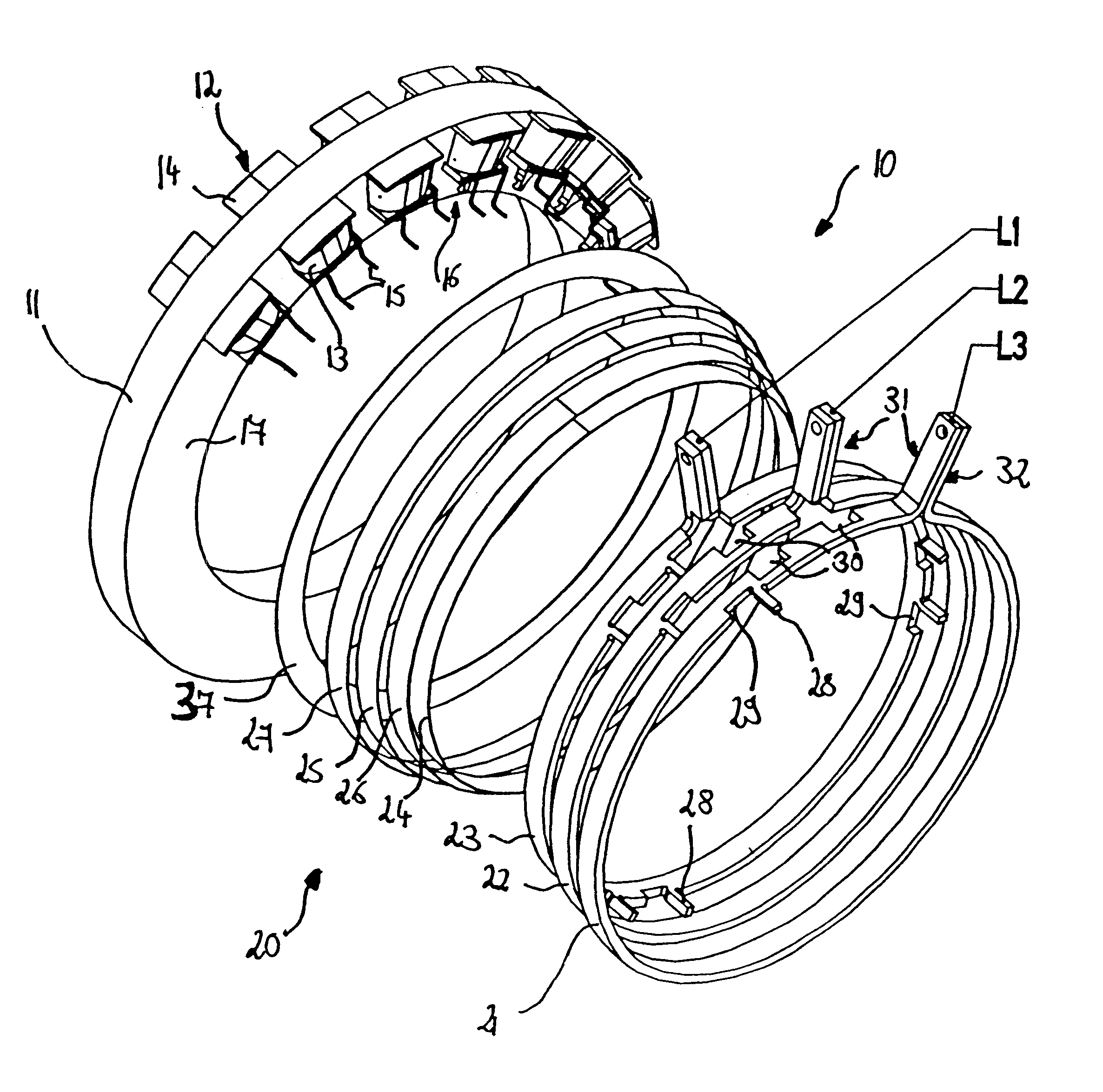
Figure 1 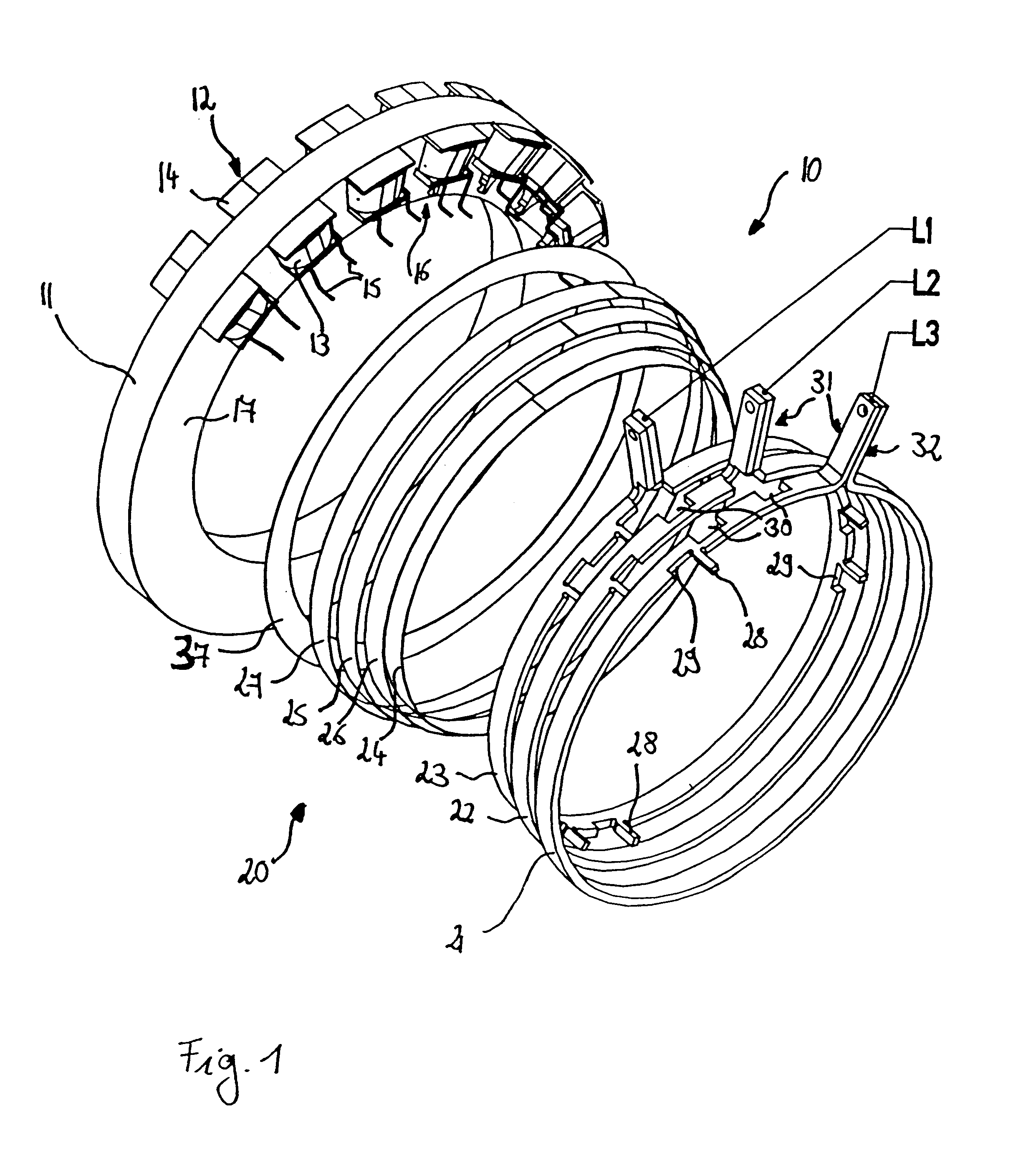
Figure 2 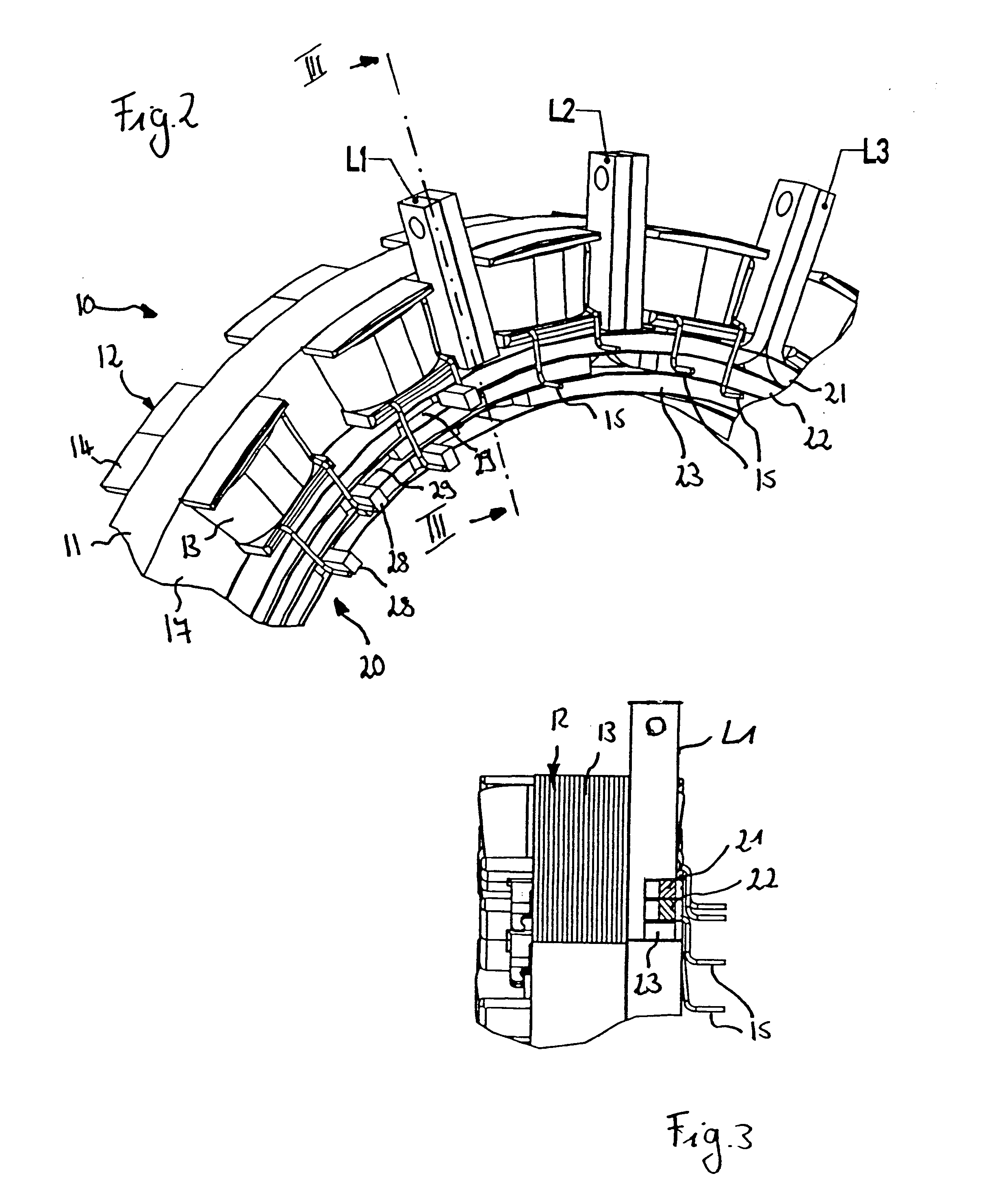
Figure 3
Abstract
Description
1. Field of the InventionThe present invention relates to a stator for an electrical machine including a plurality of stator coils arranged on a stator yoke and an interconnection arrangement arranged on one end face of the stator yoke having connecting conductors which are electrically insulated from one another and arranged concentrically with respect to one another. Each connecting conductor has a different diameter. The connecting conductors have connections for connection to the ends of the stator coils and for connection to the electrical machine. The present invention also relates to a method for producing such a stator.2. Description of the Related ArtStators for electrical machines generally have a plurality of stator teeth on which stator coils are wound. The coils are associated with individual phases of electrical power. The coils associated with a common phase are interconnected. In a three-phase machine the stator has three phases. Each of the phases have current appli...
Examples
Embodiment Construction
FIGS. 1 to 3 show a first embodiment of a stator 10 which is designed for use as a stator for an electrical machine. The present invention is particularly designed for use with a synchronous machine with permanent-magnet excitation such as a starter generator for a motor vehicle.
The stator 10 has a stator yoke 11 on which a plurality of stator coils 12 are arranged. The stator coils 12 each have an end winding 13 and an insulating body 14. The ends of the stator coil windings 13 are each formed by stator coil ends 15. The stator coils 12 are arranged around a circumference on the stator yoke 11 and thus form an area 16 bounded by the stator coils. This area 16 has a diameter formed by the distances between the stator coils 12 and the diameter of the stator yoke 11. The height of the area 16 results from the end windings 13 of the stator coils 12, that is to say from those regions of the end windings 13 which project beyond the stator yoke 11.
An interconnection arrangement 20 is prov...