
Method for rapid catalyst heating
a technology of catalyst heating and control strategy, which is applied in the direction of electric control, speed sensing governor, machines/engines, etc., can solve the problems of reducing the pumping work of those cylinders, and achieve the effects of increasing heat, increasing engine load condition, and increasing ignition timing retard
Patent Information
- Authority / Receiving Office
- US · United States
- Current Assignee / Owner
- Publication Date
- 2003-05-27
- Estimated Expiration
- Not applicable · inactive patent
Smart Images
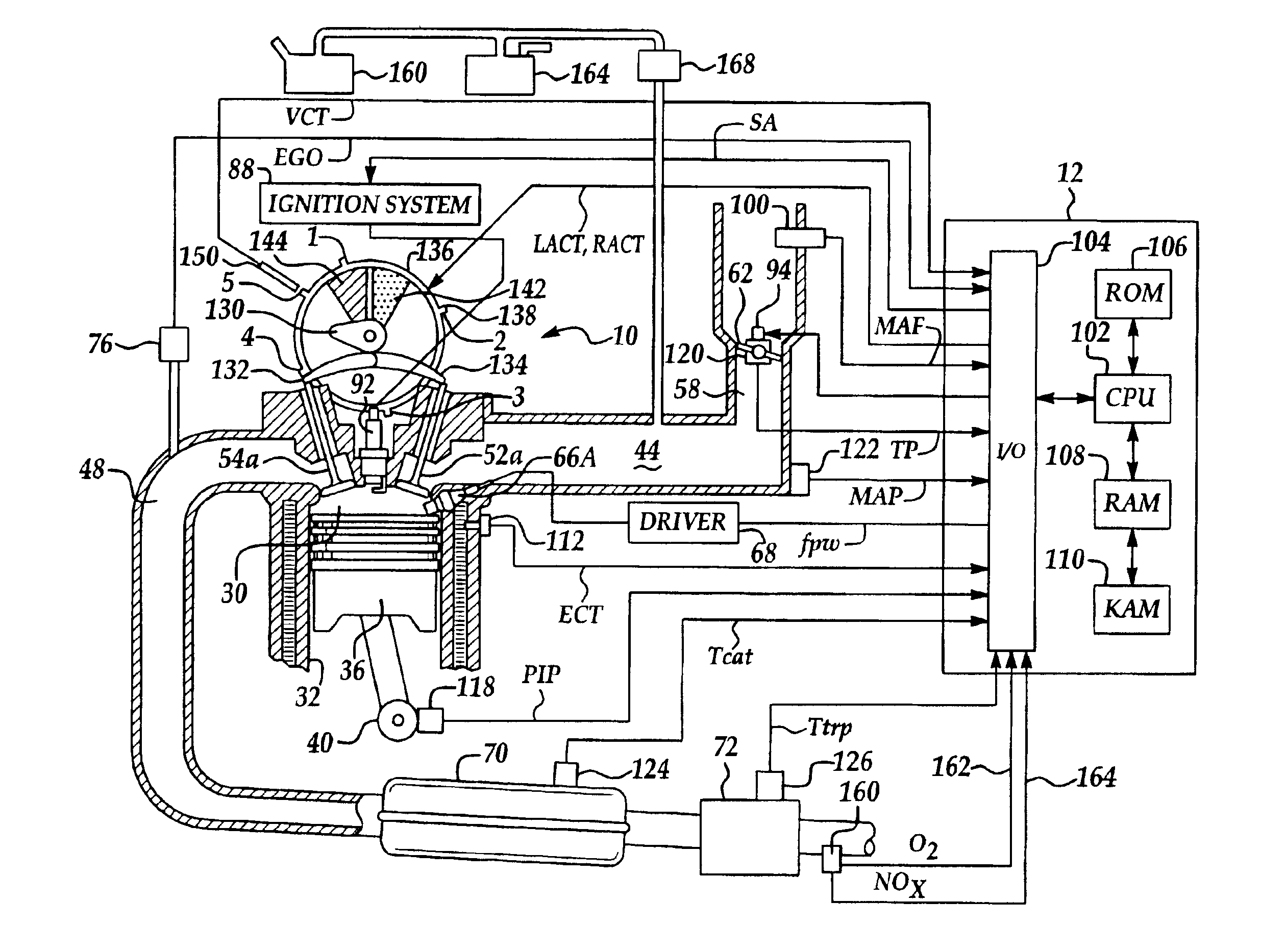
Figure 1 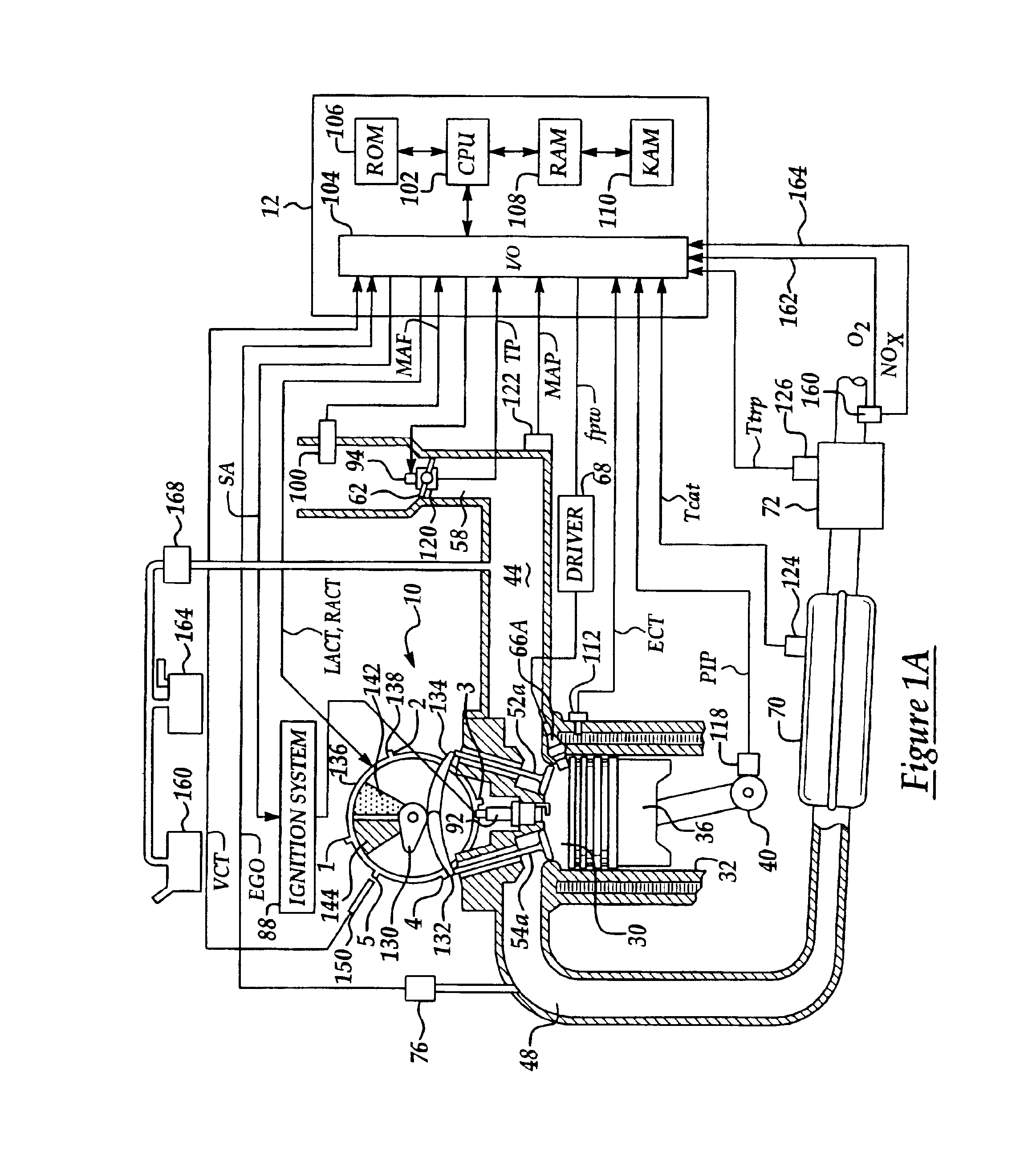
Figure 2 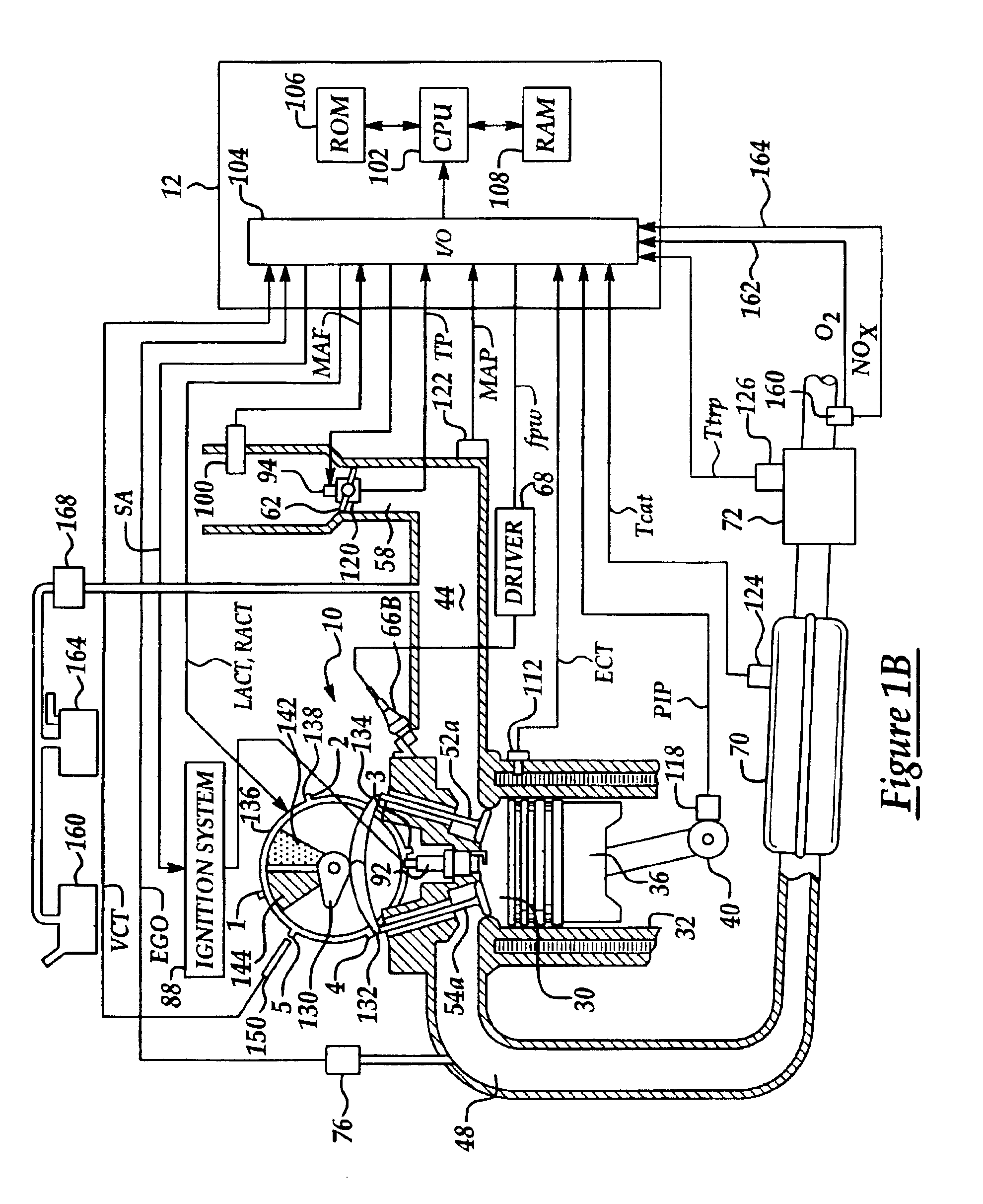
Figure 3
Abstract
Description
BACKGROUND OF INVENTION1. Field of the InventionThe present invention relates to control strategies for engines, and more particularly, to control strategies for rapidly heating an emission control device.2. Background of the InventionEmission control devices, such as catalytic converters, can reduce emissions generated by engine combustion. However, the effectiveness of such emission control devices varies with operating temperature. For example, the efficiency of an emission control device may be much greater at higher temperatures than it is at lower temperature. Typically, a "light-off" temperature is used to signify a certain temperature above which a prescribed efficiency is achieved.In vehicle emission control systems, measures are taken to rapidly heat emission control devices after starting of a vehicle, so that tail pipe emissions can be minimized. In particular, as described in U.S. Pat. No. 5,479,745, an ignition timing signal is retarded during cold engine operation to ...
Examples
example 2
of FIG. 13I illustrates operation according to the present invention. In particular, the ignition timing of the second group (spk2') is substantially more retarded than the ignition timing of the first cylinder group of Example 2 (spk2). Further, the air and fuel amounts (a2, f2) are greater than the air amounts in Example 1. As a result of operation , the first cylinder group produces engine torque (T2), while the second cylinder group produces engine torque (T2). In other words, the first cylinder group produces more engine torque than when operating according to Example 1 since there is more air and fuel to combust. Also note that the first cylinder group of Example 2 has more ignition retard from optimal timing than the ignition timing of group 1 of Example 1. Also, note that the engine torque from the second cylinder group (T2') is less than the engine torque produced by the first and second cylinder group of Example 1, due to the severe ignition timing retard from optimal timi...