
Method of increasing bone toughness and stiffness and reducing fractures
a technology of toughness and stiffness and bone, applied in the direction of antibody medical ingredients, parathyroid hormones, metabolic disorders, etc., can solve the problems of reducing the severity of fracture, and reducing the risk of fracture, so as to reduce the incidence and/or severity of fractures, increase the toughness or stiffness of bone, and reduce the incidence of fractures. the effect of severity
Patent Information
- Authority / Receiving Office
- US · United States
- Patent Type
- Patents(United States)
- Current Assignee / Owner
- Publication Date
- 2005-12-20
- Estimated Expiration
- Not applicable · inactive patent
Smart Images
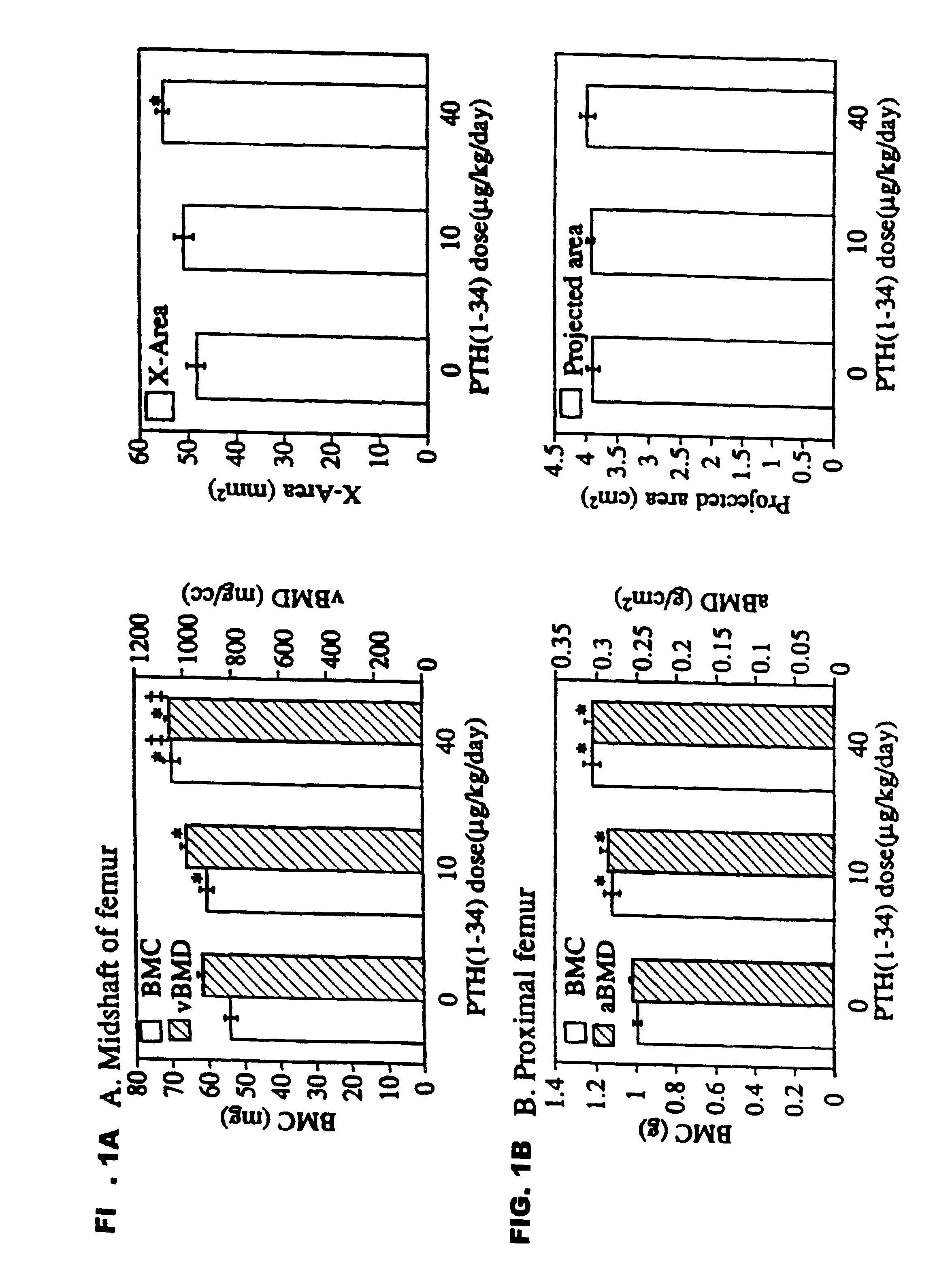
Figure 1 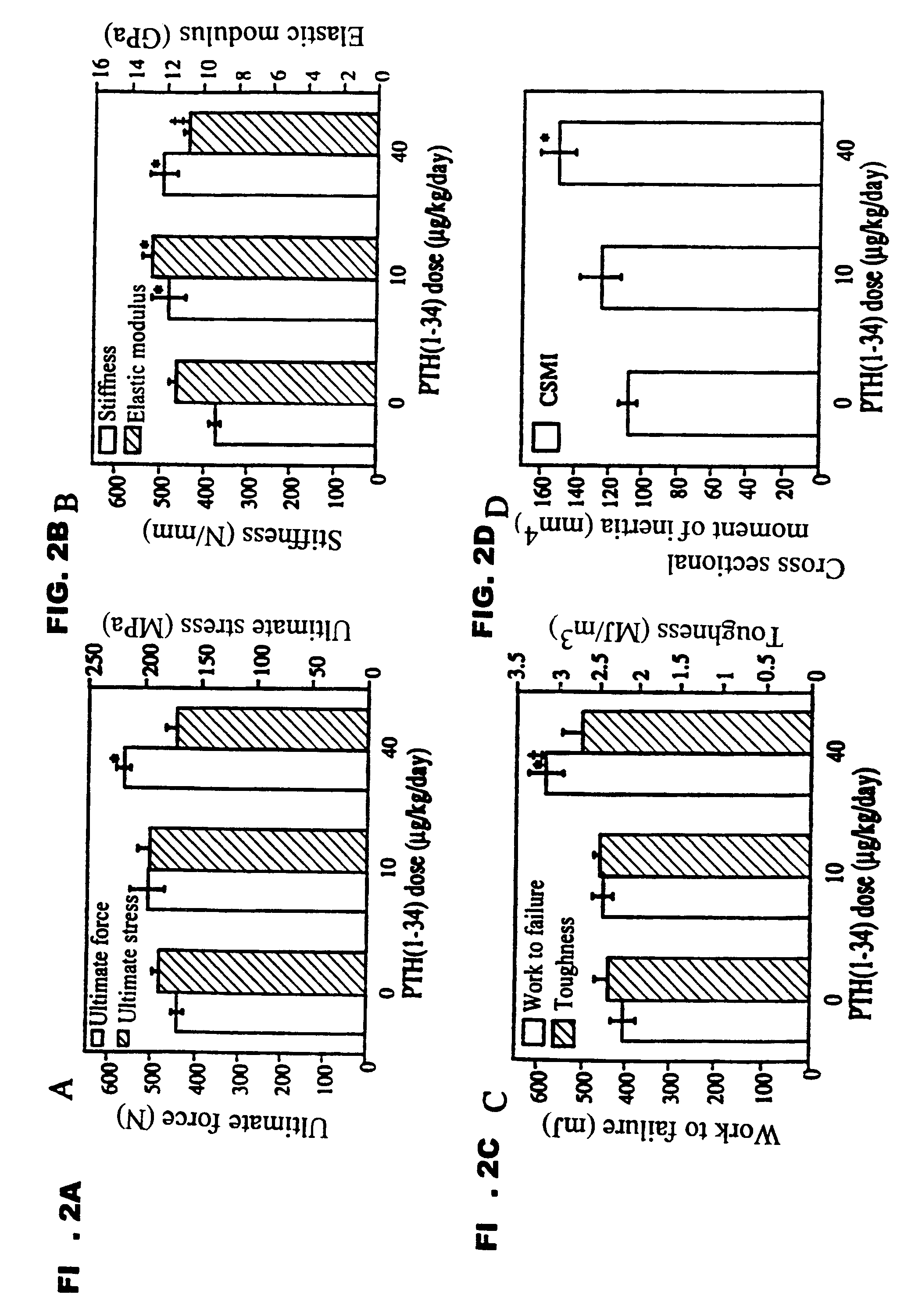
Figure 2 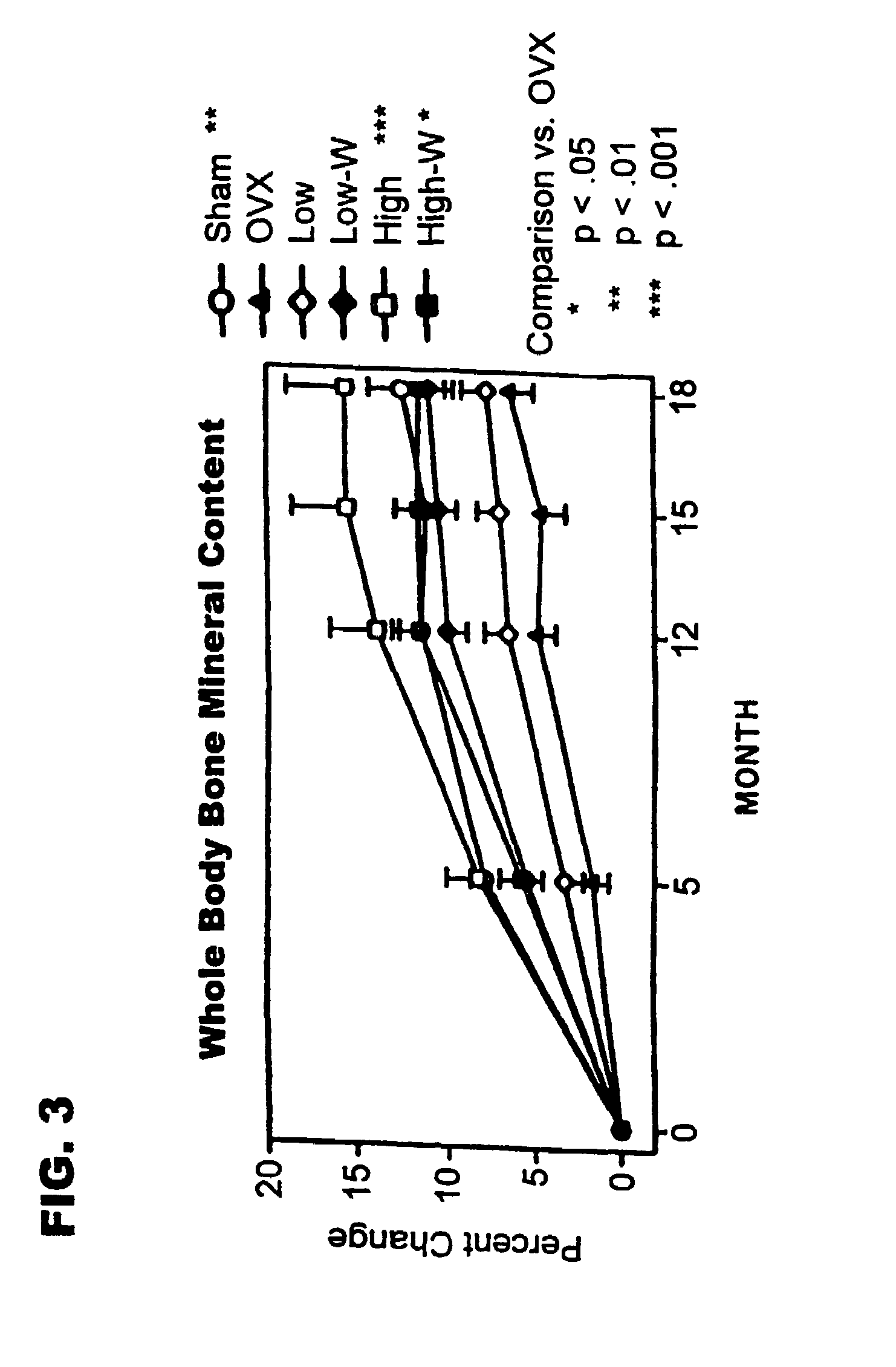
Figure 3
Abstract
Description
[0001] This application is a 371 of PCT / US99 / 18961, filed on Aug. 19, 1999, which claims the benefit of U.S. Provisional Application No. 60 / 097,151, filed on Aug. 19, 1998 and 60 / 099,746, filed on Sep. 10, 1998.TECHNICAL FIELD
[0002] This invention relates to methods for increasing the toughness and / or stiffness of bone and / or reducing the likelihood and / or severity of bone fracture by administering a parathyroid hormone. More particularly, the invention relates a method for increasing toughness or stiffness of bone at a site of a potential or actual trauma, such as the hip or spine of a person at risk of or suffering from osteoporosis. More particularly, the invention relates to a method of reducing the incidence of vertebral fracture, reducing the incidence of multiple vertebral fractures, reducing the severity of vertebral fracture, and / or reducing the incidence of non-vertebral fracture.BACKGROUND OF THE INVENTION
[0003] Existing agents such as estrogen, bisphosphonates, fluoride, or...
Examples
example 1
Increased Bone Strength and Density Upon Administration of rhPTH(1–34) to Rabbits
Experimental Procedures
[0052]Female intact New Zealand white rabbits (HRP Inc. Denver, Pa.), one of the smallest animals that form osteons by intracortical remodeling, approximately 9 months old and weighing 3.25–3.75 kg, were sorted by mean group body weight into 3 groups of 6 animals each. Two experimental groups received biosynthetic PTH(1–34) at doses of 10 or 40 μg / ml / kg / day. The control group was given 1.0 ml / kg / day of acidified 0.9M saline containing 2% heat-inactivated rabbit sera. PTH(1–34) or vehicle were injected by once daily subcutaneous injections on 5 days a week for 140 days. Rabbits were fed rabbit lab chow containing 0.5% Ca and 0.41% P, and given water ad libitum.
[0053]The selection of doses was based on a series of preliminary studies showing that (1) after a single injection of PTH(1–34) at 100 μg / kg, serum calcium increased and failed to return to baseline by 24 hours, whereas afte...
example 2
Increased Bone Strength and Density Upon Administration of rhPTH(1–34) to Monkeys
Experimental Procedures
General
[0095]The live phase of the study used feral, adult (closed growth plates) cynomolgus primates (Macaca fascicularis), weighing 2.77±0.03 kg (mean±standard error of the mean [SEM]). Monkeys were held in quarantine for 3 months, then started on a diet containing 0.3% calcium, 0.3% phosphate, and 250 IU vitamin D3 / 100 g diet, and given fluoridated water (1 ppm fluoride) ad libitum. The calcium content corresponded to 1734 mg calcium / 2000 calories. After 1 month on the diet, animals were sorted into groups of 21 or 22, sham operated or ovariectomized. Once daily subcutaneous injections of vehicle (sham and ovariectomized controls) or rhPTH(1–34), at 1 μg / kg (PTH1) or 5 μg / kg (PTH5), were started 24 hours after ovariectomy. Animals were treated for either 18 months (PTH1 and PTH5), or for 12 months followed by withdrawal of treatment (PTH1-W and PTH5-W).
[0096]The study groups we...
example 3
Increased Bone Strength and Density, and Reduced Fractures Upon Administration of rhPTH(1–34) to Humans
[0144]
Number of Subjects:rhPTH(1–34): 1093 enrolled, 848 finished.Placebo: 544 enrolled, 447 finished.Diagnosis andWomen ages 30 to 85 years, postmenopausalInclusion Criteria:for a minimum of 5 years, with a minimum ofone moderate or two mild atraumaticvertebral fractures.Dosage andTest Product (blinded)Administration:rhPTH(1–34): 20 μg / day, given subcutaneouslyrhPTH(1–34): 40 μg / day, given subcutaneouslyReference Therapy (blinded)Placebo study material for injectionDuration of Treatment:rhPTH(1–34): 17–23 months (excluding 6-monthrun-in phase)Placebo: 17–23 months (excluding 6-monthrun-in phase)Criteria for Evaluation:Spine x-ray; serum biological markers (calcium,bone-specific alkaline phosphatase, procollagen Icarboxy-terminal propeptide); urine markers(calcium, N-telopeptide, free deoxypyridinoline);1,25-dihydroxyvitamin D; bone mineral density:spine, hip, wrist, and total body...