
Convergent/divergent nozzle with modulated cooling
a technology of modulated cooling and divergent nozzles, which is applied in the direction of marine propulsion, combustion types, vessel construction, etc., can solve the problems of reducing engine efficiency, and achieve the effects of increasing non-afterburning engine efficiency, reducing pressure and momentum loss, and increasing engine efficiency
Patent Information
- Authority / Receiving Office
- US · United States
- Patent Type
- Patents(United States)
- Current Assignee / Owner
- Publication Date
- 2006-04-25
Smart Images
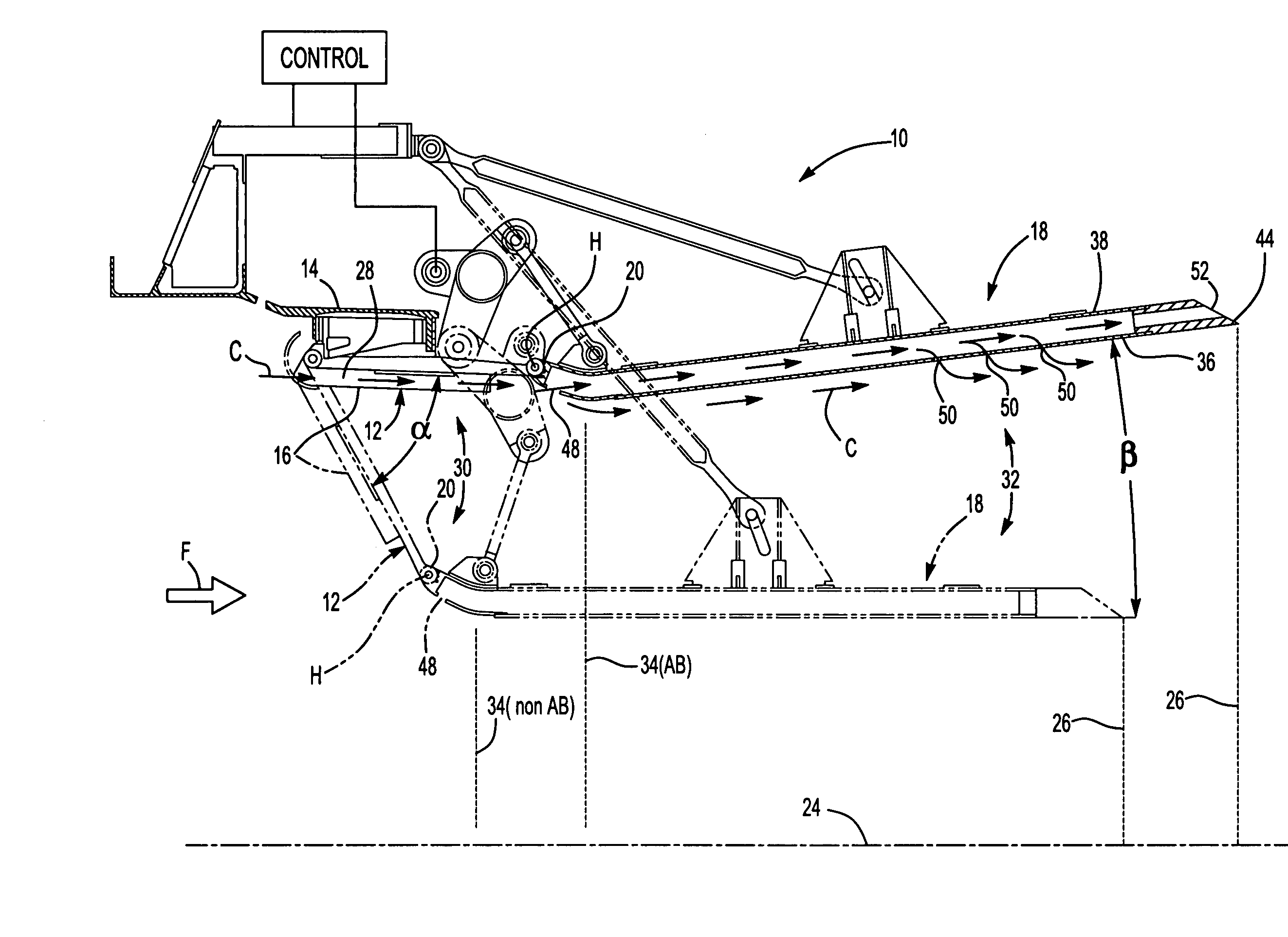
Figure 1 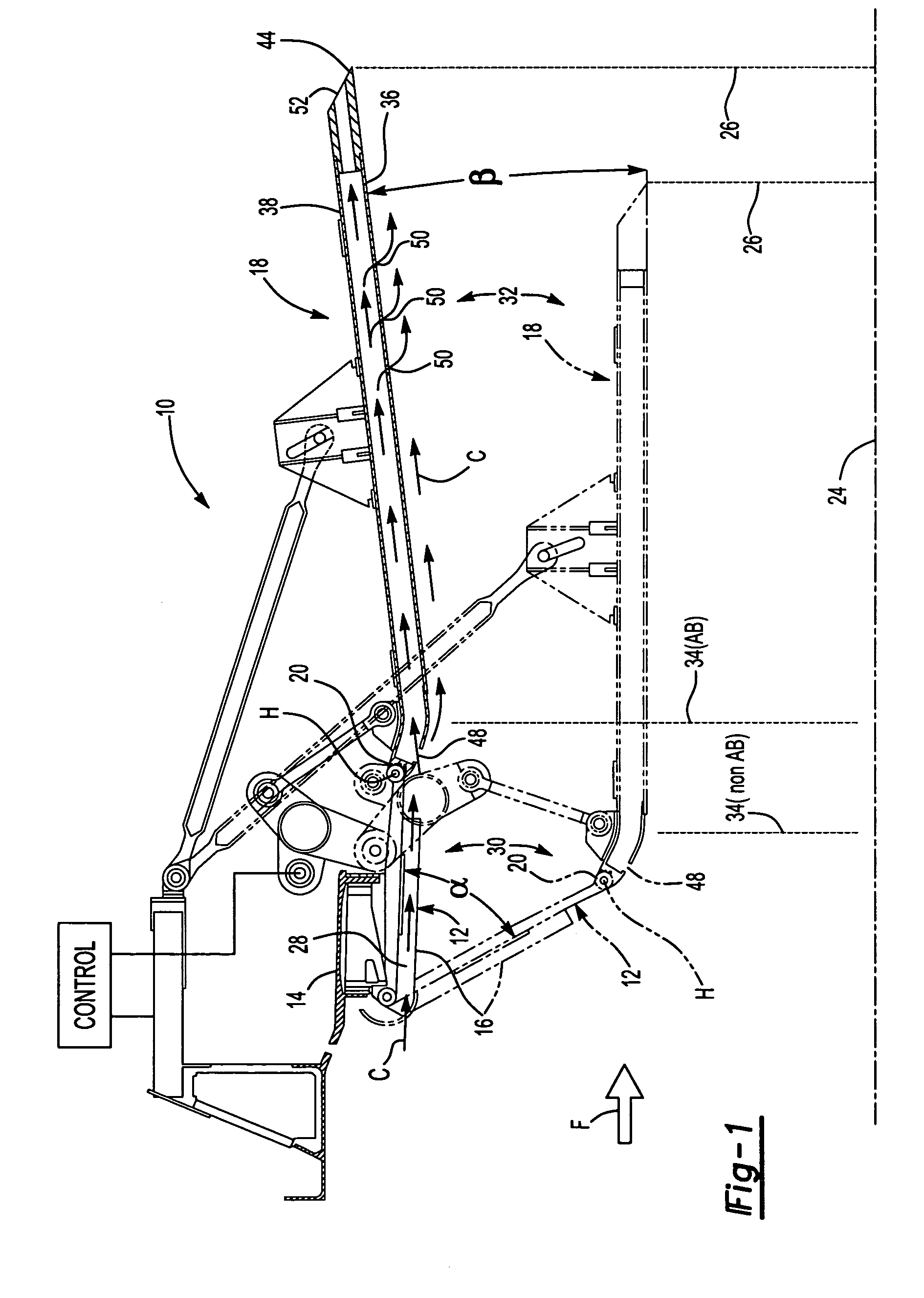
Figure 2 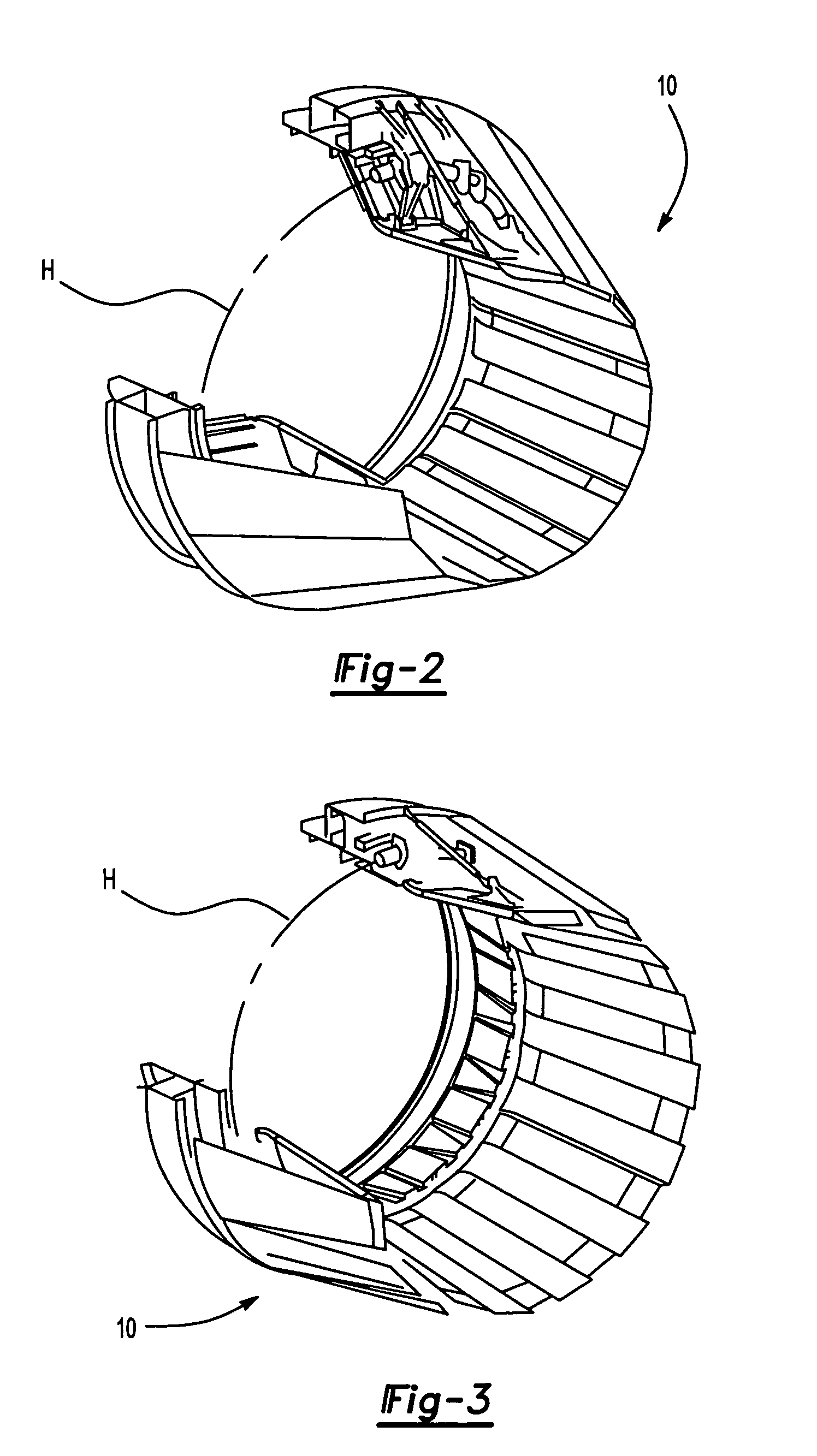
Figure 3
Abstract
Description
BACKGROUND OF THE INVENTION
[0001] The present invention relates to gas turbine engines having convergent / divergent nozzles, and more particularly to a nozzle divergent section cooling arrangement.
[0002] An exhaust nozzle optimizes the thrust produced within a gas turbine engine. In augmented gas turbine engines, convergent / divergent (CID) nozzles provide a multitude of nozzle positions. Flaps circumferentially distributed aft of the augmentor or exhaust duct form the convergent and divergent sections for which the nozzle is named. Flap seals disposed between adjacent flaps minimize gas leakage between flaps in both sections. The convergent section is pivotally connected to the augmentor or exhaust duct and to the divergent section. The divergent section is pivotally connected to the convergent section and to an external fairing positioned radially outboard of the divergent section. The opposite end of the external fairing is pivotally attached to a static outer casing which surrounds ...
Examples
Embodiment Construction
[0019]FIG. 1 illustrates a sectional view of a nozzle system 10 for a gas turbine engine. FIG. 1 depicts the nozzle 10 in both an open position (solid lines and FIG. 2), which is used during afterburning operation, and in a closed position (phantom lines and FIG. 3), which is used during non-afterburning operation.
[0020]During operation, a control system governs the angular orientations of the convergent and divergent flaps to adjust the nozzle throat area and discharge area. The convergent flaps are positionable over a range of angular orientations α, and the divergent flaps are similarly positionable over a corresponding spectrum of angular orientations β.
[0021]The nozzle includes a plurality of circumferentially distributed convergent flaps 12, each pivotably connected to a stationary frame 14 and each having a liner panel 16 secured thereto. A plurality of circumferentially distributed divergent flaps 18 are pivotably connected at a joint 20 to the aft ends of the convergent fla...