
Control strategy for multi-stroke engine system
a control strategy and engine technology, applied in electrical control, machines/engines, non-mechanical valves, etc., can solve the problems of air and fuel control at the aftertreatment device, substantial variations in the composition of exhaust gas, etc., and achieve the effect of better control
Patent Information
- Authority / Receiving Office
- US · United States
- Patent Type
- Applications(United States)
- Current Assignee / Owner
- Publication Date
- 2009-11-12
Smart Images
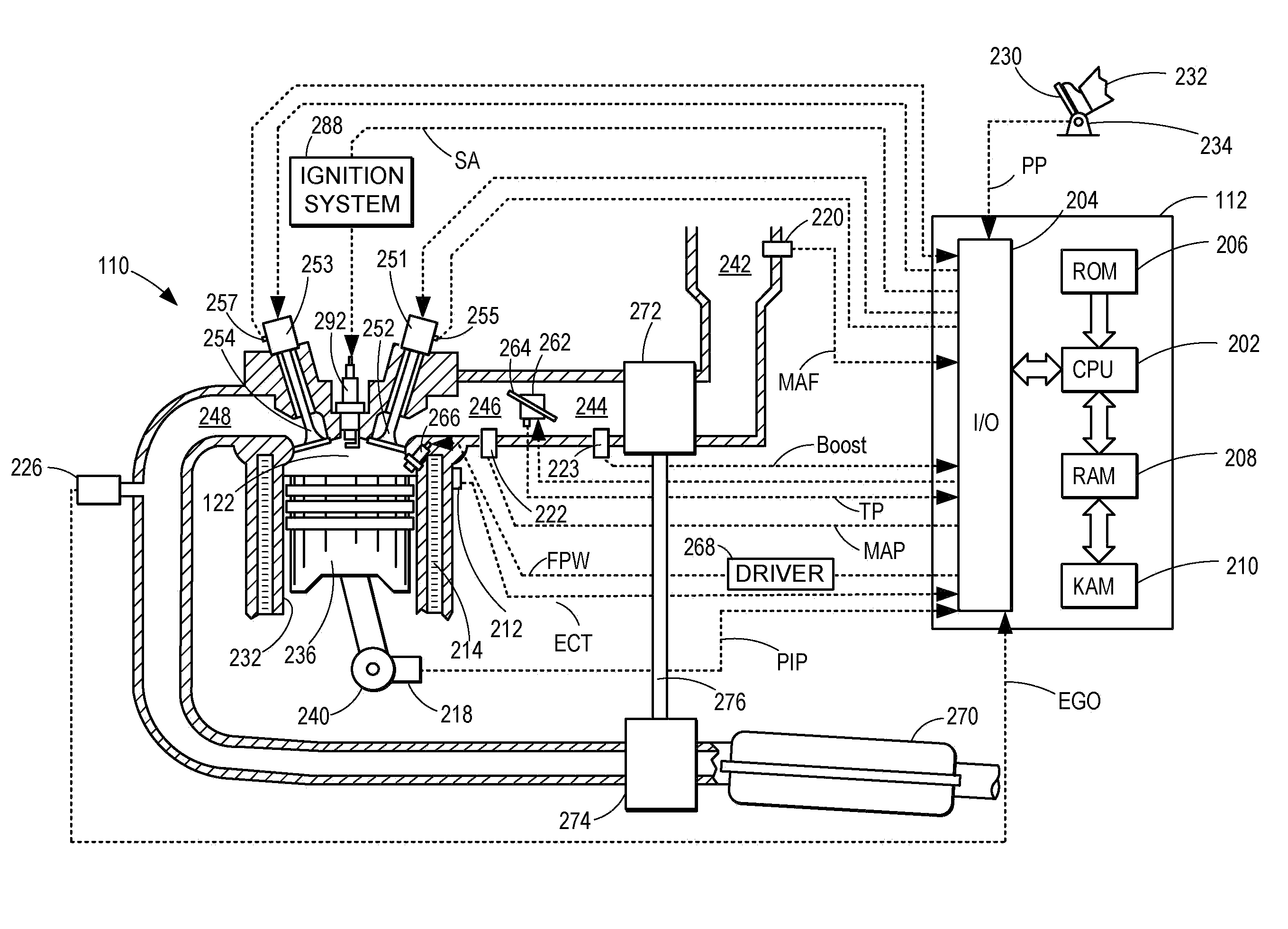
Figure 1 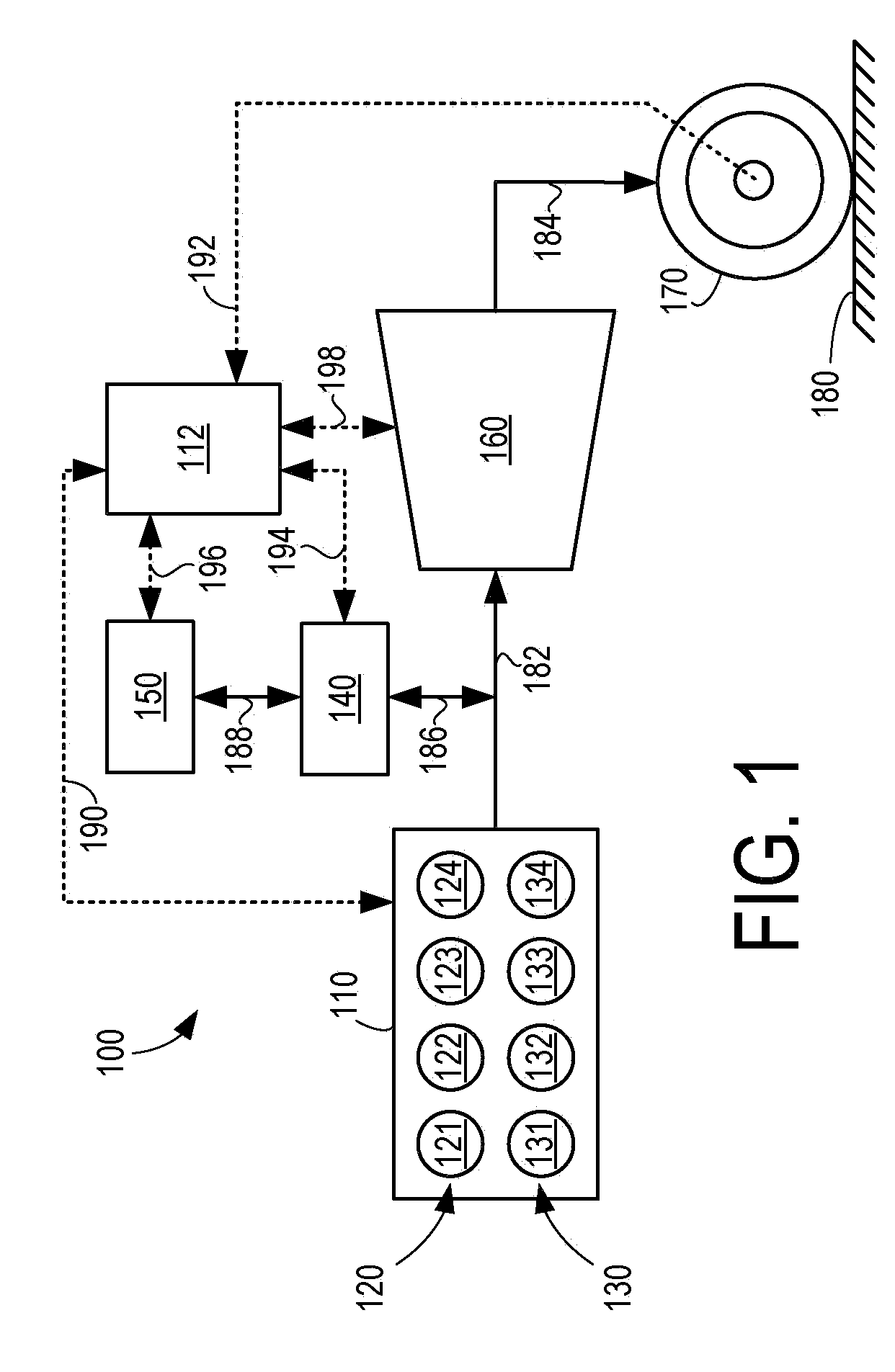
Figure 2 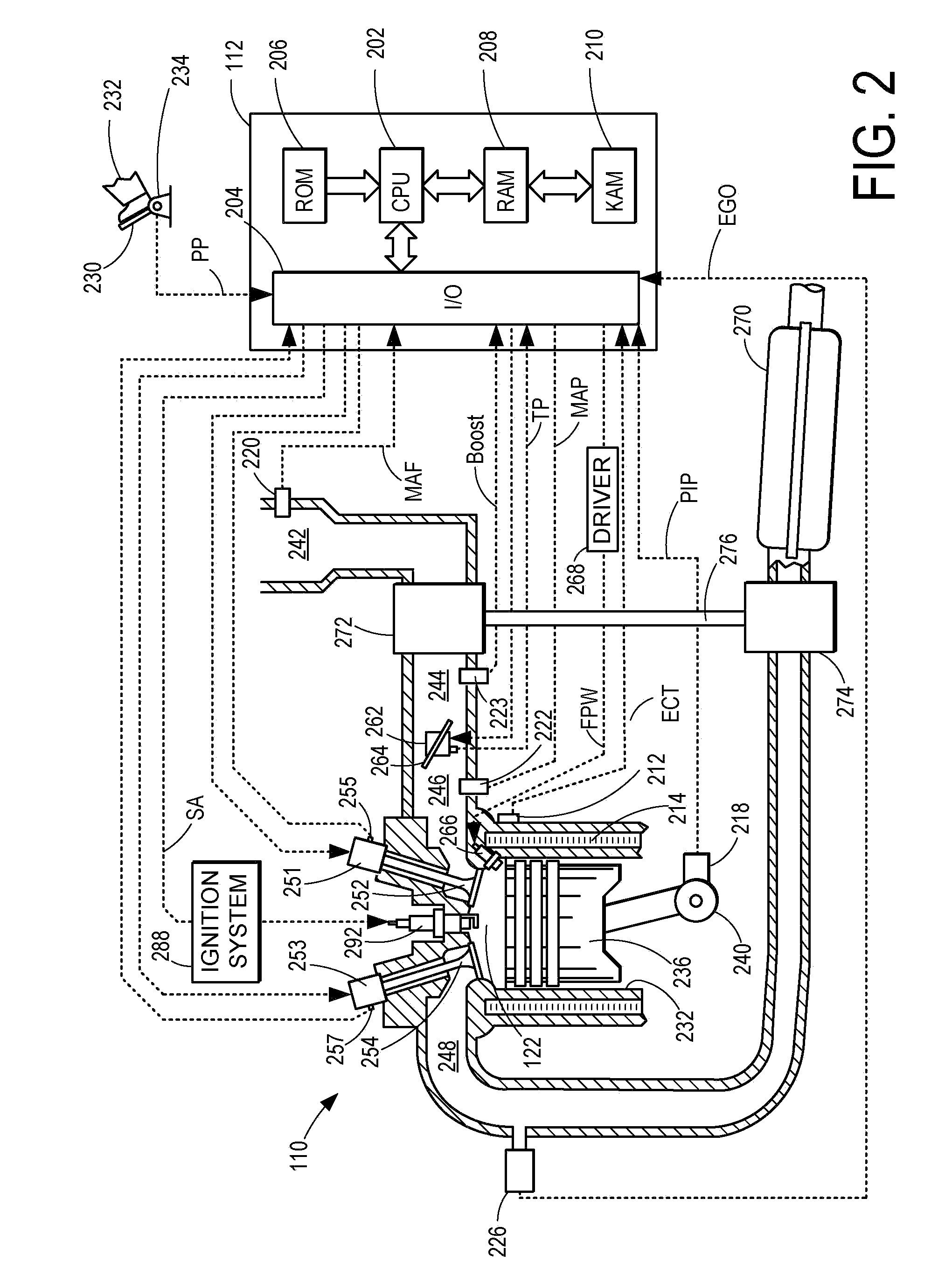
Figure 3
Abstract
Description
BACKGROUND AND SUMMARY
[0001] Internal combustion engines can carry out combustion by repeatedly admitting air and fuel into the cylinder, combusting the air and fuel, and exhausting the products of combustion from the cylinder. Some engines may perform these processes by operating in what may be referred to as a two stroke cycle, which corresponds to a combustion event being performed every two strokes of the cylinder's piston. Other engines may perform these processes by instead operating in a four stroke cycle, which corresponds to a combustion event every four strokes of the piston.
[0002] The four stroke cycle may be advantageously used in some examples to provide increased engine efficiency as compared to a comparable two stroke cycle, since air and fuel may be more thoroughly mixed in the four stroke cycle. However, the two stroke cycle may be advantageously used in other examples to provide increased power or torque output as compared to the four stroke cycle, since combustion w...
Examples
Embodiment Construction
[0014]An approach for controlling an engine system is described herein. As one example, the engine system may be configured to transition between a two stroke cycle and a four stroke cycle in response to changing operating conditions. The delivery of a suitable amount of air and fuel to the engine may be facilitated using different approaches during the two stroke cycle than during the four stroke cycle.
[0015]As a non-limiting example, an amount of un-combusted intake air that passes through the engine cylinders (i.e. blow-by) may be adjusted during the two stroke cycle to achieve a target composition of the exhaust gases provided to an exhaust aftertreatment device of the engine. In some embodiments, the amount of un-combusted intake air passing through these cylinders during the two stroke cycle may be adjusted by varying an opening overlap between the intake and exhaust valves of the engine cylinders.
[0016]For example, by increasing the opening overlap between the intake and exha...