
Method and system for turbocharging an engine
Patent Information
- Authority / Receiving Office
- US · United States
- Current Assignee / Owner
- Publication Date
- 2011-07-14
Smart Images
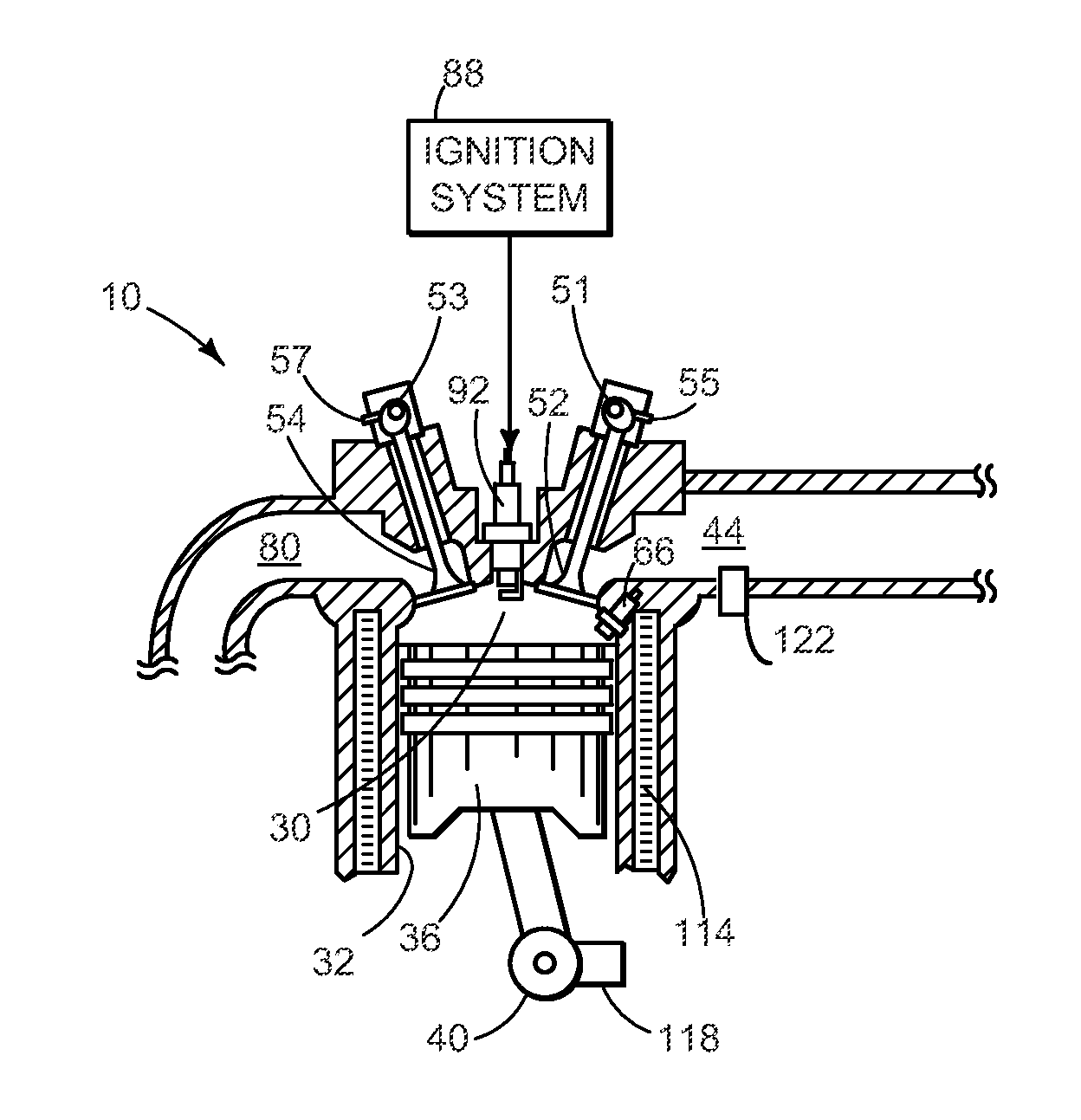
Figure 1 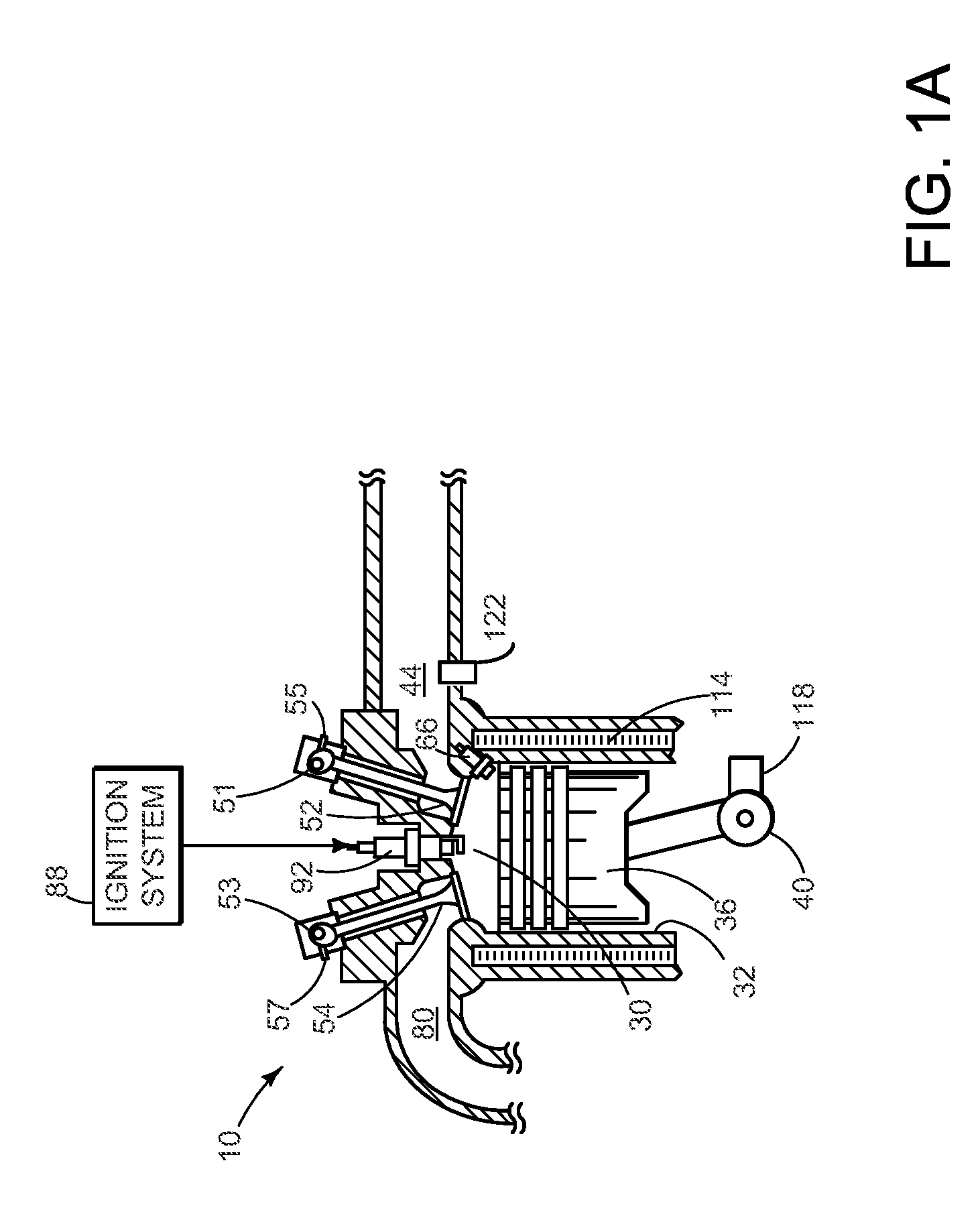
Figure 2 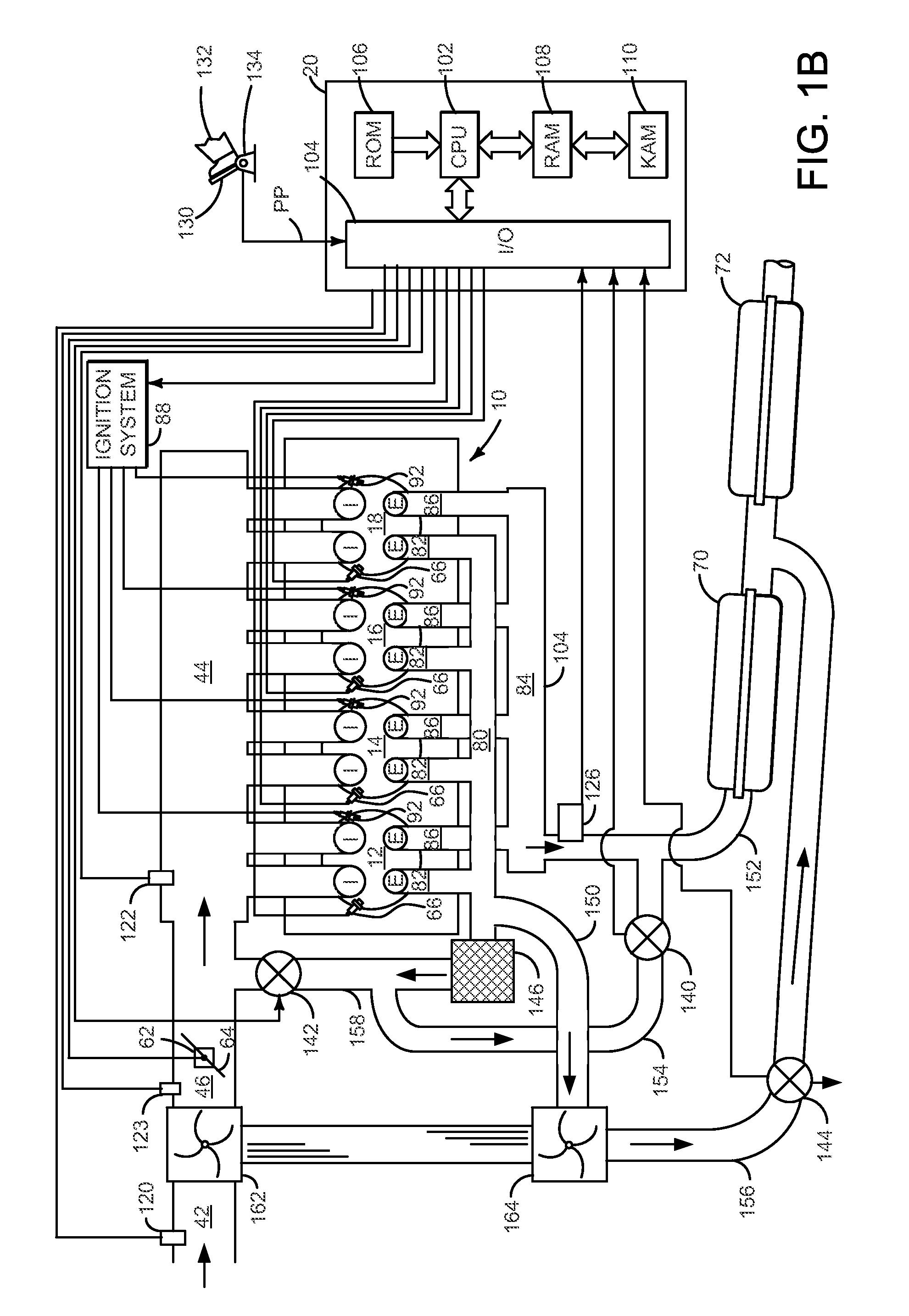
Figure 3
Abstract
Description
FIELD
[0001] The present description relates to a method for improving operation of a turbocharged engine. The method may be particularly useful for reducing engine emissions and increasing engine efficiency after a cold start.BACKGROUND AND SUMMARY
[0002] One way to increase engine efficiency is to reduce engine displacement and boost the engine. However, placing a turbine in an exhaust system can increase engine emissions and reduce engine efficiency during an engine start. In particular, engine emissions can be increased since the turbocharger may sink engine exhaust heat during an engine start rather than passing the exhaust heat to a catalyst to promote oxidation and reduction of exhaust gas constituents. Further, engine efficiency can be reduced when spark is retarded or air mass flow through the engine is increased to warm the mass of the turbocharger. Thus, engine boosting can make it more difficult to meet engine emissions and improve engine efficiency during engine starting.[0...
Examples
Embodiment Construction
[0015]The present description is related to operating an engine. In one non-limiting example, the engine may be configured as illustrated in FIGS. 1A and 1B. In one example, blow-down gases of a cylinder are separated from residual cylinder gases and the engine is operated according to the methods of FIGS. 4A-4B providing the signals of FIGS. 2-3.
[0016]Referring to FIG. 1A, a single cylinder of an internal combustion engine 10 is shown. Internal combustion engine 10 is comprised of a plurality of cylinders as shown in FIG. 2. Engine 10 includes combustion chamber 30, coolant sleeve114, and cylinder walls 32 with piston 36 positioned therein and connected to crankshaft 40. Combustion chamber 30 is shown communicating with intake manifold 44 and exhaust manifold 80 via respective intake valves 52 and exhaust valves 54. Each intake and exhaust valve may be operated by an intake cam 51 and an exhaust cam 53. Alternatively, one or more of the intake and exhaust valves may be operated by ...