
Polyester resin composition and process for the preparation thereof
Patent Information
- Authority / Receiving Office
- US · United States
- Current Assignee / Owner
- Publication Date
- 2006-06-06
- Estimated Expiration
- Not applicable · inactive patent
Smart Images
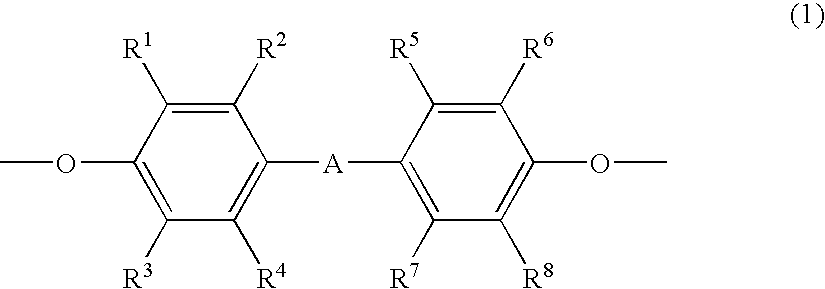
Figure 1 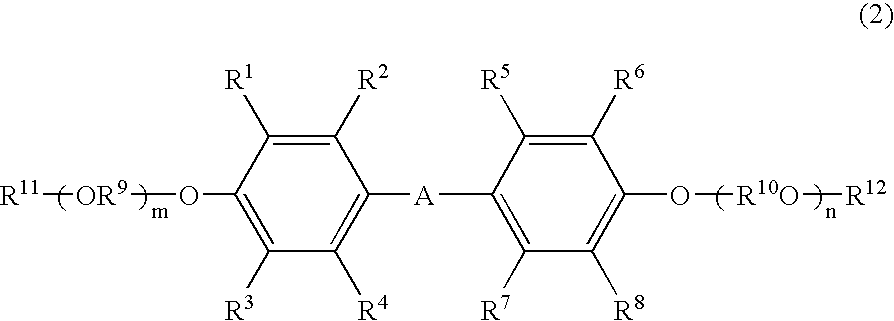
Figure 2 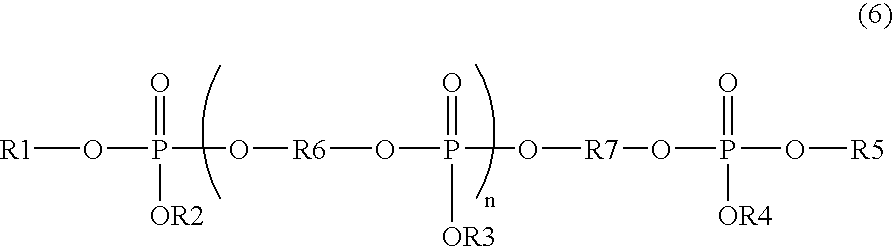
Figure 3
Abstract
Description
TECHNICAL FIELD
[0001] The present invention relates to a polyester resin composition and a method of producing the same.BACKGROUND ART
[0002] Thermoplastic polyester resins such as polyethylene terephthalate are excellent in heat resistance, chemical resistance, weather resistance, mechanical characteristics and electric characteristics, among others, and, therefore, they are used in various fields of industrial application, for example as injection molding materials, fibers and films. However, still higher levels of mechanical characteristics and heat resistance are required of them. To meet those requirements, attempts have been made to improve such characteristics generally by incorporating various inorganic particles. However, this measure may cause problems: the surface appearance of products may be impaired, or a fibrous inorganic material incorporated may be oriented in the step of injection molding to cause anisotropy.
[0003] The above drawbacks of inorganic particles are general...
Examples
production example 1
[0129]Deionized water was blended with the layered material. Then, the polyether compound was added and stirring was continued for 15 to 30 minutes. The mixture was then dried to a powder form. The layered materials (A-1 to A-6 and B-1 to B-3) were thus obtained. The weight proportions of the raw materials used in this production example are shown in Table 2 (in parts by weight).
[0130]
TABLE 2A-1A-2A-3A-4A-5A-6B-1B-2B-3Deionized100100100100100100100100100waterME1008888888Kunipia F55MM5005106ADE4005NC35PDT8005PEG40056PEG4000S5
production example 2
[0131]A reactor was charged with dimethyl terephthalate (DMT), 76 parts by weight, per 100 parts by weight of DMT, of propylene glycol, 0.003 part by weight of a hindered phenol stabilizer (Asahi Denka's Adekastab A060; hereinafter referred to as A060) and 0.00025 part by weight of Ti(OBu)4 and the transesterification reaction was allowed to proceed between DMT and propylene glycol at a reaction temperature of about 150 to 200° C. with stirring. Thereafter, 0.00025 part by weight of Sb203 was added and the polycondensation was carried out in the molten state at a reaction temperature of 270 to 280° C. under reduced pressure (0.8 to 5.0 torr (0.107 to 0.665 MPa)) to give polypropylene terephthalate (PPT).
examples 1 to 7
[0132]Polyester resin compositions were prepared by melt-kneading PET, the layered material (A-1 to A-6) obtained in Production Example 1 and A060 in the weight proportions shown in Table 3 in a twin-screw extruder (Japan Steel Works' model TEX44) and evaluated. The results are shown in Table 3.
[0133]
TABLE 3Examples1234567PET (wt parts)100100100100100100100A-1 (wt parts)2050A-2 (wt parts)30A-3 (wt parts)20A-4 (wt parts)20A-5 (wt parts)20A-6 (wt parts)30Proportion (%) of particles58456550422251with [D]≦ 3000 ÅMean [D] (Å)2380326020502970352048302940[N] (particles / wt % · 100 μ2)50465746423147Mean aspect ratio57376242361544Mean layer thickness (Å)280360230320380470310Maximum layer thickness (Å)1280149011001560168019601550Ash content (wt %)10.120.310.110.210.210.310.6Flexural modulus (MPa)4990645051004850478045704840Flexural strength (MPa)105112104104102100103Flexural strength after10010395999592905 minutes of retention (MPa)Warpage (mm)3.52.73.43.64.04.53.8Gloss (%)82848382807881