
Prosthesis attachment method and apparatus with soft tissue integrating seal
a technology of soft tissue and attachment method, applied in the field of medical technology, can solve the problems of serious osteomyelitis and achieve the effect of promoting skin/soft tissue ingrowth and minimizing the risk of infection
Patent Information
- Authority / Receiving Office
- US · United States
- Patent Type
- Patents(United States)
- Current Assignee / Owner
- Publication Date
- 2014-02-04
Smart Images
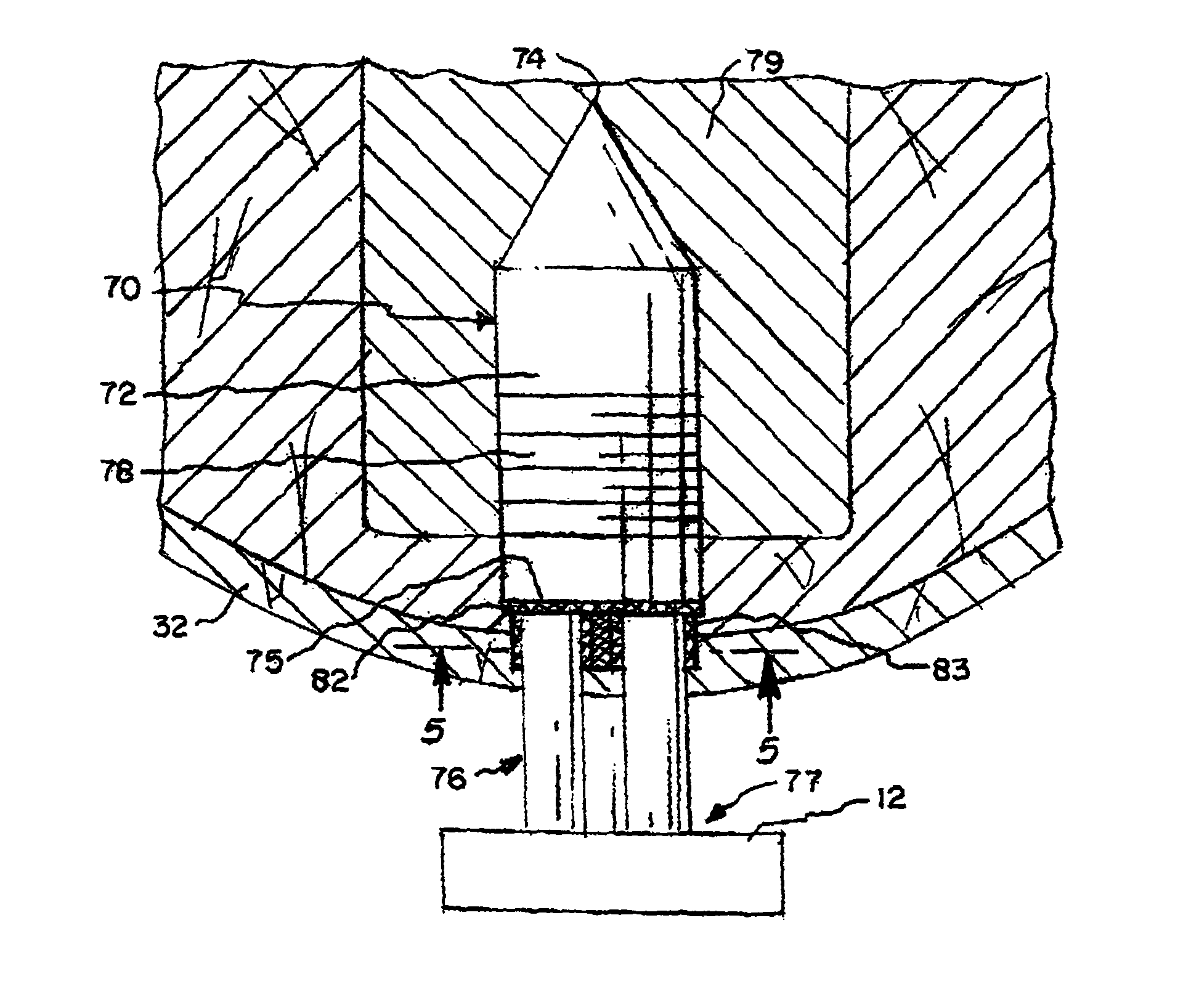
Figure 1 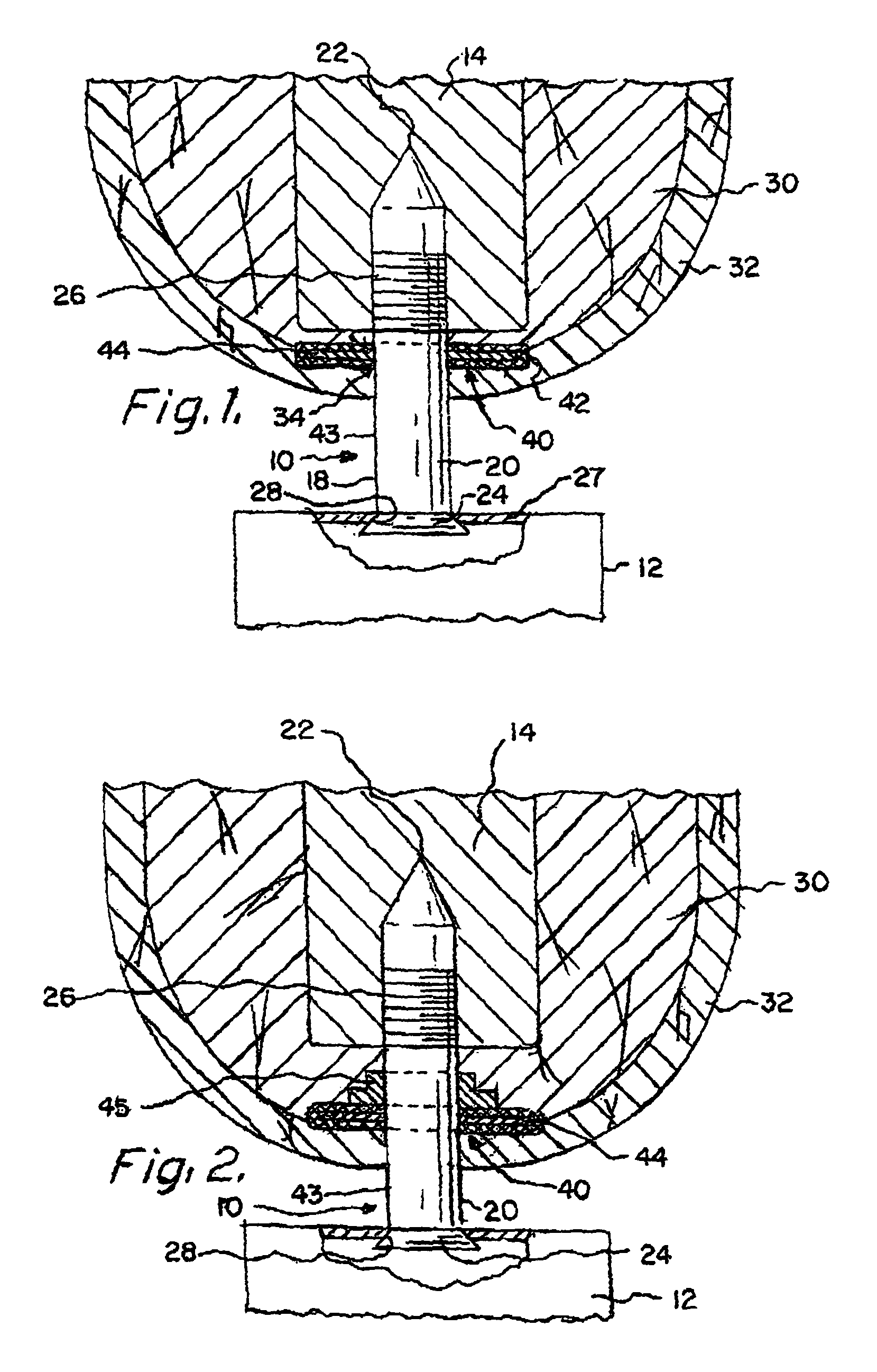
Figure 2 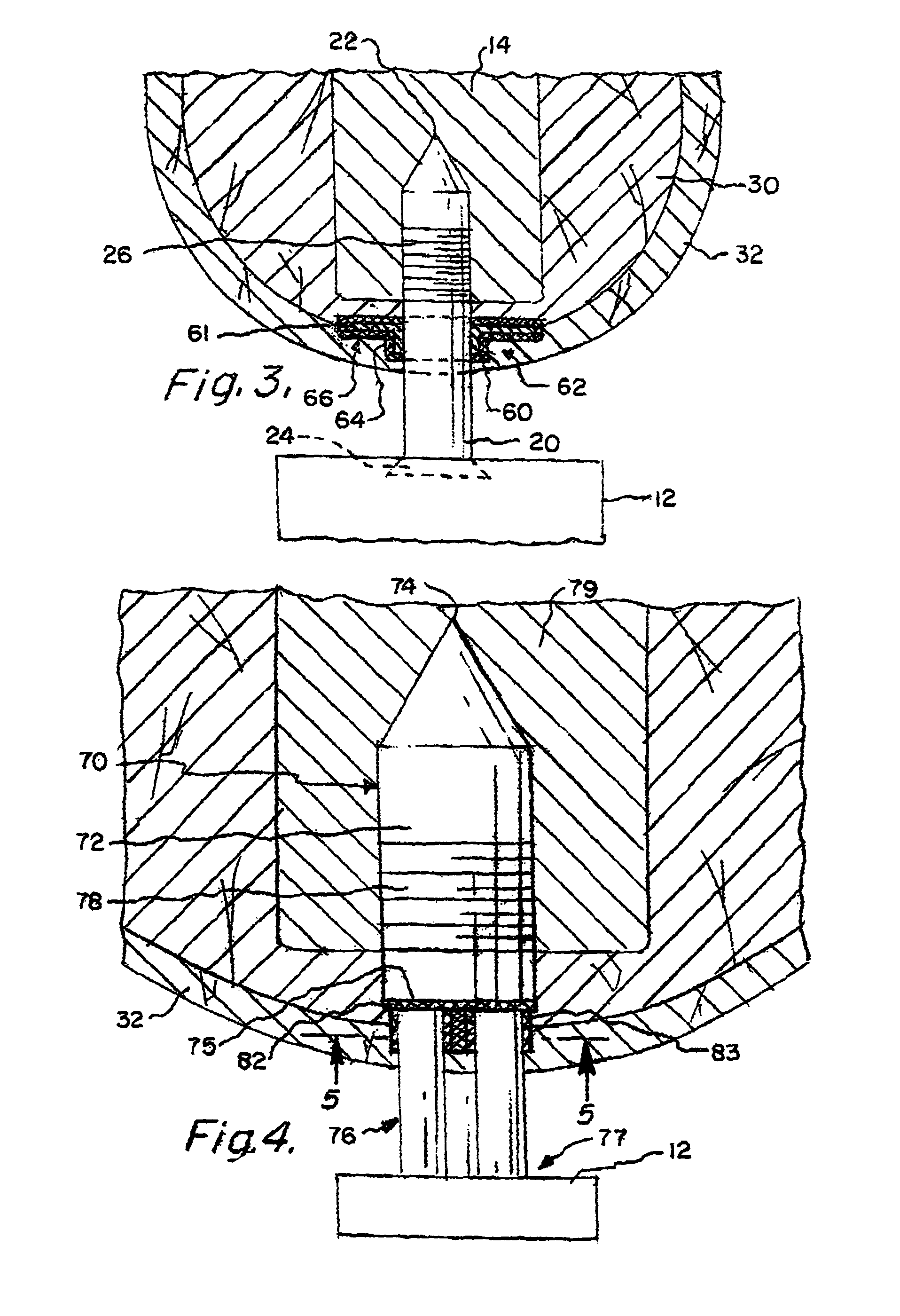
Figure 3
Abstract
Description
CROSS-REFERENCE TO RELATED APPLICATIONS
[0001] This application is the U.S. national phase under 35 U.S.C. §371 of PCT International Application No. PCT / US2009 / 000415, which has an International filing date of Jan. 21, 2009, and claims the benefit of U.S. Provisional Application No. 61 / 011,918, filed Jan. 22, 2008.FIELD OF THE INVENTION
[0002] This invention relates generally to medical technology and more particularly to a method and apparatus for minimizing marsupialization, i.e., pouch formation, and infections associated with the percutaneous projection of a fastener, e.g., bone screw, used to attach a prosthesis.BACKGROUND OF THE INVENTION
[0003] Various techniques are known for attaching a prosthesis to a patient's natural bone. Such techniques often involve the use of a screw having a head end adapted to be secured to the prosthesis and a point end adapted to be threaded or otherwise fixed into the patient's bone. To achieve reliable initial and long term fixation, it has been prop...
Examples
Embodiment Construction
[0016]Attention is initially directed to FIG. 1 which illustrates a fastener 10 for attaching an external prosthesis 12 to a patient's natural bone 14. Although the teachings of the invention are applicable to a variety of external limb prosthesis devices, in the exemplary application assumed herein, the prosthesis 12 comprises a leg prosthesis and the patient's bone 14 comprises a thigh bone, or femur.
[0017]The fastener 10 can comprise a substantially conventional bone screw 18 having a shaft 20 extending between a first, or point end, 22 and a second, or head end, 24. The shaft 20 is appropriately threaded 26 for screwing into the bone 14. The prosthesis 12 is schematically illustrated only to the extent necessary to represent that the head end 24 is configured for attachment to a prosthesis plate 27, e.g., by being seated in prosthesis recess 28 or being otherwise affixed, as by welding or bolting.
[0018]Note in FIG. 1 that the fastener 10 projects percutaneously through the patie...