
Minimally invasive valve replacement system
Patent Information
- Authority / Receiving Office
- US · United States
- Current Assignee / Owner
- Publication Date
- 2005-04-07
- Estimated Expiration
- Not applicable · inactive patent
Smart Images
Figure 1 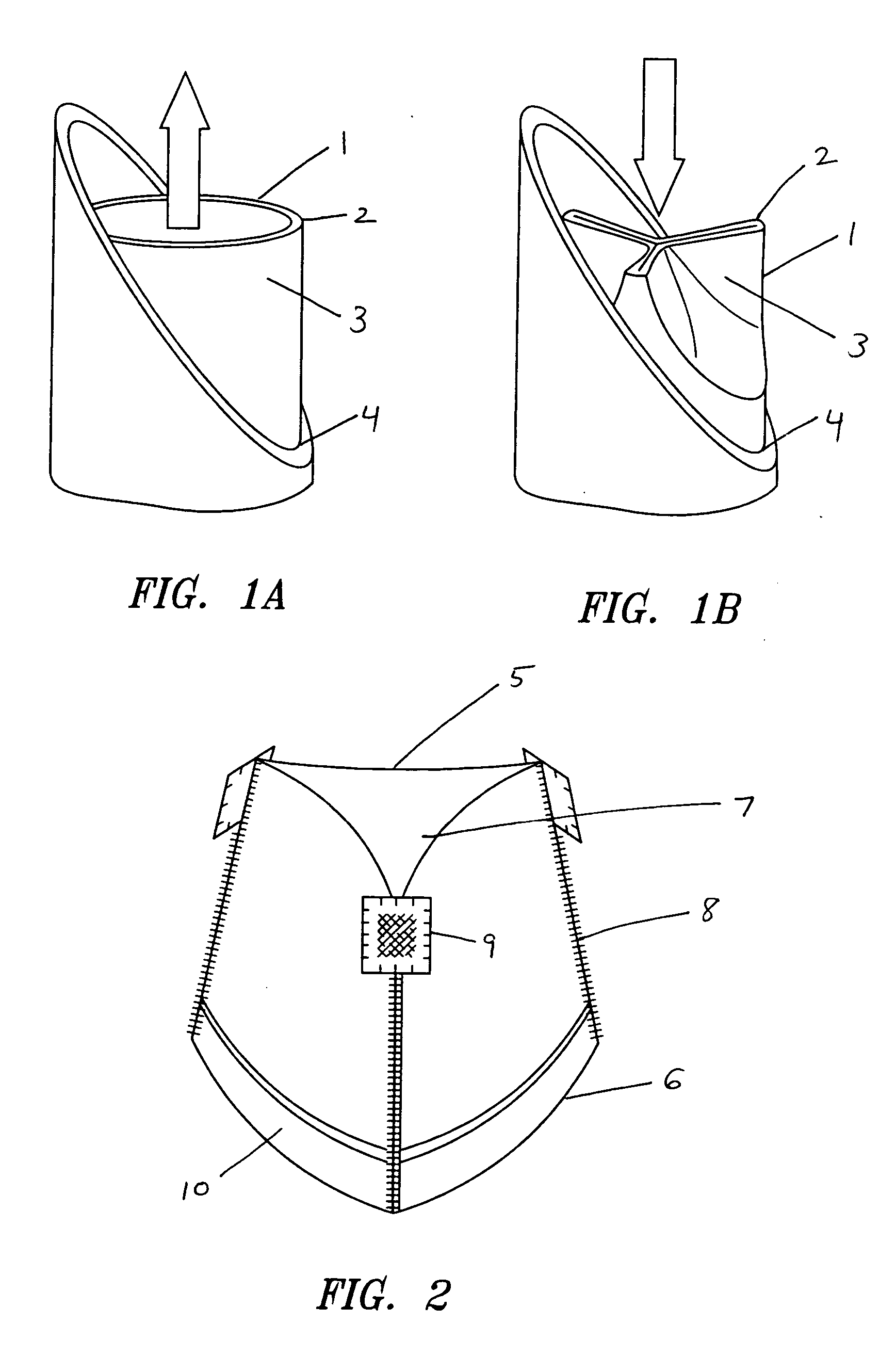
Figure 2 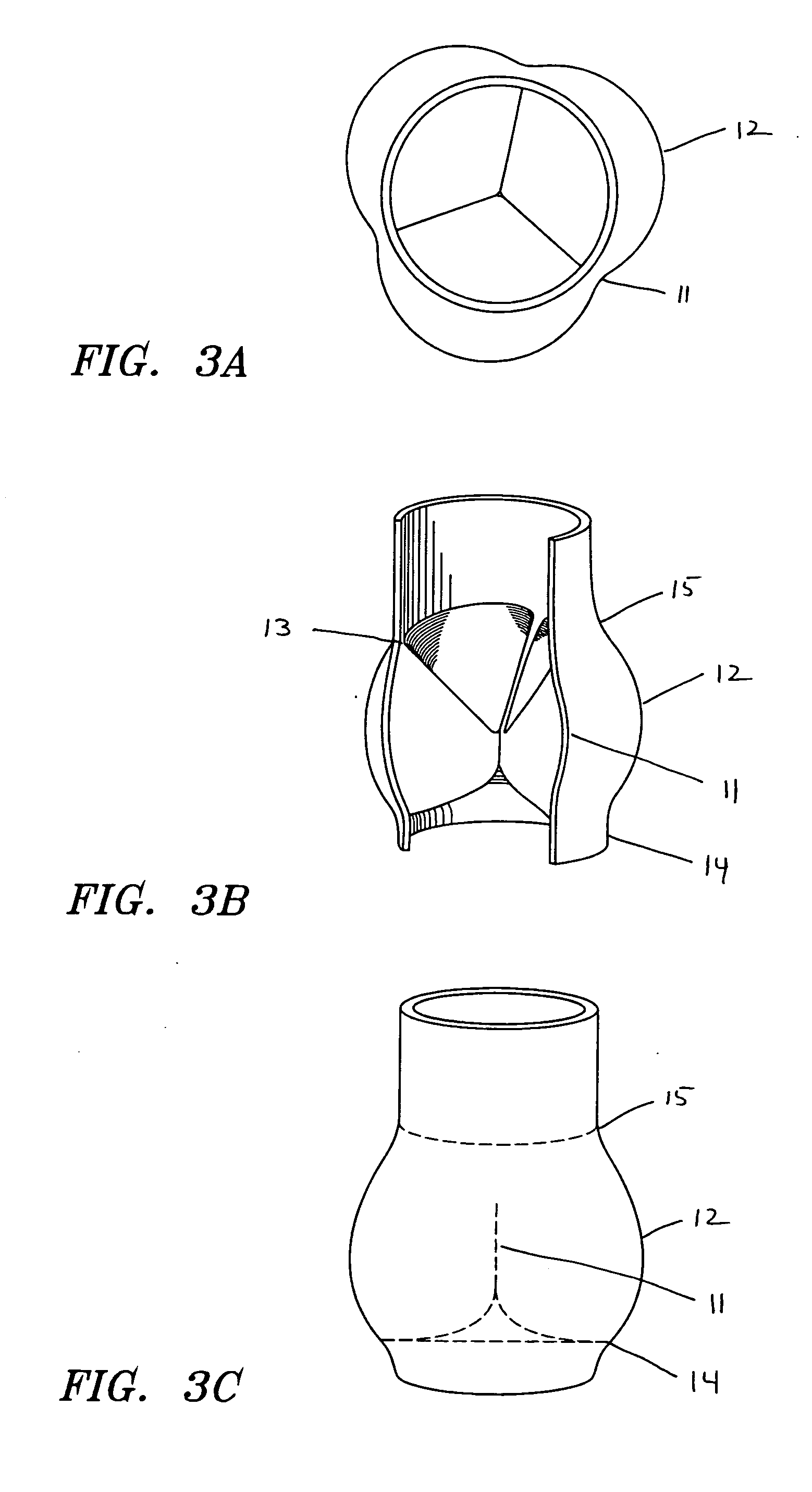
Figure 3
Abstract
Description
FIELD OF THE INVENTION
[0001] The present invention relates to devices and systems for the replacement of physiological valves. BACKGROUND OF THE INVENTION
[0002] The transport of vital fluids in the human body is largely regulated by valves. Physiological valves are designed to prevent the backflow of bodily fluids, such as blood, lymph, urine, bile, etc., thereby keeping the body's fluid dynamics unidirectional for proper homeostasis. For example, venous valves maintain the upward flow of blood, particularly from the lower extremities, back toward the heart, while lymphatic valves prevent the backflow of lymph within the lymph vessels, particularly those of the limbs.
[0003] Because of their common function, valves share certain anatomical features despite variations in relative size. The cardiac valves are among the largest valves in the body with diameters that may exceed 30 mm, while valves of the smaller veins may have diameters no larger than a fraction of a millimeter. Regar...
Examples
Embodiment Construction
[0078] The present invention relates to valve replacement systems and devices. As illustrated in FIG. 1, a valve (1) comprises a distal or outflow end (2), leaflets (3) and a proximal or inflow end (4). A typical valve functions similar to a collapsible tube in that it opens widely during systole or in response to muscular contraction, to enable unobstructed forward flow across the valvular orifice (FIG. 1A). In contrast, at the end of systole or contraction, as illustrated in FIG. 1B, as forward flow decelerates, the walls of the tube are forced centrally between the sites of attachment to the vessel wall and the valve closes completely.
[0079] Replacement Valves
[0080] A preferred valve (5) for use with the systems and devices of the present invention is illustrated in FIG. 2 and is comprised of a body having a proximal end or inflow ring (6) and a distal end or outflow ring (7). The body is comprised of multiple leaflets of valve tissue joined by seams (8), wherein each seam is f...