
System and method for secure relayed communications from an implantable medical device
Patent Information
- Authority / Receiving Office
- US · United States
- Current Assignee / Owner
- Publication Date
- 2015-12-15
Smart Images
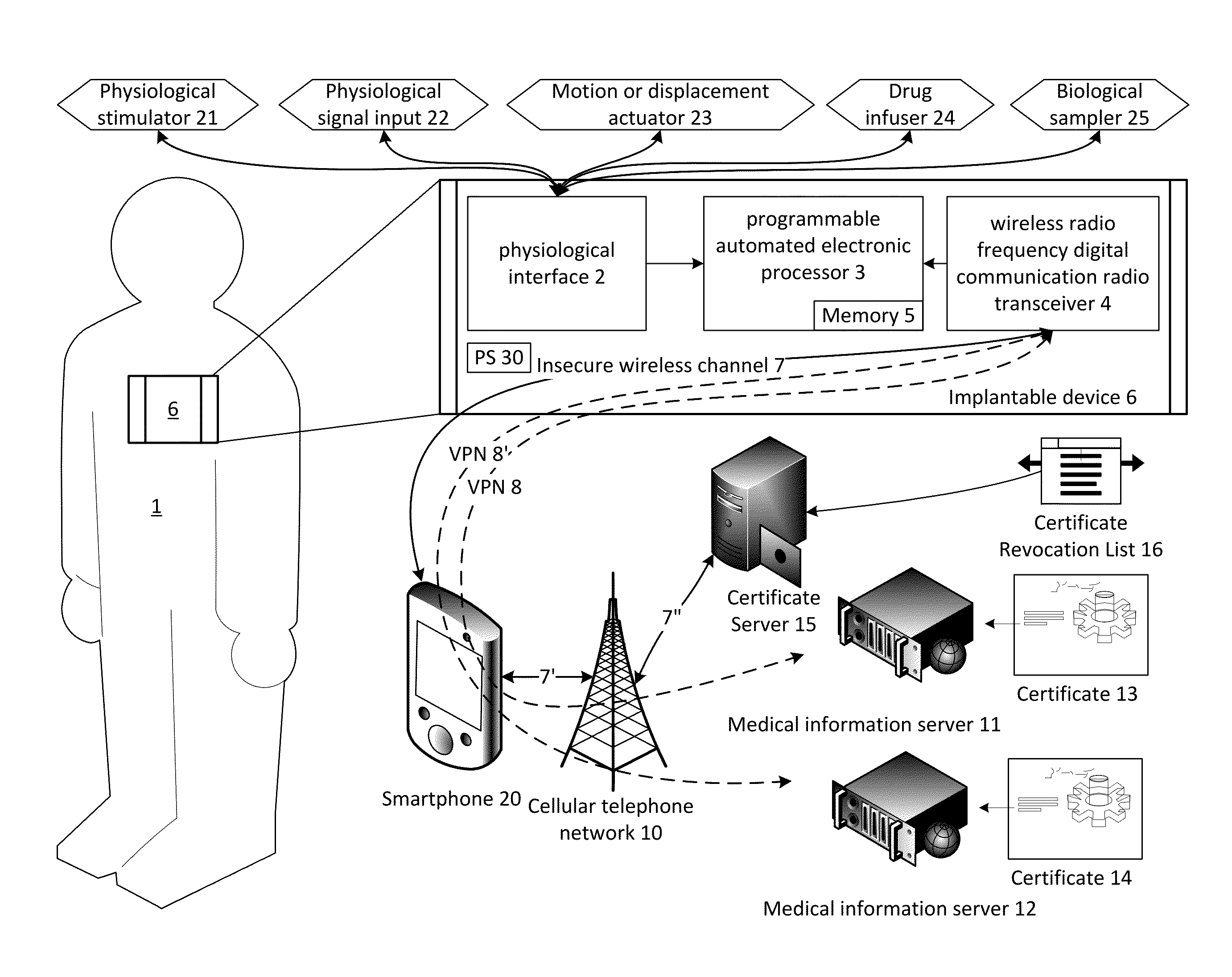
Figure 1 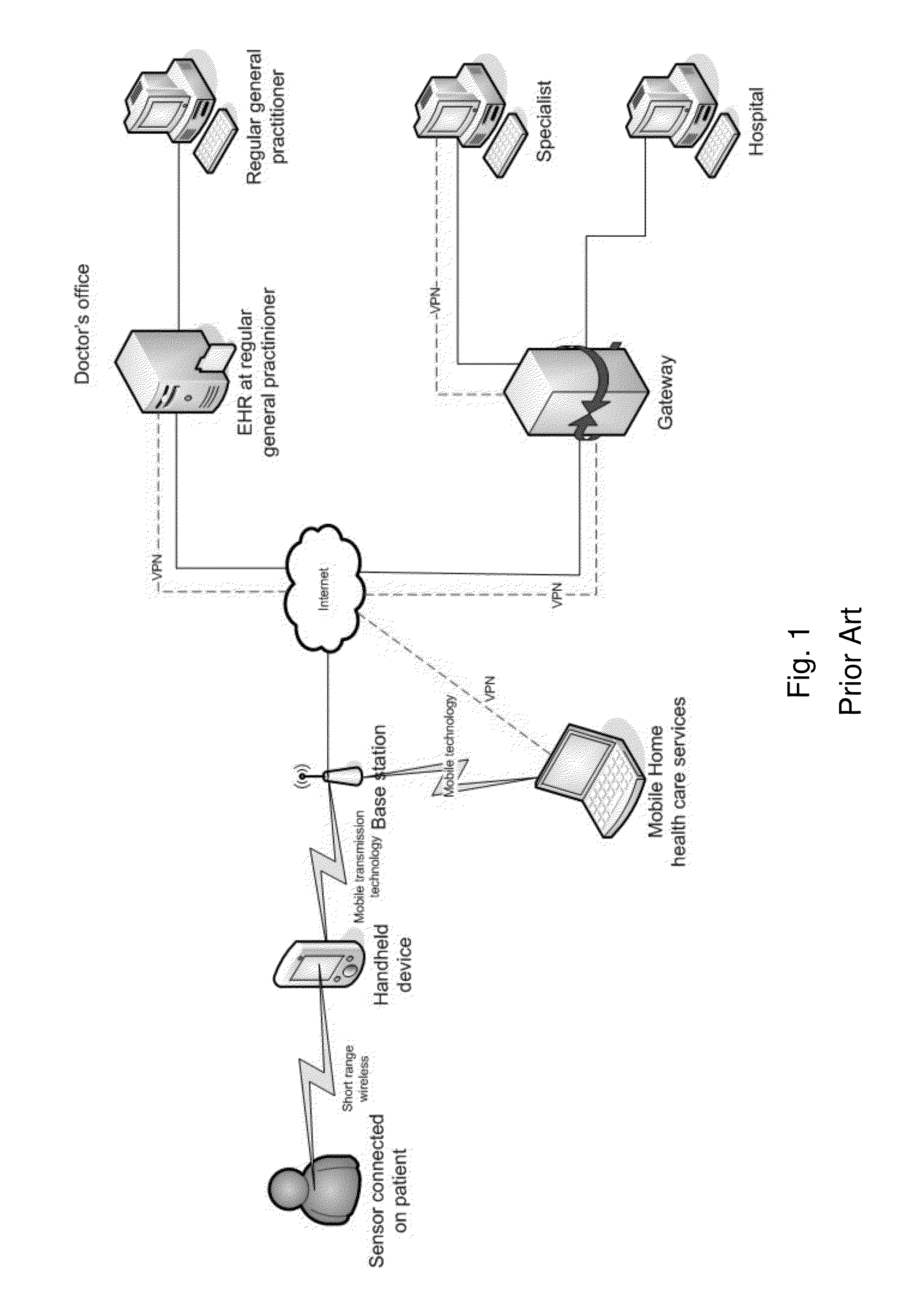
Figure 2 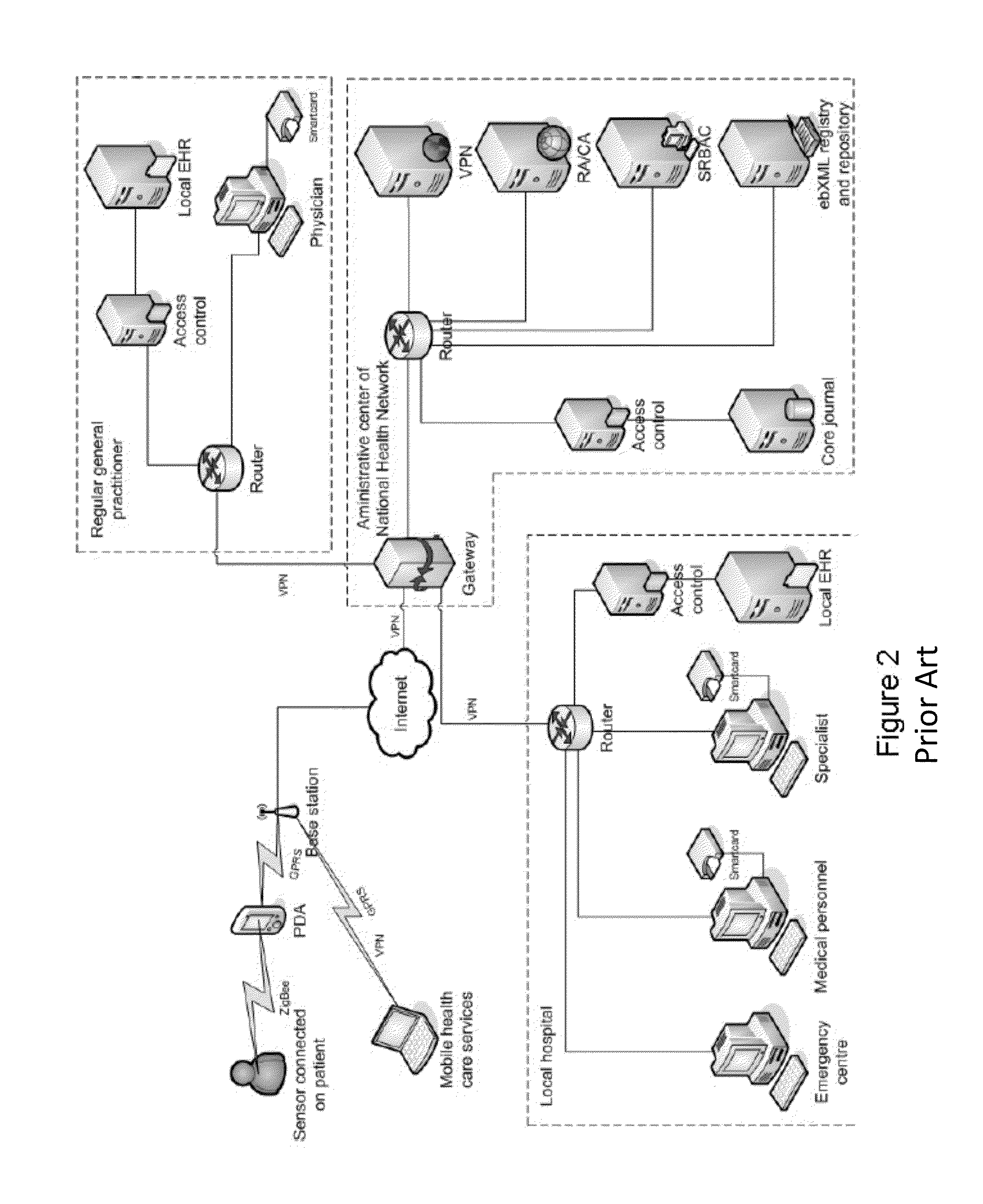
Figure 3
Abstract
Description
CROSS REFERENCE TO RELATED APPLICATION
[0001] The present application is a non-provisional of and claims benefit of priority under 35 U.S.C. §119(e) from U.S. Provisional Patent Application No. 61 / 799,720, filed Mar. 15, 2013, the entirety of which is expressly incorporated herein by reference in its entirety.FIELD OF THE INVENTION
[0002] The present invention relates to the field of implantable medical devices, and more particularly implantable medical devices having wireless data communications transceivers.BACKGROUND OF THE INVENTION
[0003] The present invention relates generally to systems and methods for providing secure and private communication channels for implantable medical devices using public communication networks and potentially insecure devices as intermediaries.
[0004] Implantable and programmable personal medical devices are becoming common. In some cases, these represent applications (“apps”) for smartphones. In other cases, regulated medical devices communicate through co...
Examples
Embodiment Construction
[0051]The preset invention provides a medical device, which may be an implantable device, having a low power communication transceiver with limited communication range. The medical device includes its own processor configured to establish and communicate through an encrypted secure channel which tunnels over a network connection. For example, a virtual private network (VPN) is provided. This VPN then communicates with a predetermined endpoint through potentially insecure public channels and infrastructure.
[0052]The technology provides, for example, an implantable medical device, comprising: a self-contained power source (e.g., a battery, supercapacitor, fuel cell, nuclear cell, energy harvesting system, etc.); at least one programmable automated electronic processor; a wireless radio frequency digital communication radio transceiver; a digital memory; and a physiological interface adapted to at least one of receive a physiological signal, produce a physiological stimulation, produce...