
Docking station with improved latching mechanism
a latching mechanism and docking station technology, applied in the field of docking stations with cam operated latches, can solve the problems of unfavorable comparison to desktop computers in some respects, portability of portable computers without keyboards, mouses, printers, etc., and achieve the effect of reducing friction
Patent Information
- Authority / Receiving Office
- US · United States
- Patent Type
- Patents(United States)
- Current Assignee / Owner
- Publication Date
- 2017-01-03
Smart Images
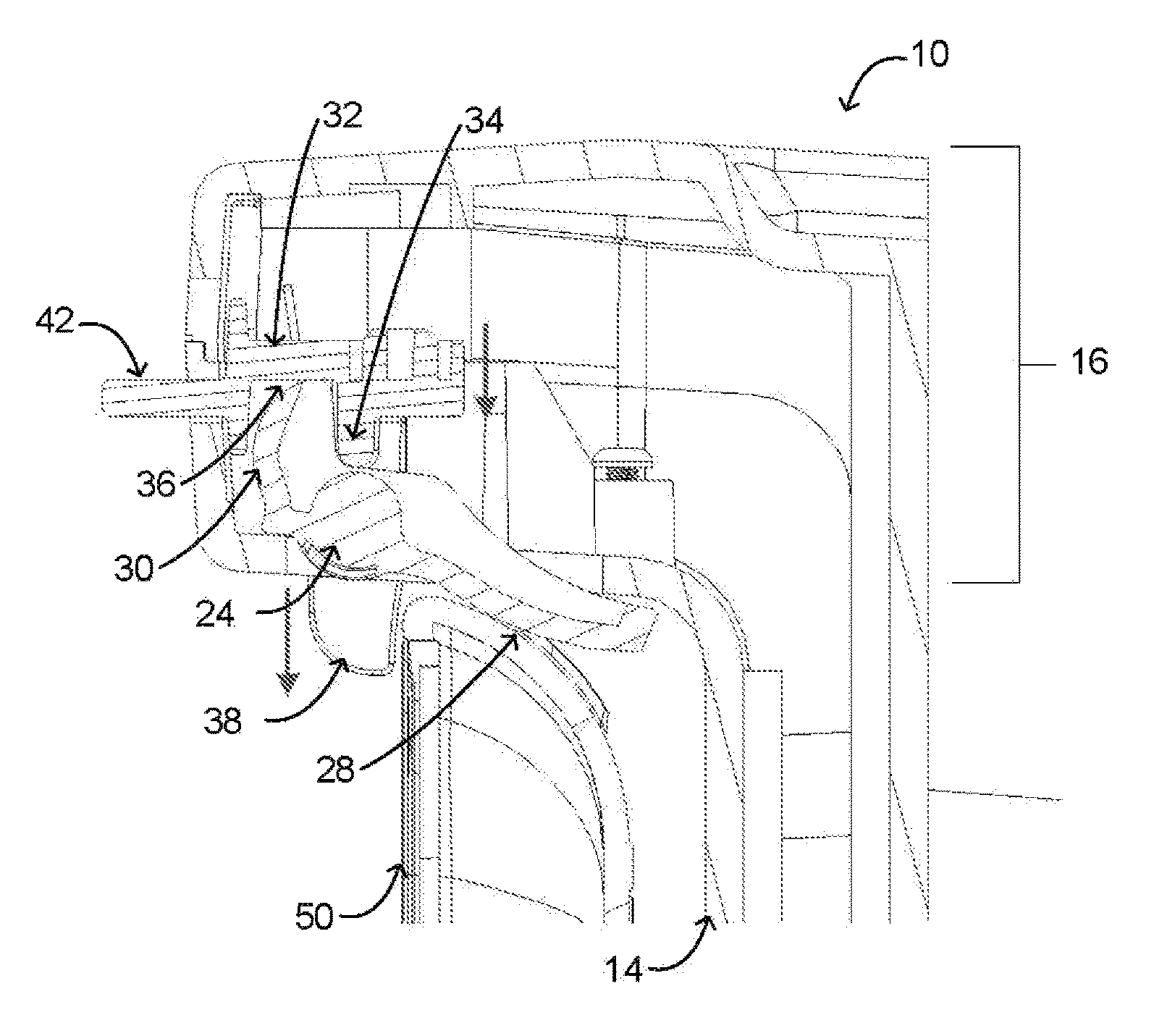
Figure 1 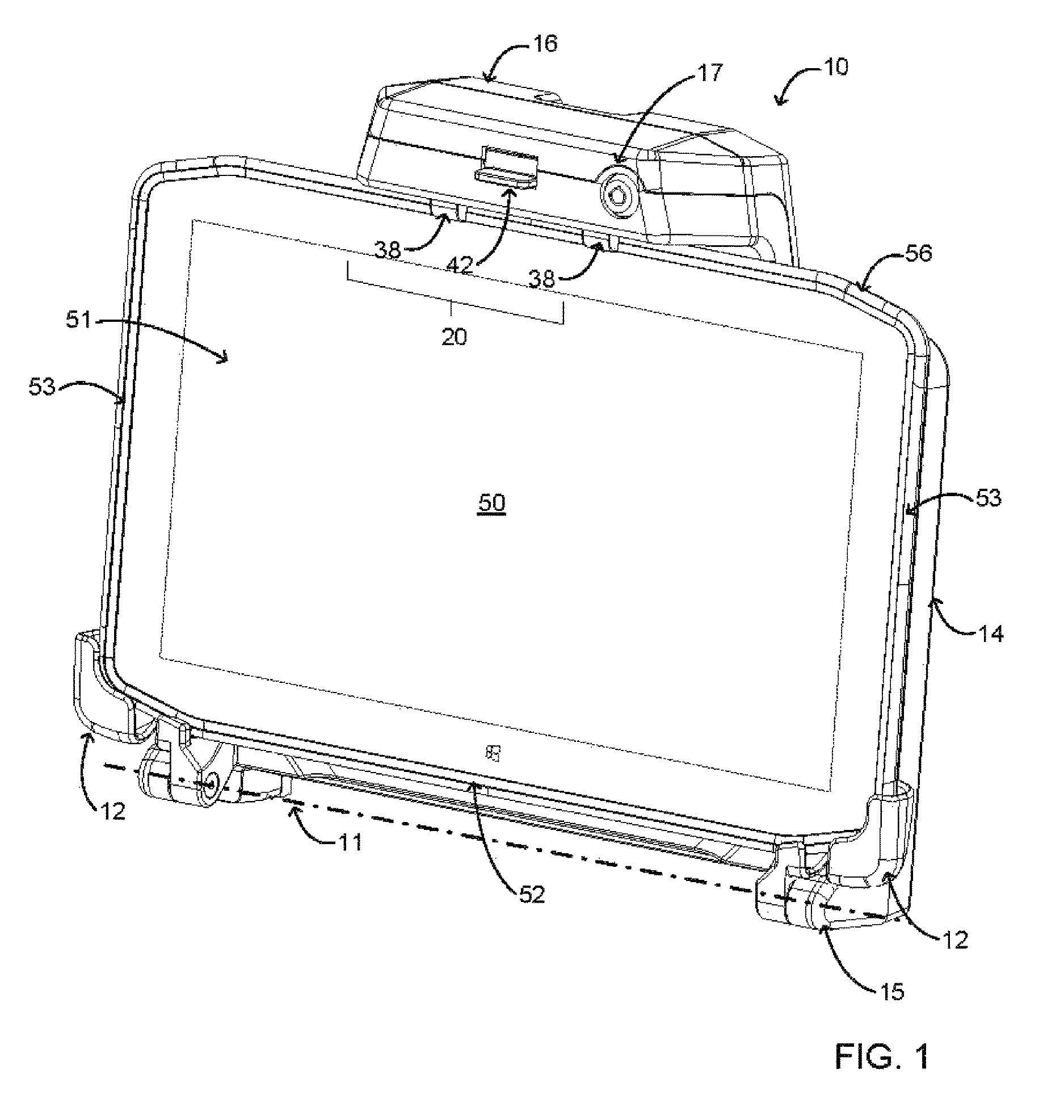
Figure 2 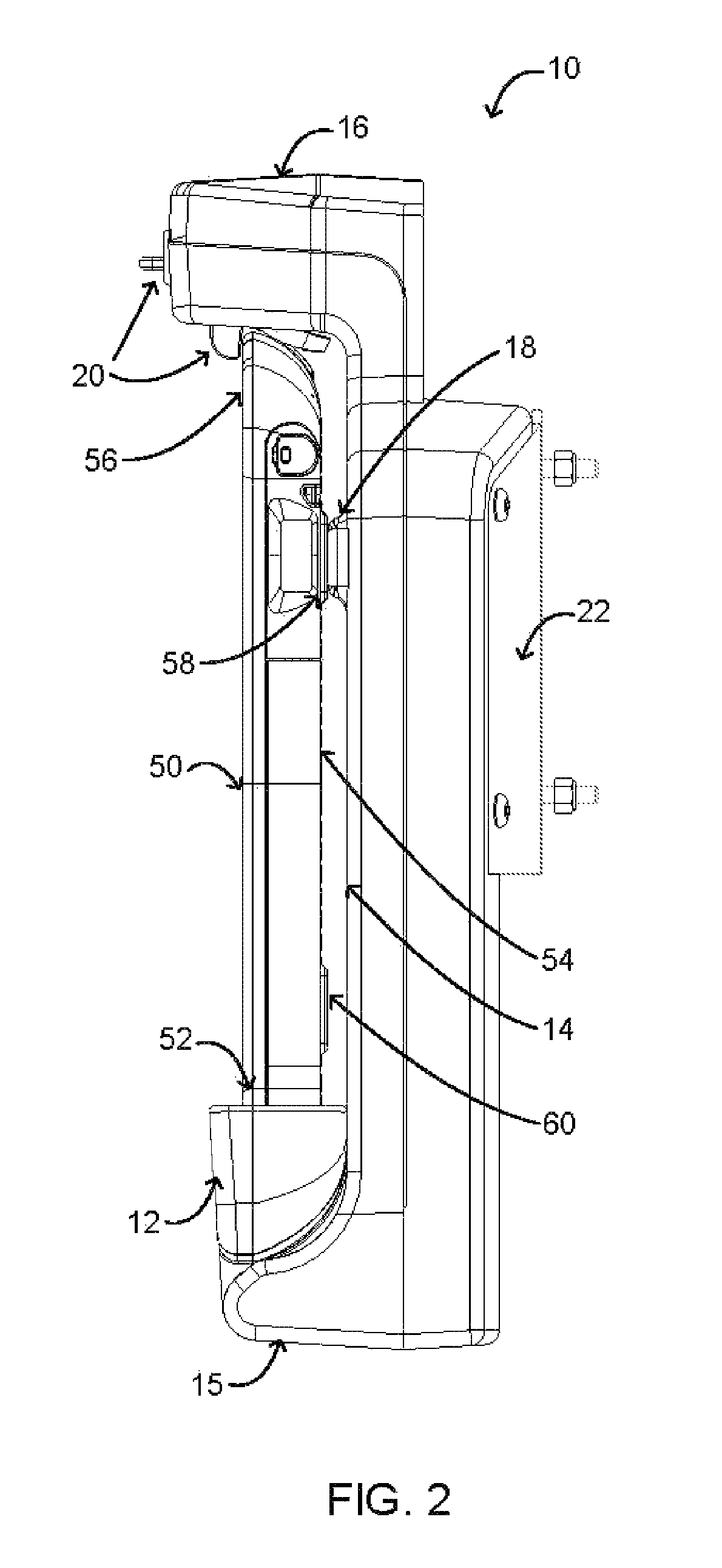
Figure 3
Abstract
Description
PRIORITY CLAIM
[0001] The present application claims priority to U.S. Provisional Application No. 61 / 969,663 filed Mar. 24, 2014.BACKGROUND OF THE INVENTION
[0002] 1. Field of the Invention
[0003] The present invention relates to docking stations for portable electronic devices. More specifically, the present invention relates to a docking station with a CAM operated latch for securing a portable electronic device against the docking station.
[0004] 2. Description of the Related Art
[0005] The following descriptions and examples are not admitted to be prior art by virtue of their inclusion within this section.
[0006] Portable computers, including laptop computers, tablet PCs, and personal digital assistants (PDAs), allow computer users to utilize many of the functions of a personal computer while facilitating freedom of movement about the workplace. Portable computers are generally lightweight and compact, but may compare unfavorably to desktop computers in some respects because they are genera...
Examples
Embodiment Construction
[0028]FIGS. 1-9 illustrate one embodiment of a docking station with an improved latching mechanism for securing a portable device. The latching mechanism described herein represents a significant improvement over conventional latching mechanisms by avoiding the high insertion forces typically needed to dock the portable device, reducing friction between the portable device and the latching mechanism, and reducing or eliminating marring of the cosmetic surfaces of the portable device. The latching mechanism described herein also tolerates variations in the size, shape and surface texture of different portable devices, or portable devices used with or without various protective covers. Although the portable device illustrated in FIGS. 1-9 is a portable computer (specifically, a tablet PC), a docking station with the improved latching mechanism may be configured for securely retaining substantially any portable device that can be docked. Examples of such portable devices may include, b...