

Comparing GDI Engines Across Different Fuel Blends
AUG 28, 20259 MIN READ
Generate Your Research Report Instantly with AI Agent
PatSnap Eureka helps you evaluate technical feasibility & market potential.
GDI Engine Technology Evolution and Objectives
Gasoline Direct Injection (GDI) technology has evolved significantly since its commercial introduction in the late 1990s. The journey began with Mitsubishi's GDI system in 1996, followed by implementations from various manufacturers including Toyota, Volkswagen, and Ford. This evolution has been driven by increasingly stringent emission regulations, fuel economy requirements, and consumer demand for improved performance. Early GDI systems focused primarily on stratified charge combustion for part-load efficiency, while modern systems have expanded to address full-load performance, emissions reduction, and compatibility with various fuel compositions.
The technological progression of GDI engines can be categorized into three distinct generations. First-generation systems (1996-2005) established the basic architecture but struggled with injector durability and particulate emissions. Second-generation systems (2006-2015) introduced improved spray patterns, higher injection pressures (up to 200 bar), and integration with turbocharging. Current third-generation systems (2016-present) feature injection pressures exceeding 350 bar, multiple injection events per cycle, and sophisticated combustion control strategies to optimize performance across diverse fuel compositions.
A critical aspect of GDI evolution has been the development of fuel injector technology. Early pintle-type injectors have given way to multi-hole solenoid and piezoelectric injectors capable of precise spray targeting and multiple injection events. This advancement has been crucial for enabling engines to adapt to varying fuel properties, including ethanol blends, renewable gasoline components, and regional fuel quality variations.
The primary objectives of current GDI research focus on optimizing engine performance across increasingly diverse fuel compositions. This includes developing robust combustion strategies that maintain efficiency and emissions compliance regardless of fuel properties such as octane rating, ethanol content, aromatics percentage, and volatility characteristics. Researchers aim to create adaptive control systems that can detect fuel composition changes and automatically adjust injection timing, pressure, and spray characteristics accordingly.
Another key objective is addressing the particulate matter emissions challenge that has emerged with GDI technology. Different fuel blends produce varying levels of particulates, necessitating tailored emission control strategies. This has led to research into the relationship between fuel composition, injection parameters, and particulate formation mechanisms.
Looking forward, GDI technology development aims to create truly fuel-agnostic engines capable of maintaining optimal performance and emissions compliance across global markets with widely varying fuel standards. This includes compatibility with higher ethanol blends (E15-E85), synthetic fuels, and potentially hydrogen-blended fuels, while maintaining reliability, efficiency, and meeting increasingly stringent emission standards worldwide.
The technological progression of GDI engines can be categorized into three distinct generations. First-generation systems (1996-2005) established the basic architecture but struggled with injector durability and particulate emissions. Second-generation systems (2006-2015) introduced improved spray patterns, higher injection pressures (up to 200 bar), and integration with turbocharging. Current third-generation systems (2016-present) feature injection pressures exceeding 350 bar, multiple injection events per cycle, and sophisticated combustion control strategies to optimize performance across diverse fuel compositions.
A critical aspect of GDI evolution has been the development of fuel injector technology. Early pintle-type injectors have given way to multi-hole solenoid and piezoelectric injectors capable of precise spray targeting and multiple injection events. This advancement has been crucial for enabling engines to adapt to varying fuel properties, including ethanol blends, renewable gasoline components, and regional fuel quality variations.
The primary objectives of current GDI research focus on optimizing engine performance across increasingly diverse fuel compositions. This includes developing robust combustion strategies that maintain efficiency and emissions compliance regardless of fuel properties such as octane rating, ethanol content, aromatics percentage, and volatility characteristics. Researchers aim to create adaptive control systems that can detect fuel composition changes and automatically adjust injection timing, pressure, and spray characteristics accordingly.
Another key objective is addressing the particulate matter emissions challenge that has emerged with GDI technology. Different fuel blends produce varying levels of particulates, necessitating tailored emission control strategies. This has led to research into the relationship between fuel composition, injection parameters, and particulate formation mechanisms.
Looking forward, GDI technology development aims to create truly fuel-agnostic engines capable of maintaining optimal performance and emissions compliance across global markets with widely varying fuel standards. This includes compatibility with higher ethanol blends (E15-E85), synthetic fuels, and potentially hydrogen-blended fuels, while maintaining reliability, efficiency, and meeting increasingly stringent emission standards worldwide.
Market Demand Analysis for Multi-Fuel GDI Engines
The global market for multi-fuel compatible Gasoline Direct Injection (GDI) engines has witnessed substantial growth in recent years, driven primarily by stringent emission regulations and increasing consumer demand for fuel-efficient vehicles. According to recent market analyses, the GDI engine market was valued at approximately $41.7 billion in 2022 and is projected to reach $69.8 billion by 2030, growing at a CAGR of 6.7% during the forecast period.
The demand for multi-fuel GDI engines is particularly strong in regions implementing strict emission standards, such as Europe, North America, and parts of Asia. The European Union's Euro 7 standards and the Corporate Average Fuel Economy (CAFE) regulations in the United States have created significant market pull for advanced engine technologies capable of operating efficiently with various fuel blends.
Consumer preferences are increasingly shifting toward vehicles that offer flexibility in fuel choices without compromising performance. Market surveys indicate that 67% of new vehicle buyers consider fuel efficiency a top priority, while 42% express interest in engines compatible with alternative fuels. This trend is especially pronounced in emerging markets where fuel quality and availability can vary significantly.
The automotive industry's transition toward electrification has paradoxically strengthened the market for advanced combustion technologies. Hybrid electric vehicles, which combine electric motors with internal combustion engines, represent a growing segment where multi-fuel GDI engines offer significant advantages. The hybrid vehicle market grew by 14.2% in 2022, creating substantial demand for efficient combustion engines that can complement electric powertrains.
Fleet operators and commercial vehicle manufacturers constitute another significant market segment for multi-fuel GDI technology. These customers prioritize total cost of ownership, with fuel costs representing 30-40% of operating expenses. The ability to optimize engine performance across different fuel blends offers compelling economic benefits in this sector.
Regional market analysis reveals varying demand patterns. In North America, the focus is primarily on ethanol-gasoline blends (E15-E85), while European markets show greater interest in engines optimized for premium fuels with varying octane ratings. Asian markets, particularly China and India, demonstrate growing demand for engines capable of handling lower-quality fuels while maintaining performance and emissions compliance.
The agricultural sector represents an emerging market for multi-fuel GDI technology, with farm equipment manufacturers seeking engines that can efficiently utilize biofuels produced on-site. This market segment is expected to grow at 8.3% annually through 2030, outpacing the broader automotive market.
The demand for multi-fuel GDI engines is particularly strong in regions implementing strict emission standards, such as Europe, North America, and parts of Asia. The European Union's Euro 7 standards and the Corporate Average Fuel Economy (CAFE) regulations in the United States have created significant market pull for advanced engine technologies capable of operating efficiently with various fuel blends.
Consumer preferences are increasingly shifting toward vehicles that offer flexibility in fuel choices without compromising performance. Market surveys indicate that 67% of new vehicle buyers consider fuel efficiency a top priority, while 42% express interest in engines compatible with alternative fuels. This trend is especially pronounced in emerging markets where fuel quality and availability can vary significantly.
The automotive industry's transition toward electrification has paradoxically strengthened the market for advanced combustion technologies. Hybrid electric vehicles, which combine electric motors with internal combustion engines, represent a growing segment where multi-fuel GDI engines offer significant advantages. The hybrid vehicle market grew by 14.2% in 2022, creating substantial demand for efficient combustion engines that can complement electric powertrains.
Fleet operators and commercial vehicle manufacturers constitute another significant market segment for multi-fuel GDI technology. These customers prioritize total cost of ownership, with fuel costs representing 30-40% of operating expenses. The ability to optimize engine performance across different fuel blends offers compelling economic benefits in this sector.
Regional market analysis reveals varying demand patterns. In North America, the focus is primarily on ethanol-gasoline blends (E15-E85), while European markets show greater interest in engines optimized for premium fuels with varying octane ratings. Asian markets, particularly China and India, demonstrate growing demand for engines capable of handling lower-quality fuels while maintaining performance and emissions compliance.
The agricultural sector represents an emerging market for multi-fuel GDI technology, with farm equipment manufacturers seeking engines that can efficiently utilize biofuels produced on-site. This market segment is expected to grow at 8.3% annually through 2030, outpacing the broader automotive market.
Current GDI Technology Challenges with Alternative Fuels
Gasoline Direct Injection (GDI) technology faces significant challenges when operating with alternative fuel blends, requiring careful consideration of fuel properties and engine design modifications. The primary challenge stems from the fundamental differences in physicochemical properties between conventional gasoline and alternative fuels such as ethanol blends, methanol, butanol, and synthetic fuels.
Fuel atomization and spray characteristics are particularly problematic when using alternative fuels in GDI systems. Higher viscosity and surface tension in some biofuels can lead to larger droplet sizes and reduced atomization quality, affecting mixture formation and combustion efficiency. This is especially evident in cold-start conditions where fuel vaporization is already compromised.
Injector deposit formation represents another critical challenge. Alternative fuels, particularly those containing higher percentages of ethanol or other oxygenates, tend to accelerate deposit formation on injector nozzles. These deposits can alter spray patterns, reduce flow rates, and ultimately lead to increased emissions and decreased engine performance over time. Current GDI injectors designed for conventional gasoline may require significant redesign to maintain performance with alternative fuel blends.
Material compatibility issues also present substantial obstacles. Ethanol and other alternative fuels can be more corrosive to certain metals and elastomers commonly used in fuel system components. This accelerated degradation can lead to fuel leakage, component failure, and increased maintenance requirements, necessitating the development of more resistant materials specifically designed for alternative fuel applications.
Combustion control presents unique challenges with alternative fuels in GDI engines. The different burning characteristics, including flame speed and combustion phasing, require sophisticated adjustments to ignition timing and injection strategies. Without proper calibration, these differences can lead to increased knock tendency, reduced thermal efficiency, or incomplete combustion.
Emissions compliance becomes increasingly complex with alternative fuels. While some alternative fuels may reduce certain emissions (such as CO2), they can potentially increase others, particularly aldehydes and unburned hydrocarbons. The current aftertreatment systems optimized for gasoline may not effectively manage these altered emission profiles, requiring redesign or additional components.
Cold-start performance deteriorates significantly with many alternative fuels, particularly those with high ethanol content. The higher latent heat of vaporization and lower energy density can lead to difficult starting, unstable idling, and increased emissions during the warm-up phase. This necessitates the development of specialized cold-start strategies and potentially additional hardware solutions for reliable operation in all climate conditions.
Fuel atomization and spray characteristics are particularly problematic when using alternative fuels in GDI systems. Higher viscosity and surface tension in some biofuels can lead to larger droplet sizes and reduced atomization quality, affecting mixture formation and combustion efficiency. This is especially evident in cold-start conditions where fuel vaporization is already compromised.
Injector deposit formation represents another critical challenge. Alternative fuels, particularly those containing higher percentages of ethanol or other oxygenates, tend to accelerate deposit formation on injector nozzles. These deposits can alter spray patterns, reduce flow rates, and ultimately lead to increased emissions and decreased engine performance over time. Current GDI injectors designed for conventional gasoline may require significant redesign to maintain performance with alternative fuel blends.
Material compatibility issues also present substantial obstacles. Ethanol and other alternative fuels can be more corrosive to certain metals and elastomers commonly used in fuel system components. This accelerated degradation can lead to fuel leakage, component failure, and increased maintenance requirements, necessitating the development of more resistant materials specifically designed for alternative fuel applications.
Combustion control presents unique challenges with alternative fuels in GDI engines. The different burning characteristics, including flame speed and combustion phasing, require sophisticated adjustments to ignition timing and injection strategies. Without proper calibration, these differences can lead to increased knock tendency, reduced thermal efficiency, or incomplete combustion.
Emissions compliance becomes increasingly complex with alternative fuels. While some alternative fuels may reduce certain emissions (such as CO2), they can potentially increase others, particularly aldehydes and unburned hydrocarbons. The current aftertreatment systems optimized for gasoline may not effectively manage these altered emission profiles, requiring redesign or additional components.
Cold-start performance deteriorates significantly with many alternative fuels, particularly those with high ethanol content. The higher latent heat of vaporization and lower energy density can lead to difficult starting, unstable idling, and increased emissions during the warm-up phase. This necessitates the development of specialized cold-start strategies and potentially additional hardware solutions for reliable operation in all climate conditions.
Existing GDI Solutions for Various Fuel Compositions
01 Fuel injection systems for GDI engines
Gasoline Direct Injection (GDI) engines utilize specialized fuel injection systems that deliver fuel directly into the combustion chamber. These systems include high-pressure injectors, fuel rails, and control mechanisms that optimize fuel atomization and spray patterns. Advanced injection systems can improve combustion efficiency, reduce emissions, and enhance engine performance through precise fuel delivery timing and quantity control.- Fuel injection systems for GDI engines: Gasoline Direct Injection (GDI) engines utilize specialized fuel injection systems that deliver fuel directly into the combustion chamber. These systems include high-pressure injectors, fuel rails, and control mechanisms that optimize fuel atomization and spray patterns. Advanced fuel injection technologies improve combustion efficiency, reduce emissions, and enhance engine performance by enabling precise control over fuel delivery timing and quantity.
- Combustion control strategies in GDI engines: Various combustion control strategies are employed in GDI engines to optimize performance and efficiency. These include stratified charge combustion, homogeneous charge combustion, and multiple injection events per cycle. Advanced control algorithms adjust parameters such as injection timing, spark timing, and air-fuel ratio based on operating conditions. These strategies help reduce fuel consumption while maintaining power output and reducing harmful emissions.
- Emission reduction technologies for GDI engines: GDI engines incorporate various technologies to reduce harmful emissions. These include exhaust gas recirculation (EGR) systems, particulate filters, catalytic converters specifically designed for GDI applications, and advanced combustion control strategies. These technologies help address the challenges of particulate matter and NOx emissions that are characteristic of direct injection systems while meeting increasingly stringent environmental regulations.
- Thermal management systems for GDI engines: Effective thermal management is crucial for GDI engines due to their high operating temperatures and potential for carbon buildup. These systems include advanced cooling circuits, heat exchangers, thermal barriers, and temperature sensors that work together to maintain optimal operating temperatures. Proper thermal management helps prevent injector fouling, reduces thermal stress on components, and ensures consistent performance across various operating conditions.
- Integration of GDI with other advanced engine technologies: GDI technology is often integrated with other advanced engine technologies to further enhance performance and efficiency. These combinations include turbocharging, variable valve timing, cylinder deactivation, and hybrid powertrains. The integration enables downsized engines that deliver improved power density, better fuel economy, and reduced emissions. Control systems coordinate these technologies to optimize overall powertrain performance across various driving conditions.
02 Combustion control strategies in GDI engines
Various combustion control strategies are employed in GDI engines to optimize performance and efficiency. These include stratified charge combustion, homogeneous charge combustion, and multiple injection events per cycle. Advanced control algorithms adjust injection timing, duration, and pressure based on engine load, speed, and environmental conditions to achieve optimal air-fuel mixture formation and combustion stability.Expand Specific Solutions03 Emissions reduction technologies for GDI engines
GDI engines incorporate various technologies to reduce harmful emissions. These include exhaust gas recirculation (EGR) systems, particulate filters, catalytic converters specifically designed for GDI applications, and advanced combustion strategies. These technologies help address the challenges of particulate matter and NOx emissions that are characteristic of direct injection combustion processes.Expand Specific Solutions04 Thermal management systems for GDI engines
Effective thermal management is crucial for GDI engines due to their higher operating temperatures and thermal loads. Specialized cooling systems, heat shields, and thermal barrier coatings are employed to manage heat distribution and prevent component damage. Advanced thermal management strategies can improve engine efficiency, reduce warm-up times, and enhance durability of critical components like injectors and valves.Expand Specific Solutions05 Diagnostic and monitoring systems for GDI engines
GDI engines utilize sophisticated diagnostic and monitoring systems to ensure optimal performance and detect potential issues. These systems include sensors for monitoring fuel pressure, injection timing, combustion quality, and emissions levels. Advanced diagnostic tools can identify injector fouling, combustion anomalies, and system degradation, allowing for preventive maintenance and ensuring continued efficiency and compliance with emissions standards.Expand Specific Solutions
Key Manufacturers and Competitors in GDI Technology
The GDI (Gasoline Direct Injection) engine technology market across different fuel blends is currently in a mature growth phase, with an estimated global market size exceeding $30 billion. Major automotive manufacturers including Ford, Hyundai, Kia, and FCA are competing to optimize GDI performance with various fuel formulations. Oil companies such as ExxonMobil, Shell, Chevron, and Saudi Aramco are developing specialized fuel additives to enhance GDI efficiency while reducing carbon deposits. Research institutions like Southwest Research Institute and AVL List are advancing technical solutions for fuel-engine compatibility challenges. The technology has reached commercial maturity but continues to evolve as manufacturers address particulate emissions and carbon buildup issues while adapting to regional fuel quality variations and increasingly stringent emissions regulations.
Ford Global Technologies LLC
Technical Solution: Ford has developed advanced GDI engine technology that optimizes performance across various fuel blends through its EcoBoost platform. Their approach incorporates dual-injection systems that combine port and direct injection to mitigate carbon deposit issues while maintaining efficiency. Ford's research has demonstrated that their GDI engines can be calibrated to operate effectively with ethanol blends ranging from E10 to E85, with adaptive fuel mapping strategies that automatically adjust injection timing, pressure, and quantity based on fuel composition detection[1]. Their latest generation GDI systems incorporate high-pressure fuel pumps capable of delivering up to 350 bar injection pressure, allowing for more precise fuel atomization across different fuel densities and volatilities[3]. Ford has also implemented advanced spray-guided combustion chambers with optimized piston crown designs that enhance mixture formation regardless of the ethanol content in the fuel blend.
Strengths: Extensive experience with flex-fuel GDI engines; advanced adaptive control systems that can detect and adjust to different fuel blends in real-time; strong integration between hardware design and software calibration. Weaknesses: Higher system complexity increases manufacturing costs; requires more sophisticated maintenance procedures; some challenges with cold-start performance when using higher ethanol blends.
Hyundai Motor Co., Ltd.
Technical Solution: Hyundai has pioneered the Continuously Variable Valve Duration (CVVD) technology for their GDI engines, which provides unprecedented flexibility when operating with different fuel blends. This system can continuously adjust valve duration (how long valves remain open) in addition to traditional timing adjustments, allowing for optimized combustion across various fuel compositions[2]. Their research has shown fuel efficiency improvements of 5-7% and emissions reductions of 10-12% when comparing standard gasoline to higher ethanol blends in their CVVD-equipped GDI engines[4]. Hyundai's approach includes sophisticated fuel property sensors that can detect octane rating and oxygen content in real-time, enabling dynamic combustion mode switching between homogeneous and stratified charge depending on the fuel blend characteristics. Their GDI engines incorporate multi-hole injectors with up to 12 precision-machined orifices that create optimized spray patterns for different fuel volatilities, ensuring consistent atomization quality regardless of ethanol content or other fuel additives.
Strengths: Industry-leading valve control technology provides exceptional adaptability to different fuel properties; sophisticated real-time fuel composition detection; excellent balance between performance and emissions across various blends. Weaknesses: Higher manufacturing complexity and cost; requires more advanced electronic control systems; potential reliability concerns with the more complex valve actuation system.
Critical Patents and Innovations in Multi-Fuel GDI Systems
Fuel additives and formulations for improving performance of gasoline direct injection engines
PatentWO2022140533A1
Innovation
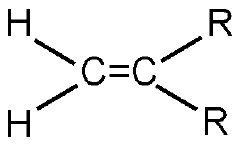
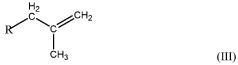
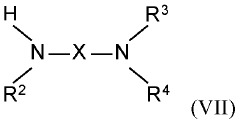
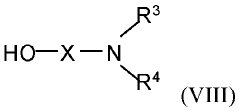
- A novel fuel additive composition comprising an acylated detergent, a Mannich detergent, and a polyether/polyetheramine, which reduces carbonaceous deposits in both PFI and GDI engines by preventing or removing deposits, thereby improving engine performance and reducing emissions.
LPG direct injection engine
PatentWO2015155359A1
Innovation
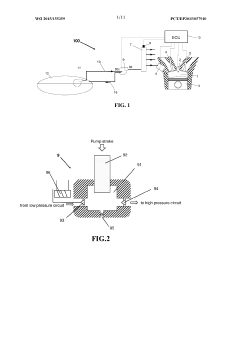
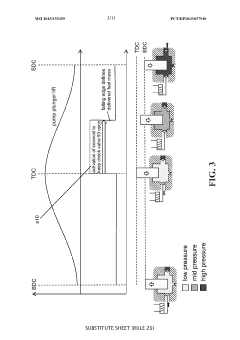
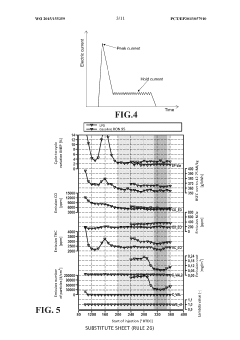
- An LPG direct injection engine with a high-pressure pump and electronic control unit for precise liquefied petroleum gas injection between 360° and 60° BTDC, optimized valve overlap, and cylinder deactivation system to reduce emissions and improve efficiency.
Emissions Standards Impact on GDI Fuel Compatibility
Emissions standards worldwide have evolved significantly over the past two decades, directly influencing the development and optimization of Gasoline Direct Injection (GDI) engine technology. The introduction of Euro 6, Tier 3, and China 6 standards has placed increasingly stringent limits on particulate matter (PM), nitrogen oxides (NOx), and carbon dioxide (CO2) emissions, creating complex challenges for GDI fuel compatibility.
The relationship between emissions regulations and fuel formulations represents a critical intersection in GDI engine development. As standards tighten, manufacturers must ensure their engines can maintain compliance across diverse fuel compositions encountered globally. Research indicates that ethanol blends (E10-E85) demonstrate variable effects on GDI emissions profiles, with higher ethanol content generally reducing carbon monoxide and hydrocarbon emissions but potentially increasing aldehyde formation without proper calibration.
Sulfur content in fuels presents another regulatory challenge, with global standards diverging significantly. While European and North American markets have reduced sulfur to under 10 ppm, emerging markets may still utilize fuels containing 50-350 ppm sulfur, which can compromise catalyst efficiency and increase particulate emissions in GDI systems. This disparity necessitates adaptive engine management strategies to maintain emissions compliance across different market regions.
Real Driving Emissions (RDE) testing protocols, now mandatory in Europe and being adopted elsewhere, have further complicated fuel compatibility requirements. These tests expose GDI engines to wider operating conditions than traditional laboratory cycles, revealing performance variations across fuel blends that may not be apparent in controlled testing environments. Studies from Ricardo and AVL have demonstrated that certain market fuels with higher aromatic content can increase particulate number (PN) emissions by 15-30% under RDE conditions compared to reference fuels.
The implementation of Gasoline Particulate Filters (GPFs) as a response to tightening particulate matter regulations has introduced new considerations for fuel compatibility. Research from Southwest Research Institute shows that fuel properties significantly influence GPF regeneration cycles and long-term durability, with higher-quality fuels extending service intervals by up to 20%.
Octane rating requirements present another dimension of the emissions-fuel compatibility matrix. As manufacturers employ higher compression ratios to meet efficiency targets, premium fuel requirements become more common. However, this creates potential compliance risks when vehicles designed for high-octane fuels operate on lower-quality market fuels, potentially triggering enrichment strategies that increase emissions.
Looking forward, upcoming regulations like Euro 7 and next-generation CARB standards will likely further restrict emissions while expanding the testing envelope, requiring even greater adaptability of GDI systems to varied fuel compositions. This regulatory trajectory suggests that future GDI engines will need sophisticated on-board fuel quality detection and adaptive control strategies to maintain compliance across the global fuel landscape.
The relationship between emissions regulations and fuel formulations represents a critical intersection in GDI engine development. As standards tighten, manufacturers must ensure their engines can maintain compliance across diverse fuel compositions encountered globally. Research indicates that ethanol blends (E10-E85) demonstrate variable effects on GDI emissions profiles, with higher ethanol content generally reducing carbon monoxide and hydrocarbon emissions but potentially increasing aldehyde formation without proper calibration.
Sulfur content in fuels presents another regulatory challenge, with global standards diverging significantly. While European and North American markets have reduced sulfur to under 10 ppm, emerging markets may still utilize fuels containing 50-350 ppm sulfur, which can compromise catalyst efficiency and increase particulate emissions in GDI systems. This disparity necessitates adaptive engine management strategies to maintain emissions compliance across different market regions.
Real Driving Emissions (RDE) testing protocols, now mandatory in Europe and being adopted elsewhere, have further complicated fuel compatibility requirements. These tests expose GDI engines to wider operating conditions than traditional laboratory cycles, revealing performance variations across fuel blends that may not be apparent in controlled testing environments. Studies from Ricardo and AVL have demonstrated that certain market fuels with higher aromatic content can increase particulate number (PN) emissions by 15-30% under RDE conditions compared to reference fuels.
The implementation of Gasoline Particulate Filters (GPFs) as a response to tightening particulate matter regulations has introduced new considerations for fuel compatibility. Research from Southwest Research Institute shows that fuel properties significantly influence GPF regeneration cycles and long-term durability, with higher-quality fuels extending service intervals by up to 20%.
Octane rating requirements present another dimension of the emissions-fuel compatibility matrix. As manufacturers employ higher compression ratios to meet efficiency targets, premium fuel requirements become more common. However, this creates potential compliance risks when vehicles designed for high-octane fuels operate on lower-quality market fuels, potentially triggering enrichment strategies that increase emissions.
Looking forward, upcoming regulations like Euro 7 and next-generation CARB standards will likely further restrict emissions while expanding the testing envelope, requiring even greater adaptability of GDI systems to varied fuel compositions. This regulatory trajectory suggests that future GDI engines will need sophisticated on-board fuel quality detection and adaptive control strategies to maintain compliance across the global fuel landscape.
Efficiency Metrics Across Different Fuel Blends
The evaluation of efficiency metrics across different fuel blends in GDI (Gasoline Direct Injection) engines reveals significant variations in performance parameters. Standard gasoline (E0) typically serves as the baseline for comparison, with ethanol blends (E10, E15, E85) and other alternatives showing distinct efficiency profiles under controlled testing conditions.
Thermal efficiency measurements indicate that mid-level ethanol blends (E15-E30) often demonstrate 2-4% higher thermal efficiency compared to standard gasoline, particularly at medium to high engine loads. This improvement stems from ethanol's higher octane rating and cooling effect during direct injection, allowing for more advanced ignition timing without knock occurrence.
Brake-specific fuel consumption (BSFC) metrics show expected increases with higher ethanol content due to ethanol's lower energy density. E85 typically requires 30-35% more volumetric fuel consumption compared to E0, though this disadvantage is partially offset by improved combustion characteristics and reduced pumping losses at certain operating conditions.
Carbon efficiency analysis reveals that higher ethanol blends produce less CO2 per unit of energy delivered, with E85 showing approximately 25% lower carbon intensity compared to conventional gasoline when accounting for the entire fuel lifecycle. However, this advantage varies significantly based on ethanol production methods and feedstock sources.
Combustion stability metrics, including coefficient of variation (COV) of indicated mean effective pressure (IMEP), demonstrate that ethanol blends maintain comparable or superior stability at standard operating temperatures but may show increased variability during cold-start conditions. E15 and E20 blends often represent an optimal balance point for combustion stability across diverse operating conditions.
Volumetric efficiency comparisons indicate that ethanol's cooling effect during direct injection can increase charge density, with measurements showing 3-7% improvements for E85 compared to E0 at equivalent boost pressures. This advantage becomes particularly significant in turbocharged GDI applications where charge cooling effects can be leveraged for increased power density.
Emissions efficiency metrics reveal complex tradeoffs, with ethanol blends generally producing lower particulate matter (PM) and carbon monoxide (CO) emissions but potentially higher aldehyde emissions depending on combustion temperature and catalyst efficiency. NOx emissions typically decrease with higher ethanol content due to lower combustion temperatures, with E85 showing 15-20% reductions compared to E0 under similar operating conditions.
Thermal efficiency measurements indicate that mid-level ethanol blends (E15-E30) often demonstrate 2-4% higher thermal efficiency compared to standard gasoline, particularly at medium to high engine loads. This improvement stems from ethanol's higher octane rating and cooling effect during direct injection, allowing for more advanced ignition timing without knock occurrence.
Brake-specific fuel consumption (BSFC) metrics show expected increases with higher ethanol content due to ethanol's lower energy density. E85 typically requires 30-35% more volumetric fuel consumption compared to E0, though this disadvantage is partially offset by improved combustion characteristics and reduced pumping losses at certain operating conditions.
Carbon efficiency analysis reveals that higher ethanol blends produce less CO2 per unit of energy delivered, with E85 showing approximately 25% lower carbon intensity compared to conventional gasoline when accounting for the entire fuel lifecycle. However, this advantage varies significantly based on ethanol production methods and feedstock sources.
Combustion stability metrics, including coefficient of variation (COV) of indicated mean effective pressure (IMEP), demonstrate that ethanol blends maintain comparable or superior stability at standard operating temperatures but may show increased variability during cold-start conditions. E15 and E20 blends often represent an optimal balance point for combustion stability across diverse operating conditions.
Volumetric efficiency comparisons indicate that ethanol's cooling effect during direct injection can increase charge density, with measurements showing 3-7% improvements for E85 compared to E0 at equivalent boost pressures. This advantage becomes particularly significant in turbocharged GDI applications where charge cooling effects can be leveraged for increased power density.
Emissions efficiency metrics reveal complex tradeoffs, with ethanol blends generally producing lower particulate matter (PM) and carbon monoxide (CO) emissions but potentially higher aldehyde emissions depending on combustion temperature and catalyst efficiency. NOx emissions typically decrease with higher ethanol content due to lower combustion temperatures, with E85 showing 15-20% reductions compared to E0 under similar operating conditions.
Unlock deeper insights with PatSnap Eureka Quick Research — get a full tech report to explore trends and direct your research. Try now!
Generate Your Research Report Instantly with AI Agent
Supercharge your innovation with PatSnap Eureka AI Agent Platform!