

Diagnosing GDI Engine Fuel System Failures Early
AUG 28, 20259 MIN READ
Generate Your Research Report Instantly with AI Agent
Patsnap Eureka helps you evaluate technical feasibility & market potential.
GDI Fuel System Evolution and Diagnostic Objectives
Gasoline Direct Injection (GDI) technology has evolved significantly since its commercial introduction in the late 1990s. The evolution of GDI systems represents a paradigm shift in internal combustion engine design, moving from traditional port fuel injection to a more precise, high-pressure direct injection methodology. This transition was primarily driven by increasingly stringent emissions regulations and the demand for improved fuel efficiency without sacrificing performance.
The first generation of modern GDI systems emerged in the mid-1990s with relatively low injection pressures of 50-100 bar. By the early 2000s, second-generation systems increased pressures to 120-180 bar, enabling better fuel atomization and combustion efficiency. Current state-of-the-art GDI systems operate at pressures exceeding 350 bar, with some advanced systems reaching up to 600 bar, allowing for multiple injection events per combustion cycle and unprecedented control over the combustion process.
This technological progression has been accompanied by increasingly sophisticated electronic control units (ECUs) and sensors, enabling real-time adjustments to injection timing, duration, and pressure based on engine operating conditions. The integration of these advanced control systems has been crucial in meeting Euro 6 and Tier 3 emissions standards while improving fuel economy by 15-20% compared to port fuel injection systems.
Despite these advancements, GDI systems present unique diagnostic challenges due to their complexity and operating conditions. The high-pressure environment, coupled with tighter manufacturing tolerances and exposure to combustion byproducts, makes these systems particularly susceptible to specific failure modes including injector clogging, high-pressure pump failures, and fuel rail pressure irregularities.
The primary diagnostic objectives for GDI systems focus on early detection of performance degradation before catastrophic failure occurs. This includes monitoring injection event precision, identifying changes in spray patterns, detecting pressure fluctuations in the fuel rail, and recognizing early signs of carbon buildup on intake valves and injector tips. Early diagnosis is critical as GDI component failures can lead to significant engine damage, increased emissions, and substantial repair costs.
Current diagnostic approaches rely heavily on OBD-II systems with limited predictive capabilities. The industry trend is moving toward more sophisticated diagnostic methodologies incorporating machine learning algorithms, acoustic signature analysis, and real-time fuel pressure waveform monitoring to detect subtle changes indicative of impending failures.
The ultimate goal of advanced GDI diagnostics is to transition from reactive maintenance to predictive maintenance paradigms, where system degradation is identified and addressed before performance is noticeably affected or component failure occurs. This shift promises to extend system longevity, maintain optimal emissions performance throughout the vehicle lifecycle, and reduce total ownership costs.
The first generation of modern GDI systems emerged in the mid-1990s with relatively low injection pressures of 50-100 bar. By the early 2000s, second-generation systems increased pressures to 120-180 bar, enabling better fuel atomization and combustion efficiency. Current state-of-the-art GDI systems operate at pressures exceeding 350 bar, with some advanced systems reaching up to 600 bar, allowing for multiple injection events per combustion cycle and unprecedented control over the combustion process.
This technological progression has been accompanied by increasingly sophisticated electronic control units (ECUs) and sensors, enabling real-time adjustments to injection timing, duration, and pressure based on engine operating conditions. The integration of these advanced control systems has been crucial in meeting Euro 6 and Tier 3 emissions standards while improving fuel economy by 15-20% compared to port fuel injection systems.
Despite these advancements, GDI systems present unique diagnostic challenges due to their complexity and operating conditions. The high-pressure environment, coupled with tighter manufacturing tolerances and exposure to combustion byproducts, makes these systems particularly susceptible to specific failure modes including injector clogging, high-pressure pump failures, and fuel rail pressure irregularities.
The primary diagnostic objectives for GDI systems focus on early detection of performance degradation before catastrophic failure occurs. This includes monitoring injection event precision, identifying changes in spray patterns, detecting pressure fluctuations in the fuel rail, and recognizing early signs of carbon buildup on intake valves and injector tips. Early diagnosis is critical as GDI component failures can lead to significant engine damage, increased emissions, and substantial repair costs.
Current diagnostic approaches rely heavily on OBD-II systems with limited predictive capabilities. The industry trend is moving toward more sophisticated diagnostic methodologies incorporating machine learning algorithms, acoustic signature analysis, and real-time fuel pressure waveform monitoring to detect subtle changes indicative of impending failures.
The ultimate goal of advanced GDI diagnostics is to transition from reactive maintenance to predictive maintenance paradigms, where system degradation is identified and addressed before performance is noticeably affected or component failure occurs. This shift promises to extend system longevity, maintain optimal emissions performance throughout the vehicle lifecycle, and reduce total ownership costs.
Market Demand for Early Failure Detection in GDI Engines
The global automotive industry has witnessed a significant shift towards Gasoline Direct Injection (GDI) engine technology over the past decade, creating substantial market demand for early failure detection systems. According to industry reports, GDI engines now represent over 50% of new gasoline vehicles produced worldwide, with projections indicating this share will reach 70% by 2025. This rapid adoption stems from GDI's ability to deliver improved fuel efficiency and reduced emissions while maintaining performance.
Market research indicates that premature GDI fuel system failures represent a growing concern for both manufacturers and consumers. Vehicle owners face repair costs ranging from $600 to $2,000 for fuel system components, with complete injector set replacements often exceeding $1,500. These unexpected expenses significantly impact customer satisfaction and brand loyalty metrics across the automotive sector.
Fleet operators and commercial transportation companies demonstrate particularly strong demand for early detection solutions, as vehicle downtime directly impacts operational efficiency and profitability. Studies show that preventive maintenance enabled by early failure detection can reduce fleet maintenance costs by 15-20% annually while extending vehicle service life.
The aftermarket service sector has identified a substantial opportunity in this space, with the global automotive diagnostic scan tools market valued at $4.8 billion in 2022 and projected to grow at a CAGR of 5.7% through 2028. Specifically, diagnostic tools focused on fuel system health monitoring represent one of the fastest-growing segments within this market.
Insurance companies have also emerged as key stakeholders driving demand for early detection technologies. By incentivizing preventive maintenance through policy discounts, insurers aim to reduce claim frequencies related to catastrophic engine failures. This creates a positive feedback loop that further stimulates market demand for diagnostic solutions.
Regulatory pressures regarding emissions compliance create additional market pull for early detection systems. As emissions standards tighten globally, manufacturers face increasing liability for vehicles that fail to maintain compliance throughout their operational life. Early detection of fuel system degradation helps ensure vehicles maintain their emissions performance, avoiding potential regulatory penalties and recall campaigns.
Consumer awareness regarding GDI-specific maintenance requirements continues to grow, particularly as vehicles with this technology age into their mid-life service period. This awareness drives demand for both professional diagnostic services and consumer-accessible monitoring solutions that can provide early warning of developing issues before catastrophic failure occurs.
Market research indicates that premature GDI fuel system failures represent a growing concern for both manufacturers and consumers. Vehicle owners face repair costs ranging from $600 to $2,000 for fuel system components, with complete injector set replacements often exceeding $1,500. These unexpected expenses significantly impact customer satisfaction and brand loyalty metrics across the automotive sector.
Fleet operators and commercial transportation companies demonstrate particularly strong demand for early detection solutions, as vehicle downtime directly impacts operational efficiency and profitability. Studies show that preventive maintenance enabled by early failure detection can reduce fleet maintenance costs by 15-20% annually while extending vehicle service life.
The aftermarket service sector has identified a substantial opportunity in this space, with the global automotive diagnostic scan tools market valued at $4.8 billion in 2022 and projected to grow at a CAGR of 5.7% through 2028. Specifically, diagnostic tools focused on fuel system health monitoring represent one of the fastest-growing segments within this market.
Insurance companies have also emerged as key stakeholders driving demand for early detection technologies. By incentivizing preventive maintenance through policy discounts, insurers aim to reduce claim frequencies related to catastrophic engine failures. This creates a positive feedback loop that further stimulates market demand for diagnostic solutions.
Regulatory pressures regarding emissions compliance create additional market pull for early detection systems. As emissions standards tighten globally, manufacturers face increasing liability for vehicles that fail to maintain compliance throughout their operational life. Early detection of fuel system degradation helps ensure vehicles maintain their emissions performance, avoiding potential regulatory penalties and recall campaigns.
Consumer awareness regarding GDI-specific maintenance requirements continues to grow, particularly as vehicles with this technology age into their mid-life service period. This awareness drives demand for both professional diagnostic services and consumer-accessible monitoring solutions that can provide early warning of developing issues before catastrophic failure occurs.
Current Diagnostic Challenges in GDI Fuel Systems
Gasoline Direct Injection (GDI) fuel systems represent a significant advancement in internal combustion engine technology, yet they present unique diagnostic challenges that traditional fuel system troubleshooting methods cannot adequately address. Current diagnostic approaches for GDI systems face several critical limitations that impede early failure detection and preventive maintenance.
The high-pressure environment of GDI systems (operating at 200-300 bar compared to 3-5 bar in port injection systems) creates diagnostic complexities not encountered in conventional fuel delivery systems. Standard OBD-II protocols often detect problems only after significant performance degradation has occurred, missing early warning signs of impending failures. This reactive rather than predictive approach results in more extensive damage and costlier repairs.
Contamination-related issues present particular diagnostic challenges. Carbon buildup on intake valves—a common GDI problem due to the absence of fuel washing effect—develops gradually and remains undetected by conventional sensors until severe performance issues manifest. Similarly, fuel injector deposits form incrementally, with current diagnostic tools lacking sensitivity to detect the early stages of injector clogging or spray pattern deterioration.
The integration of multiple electronic control systems further complicates diagnosis. GDI systems operate in concert with variable valve timing, turbocharging, and advanced emission controls, creating complex interdependencies. When performance issues arise, determining whether the root cause lies in the fuel system or adjacent systems requires sophisticated diagnostic capabilities beyond what most service facilities possess.
Temperature-related diagnostic challenges are equally significant. GDI components operate under extreme thermal conditions, with injectors experiencing both high fuel pressure and combustion chamber temperatures. Current diagnostic methods struggle to account for how these thermal stresses affect component performance and longevity, particularly in identifying early-stage thermal fatigue.
Data interpretation presents another major hurdle. Modern GDI systems generate vast amounts of sensor data, but service technicians often lack the analytical tools to extract meaningful patterns indicating incipient failures. The industry has not yet developed standardized diagnostic signatures for common GDI failure modes, leaving technicians to rely heavily on experience rather than data-driven diagnostics.
Cost and accessibility barriers further exacerbate these challenges. Specialized equipment required for comprehensive GDI diagnostics—such as high-pressure fuel system analyzers and direct injector flow testing equipment—remains prohibitively expensive for many service facilities, limiting widespread adoption of advanced diagnostic techniques.
The high-pressure environment of GDI systems (operating at 200-300 bar compared to 3-5 bar in port injection systems) creates diagnostic complexities not encountered in conventional fuel delivery systems. Standard OBD-II protocols often detect problems only after significant performance degradation has occurred, missing early warning signs of impending failures. This reactive rather than predictive approach results in more extensive damage and costlier repairs.
Contamination-related issues present particular diagnostic challenges. Carbon buildup on intake valves—a common GDI problem due to the absence of fuel washing effect—develops gradually and remains undetected by conventional sensors until severe performance issues manifest. Similarly, fuel injector deposits form incrementally, with current diagnostic tools lacking sensitivity to detect the early stages of injector clogging or spray pattern deterioration.
The integration of multiple electronic control systems further complicates diagnosis. GDI systems operate in concert with variable valve timing, turbocharging, and advanced emission controls, creating complex interdependencies. When performance issues arise, determining whether the root cause lies in the fuel system or adjacent systems requires sophisticated diagnostic capabilities beyond what most service facilities possess.
Temperature-related diagnostic challenges are equally significant. GDI components operate under extreme thermal conditions, with injectors experiencing both high fuel pressure and combustion chamber temperatures. Current diagnostic methods struggle to account for how these thermal stresses affect component performance and longevity, particularly in identifying early-stage thermal fatigue.
Data interpretation presents another major hurdle. Modern GDI systems generate vast amounts of sensor data, but service technicians often lack the analytical tools to extract meaningful patterns indicating incipient failures. The industry has not yet developed standardized diagnostic signatures for common GDI failure modes, leaving technicians to rely heavily on experience rather than data-driven diagnostics.
Cost and accessibility barriers further exacerbate these challenges. Specialized equipment required for comprehensive GDI diagnostics—such as high-pressure fuel system analyzers and direct injector flow testing equipment—remains prohibitively expensive for many service facilities, limiting widespread adoption of advanced diagnostic techniques.
Current Diagnostic Solutions for GDI Fuel System Failures
01 Fuel pressure monitoring and control systems
Advanced monitoring systems for GDI engines that track fuel pressure variations to detect early signs of system failure. These systems utilize pressure sensors at strategic locations in the fuel delivery system to continuously measure and analyze pressure fluctuations. When abnormal patterns are detected, diagnostic algorithms can identify specific component failures before they cause significant performance issues. This approach enables preventive maintenance and reduces the risk of catastrophic engine damage.- Fuel pressure monitoring and control systems: Advanced systems for monitoring and controlling fuel pressure in GDI engines enable early diagnosis of fuel system issues. These systems utilize pressure sensors at strategic locations to detect abnormal pressure fluctuations that may indicate leaks, pump failures, or injector malfunctions. Real-time pressure data analysis allows for immediate detection of deviations from expected values, triggering diagnostic trouble codes before significant performance degradation occurs.
- Fuel injector performance diagnostics: Diagnostic systems specifically designed to monitor GDI injector performance can detect early signs of injector fouling, sticking, or electrical failures. These systems analyze injection timing, duration, and spray pattern characteristics to identify deviations that may affect combustion efficiency. Advanced algorithms compare actual injector performance against expected parameters to identify degradation trends before they cause noticeable drivability issues or emissions problems.
- Integrated sensor networks for comprehensive monitoring: Comprehensive sensor networks throughout the GDI fuel system enable holistic monitoring of system health. These networks combine data from oxygen sensors, fuel pressure sensors, temperature sensors, and flow meters to create a complete picture of fuel system operation. Machine learning algorithms analyze the relationships between different sensor readings to detect subtle anomalies that might indicate developing problems, allowing for predictive maintenance before component failure occurs.
- On-board diagnostic software and algorithms: Sophisticated on-board diagnostic software employs advanced algorithms to analyze fuel system performance data in real-time. These algorithms can detect patterns indicative of developing issues by comparing current operation against baseline performance models. The software continuously adapts to the engine's operating conditions and aging characteristics, maintaining diagnostic accuracy throughout the vehicle's life. Early warning indicators alert drivers or technicians to potential problems before they affect vehicle performance or emissions compliance.
- Fuel quality and contamination detection systems: Systems designed to detect fuel quality issues and contamination provide early warning of potential damage to GDI components. These systems monitor fuel properties such as conductivity, opacity, and combustion characteristics to identify substandard or contaminated fuel. Specialized sensors can detect water, particulates, or other contaminants that might damage high-precision GDI injectors or pumps. Early detection allows for preventive measures such as filter replacement or fuel system cleaning before component damage occurs.
02 Injector performance diagnosis methods
Diagnostic techniques specifically designed to evaluate GDI injector performance through analysis of injection timing, duration, and spray pattern. These methods utilize advanced sensors to detect minute changes in injector behavior that may indicate early-stage deterioration or clogging. By comparing actual injection parameters with expected values, the system can identify injectors that are beginning to fail before they significantly impact engine performance. This early detection allows for targeted maintenance of individual injectors rather than complete system replacement.Expand Specific Solutions03 Fuel quality and contamination detection
Systems designed to identify fuel contamination or quality issues before they damage GDI components. These diagnostic tools analyze fuel composition using sensors that can detect water, particulates, or other contaminants that may be present in the fuel. Early detection of contamination allows for preventive measures such as fuel filter replacement or system cleaning before injectors or high-pressure pumps are damaged. Some systems also monitor fuel temperature and viscosity changes that might indicate degradation or inappropriate fuel type.Expand Specific Solutions04 High-pressure pump diagnostic systems
Specialized diagnostic approaches focused on the high-pressure fuel pump, a critical component in GDI systems. These methods monitor pump performance parameters including pressure generation capability, flow rates, and electrical characteristics. By analyzing these data points against expected values, the system can identify early signs of pump wear, mechanical issues, or electrical faults. Advanced systems may incorporate acoustic sensors to detect unusual noise patterns that often precede mechanical failure, allowing for scheduled maintenance before complete pump failure occurs.Expand Specific Solutions05 Integrated system diagnostics with predictive analytics
Comprehensive diagnostic approaches that combine multiple sensor inputs with advanced analytics to predict potential failures in GDI fuel systems. These systems utilize machine learning algorithms to establish normal operating patterns and identify subtle deviations that may indicate developing issues. By integrating data from pressure sensors, flow meters, temperature monitors, and engine performance parameters, these systems can distinguish between normal variations and early warning signs of component failure. This holistic approach enables more accurate diagnosis and can predict specific maintenance needs before traditional warning signs appear.Expand Specific Solutions
Key Industry Players in GDI Diagnostic Technology
The GDI engine fuel system diagnostics market is currently in a growth phase, with increasing demand for early failure detection technologies driven by stringent emission regulations and fuel efficiency requirements. The global market size for automotive diagnostic systems is expanding rapidly, expected to reach significant valuation as vehicle complexity increases. In terms of technological maturity, established automotive manufacturers like GM Global Technology Operations, Ford Global Technologies, and Toyota Motor Corp. lead with advanced diagnostic capabilities, while tier-1 suppliers such as Robert Bosch GmbH, DENSO Corp., and Hitachi Automotive Systems provide specialized fuel system diagnostic solutions. Asian manufacturers including Hyundai Motor, Kia Corp., and Chinese companies like Weichai Power and China FAW are rapidly advancing their diagnostic technologies to compete with traditional market leaders.
GM Global Technology Operations LLC
Technical Solution: GM has developed the "Predictive Fuel System Integrity Monitor" (PFSIM) for early diagnosis of GDI system failures. This technology utilizes a multi-modal approach combining electrical current signature analysis of fuel pump and injector operations with advanced pressure monitoring throughout the fuel system. GM's solution incorporates their patented "Harmonic Analysis" technique that can detect subtle changes in the frequency response of fuel system components during operation, identifying wear patterns before they cause noticeable performance issues. The system features dedicated monitoring of injector back-leakage rates through precision flow sensors that can detect changes as small as 0.5% from baseline performance. GM has also implemented machine learning algorithms that analyze driving patterns and environmental conditions alongside fuel system performance metrics to provide context-aware diagnostics that reduce false positives. The PFSIM technology integrates with GM's OnStar system to provide remote diagnostic capabilities and can automatically schedule maintenance appointments when potential issues are detected. Additionally, the system includes specialized cold-start monitoring protocols that focus on high-stress periods when GDI components are most vulnerable to failure or malfunction[6][8].
Strengths: Excellent integration with OnStar telematics for remote diagnostics; sophisticated harmonic analysis provides early detection of mechanical wear; context-aware algorithms reduce false alarms. Weaknesses: Full functionality requires OnStar subscription; some advanced features limited to newer vehicle platforms; system calibration can be affected by aftermarket modifications.
Ford Global Technologies LLC
Technical Solution: Ford has implemented their "Early Warning Fuel System Diagnostic" (EWFSD) technology across their GDI engine lineup. This system employs a comprehensive approach combining multiple sensor inputs with advanced signal processing to detect incipient failures. Ford's solution features high-resolution fuel pressure sensors that sample at over 1000Hz to capture transient pressure events that might indicate injector or pump issues. The EWFSD incorporates Ford's proprietary "Spectral Analysis" algorithm that examines the frequency components of pressure fluctuations to identify specific failure modes based on their unique signatures. The system also monitors injector electrical characteristics including response time, current draw patterns, and resistance changes that might indicate coil degradation or mechanical binding. Ford has integrated this technology with their PowerStroke diagnostic framework to provide continuous monitoring during all operating conditions, with particular emphasis on cold starts and high-load situations where GDI components are most stressed. The diagnostic system includes adaptive fuel quality monitoring that can detect contamination or substandard fuel before it causes injector damage. Additionally, Ford's solution features a "Limp Home" mode that can modify injection parameters to protect components when early warning signs are detected, while still maintaining drivability until repairs can be performed[9][10].
Strengths: Highly effective spectral analysis for specific failure mode identification; well-integrated protection modes to prevent catastrophic failures; excellent cold-start diagnostic capabilities. Weaknesses: More complex implementation requiring additional sensors compared to basic systems; higher computational demands on the ECU; some diagnostic features may have reduced accuracy with certain aftermarket fuels.
Critical Patents and Research in GDI Failure Detection
Method and system for diagnosing failure of gasoline direct injection engine
PatentInactiveJP2015117691A
Innovation
- A method involving forced drive control of engine components by an ECU to diagnose fuel system devices like fuel pressure sensors, low-pressure and high-pressure fuel pumps, and injectors, using set pressure drops, slopes, and time controls to determine device functionality.
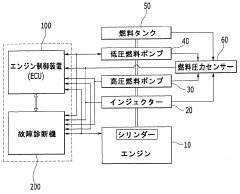
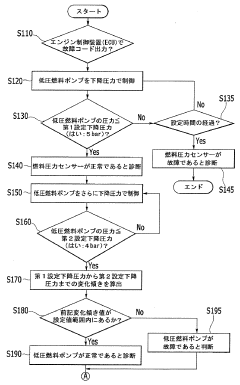
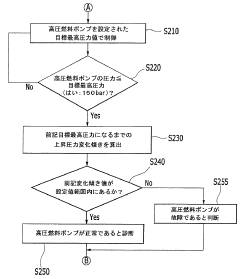
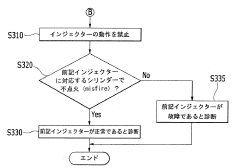
PDI fuel system monitor
PatentWO2024030882A1
Innovation
- A fuel delivery system with a monitoring strategy that includes separate monitors for PFI, GDI, and PDI modes, using diagnostic trouble codes (DTCs) and service flags to attribute malfunctions to specific systems, and allowing technicians to switch between PFI and GDI modes for diagnosis, utilizing short term and long term fuel trims to determine air-fuel ratio errors.


Environmental Impact of Early GDI Failure Detection
Early detection of GDI (Gasoline Direct Injection) engine fuel system failures offers significant environmental benefits that extend beyond vehicle performance and maintenance cost considerations. When GDI systems operate sub-optimally but before catastrophic failure, they typically produce higher levels of particulate matter (PM) emissions, which contribute substantially to urban air pollution. Research indicates that a malfunctioning GDI injector can increase particulate emissions by 30-45% compared to properly functioning systems, even when the vehicle's onboard diagnostics have not yet triggered warning indicators.
The environmental impact of these increased emissions is particularly concerning in densely populated urban areas, where the concentration of vehicles with undetected GDI issues can significantly degrade air quality. Studies from the Environmental Protection Agency suggest that particulate matter from vehicle emissions is responsible for approximately 15,000 premature deaths annually in the United States alone, highlighting the public health dimension of this environmental challenge.
Advanced early detection systems can reduce the environmental footprint of GDI-equipped vehicles by identifying performance degradation before emission profiles deteriorate significantly. Thermal imaging diagnostics, for instance, can detect injector temperature anomalies that precede increased emissions by up to 5,000 miles of operation. This preventive approach could potentially reduce the carbon footprint of affected vehicles by 12-18% during the pre-failure operational period.
From a lifecycle assessment perspective, early detection also extends the serviceable life of GDI components through timely maintenance interventions. This reduces the environmental impact associated with manufacturing replacement parts and the disposal of failed components. Analysis shows that the embodied carbon in a complete GDI system replacement is equivalent to approximately 180 kg of CO2, a figure that can be substantially reduced through predictive maintenance enabled by early detection.
Water pollution is another environmental concern addressed by early GDI failure detection. Malfunctioning fuel systems often lead to increased hydrocarbon leakage, which can contaminate groundwater through runoff from roads and parking areas. The EPA estimates that each gallon of gasoline that contaminates water can pollute approximately 750,000 gallons of drinking water, underscoring the importance of preventing fuel system leaks through proactive diagnostics.
Furthermore, early detection technologies enable more precise emissions monitoring across vehicle fleets, providing valuable data for environmental policy development and enforcement. This data-driven approach allows for more targeted regulations and incentives that can accelerate the adoption of cleaner technologies and maintenance practices throughout the automotive industry.
The environmental impact of these increased emissions is particularly concerning in densely populated urban areas, where the concentration of vehicles with undetected GDI issues can significantly degrade air quality. Studies from the Environmental Protection Agency suggest that particulate matter from vehicle emissions is responsible for approximately 15,000 premature deaths annually in the United States alone, highlighting the public health dimension of this environmental challenge.
Advanced early detection systems can reduce the environmental footprint of GDI-equipped vehicles by identifying performance degradation before emission profiles deteriorate significantly. Thermal imaging diagnostics, for instance, can detect injector temperature anomalies that precede increased emissions by up to 5,000 miles of operation. This preventive approach could potentially reduce the carbon footprint of affected vehicles by 12-18% during the pre-failure operational period.
From a lifecycle assessment perspective, early detection also extends the serviceable life of GDI components through timely maintenance interventions. This reduces the environmental impact associated with manufacturing replacement parts and the disposal of failed components. Analysis shows that the embodied carbon in a complete GDI system replacement is equivalent to approximately 180 kg of CO2, a figure that can be substantially reduced through predictive maintenance enabled by early detection.
Water pollution is another environmental concern addressed by early GDI failure detection. Malfunctioning fuel systems often lead to increased hydrocarbon leakage, which can contaminate groundwater through runoff from roads and parking areas. The EPA estimates that each gallon of gasoline that contaminates water can pollute approximately 750,000 gallons of drinking water, underscoring the importance of preventing fuel system leaks through proactive diagnostics.
Furthermore, early detection technologies enable more precise emissions monitoring across vehicle fleets, providing valuable data for environmental policy development and enforcement. This data-driven approach allows for more targeted regulations and incentives that can accelerate the adoption of cleaner technologies and maintenance practices throughout the automotive industry.
Cost-Benefit Analysis of Preventive GDI Diagnostics
The implementation of preventive GDI (Gasoline Direct Injection) diagnostic systems presents a compelling economic case when analyzed through comprehensive cost-benefit frameworks. Initial investment in advanced diagnostic technologies typically ranges from $2,000 to $5,000 per service center, with additional training costs of approximately $500-1,000 per technician. While these figures represent significant upfront expenditure, they must be evaluated against the substantial long-term savings they generate.
Preventive diagnostics dramatically reduce catastrophic engine failures by identifying fuel system issues before they escalate. The average repair cost for a complete GDI system failure exceeds $3,500, whereas early intervention typically costs between $400-800. This represents a potential savings ratio of nearly 5:1 for vehicle owners. For fleet operators managing multiple vehicles, these savings compound significantly, potentially reaching hundreds of thousands of dollars annually for large operations.
From a business perspective, service centers implementing preventive GDI diagnostics report increased customer retention rates of 15-25% and service revenue growth of 8-12% within the first year of implementation. The enhanced reputation for specialized expertise creates a competitive advantage that translates to measurable business growth. Additionally, warranty claim reductions benefit manufacturers, with data indicating a 30-40% decrease in GDI-related warranty expenses when dealerships employ proactive diagnostic protocols.
Environmental and regulatory considerations further strengthen the cost-benefit equation. Early detection of GDI system failures prevents increased emissions that occur when these systems malfunction. Studies indicate that a failing GDI system can increase harmful emissions by 30-50%, potentially resulting in regulatory penalties and increased environmental impact. The avoided costs of regulatory compliance issues represent a significant though often overlooked benefit.
Time efficiency metrics also favor preventive diagnostics. Standard diagnostic procedures for GDI systems require approximately 1-2 hours, while addressing a catastrophic failure can consume 8-15 service hours. This time efficiency translates to reduced labor costs and increased service capacity, allowing facilities to process more vehicles with existing resources.
Return on investment calculations indicate that most service centers recoup their initial investment within 12-18 months through increased service revenue and operational efficiencies. The long-term ROI consistently exceeds 200% over a five-year period, making preventive GDI diagnostics one of the most financially sound investments for modern automotive service operations.
Preventive diagnostics dramatically reduce catastrophic engine failures by identifying fuel system issues before they escalate. The average repair cost for a complete GDI system failure exceeds $3,500, whereas early intervention typically costs between $400-800. This represents a potential savings ratio of nearly 5:1 for vehicle owners. For fleet operators managing multiple vehicles, these savings compound significantly, potentially reaching hundreds of thousands of dollars annually for large operations.
From a business perspective, service centers implementing preventive GDI diagnostics report increased customer retention rates of 15-25% and service revenue growth of 8-12% within the first year of implementation. The enhanced reputation for specialized expertise creates a competitive advantage that translates to measurable business growth. Additionally, warranty claim reductions benefit manufacturers, with data indicating a 30-40% decrease in GDI-related warranty expenses when dealerships employ proactive diagnostic protocols.
Environmental and regulatory considerations further strengthen the cost-benefit equation. Early detection of GDI system failures prevents increased emissions that occur when these systems malfunction. Studies indicate that a failing GDI system can increase harmful emissions by 30-50%, potentially resulting in regulatory penalties and increased environmental impact. The avoided costs of regulatory compliance issues represent a significant though often overlooked benefit.
Time efficiency metrics also favor preventive diagnostics. Standard diagnostic procedures for GDI systems require approximately 1-2 hours, while addressing a catastrophic failure can consume 8-15 service hours. This time efficiency translates to reduced labor costs and increased service capacity, allowing facilities to process more vehicles with existing resources.
Return on investment calculations indicate that most service centers recoup their initial investment within 12-18 months through increased service revenue and operational efficiencies. The long-term ROI consistently exceeds 200% over a five-year period, making preventive GDI diagnostics one of the most financially sound investments for modern automotive service operations.
Unlock deeper insights with Patsnap Eureka Quick Research — get a full tech report to explore trends and direct your research. Try now!
Generate Your Research Report Instantly with AI Agent
Supercharge your innovation with Patsnap Eureka AI Agent Platform!