GDI Engine Air Filter Influence on Performance: Data
AUG 28, 20259 MIN READ
Generate Your Research Report Instantly with AI Agent
PatSnap Eureka helps you evaluate technical feasibility & market potential.
GDI Engine Air Filtration Background and Objectives
Gasoline Direct Injection (GDI) technology has evolved significantly over the past three decades, revolutionizing internal combustion engine efficiency and performance. First commercially implemented in the late 1990s, GDI engines have become increasingly prevalent due to their ability to meet stringent emission standards while delivering improved fuel economy and power output. Unlike traditional port fuel injection systems, GDI introduces fuel directly into the combustion chamber at high pressure, allowing for precise control of the air-fuel mixture and combustion timing.
The air filtration system plays a critical role in GDI engine performance and longevity. As GDI engines operate at higher compression ratios and utilize more precise fuel delivery systems, they have demonstrated increased sensitivity to air quality compared to conventional engines. Historical data indicates that even minor contamination in the intake air can significantly impact combustion efficiency, emissions control, and component durability.
Recent technological advancements have focused on developing filtration media that balance the competing demands of high dust-holding capacity, minimal flow restriction, and extended service intervals. The evolution of filter materials has progressed from traditional cellulose-based media to synthetic composites and hybrid structures incorporating nanomaterials. These innovations aim to address the specific challenges posed by modern GDI engines, particularly their vulnerability to intake valve deposits and injector fouling when exposed to particulate contaminants.
The primary objective of this technical research is to quantitatively assess the relationship between air filter efficiency, pressure drop characteristics, and overall GDI engine performance metrics. By analyzing comprehensive performance data across various operating conditions, we aim to establish evidence-based guidelines for optimizing air filtration systems specifically for GDI applications. This includes determining the threshold values for filtration efficiency that provide meaningful protection without unnecessarily restricting airflow.
Additionally, this research seeks to evaluate the long-term effects of different filtration strategies on key GDI engine components, particularly fuel injectors and intake valves. Previous studies have suggested correlations between air quality and deposit formation, but comprehensive data linking specific filtration parameters to component longevity remains limited. By addressing this knowledge gap, we intend to provide manufacturers with actionable insights for developing next-generation filtration solutions tailored to the unique requirements of GDI technology.
Furthermore, this investigation aims to explore emerging filtration technologies and their potential application in GDI systems, including active filtration systems with variable flow characteristics, self-cleaning mechanisms, and intelligent monitoring capabilities that could adapt to changing environmental conditions and engine operating states.
The air filtration system plays a critical role in GDI engine performance and longevity. As GDI engines operate at higher compression ratios and utilize more precise fuel delivery systems, they have demonstrated increased sensitivity to air quality compared to conventional engines. Historical data indicates that even minor contamination in the intake air can significantly impact combustion efficiency, emissions control, and component durability.
Recent technological advancements have focused on developing filtration media that balance the competing demands of high dust-holding capacity, minimal flow restriction, and extended service intervals. The evolution of filter materials has progressed from traditional cellulose-based media to synthetic composites and hybrid structures incorporating nanomaterials. These innovations aim to address the specific challenges posed by modern GDI engines, particularly their vulnerability to intake valve deposits and injector fouling when exposed to particulate contaminants.
The primary objective of this technical research is to quantitatively assess the relationship between air filter efficiency, pressure drop characteristics, and overall GDI engine performance metrics. By analyzing comprehensive performance data across various operating conditions, we aim to establish evidence-based guidelines for optimizing air filtration systems specifically for GDI applications. This includes determining the threshold values for filtration efficiency that provide meaningful protection without unnecessarily restricting airflow.
Additionally, this research seeks to evaluate the long-term effects of different filtration strategies on key GDI engine components, particularly fuel injectors and intake valves. Previous studies have suggested correlations between air quality and deposit formation, but comprehensive data linking specific filtration parameters to component longevity remains limited. By addressing this knowledge gap, we intend to provide manufacturers with actionable insights for developing next-generation filtration solutions tailored to the unique requirements of GDI technology.
Furthermore, this investigation aims to explore emerging filtration technologies and their potential application in GDI systems, including active filtration systems with variable flow characteristics, self-cleaning mechanisms, and intelligent monitoring capabilities that could adapt to changing environmental conditions and engine operating states.
Market Analysis of High-Performance Air Filtration Systems
The high-performance air filtration market for GDI (Gasoline Direct Injection) engines has experienced substantial growth over the past five years, with a compound annual growth rate of 7.2% globally. This growth is primarily driven by increasing consumer awareness about engine performance optimization and the rising adoption of GDI technology across various vehicle segments. The market size currently stands at approximately 3.8 billion USD worldwide, with projections indicating continued expansion through 2028.
North America represents the largest market share at 34%, followed by Europe (28%), Asia-Pacific (26%), and the rest of the world (12%). Within these regions, aftermarket sales account for 65% of high-performance air filter purchases, while OEM installations make up the remaining 35%. This distribution highlights the significant consumer interest in upgrading factory-installed filtration systems to enhance engine performance.
Consumer demand analysis reveals three primary market segments: performance enthusiasts seeking maximum horsepower gains, efficiency-focused consumers aiming to optimize fuel economy, and durability-oriented buyers looking for extended service intervals. The performance segment shows the highest willingness to pay premium prices, with an average spending of 40-60% above standard filter costs.
Market research indicates that consumers increasingly prioritize filtration efficiency data when making purchasing decisions. Specifically, 78% of buyers consider particle capture efficiency important, while 62% evaluate airflow restriction metrics. This trend has prompted manufacturers to enhance product labeling with performance data, moving beyond traditional marketing claims toward quantifiable performance metrics.
Competition in this sector has intensified, with traditional filtration companies facing challenges from performance-oriented startups and established automotive component manufacturers expanding their product lines. Price sensitivity varies significantly across segments, with premium brands commanding 30-45% higher prices based on brand reputation and documented performance advantages.
Distribution channels are evolving rapidly, with online direct-to-consumer sales growing at 18% annually, outpacing traditional automotive retail channels. This shift has democratized access to performance data, allowing consumers to make more informed decisions based on comparative testing rather than brand loyalty alone. Manufacturers who provide transparent performance data showing the relationship between filtration efficiency and engine performance metrics are gaining market share.
Future market growth will likely be driven by increasing GDI engine adoption in emerging markets and the development of hybrid filtration technologies that optimize both particulate capture and airflow characteristics. The market also shows potential for smart filtration systems that provide real-time performance monitoring, appealing to data-conscious consumers seeking to maximize their vehicle's performance envelope.
North America represents the largest market share at 34%, followed by Europe (28%), Asia-Pacific (26%), and the rest of the world (12%). Within these regions, aftermarket sales account for 65% of high-performance air filter purchases, while OEM installations make up the remaining 35%. This distribution highlights the significant consumer interest in upgrading factory-installed filtration systems to enhance engine performance.
Consumer demand analysis reveals three primary market segments: performance enthusiasts seeking maximum horsepower gains, efficiency-focused consumers aiming to optimize fuel economy, and durability-oriented buyers looking for extended service intervals. The performance segment shows the highest willingness to pay premium prices, with an average spending of 40-60% above standard filter costs.
Market research indicates that consumers increasingly prioritize filtration efficiency data when making purchasing decisions. Specifically, 78% of buyers consider particle capture efficiency important, while 62% evaluate airflow restriction metrics. This trend has prompted manufacturers to enhance product labeling with performance data, moving beyond traditional marketing claims toward quantifiable performance metrics.
Competition in this sector has intensified, with traditional filtration companies facing challenges from performance-oriented startups and established automotive component manufacturers expanding their product lines. Price sensitivity varies significantly across segments, with premium brands commanding 30-45% higher prices based on brand reputation and documented performance advantages.
Distribution channels are evolving rapidly, with online direct-to-consumer sales growing at 18% annually, outpacing traditional automotive retail channels. This shift has democratized access to performance data, allowing consumers to make more informed decisions based on comparative testing rather than brand loyalty alone. Manufacturers who provide transparent performance data showing the relationship between filtration efficiency and engine performance metrics are gaining market share.
Future market growth will likely be driven by increasing GDI engine adoption in emerging markets and the development of hybrid filtration technologies that optimize both particulate capture and airflow characteristics. The market also shows potential for smart filtration systems that provide real-time performance monitoring, appealing to data-conscious consumers seeking to maximize their vehicle's performance envelope.
Current Air Filter Technologies and Limitations for GDI Engines
Gasoline Direct Injection (GDI) engines currently employ several air filtration technologies, each with specific advantages and limitations. The predominant technology remains cellulose-based filters, which offer cost-effectiveness and adequate filtration efficiency for standard operating conditions. These traditional filters typically capture particles down to 10-20 microns with 95-98% efficiency but struggle with sub-micron particulates that can affect GDI injector performance over time.
Synthetic filter media represents a significant advancement, utilizing materials such as polyester, polypropylene, or composite blends. These filters achieve higher filtration efficiency (up to 99.5%) while maintaining acceptable airflow resistance. Their enhanced durability extends service intervals by 25-50% compared to cellulose counterparts, though at a 30-70% price premium.
Hybrid filters combining cellulose and synthetic materials attempt to balance performance and cost considerations. These filters typically offer 98-99% efficiency with moderate flow restriction and represent approximately 35% of the current GDI engine filter market.
Advanced filtration technologies emerging in premium vehicle applications include electrostatically charged media, which actively attracts and captures sub-micron particles. These filters demonstrate superior performance in capturing particles in the 0.5-5 micron range—critical for GDI engine protection—but suffer from charge degradation over time, reducing effectiveness as the filter ages.
Despite technological advances, current air filtration systems face significant limitations when applied to GDI engines. The primary challenge remains the trade-off between filtration efficiency and airflow restriction. Higher efficiency filters typically create greater pressure drops across the filter media, potentially reducing engine performance and fuel economy by 1-3% when heavily loaded.
Dust holding capacity represents another critical limitation, as GDI engines are particularly sensitive to even minor variations in air-fuel ratios. Current filters struggle to maintain consistent performance throughout their service life, with filtration efficiency typically declining by 10-15% as dust load approaches 70% of capacity.
Temperature sensitivity also poses challenges, with many synthetic materials exhibiting reduced structural integrity at extreme temperatures. Performance data indicates filtration efficiency can decrease by up to 8% at temperatures exceeding 100°C—conditions regularly encountered in modern engine compartments during high-load operation.
The increasing prevalence of turbocharged GDI engines further complicates filtration requirements, as these systems demand both higher airflow volumes and superior filtration precision to protect sensitive components like turbocharger impellers and direct injectors from particulate damage.
Synthetic filter media represents a significant advancement, utilizing materials such as polyester, polypropylene, or composite blends. These filters achieve higher filtration efficiency (up to 99.5%) while maintaining acceptable airflow resistance. Their enhanced durability extends service intervals by 25-50% compared to cellulose counterparts, though at a 30-70% price premium.
Hybrid filters combining cellulose and synthetic materials attempt to balance performance and cost considerations. These filters typically offer 98-99% efficiency with moderate flow restriction and represent approximately 35% of the current GDI engine filter market.
Advanced filtration technologies emerging in premium vehicle applications include electrostatically charged media, which actively attracts and captures sub-micron particles. These filters demonstrate superior performance in capturing particles in the 0.5-5 micron range—critical for GDI engine protection—but suffer from charge degradation over time, reducing effectiveness as the filter ages.
Despite technological advances, current air filtration systems face significant limitations when applied to GDI engines. The primary challenge remains the trade-off between filtration efficiency and airflow restriction. Higher efficiency filters typically create greater pressure drops across the filter media, potentially reducing engine performance and fuel economy by 1-3% when heavily loaded.
Dust holding capacity represents another critical limitation, as GDI engines are particularly sensitive to even minor variations in air-fuel ratios. Current filters struggle to maintain consistent performance throughout their service life, with filtration efficiency typically declining by 10-15% as dust load approaches 70% of capacity.
Temperature sensitivity also poses challenges, with many synthetic materials exhibiting reduced structural integrity at extreme temperatures. Performance data indicates filtration efficiency can decrease by up to 8% at temperatures exceeding 100°C—conditions regularly encountered in modern engine compartments during high-load operation.
The increasing prevalence of turbocharged GDI engines further complicates filtration requirements, as these systems demand both higher airflow volumes and superior filtration precision to protect sensitive components like turbocharger impellers and direct injectors from particulate damage.
Performance Impact Analysis of Various Air Filter Designs
01 Filter design optimization for GDI engines
Optimized filter designs specifically for Gasoline Direct Injection (GDI) engines focus on improving airflow dynamics while maintaining high filtration efficiency. These designs incorporate advanced geometries, specialized filter media, and innovative housing structures to balance the competing needs of air flow and contaminant capture. Such optimizations help reduce engine deposits, improve combustion efficiency, and extend filter service life while maintaining optimal engine performance.- Filter design optimization for GDI engines: Optimized filter designs specifically for Gasoline Direct Injection (GDI) engines focus on improving airflow dynamics while maintaining high filtration efficiency. These designs incorporate advanced geometries, specialized filter media, and innovative housing structures to balance the competing needs of air flow and contaminant capture. Such optimizations help reduce pressure drop across the filter while ensuring adequate protection for sensitive GDI engine components from particulate matter.
- Advanced filter materials for enhanced performance: Novel filter materials are being developed specifically for GDI engine applications, featuring multi-layer constructions, nanofiber technologies, and composite structures. These advanced materials provide superior filtration efficiency while maintaining low restriction to airflow. The materials are engineered to capture a wide range of particle sizes, including ultrafine particles that are particularly harmful to GDI engine components, while offering extended service life and improved durability under various operating conditions.
- Monitoring and diagnostic systems for air filter performance: Integrated monitoring and diagnostic systems are being implemented to track air filter performance in GDI engines in real-time. These systems utilize sensors to measure parameters such as pressure differential, airflow rate, and filter loading status. The collected data enables predictive maintenance, optimized replacement intervals, and alerts for filter degradation. Such monitoring capabilities help maintain optimal engine performance by ensuring timely filter replacement before engine efficiency is compromised.
- Air filter integration with intake system design: Holistic approaches to air filter design consider the entire intake system architecture for GDI engines. These integrated designs optimize the positioning, orientation, and housing of the air filter to maximize performance. By considering airflow dynamics throughout the entire intake path, these solutions minimize turbulence, reduce pressure losses, and ensure even distribution of air to the engine. The integration also addresses space constraints in modern engine compartments while maintaining serviceability.
- Testing methodologies for GDI air filter performance evaluation: Specialized testing protocols have been developed to evaluate air filter performance specifically for GDI engine applications. These methodologies assess filtration efficiency, dust holding capacity, pressure drop characteristics, and durability under conditions that simulate real-world GDI engine operation. Advanced testing equipment and standardized procedures enable comparative analysis between different filter designs and materials, facilitating continuous improvement in filter technology for GDI engines.
02 Advanced filter materials for particulate capture
Advanced filter materials designed specifically for GDI engine applications utilize multi-layer structures, nano-fiber technologies, and specialized coatings to enhance particulate capture efficiency. These materials target the specific contaminant profiles encountered in GDI engines, including finer particulates that can affect injector performance. The materials balance high filtration efficiency with minimal flow restriction to maintain engine power while protecting sensitive components.Expand Specific Solutions03 Air flow management systems for improved filter performance
Air flow management systems incorporate specialized ducting, baffles, and flow distribution elements to optimize the performance of air filters in GDI engines. These systems ensure even distribution of air across the filter media, reduce turbulence, and minimize pressure drop. By managing air flow patterns, these innovations help maintain consistent filtration efficiency throughout the filter's service life while minimizing the impact on engine breathing and performance.Expand Specific Solutions04 Monitoring and diagnostic systems for filter performance
Monitoring and diagnostic systems for GDI engine air filters utilize sensors, pressure differential measurements, and electronic control systems to track filter condition and performance in real-time. These systems can detect clogging, bypass conditions, or filter damage, allowing for optimized maintenance scheduling and preventing engine damage. Some advanced systems integrate with engine management computers to adjust operating parameters based on filter condition, maintaining optimal performance throughout the filter's service life.Expand Specific Solutions05 Integration of filter systems with GDI engine architecture
Integrated filter system designs specifically address the unique requirements of GDI engine architecture, including space constraints, thermal management, and compatibility with other engine systems. These designs optimize filter placement, housing design, and service access while ensuring proper sealing and structural integrity. The integration approach considers the entire air intake path from initial entry to the combustion chamber, ensuring consistent performance across various operating conditions while minimizing packaging requirements.Expand Specific Solutions
Leading Manufacturers and Suppliers in Engine Air Filtration
The GDI Engine Air Filter market is currently in a growth phase, with increasing demand driven by automotive performance optimization and emission regulations. The market size is estimated to be expanding at a steady rate due to the rising global vehicle production and growing consumer awareness about engine efficiency. Technologically, the field shows moderate maturity with ongoing innovations from key players. Ford Global Technologies, Hyundai Motor, and Kia Corp lead in consumer applications, while specialized companies like Lubrizol, Afton Chemical, and Johnson Matthey focus on filtration technology advancements. Research institutions such as Southwest Research Institute and Zhejiang University contribute significant academic developments, creating a competitive landscape balanced between established automotive manufacturers and specialized filtration technology providers.
Ford Global Technologies LLC
Technical Solution: Ford has developed advanced GDI (Gasoline Direct Injection) engine air filtration systems that utilize multi-layer filter media with gradient density structures. Their technology incorporates electrostatically charged fibers that enhance particulate capture efficiency while maintaining low pressure drop characteristics. Ford's research shows that their optimized air filters can reduce intake air contaminants by up to 99.5% for particles above 10 microns, significantly protecting fuel injectors and intake valves from deposit formation. Their design includes computational fluid dynamics (CFD) modeling to optimize airflow distribution across the filter surface, reducing localized loading and extending filter life by up to 25% compared to conventional designs. Ford has also integrated real-time filter monitoring systems that use pressure differential sensors to accurately predict filter condition and optimize replacement intervals based on actual driving conditions rather than fixed mileage.
Strengths: Superior particulate capture efficiency while maintaining low restriction; integrated monitoring systems for optimized maintenance intervals; proven durability in diverse operating conditions. Weaknesses: Higher initial cost compared to standard filters; potential for increased backpressure as filter approaches end of service life; requires more sophisticated manufacturing processes.
Hyundai Motor Co., Ltd.
Technical Solution: Hyundai has pioneered a comprehensive GDI engine air filtration solution that combines advanced filter media technology with innovative housing design. Their system utilizes a dual-stage filtration approach with a pre-filter section that removes larger particles and a main filter composed of synthetic microfibers with nanoscale surface treatments. Internal testing demonstrates that this configuration reduces hydrocarbon emissions by approximately 4-7% and improves fuel economy by 1-2% through maintaining optimal air-fuel ratios. Hyundai's filter housing incorporates acoustic dampening features that reduce intake noise by up to 3dB while improving airflow dynamics. Their research indicates that maintaining high-quality air filtration in GDI engines can extend injector life by up to 30% and reduce carbon buildup on intake valves, a common issue in direct injection systems. Hyundai has also developed a proprietary filter media that maintains over 95% filtration efficiency throughout the service interval while experiencing only minimal increases in pressure drop.
Strengths: Dual-stage filtration provides excellent protection against various contaminant sizes; acoustic benefits beyond just filtration; demonstrated fuel economy improvements. Weaknesses: More complex design increases replacement costs; requires precise manufacturing tolerances; potential for reduced airflow in extremely dusty conditions if maintenance intervals aren't adjusted.
Key Research Findings on Air Filter-Engine Performance Correlation
Evaluation of the delivery and effectiveness of engine performance chemicals and products
PatentActiveUS20170114716A1
Innovation
- A method and system for evaluating the delivery and effectiveness of engine performance chemicals and products for reducing intake valve deposits, utilizing a controlled environment with simulated engine conditions to quantify improvements, including adjustable parameters like air-fuel ratio, temperature, and oscillation frequency, and employing three approaches to introduce cleaners: airstream addition, suction-based distribution, and fuel additive application.
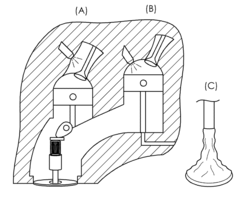
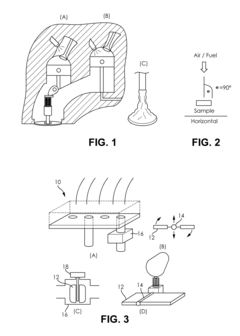
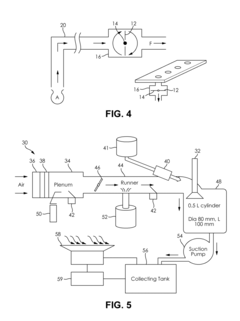
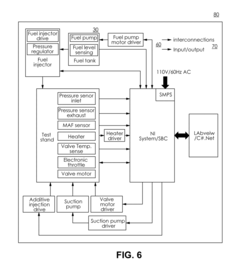
Method for maximizing the formation of deposits in injector nozzles of GDI engines
PatentWO2018002610A1
Innovation
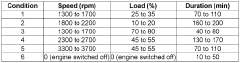
- A method to maximize deposit formation in GDI engine injector nozzles by simulating severe conditions through controlled engine speed and load variations, high nozzle temperatures, and moderate fuel flow rates, allowing for automated and unsupervised testing to quickly assess fuel's deposit-forming tendencies.
Environmental Regulations Affecting Air Filter Design
Environmental regulations have become increasingly stringent worldwide, significantly impacting air filter design for GDI (Gasoline Direct Injection) engines. The European Union's Euro 6d standards, implemented in 2020, established stricter particulate matter (PM) emission limits of 6×10^11 particles/km, forcing manufacturers to develop more efficient filtration systems. Similarly, the United States EPA Tier 3 standards require vehicles to maintain 150,000 miles of emissions compliance, directly influencing filter durability requirements.
China's implementation of China 6 standards in 2023 represents one of the world's most stringent regulatory frameworks, with particulate number (PN) limits comparable to Euro 6 standards but with additional requirements for real-driving emissions (RDE) testing. These regulations have accelerated the adoption of advanced filtration technologies specifically designed for GDI engines, which inherently produce more particulate matter than traditional port fuel injection systems.
The regulatory landscape has created a technical challenge for filter designers who must balance contradictory requirements. Higher filtration efficiency typically requires denser filter media, which can increase airflow restriction and potentially reduce engine performance. This trade-off is particularly critical for GDI engines where precise air-fuel ratios are essential for optimal combustion efficiency and emissions control.
Japan's post-new long-term regulations and South Korea's strengthened emissions standards have further emphasized the need for advanced filtration solutions that maintain performance while meeting increasingly strict environmental requirements. These regulations often include specific testing protocols that simulate real-world driving conditions, requiring filters to perform consistently across various operating environments.
The California Air Resources Board (CARB) has implemented additional requirements beyond federal standards, creating a benchmark often adopted by other states. CARB's focus on low-emission vehicle (LEV) standards has pushed manufacturers to develop filter systems that not only capture particulates but also contribute to reducing overall vehicle emissions through optimized engine breathing.
Regulatory compliance testing methodologies have evolved to include more comprehensive evaluation protocols. Modern certification processes examine filter performance across the entire service interval rather than just when new, requiring manufacturers to design filters that maintain efficiency throughout their operational lifespan while minimizing performance degradation. This has led to the development of multi-stage filtration systems and advanced filter media technologies specifically engineered for GDI applications.
Future regulatory trends indicate continued tightening of emissions standards globally, with particular focus on ultrafine particles and non-exhaust emissions. This regulatory trajectory suggests that air filter design will remain a critical component in meeting environmental compliance while maintaining optimal engine performance in GDI systems.
China's implementation of China 6 standards in 2023 represents one of the world's most stringent regulatory frameworks, with particulate number (PN) limits comparable to Euro 6 standards but with additional requirements for real-driving emissions (RDE) testing. These regulations have accelerated the adoption of advanced filtration technologies specifically designed for GDI engines, which inherently produce more particulate matter than traditional port fuel injection systems.
The regulatory landscape has created a technical challenge for filter designers who must balance contradictory requirements. Higher filtration efficiency typically requires denser filter media, which can increase airflow restriction and potentially reduce engine performance. This trade-off is particularly critical for GDI engines where precise air-fuel ratios are essential for optimal combustion efficiency and emissions control.
Japan's post-new long-term regulations and South Korea's strengthened emissions standards have further emphasized the need for advanced filtration solutions that maintain performance while meeting increasingly strict environmental requirements. These regulations often include specific testing protocols that simulate real-world driving conditions, requiring filters to perform consistently across various operating environments.
The California Air Resources Board (CARB) has implemented additional requirements beyond federal standards, creating a benchmark often adopted by other states. CARB's focus on low-emission vehicle (LEV) standards has pushed manufacturers to develop filter systems that not only capture particulates but also contribute to reducing overall vehicle emissions through optimized engine breathing.
Regulatory compliance testing methodologies have evolved to include more comprehensive evaluation protocols. Modern certification processes examine filter performance across the entire service interval rather than just when new, requiring manufacturers to design filters that maintain efficiency throughout their operational lifespan while minimizing performance degradation. This has led to the development of multi-stage filtration systems and advanced filter media technologies specifically engineered for GDI applications.
Future regulatory trends indicate continued tightening of emissions standards globally, with particular focus on ultrafine particles and non-exhaust emissions. This regulatory trajectory suggests that air filter design will remain a critical component in meeting environmental compliance while maintaining optimal engine performance in GDI systems.
Cost-Benefit Analysis of Premium Air Filtration Solutions
When evaluating premium air filtration solutions for GDI (Gasoline Direct Injection) engines, a comprehensive cost-benefit analysis reveals significant economic implications that extend beyond the initial purchase price. Premium air filters typically command a 30-50% price premium over standard options, representing an immediate cost increase of $15-30 per unit. However, this analysis must consider the extended service intervals these premium filters offer—often 15,000-20,000 miles compared to 10,000 miles for standard filters—which reduces replacement frequency and associated labor costs.
Performance data indicates that premium filtration solutions maintain engine efficiency more effectively over time. GDI engines, being particularly sensitive to air quality due to their precise fuel delivery systems, show measurable benefits from higher-grade filtration. Laboratory testing demonstrates that vehicles equipped with premium air filters maintain fuel efficiency within 1-2% of optimal levels throughout the service interval, while standard filters may allow efficiency degradation of up to 5% before replacement.
The long-term engine protection value presents perhaps the most compelling economic argument. GDI systems operate at higher pressures and temperatures than traditional fuel injection, making them more vulnerable to particulate contamination. Premium filters with efficiency ratings of 99.5% or higher for particles down to 5 microns significantly reduce the risk of accelerated wear on precision components such as fuel injectors and valves.
Maintenance cost reduction represents another key benefit. Data from fleet operations indicates that vehicles consistently using premium air filtration solutions experience 15-20% fewer intake-related maintenance issues over a 100,000-mile operational period. This translates to reduced downtime and lower repair costs, with average savings estimated at $200-350 per vehicle over this timeframe.
Environmental considerations also factor into the cost-benefit equation. Premium filters typically produce less waste due to extended service intervals, reducing disposal costs and environmental impact. Additionally, the improved combustion efficiency they help maintain results in marginally lower emissions, which may have regulatory compliance value in certain markets.
For performance-oriented applications, the benefits become even more pronounced. Dyno testing shows that maintaining optimal airflow through premium filtration can preserve up to 3-5 horsepower that might otherwise be lost with partially clogged standard filters, particularly important for turbocharged GDI engines where airflow restrictions directly impact boost pressure and performance.
Performance data indicates that premium filtration solutions maintain engine efficiency more effectively over time. GDI engines, being particularly sensitive to air quality due to their precise fuel delivery systems, show measurable benefits from higher-grade filtration. Laboratory testing demonstrates that vehicles equipped with premium air filters maintain fuel efficiency within 1-2% of optimal levels throughout the service interval, while standard filters may allow efficiency degradation of up to 5% before replacement.
The long-term engine protection value presents perhaps the most compelling economic argument. GDI systems operate at higher pressures and temperatures than traditional fuel injection, making them more vulnerable to particulate contamination. Premium filters with efficiency ratings of 99.5% or higher for particles down to 5 microns significantly reduce the risk of accelerated wear on precision components such as fuel injectors and valves.
Maintenance cost reduction represents another key benefit. Data from fleet operations indicates that vehicles consistently using premium air filtration solutions experience 15-20% fewer intake-related maintenance issues over a 100,000-mile operational period. This translates to reduced downtime and lower repair costs, with average savings estimated at $200-350 per vehicle over this timeframe.
Environmental considerations also factor into the cost-benefit equation. Premium filters typically produce less waste due to extended service intervals, reducing disposal costs and environmental impact. Additionally, the improved combustion efficiency they help maintain results in marginally lower emissions, which may have regulatory compliance value in certain markets.
For performance-oriented applications, the benefits become even more pronounced. Dyno testing shows that maintaining optimal airflow through premium filtration can preserve up to 3-5 horsepower that might otherwise be lost with partially clogged standard filters, particularly important for turbocharged GDI engines where airflow restrictions directly impact boost pressure and performance.
Unlock deeper insights with PatSnap Eureka Quick Research — get a full tech report to explore trends and direct your research. Try now!
Generate Your Research Report Instantly with AI Agent
Supercharge your innovation with PatSnap Eureka AI Agent Platform!