How to Implement GDI Engine Exhaust Gas Recirculation
AUG 28, 20259 MIN READ
Generate Your Research Report Instantly with AI Agent
Patsnap Eureka helps you evaluate technical feasibility & market potential.
GDI EGR Technology Background and Objectives
Gasoline Direct Injection (GDI) technology has evolved significantly since its commercial introduction in the late 1990s, revolutionizing internal combustion engine efficiency. This evolution has been driven by increasingly stringent emissions regulations worldwide, particularly focused on reducing NOx and particulate matter emissions while maintaining or improving fuel economy. The integration of Exhaust Gas Recirculation (EGR) with GDI engines represents a critical technological advancement in this journey.
The historical development of EGR systems dates back to the 1970s when they were first implemented in conventional port fuel injection engines primarily for NOx reduction. However, the application of EGR in GDI engines presents unique challenges and opportunities due to the fundamentally different combustion characteristics of direct injection technology.
GDI engines operate with stratified charge combustion under certain conditions, creating localized rich and lean zones within the combustion chamber. This stratification, while beneficial for fuel economy, can lead to increased NOx formation in high-temperature zones and particulate matter in fuel-rich regions. EGR technology addresses these issues by recirculating a portion of exhaust gases back into the intake system, diluting the intake charge and reducing combustion temperatures.
The primary technical objectives for implementing EGR in GDI engines include reducing NOx emissions by 30-50% compared to non-EGR GDI engines, minimizing the fuel economy penalty associated with traditional emissions control methods, and enabling compliance with Euro 6d, China 6b, and US Tier 3 emissions standards. Additionally, EGR implementation aims to mitigate knock tendencies, allowing for higher compression ratios and improved thermal efficiency.
Current technological trends in GDI EGR systems focus on advanced control strategies, including dual-loop EGR systems that combine high-pressure (HP) and low-pressure (LP) recirculation paths. These systems offer greater flexibility in EGR rate control across the engine operating map. Another emerging trend is cooled EGR technology, which further reduces combustion temperatures and NOx formation while minimizing the impact on volumetric efficiency.
The integration of EGR with other advanced technologies, such as variable valve timing, turbocharging, and Miller cycle operation, represents a holistic approach to emissions reduction and efficiency improvement. This integration pathway is expected to extend the viability of internal combustion engines in an increasingly electrified automotive landscape.
Looking forward, the development trajectory for GDI EGR technology aims to achieve ultra-low NOx emissions (<10 ppm) while maintaining or improving fuel economy by at least 5% compared to current GDI engines. This ambitious goal necessitates innovative approaches to EGR distribution, cooling, and control strategies tailored specifically to the unique combustion characteristics of GDI engines.
The historical development of EGR systems dates back to the 1970s when they were first implemented in conventional port fuel injection engines primarily for NOx reduction. However, the application of EGR in GDI engines presents unique challenges and opportunities due to the fundamentally different combustion characteristics of direct injection technology.
GDI engines operate with stratified charge combustion under certain conditions, creating localized rich and lean zones within the combustion chamber. This stratification, while beneficial for fuel economy, can lead to increased NOx formation in high-temperature zones and particulate matter in fuel-rich regions. EGR technology addresses these issues by recirculating a portion of exhaust gases back into the intake system, diluting the intake charge and reducing combustion temperatures.
The primary technical objectives for implementing EGR in GDI engines include reducing NOx emissions by 30-50% compared to non-EGR GDI engines, minimizing the fuel economy penalty associated with traditional emissions control methods, and enabling compliance with Euro 6d, China 6b, and US Tier 3 emissions standards. Additionally, EGR implementation aims to mitigate knock tendencies, allowing for higher compression ratios and improved thermal efficiency.
Current technological trends in GDI EGR systems focus on advanced control strategies, including dual-loop EGR systems that combine high-pressure (HP) and low-pressure (LP) recirculation paths. These systems offer greater flexibility in EGR rate control across the engine operating map. Another emerging trend is cooled EGR technology, which further reduces combustion temperatures and NOx formation while minimizing the impact on volumetric efficiency.
The integration of EGR with other advanced technologies, such as variable valve timing, turbocharging, and Miller cycle operation, represents a holistic approach to emissions reduction and efficiency improvement. This integration pathway is expected to extend the viability of internal combustion engines in an increasingly electrified automotive landscape.
Looking forward, the development trajectory for GDI EGR technology aims to achieve ultra-low NOx emissions (<10 ppm) while maintaining or improving fuel economy by at least 5% compared to current GDI engines. This ambitious goal necessitates innovative approaches to EGR distribution, cooling, and control strategies tailored specifically to the unique combustion characteristics of GDI engines.
Market Demand Analysis for GDI EGR Systems
The global market for Gasoline Direct Injection (GDI) Exhaust Gas Recirculation (EGR) systems is experiencing robust growth driven by increasingly stringent emission regulations worldwide. Major markets including Europe, North America, and Asia-Pacific have implemented or announced plans for more restrictive CO2 and NOx emission standards, creating substantial demand for advanced emission control technologies like GDI EGR systems.
The automotive industry's shift toward fuel efficiency without compromising performance has positioned GDI EGR systems as a critical technology. Market research indicates that the global EGR systems market, including GDI applications, is projected to grow at a compound annual growth rate of approximately 7.8% between 2023 and 2030, reaching a market valuation exceeding $15 billion by the end of the forecast period.
Consumer preferences are evolving toward vehicles that offer improved fuel economy while maintaining performance characteristics. This trend aligns perfectly with GDI EGR technology, which enables manufacturers to meet these seemingly contradictory demands. Market surveys reveal that over 65% of new car buyers consider fuel efficiency among their top three purchasing criteria, creating a strong pull factor for GDI EGR-equipped vehicles.
From a regional perspective, Europe leads in GDI EGR system adoption due to its stringent Euro 6d and upcoming Euro 7 emission standards. The North American market follows closely, driven by Corporate Average Fuel Economy (CAFE) standards. The Asia-Pacific region, particularly China and India, represents the fastest-growing market segment as these countries implement more stringent emission regulations modeled after European standards.
The commercial vehicle segment presents a particularly promising growth opportunity for GDI EGR systems. With commercial fleet operators increasingly focused on total cost of ownership, the fuel economy benefits of GDI EGR systems translate directly to operational cost savings. This segment is expected to grow at a higher rate than passenger vehicles, with projected annual growth exceeding 9% through 2030.
Market analysis reveals a significant price sensitivity threshold. While consumers and fleet operators value fuel efficiency, the premium for GDI EGR technology must typically deliver a return on investment within 2-3 years to achieve broad market acceptance. This economic reality is driving research and development efforts toward cost-effective GDI EGR solutions that maintain performance benefits while reducing implementation costs.
The aftermarket for GDI EGR components also represents a substantial opportunity, with the replacement and service market expected to grow as the installed base of GDI EGR-equipped vehicles increases. This secondary market is projected to reach approximately $3 billion annually by 2028.
The automotive industry's shift toward fuel efficiency without compromising performance has positioned GDI EGR systems as a critical technology. Market research indicates that the global EGR systems market, including GDI applications, is projected to grow at a compound annual growth rate of approximately 7.8% between 2023 and 2030, reaching a market valuation exceeding $15 billion by the end of the forecast period.
Consumer preferences are evolving toward vehicles that offer improved fuel economy while maintaining performance characteristics. This trend aligns perfectly with GDI EGR technology, which enables manufacturers to meet these seemingly contradictory demands. Market surveys reveal that over 65% of new car buyers consider fuel efficiency among their top three purchasing criteria, creating a strong pull factor for GDI EGR-equipped vehicles.
From a regional perspective, Europe leads in GDI EGR system adoption due to its stringent Euro 6d and upcoming Euro 7 emission standards. The North American market follows closely, driven by Corporate Average Fuel Economy (CAFE) standards. The Asia-Pacific region, particularly China and India, represents the fastest-growing market segment as these countries implement more stringent emission regulations modeled after European standards.
The commercial vehicle segment presents a particularly promising growth opportunity for GDI EGR systems. With commercial fleet operators increasingly focused on total cost of ownership, the fuel economy benefits of GDI EGR systems translate directly to operational cost savings. This segment is expected to grow at a higher rate than passenger vehicles, with projected annual growth exceeding 9% through 2030.
Market analysis reveals a significant price sensitivity threshold. While consumers and fleet operators value fuel efficiency, the premium for GDI EGR technology must typically deliver a return on investment within 2-3 years to achieve broad market acceptance. This economic reality is driving research and development efforts toward cost-effective GDI EGR solutions that maintain performance benefits while reducing implementation costs.
The aftermarket for GDI EGR components also represents a substantial opportunity, with the replacement and service market expected to grow as the installed base of GDI EGR-equipped vehicles increases. This secondary market is projected to reach approximately $3 billion annually by 2028.
Current GDI EGR Implementation Challenges
Despite significant advancements in Gasoline Direct Injection (GDI) technology, implementing effective Exhaust Gas Recirculation (EGR) systems in GDI engines presents several substantial challenges. The primary technical obstacle remains the precise control of EGR rates across varying engine operating conditions. Unlike port fuel injection systems, GDI engines operate with stratified charge combustion at part loads, making EGR distribution more complex and potentially leading to combustion instability.
The integration of EGR systems with existing GDI architecture poses significant packaging constraints. Modern GDI engines already accommodate complex fuel delivery systems, turbochargers, and after-treatment devices, leaving limited space for additional EGR components such as coolers, valves, and associated plumbing. This spatial limitation often forces compromises in EGR system design that may reduce overall effectiveness.
Temperature management represents another critical challenge. GDI engines typically operate at higher combustion temperatures than conventional engines, which affects the thermal characteristics of recirculated exhaust gases. EGR coolers must be designed to handle these elevated temperatures while maintaining efficiency and preventing condensation issues that could lead to corrosion or fouling of the intake system.
Particulate matter (PM) emissions inherent to GDI operation complicate EGR implementation further. The recirculation of exhaust containing PM can accelerate deposit formation in the intake manifold, EGR valves, and coolers, potentially reducing system performance over time and increasing maintenance requirements. This fouling effect is particularly pronounced in high-pressure EGR configurations where exhaust gases are recirculated before passing through the particulate filter.
Control system complexity presents a significant hurdle as well. The ECU must precisely manage EGR rates based on multiple parameters including engine load, speed, temperature, and emissions targets. This requires sophisticated algorithms and additional sensors, increasing system cost and complexity. The transient response of EGR systems during rapid load changes remains particularly challenging to optimize in GDI applications.
Compatibility with other emission control technologies creates integration challenges. Modern GDI engines employ various strategies including variable valve timing, turbocharging, and advanced catalytic converters. EGR systems must work harmoniously with these technologies without compromising their effectiveness. For instance, high EGR rates can affect turbocharger performance by reducing exhaust energy available to the turbine.
Finally, durability concerns persist with GDI EGR implementations. Components exposed to recirculated exhaust gases experience accelerated wear due to thermal cycling and chemical exposure. This is exacerbated in GDI applications where higher combustion temperatures and potential fuel impingement on cylinder walls can introduce additional contaminants into the exhaust stream, further challenging EGR system longevity.
The integration of EGR systems with existing GDI architecture poses significant packaging constraints. Modern GDI engines already accommodate complex fuel delivery systems, turbochargers, and after-treatment devices, leaving limited space for additional EGR components such as coolers, valves, and associated plumbing. This spatial limitation often forces compromises in EGR system design that may reduce overall effectiveness.
Temperature management represents another critical challenge. GDI engines typically operate at higher combustion temperatures than conventional engines, which affects the thermal characteristics of recirculated exhaust gases. EGR coolers must be designed to handle these elevated temperatures while maintaining efficiency and preventing condensation issues that could lead to corrosion or fouling of the intake system.
Particulate matter (PM) emissions inherent to GDI operation complicate EGR implementation further. The recirculation of exhaust containing PM can accelerate deposit formation in the intake manifold, EGR valves, and coolers, potentially reducing system performance over time and increasing maintenance requirements. This fouling effect is particularly pronounced in high-pressure EGR configurations where exhaust gases are recirculated before passing through the particulate filter.
Control system complexity presents a significant hurdle as well. The ECU must precisely manage EGR rates based on multiple parameters including engine load, speed, temperature, and emissions targets. This requires sophisticated algorithms and additional sensors, increasing system cost and complexity. The transient response of EGR systems during rapid load changes remains particularly challenging to optimize in GDI applications.
Compatibility with other emission control technologies creates integration challenges. Modern GDI engines employ various strategies including variable valve timing, turbocharging, and advanced catalytic converters. EGR systems must work harmoniously with these technologies without compromising their effectiveness. For instance, high EGR rates can affect turbocharger performance by reducing exhaust energy available to the turbine.
Finally, durability concerns persist with GDI EGR implementations. Components exposed to recirculated exhaust gases experience accelerated wear due to thermal cycling and chemical exposure. This is exacerbated in GDI applications where higher combustion temperatures and potential fuel impingement on cylinder walls can introduce additional contaminants into the exhaust stream, further challenging EGR system longevity.
Current GDI EGR System Design Solutions
01 EGR systems for GDI engines
Exhaust Gas Recirculation (EGR) systems specifically designed for Gasoline Direct Injection (GDI) engines help reduce emissions and improve fuel efficiency. These systems recirculate a portion of the exhaust gas back into the combustion chamber, lowering combustion temperatures and reducing NOx emissions. The specialized design accommodates the unique characteristics of GDI engines, including their higher operating pressures and different combustion dynamics compared to conventional gasoline engines.- EGR systems for GDI engines: Exhaust Gas Recirculation (EGR) systems specifically designed for Gasoline Direct Injection (GDI) engines help reduce emissions and improve fuel efficiency. These systems recirculate a portion of the exhaust gas back into the combustion chamber, lowering combustion temperatures and reducing NOx emissions. The specialized design accommodates the unique characteristics of GDI engines, including their higher operating pressures and different combustion dynamics compared to conventional gasoline engines.
- EGR cooling technologies: Cooling technologies for Exhaust Gas Recirculation systems in GDI engines help maintain optimal engine performance while reducing emissions. These cooling systems lower the temperature of recirculated exhaust gases before they re-enter the combustion chamber, which further reduces NOx formation and prevents engine knock. Various heat exchanger designs and cooling methods are employed to achieve efficient temperature reduction while maintaining system durability and performance under varying operating conditions.
- EGR control strategies and algorithms: Advanced control strategies and algorithms optimize the operation of Exhaust Gas Recirculation systems in GDI engines across different driving conditions. These control systems precisely regulate the amount of exhaust gas recirculated based on engine load, speed, temperature, and other parameters. Electronic control units use sensor data to make real-time adjustments to EGR valve positions, ensuring optimal combustion efficiency while maintaining emissions compliance and preventing engine performance issues like hesitation or knock.
- EGR valve designs and mechanisms: Specialized valve designs and mechanisms for Exhaust Gas Recirculation systems in GDI engines ensure precise control of exhaust gas flow. These valves regulate the amount of exhaust gas recirculated into the intake manifold and must withstand high temperatures and corrosive environments. Innovations include electronically actuated valves, poppet-style designs, and rotary valves that provide improved response times and flow characteristics. Advanced materials and coatings help extend valve life despite the harsh operating conditions.
- Integration of EGR with other emission control systems: Integration of Exhaust Gas Recirculation with other emission control technologies in GDI engines creates comprehensive emission reduction solutions. These integrated systems combine EGR with catalytic converters, particulate filters, and advanced fuel injection strategies to simultaneously address multiple pollutants. The coordinated operation of these systems is managed by sophisticated engine control modules that optimize the performance of each component based on driving conditions, ensuring compliance with increasingly stringent emission standards while maintaining engine performance and efficiency.
02 EGR cooling technologies
Cooling technologies for Exhaust Gas Recirculation systems are essential for maximizing the benefits of EGR in GDI engines. By reducing the temperature of recirculated exhaust gases before they re-enter the combustion chamber, these cooling systems further decrease NOx formation and improve engine efficiency. Various heat exchanger designs and cooling methods are employed to optimize the temperature of the recirculated gases for different engine operating conditions.Expand Specific Solutions03 EGR control strategies and systems
Advanced control strategies and systems for managing Exhaust Gas Recirculation in GDI engines ensure optimal performance across various operating conditions. These control systems utilize sensors, electronic control units, and actuators to precisely regulate the amount of exhaust gas recirculated based on engine load, speed, temperature, and other parameters. Adaptive control algorithms can dynamically adjust EGR rates to maintain the best balance between emissions reduction, fuel economy, and engine performance.Expand Specific Solutions04 Low-pressure and high-pressure EGR configurations
GDI engines can utilize either low-pressure or high-pressure EGR configurations, each with distinct advantages. High-pressure EGR systems extract exhaust gas before the turbine and reintroduce it upstream of the compressor, providing faster response times but potentially affecting turbocharger performance. Low-pressure systems extract exhaust gas after the turbine and introduce it before the compressor, offering better cooling potential and more uniform distribution but with slower response times. Some advanced systems combine both approaches for optimized performance across the engine operating range.Expand Specific Solutions05 Historical development of EGR for gasoline engines
The historical development of Exhaust Gas Recirculation systems for gasoline engines shows the evolution from simple mechanical systems to sophisticated electronic controls now used in GDI engines. Early EGR implementations focused primarily on NOx reduction through basic flow control valves. Over time, these systems evolved to incorporate electronic control, improved flow management, and integration with other engine systems. This progression has led to the advanced EGR systems currently employed in modern GDI engines that simultaneously address emissions, fuel economy, and performance requirements.Expand Specific Solutions
Key Automotive Industry Players in EGR Development
The GDI Engine Exhaust Gas Recirculation technology market is currently in a growth phase, with increasing regulatory pressure driving adoption across automotive and heavy equipment sectors. The global market size is estimated to exceed $12 billion by 2027, growing at a CAGR of approximately 8%. Leading players demonstrate varying levels of technical maturity: established OEMs like Volvo Lastvagnar, Scania, Ford, BMW, and Caterpillar have advanced commercial implementations, while Hyundai, BYD, and Geely are rapidly advancing their capabilities. Research institutions like Southwest Research Institute and Tianjin University provide critical innovation support. Component specialists including Jacobs Vehicle Systems, Knorr-Bremse, and DENSO offer specialized expertise in system integration, with competition intensifying as emission standards tighten globally.
DENSO Corp.
Technical Solution: DENSO has engineered a comprehensive GDI engine EGR solution featuring proprietary cooler designs that achieve industry-leading heat exchange efficiency. Their system incorporates ceramic-coated EGR valves resistant to carbon fouling, a common issue in GDI applications. DENSO's implementation utilizes integrated sensors for direct measurement of EGR flow rates, enabling closed-loop control for improved accuracy. Their technology includes specialized EGR distribution systems that ensure uniform delivery of recirculated exhaust gases across all cylinders, addressing the cylinder-to-cylinder variation issues common in GDI engines. DENSO has also developed dedicated EGR cleaning systems that periodically purge deposits from critical components, extending service intervals and maintaining consistent performance throughout the vehicle lifecycle.
Strengths: Superior cooler efficiency reduces overall system size requirements; advanced fouling resistance technology maintains performance over extended periods. Weaknesses: Premium components increase system cost; specialized cleaning routines add complexity to engine management software.
Hyundai Motor Co., Ltd.
Technical Solution: Hyundai has implemented an innovative GDI engine EGR system featuring a split-cooling architecture that separately manages high and low-temperature recirculation paths. Their technology incorporates electrically-actuated EGR valves with millisecond response times, enabling rapid adjustments to changing engine conditions. Hyundai's implementation includes dedicated EGR channels within the intake manifold that optimize distribution to individual cylinders, addressing the charge homogeneity challenges inherent to GDI engines. Their system also features integrated condensate management that prevents water accumulation in critical components. Hyundai has further enhanced their EGR implementation with predictive control algorithms that leverage navigation data to anticipate driving conditions and proactively adjust recirculation rates for optimal emissions performance.
Strengths: Exceptional transient response characteristics; excellent cylinder-to-cylinder EGR distribution uniformity. Weaknesses: Higher component count increases potential failure points; system requires more frequent maintenance compared to simpler implementations.
Core Patents and Innovations in GDI EGR Technology
Stratified Charge Gasoline Direct Injection Systems Using Exhaust Gas Recirculation
PatentActiveUS20090266344A1
Innovation
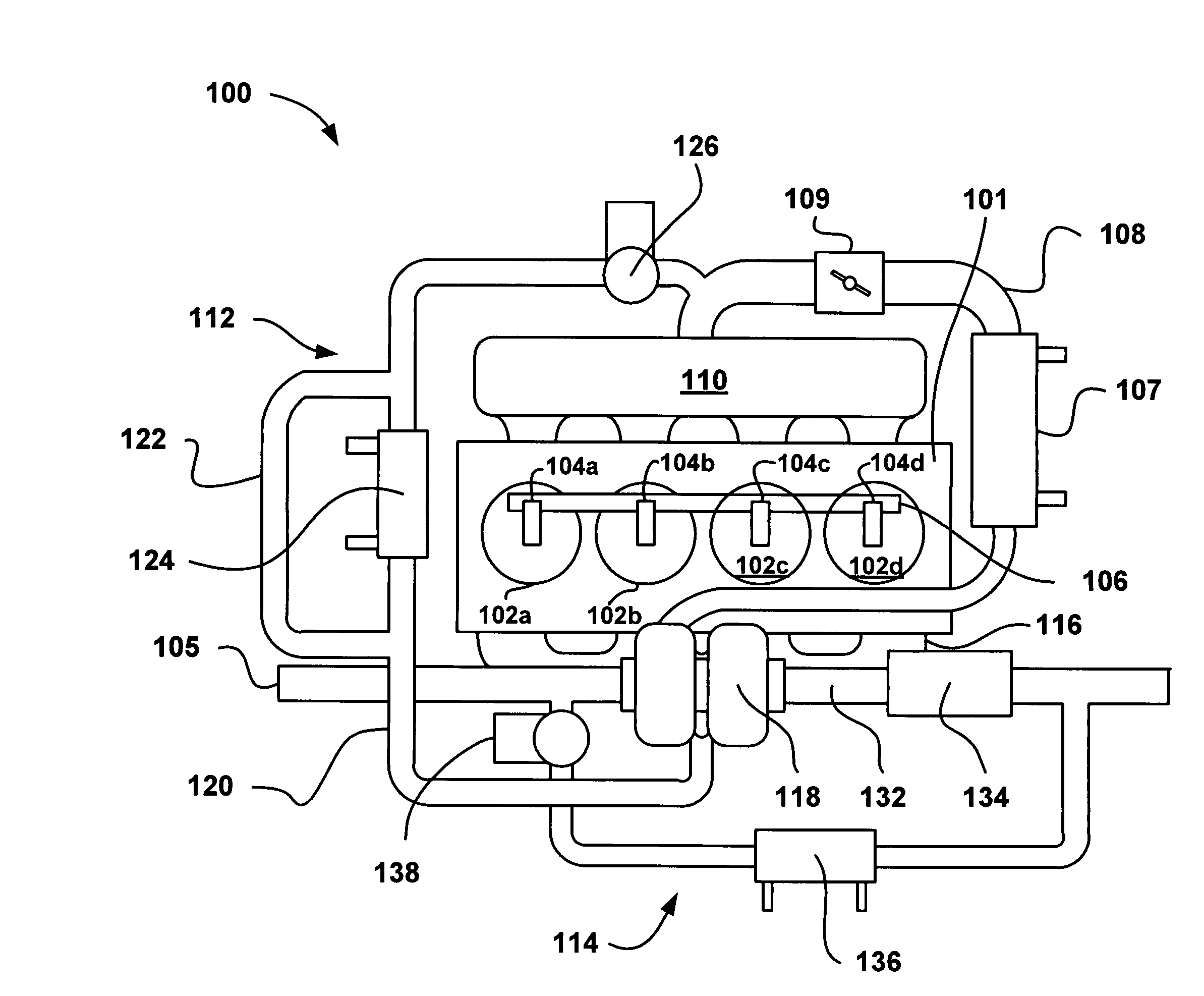
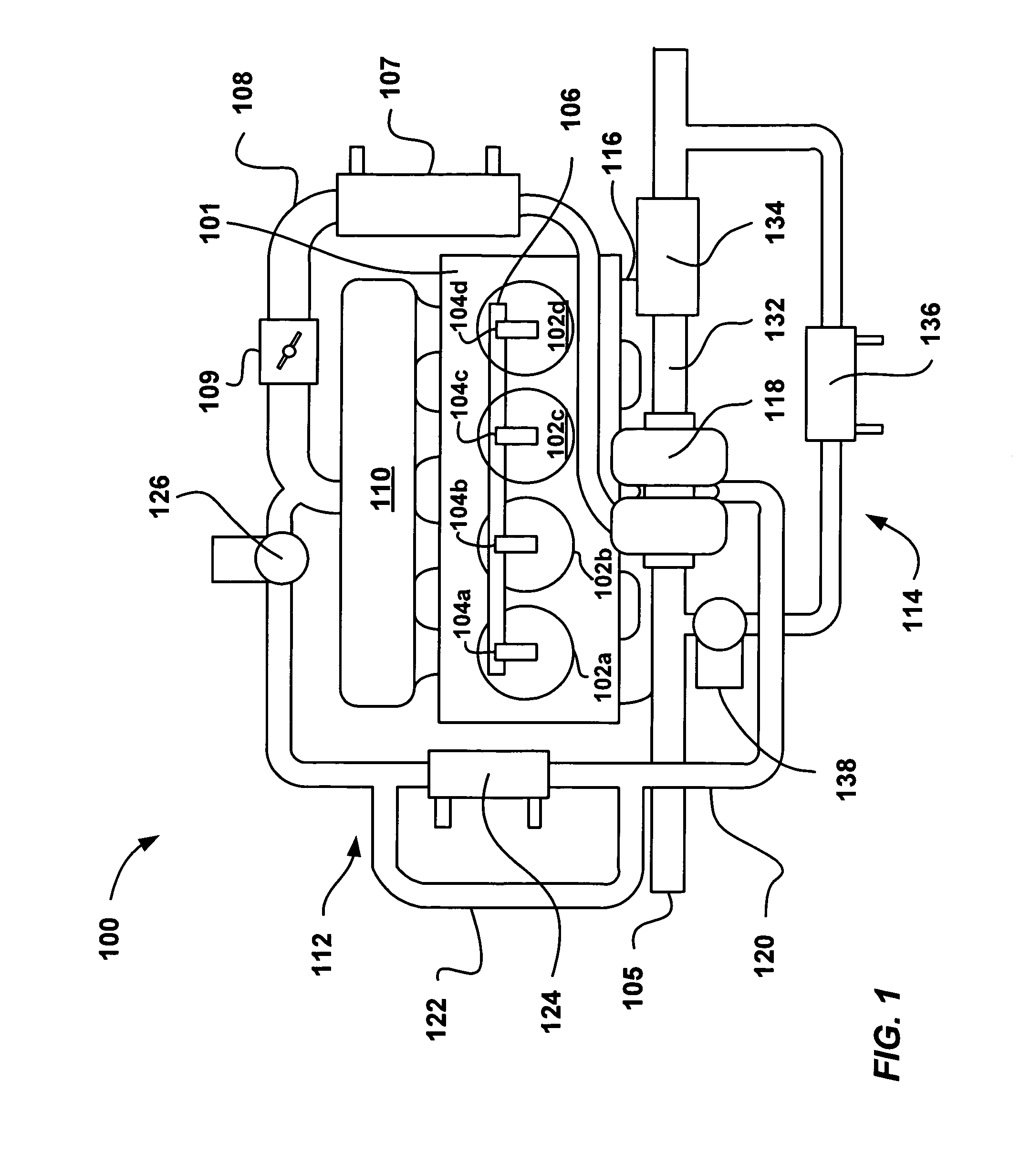
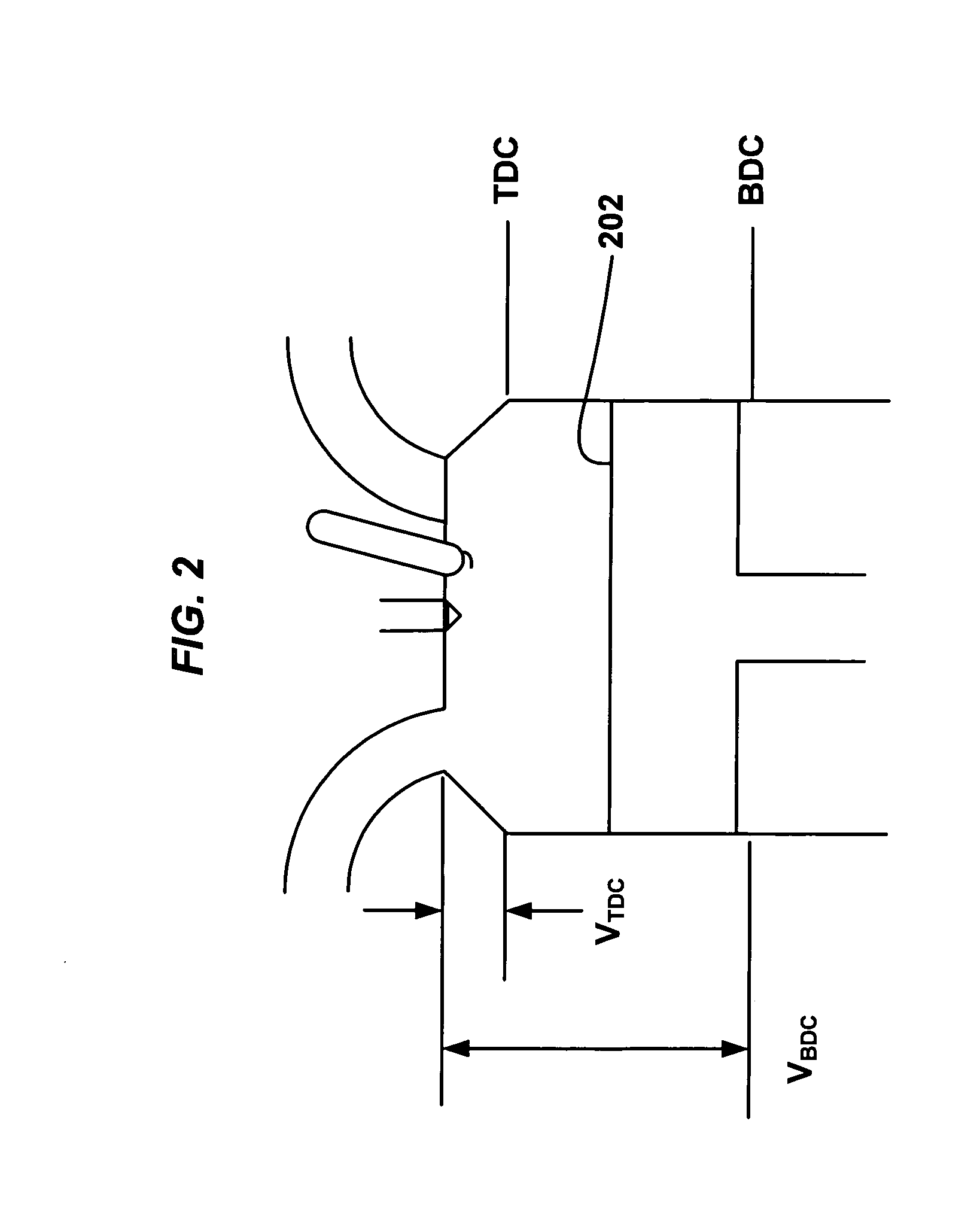
- A dual injection strategy is implemented in a gasoline direct injection engine, where air including exhaust gas at levels greater than 20% by total air mass is introduced into the combustion chamber, with a first fuel amount injected as the piston moves away from the cylinder head and a second fuel amount injected as it moves towards the cylinder head, maintaining an air-to-fuel ratio of 14.0:1 to 15.0:1, and controlled by an electronic system with high and low pressure EGR valves.

Exhaust-Gas Recirculation System
PatentInactiveUS20080135026A1
Innovation
- The exhaust-gas recirculation system is designed with a branching section positioned directly opposed to the movable valving element of the EGR valve, allowing each introducing passage to be isolated from others, thereby minimizing communication and maintaining a simple mechanism with shared valve usage.


Emissions Regulations Impact on GDI EGR Development
The evolution of emissions regulations has been a primary driver for the development and implementation of Exhaust Gas Recirculation (EGR) systems in Gasoline Direct Injection (GDI) engines. Since the introduction of Euro 1 standards in 1992, regulatory frameworks have progressively tightened emission limits, with each new iteration demanding more sophisticated technological solutions from automotive manufacturers.
The implementation of Euro 6 standards in 2014 marked a significant turning point for GDI engine development, as these regulations specifically targeted particulate matter (PM) and nitrogen oxides (NOx) emissions—pollutants that GDI engines traditionally struggled to control. This regulatory pressure has accelerated research and development in EGR technologies as a cost-effective solution for NOx reduction.
In the United States, the Environmental Protection Agency's Tier 3 standards and California Air Resources Board's LEV III regulations have similarly pushed manufacturers toward advanced EGR solutions. These regulations have established fleet-average emission standards that become increasingly stringent through 2025, requiring a 70-80% reduction in NOx and non-methane organic gases (NMOG) compared to previous standards.
China's rapidly evolving regulatory framework, now implementing China 6 standards (equivalent to Euro 6), has created one of the world's most demanding emissions environments. This has forced global automakers to accelerate their EGR technology deployment in the world's largest automotive market, driving innovation in high-pressure and low-pressure EGR systems specifically optimized for GDI applications.
The regulatory focus has shifted from simply limiting tailpipe emissions to comprehensive lifecycle assessments of environmental impact. This has influenced EGR system design to balance NOx reduction with fuel efficiency, as CO2 emissions have become increasingly regulated under frameworks such as the EU's CO2 fleet targets and similar programs in other markets.
Real Driving Emissions (RDE) testing, introduced with Euro 6d-TEMP and fully implemented in Euro 6d, has fundamentally changed the approach to EGR calibration. Systems must now perform effectively across a much wider range of operating conditions than previously required under laboratory testing cycles, necessitating more sophisticated control strategies and hardware designs.
Looking forward, the proposed Euro 7 standards and equivalent regulations in other markets will likely demand even greater emissions reductions, potentially requiring dual-loop EGR systems that combine high and low-pressure circuits to maximize efficiency across all engine operating conditions. This regulatory trajectory ensures that EGR will remain a critical technology in GDI engines for the foreseeable future.
The implementation of Euro 6 standards in 2014 marked a significant turning point for GDI engine development, as these regulations specifically targeted particulate matter (PM) and nitrogen oxides (NOx) emissions—pollutants that GDI engines traditionally struggled to control. This regulatory pressure has accelerated research and development in EGR technologies as a cost-effective solution for NOx reduction.
In the United States, the Environmental Protection Agency's Tier 3 standards and California Air Resources Board's LEV III regulations have similarly pushed manufacturers toward advanced EGR solutions. These regulations have established fleet-average emission standards that become increasingly stringent through 2025, requiring a 70-80% reduction in NOx and non-methane organic gases (NMOG) compared to previous standards.
China's rapidly evolving regulatory framework, now implementing China 6 standards (equivalent to Euro 6), has created one of the world's most demanding emissions environments. This has forced global automakers to accelerate their EGR technology deployment in the world's largest automotive market, driving innovation in high-pressure and low-pressure EGR systems specifically optimized for GDI applications.
The regulatory focus has shifted from simply limiting tailpipe emissions to comprehensive lifecycle assessments of environmental impact. This has influenced EGR system design to balance NOx reduction with fuel efficiency, as CO2 emissions have become increasingly regulated under frameworks such as the EU's CO2 fleet targets and similar programs in other markets.
Real Driving Emissions (RDE) testing, introduced with Euro 6d-TEMP and fully implemented in Euro 6d, has fundamentally changed the approach to EGR calibration. Systems must now perform effectively across a much wider range of operating conditions than previously required under laboratory testing cycles, necessitating more sophisticated control strategies and hardware designs.
Looking forward, the proposed Euro 7 standards and equivalent regulations in other markets will likely demand even greater emissions reductions, potentially requiring dual-loop EGR systems that combine high and low-pressure circuits to maximize efficiency across all engine operating conditions. This regulatory trajectory ensures that EGR will remain a critical technology in GDI engines for the foreseeable future.
Thermal Management Strategies for GDI EGR Systems
Thermal management is a critical aspect of GDI EGR systems that significantly impacts both performance and emissions control. Effective thermal management strategies must address the inherent temperature challenges associated with recirculated exhaust gases, which can reach temperatures exceeding 800°C before cooling.
The primary thermal management approaches for GDI EGR systems can be categorized into active and passive cooling strategies. Active cooling typically employs dedicated EGR coolers—compact heat exchangers that utilize engine coolant to reduce exhaust gas temperatures before reintroduction to the intake manifold. These coolers commonly feature tube-and-shell or plate designs optimized for high thermal efficiency while minimizing pressure drop and fouling susceptibility.
Advanced thermal management systems increasingly incorporate dual-loop cooling circuits, separating high-temperature and low-temperature cooling requirements. This configuration allows for more precise temperature control of recirculated exhaust gases, maintaining optimal temperatures between 120-150°C to balance NOx reduction benefits against potential condensation issues that could lead to corrosion or fouling.
Variable cooling technologies represent another frontier in thermal management, employing electronically controlled valves to modulate coolant flow through EGR coolers based on engine operating conditions. This adaptive approach optimizes EGR temperature across the entire operating range, particularly beneficial during cold-start conditions when minimal cooling is desirable to maintain combustion stability.
Material selection plays a crucial role in thermal management strategy, with high-temperature-resistant alloys such as stainless steel and Inconel being preferred for hot-side components. For cooler components, aluminum alloys with specialized coatings are increasingly utilized to enhance heat transfer efficiency while providing necessary corrosion resistance.
Thermal insulation strategies are equally important, particularly for high-pressure EGR systems where maintaining exhaust gas energy can improve turbocharger performance. Selective insulation of EGR passages helps minimize heat loss before the turbocharger while still allowing sufficient cooling before intake reintroduction.
Computational fluid dynamics (CFD) and thermal modeling have become essential tools in developing these strategies, enabling engineers to predict temperature distributions, identify potential hotspots, and optimize cooling circuit designs before physical prototyping. These simulation approaches have led to innovations such as variable-geometry coolers that can adapt their effective surface area based on operating conditions.
The integration of thermal management with broader engine control strategies represents the cutting edge of GDI EGR system development, with model-based controllers continuously optimizing EGR temperature based on real-time sensor data and predictive algorithms.
The primary thermal management approaches for GDI EGR systems can be categorized into active and passive cooling strategies. Active cooling typically employs dedicated EGR coolers—compact heat exchangers that utilize engine coolant to reduce exhaust gas temperatures before reintroduction to the intake manifold. These coolers commonly feature tube-and-shell or plate designs optimized for high thermal efficiency while minimizing pressure drop and fouling susceptibility.
Advanced thermal management systems increasingly incorporate dual-loop cooling circuits, separating high-temperature and low-temperature cooling requirements. This configuration allows for more precise temperature control of recirculated exhaust gases, maintaining optimal temperatures between 120-150°C to balance NOx reduction benefits against potential condensation issues that could lead to corrosion or fouling.
Variable cooling technologies represent another frontier in thermal management, employing electronically controlled valves to modulate coolant flow through EGR coolers based on engine operating conditions. This adaptive approach optimizes EGR temperature across the entire operating range, particularly beneficial during cold-start conditions when minimal cooling is desirable to maintain combustion stability.
Material selection plays a crucial role in thermal management strategy, with high-temperature-resistant alloys such as stainless steel and Inconel being preferred for hot-side components. For cooler components, aluminum alloys with specialized coatings are increasingly utilized to enhance heat transfer efficiency while providing necessary corrosion resistance.
Thermal insulation strategies are equally important, particularly for high-pressure EGR systems where maintaining exhaust gas energy can improve turbocharger performance. Selective insulation of EGR passages helps minimize heat loss before the turbocharger while still allowing sufficient cooling before intake reintroduction.
Computational fluid dynamics (CFD) and thermal modeling have become essential tools in developing these strategies, enabling engineers to predict temperature distributions, identify potential hotspots, and optimize cooling circuit designs before physical prototyping. These simulation approaches have led to innovations such as variable-geometry coolers that can adapt their effective surface area based on operating conditions.
The integration of thermal management with broader engine control strategies represents the cutting edge of GDI EGR system development, with model-based controllers continuously optimizing EGR temperature based on real-time sensor data and predictive algorithms.
Unlock deeper insights with Patsnap Eureka Quick Research — get a full tech report to explore trends and direct your research. Try now!
Generate Your Research Report Instantly with AI Agent
Supercharge your innovation with Patsnap Eureka AI Agent Platform!