
How to Optimize GDI Engine Turbo Boost Levels
AUG 28, 202510 MIN READ
Generate Your Research Report Instantly with AI Agent
Patsnap Eureka helps you evaluate technical feasibility & market potential.
GDI Turbo Technology Background and Objectives
Gasoline Direct Injection (GDI) technology has evolved significantly since its commercial introduction in the late 1990s. This evolution has been driven by increasingly stringent emissions regulations, consumer demand for improved fuel economy, and the automotive industry's pursuit of enhanced engine performance. GDI engines represent a fundamental shift from traditional port fuel injection systems by delivering fuel directly into the combustion chamber, allowing for more precise fuel metering and combustion control.
The integration of turbocharging with GDI engines has created a powerful synergy that addresses the automotive industry's need to simultaneously reduce engine displacement while maintaining or improving power output—a concept commonly known as "downsizing." This combination has become increasingly prevalent in modern vehicle powertrains, with market penetration growing from approximately 5% in 2010 to over 30% in current production vehicles across global markets.
Turbocharging in GDI engines utilizes exhaust gas energy to compress intake air, increasing oxygen density and enabling more efficient combustion. The historical development of this technology has progressed from simple wastegate-controlled systems to sophisticated variable geometry turbochargers and, more recently, electric-assisted turbocharging solutions that minimize traditional turbo lag while maximizing boost response.
The primary objectives of GDI turbo optimization center around four key areas: enhancing thermal efficiency, improving transient response, reducing emissions (particularly NOx and particulate matter), and ensuring reliability under increased cylinder pressures. Current industry benchmarks indicate thermal efficiency targets exceeding 40%, with some advanced systems approaching 45% under optimal conditions.
Recent technological advancements have focused on multi-stage boosting systems, integrated exhaust manifolds, and advanced electronic control strategies that dynamically adjust boost levels based on real-time operating conditions. These innovations aim to flatten the torque curve across a broader RPM range while maintaining combustion stability and minimizing knock tendencies.
The optimization of turbo boost levels in GDI engines represents a complex balance between competing factors including fuel economy, emissions compliance, performance expectations, and component durability. This technical challenge is further complicated by the varied driving conditions vehicles encounter, from cold-start urban cycles to sustained high-speed operation.
Our technical objective is to develop a comprehensive framework for optimizing GDI turbo boost levels that addresses these competing demands while providing adaptability across different vehicle platforms and use cases. This framework will incorporate both hardware solutions and software control strategies to achieve optimal boost management throughout the engine's operating range.
The integration of turbocharging with GDI engines has created a powerful synergy that addresses the automotive industry's need to simultaneously reduce engine displacement while maintaining or improving power output—a concept commonly known as "downsizing." This combination has become increasingly prevalent in modern vehicle powertrains, with market penetration growing from approximately 5% in 2010 to over 30% in current production vehicles across global markets.
Turbocharging in GDI engines utilizes exhaust gas energy to compress intake air, increasing oxygen density and enabling more efficient combustion. The historical development of this technology has progressed from simple wastegate-controlled systems to sophisticated variable geometry turbochargers and, more recently, electric-assisted turbocharging solutions that minimize traditional turbo lag while maximizing boost response.
The primary objectives of GDI turbo optimization center around four key areas: enhancing thermal efficiency, improving transient response, reducing emissions (particularly NOx and particulate matter), and ensuring reliability under increased cylinder pressures. Current industry benchmarks indicate thermal efficiency targets exceeding 40%, with some advanced systems approaching 45% under optimal conditions.
Recent technological advancements have focused on multi-stage boosting systems, integrated exhaust manifolds, and advanced electronic control strategies that dynamically adjust boost levels based on real-time operating conditions. These innovations aim to flatten the torque curve across a broader RPM range while maintaining combustion stability and minimizing knock tendencies.
The optimization of turbo boost levels in GDI engines represents a complex balance between competing factors including fuel economy, emissions compliance, performance expectations, and component durability. This technical challenge is further complicated by the varied driving conditions vehicles encounter, from cold-start urban cycles to sustained high-speed operation.
Our technical objective is to develop a comprehensive framework for optimizing GDI turbo boost levels that addresses these competing demands while providing adaptability across different vehicle platforms and use cases. This framework will incorporate both hardware solutions and software control strategies to achieve optimal boost management throughout the engine's operating range.
Market Demand Analysis for Turbocharged GDI Engines
The global market for turbocharged Gasoline Direct Injection (GDI) engines has experienced substantial growth over the past decade, driven primarily by increasingly stringent emissions regulations and consumer demand for improved fuel efficiency without sacrificing performance. According to recent industry analyses, the global automotive turbocharger market reached approximately $16 billion in 2022 and is projected to grow at a compound annual growth rate of 8.7% through 2030.
In mature automotive markets such as North America and Europe, consumer preferences have shifted significantly toward downsized turbocharged engines. This trend is evidenced by the fact that over 70% of new passenger vehicles sold in these regions now feature some form of turbocharging technology, with GDI systems becoming the predominant fuel delivery method.
The Asia-Pacific region represents the fastest-growing market for turbocharged GDI technology, with China leading adoption rates as manufacturers respond to the government's dual pressure of emissions reduction and fuel economy improvements. Market penetration in this region has more than doubled in the past five years, creating substantial opportunities for technology providers and automotive manufacturers alike.
Commercial vehicle applications for optimized turbo boost systems are also expanding rapidly, with medium and heavy-duty truck manufacturers increasingly adopting advanced GDI turbo systems to meet both performance requirements and emissions standards. This segment is expected to grow at nearly 10% annually through 2028, outpacing the broader automotive market.
From a consumer perspective, market research indicates that vehicle buyers increasingly prioritize the balance of performance and efficiency that optimized turbocharging can provide. Surveys show that over 65% of new car buyers consider fuel economy a "very important" purchase factor, while 58% simultaneously rate acceleration and performance as highly important—a combination that turbocharged GDI engines are uniquely positioned to address.
The aftermarket for turbocharger optimization solutions also demonstrates robust growth, with performance tuning and efficiency enhancement products showing 12% year-over-year revenue increases. This indicates strong consumer interest in further optimizing factory turbocharging systems beyond manufacturer specifications.
Industry forecasts suggest that variable-geometry turbochargers and electrically assisted turbocharging systems will see particularly strong demand growth, with projected market expansion of 15% and 22% respectively over the next five years. These advanced systems offer superior boost optimization capabilities compared to conventional fixed-geometry turbochargers, addressing the market need for reduced turbo lag and improved low-end torque characteristics.
In mature automotive markets such as North America and Europe, consumer preferences have shifted significantly toward downsized turbocharged engines. This trend is evidenced by the fact that over 70% of new passenger vehicles sold in these regions now feature some form of turbocharging technology, with GDI systems becoming the predominant fuel delivery method.
The Asia-Pacific region represents the fastest-growing market for turbocharged GDI technology, with China leading adoption rates as manufacturers respond to the government's dual pressure of emissions reduction and fuel economy improvements. Market penetration in this region has more than doubled in the past five years, creating substantial opportunities for technology providers and automotive manufacturers alike.
Commercial vehicle applications for optimized turbo boost systems are also expanding rapidly, with medium and heavy-duty truck manufacturers increasingly adopting advanced GDI turbo systems to meet both performance requirements and emissions standards. This segment is expected to grow at nearly 10% annually through 2028, outpacing the broader automotive market.
From a consumer perspective, market research indicates that vehicle buyers increasingly prioritize the balance of performance and efficiency that optimized turbocharging can provide. Surveys show that over 65% of new car buyers consider fuel economy a "very important" purchase factor, while 58% simultaneously rate acceleration and performance as highly important—a combination that turbocharged GDI engines are uniquely positioned to address.
The aftermarket for turbocharger optimization solutions also demonstrates robust growth, with performance tuning and efficiency enhancement products showing 12% year-over-year revenue increases. This indicates strong consumer interest in further optimizing factory turbocharging systems beyond manufacturer specifications.
Industry forecasts suggest that variable-geometry turbochargers and electrically assisted turbocharging systems will see particularly strong demand growth, with projected market expansion of 15% and 22% respectively over the next five years. These advanced systems offer superior boost optimization capabilities compared to conventional fixed-geometry turbochargers, addressing the market need for reduced turbo lag and improved low-end torque characteristics.
Current Challenges in GDI Turbo Boost Optimization
Gasoline Direct Injection (GDI) engines with turbocharging face several critical optimization challenges that limit their performance potential and efficiency. The primary challenge lies in balancing boost pressure with engine reliability. Excessive boost levels can lead to knock phenomena, where abnormal combustion occurs before the spark plug ignites the air-fuel mixture. This pre-ignition can cause severe engine damage and significantly reduce component lifespan, particularly affecting pistons and connecting rods that experience extreme mechanical stress.
Thermal management represents another significant hurdle in GDI turbo systems. The combination of direct injection and turbocharging generates substantial heat that must be efficiently dissipated. Current cooling systems often struggle to maintain optimal operating temperatures under high boost conditions, leading to reduced volumetric efficiency and potential thermal damage to critical components. This thermal limitation frequently necessitates boost pressure restrictions that compromise performance potential.
Turbo lag continues to plague GDI systems despite advancements in turbocharger technology. The inherent delay between throttle input and boost pressure buildup creates drivability issues and inconsistent power delivery. While variable geometry turbochargers and twin-scroll designs have improved response characteristics, they add complexity and cost to the system while still not completely eliminating lag across all operating conditions.
Fuel delivery precision presents unique challenges in turbocharged GDI engines. As boost pressure increases, maintaining the ideal air-fuel ratio becomes increasingly difficult due to the compressed air's higher density. Current fuel injector technology struggles to deliver precisely metered fuel under varying boost conditions, leading to either rich mixtures that waste fuel or lean conditions that can damage the engine.
Emissions compliance further complicates boost optimization. Higher boost levels typically generate increased NOx emissions due to higher combustion temperatures. Particulate matter emissions also tend to increase under certain high-boost operating conditions in GDI engines. These emissions challenges often force manufacturers to implement conservative boost strategies that prioritize regulatory compliance over maximum performance.
Control system limitations represent a technological barrier to optimal boost management. Current engine control units (ECUs) typically rely on predetermined maps and relatively simple algorithms that cannot fully adapt to all driving conditions and environmental factors. The lack of real-time combustion analysis and predictive capabilities means boost levels must incorporate significant safety margins, limiting performance potential.
Material constraints also impose practical limitations on boost optimization. While advanced materials like silicon-aluminum alloys and reinforced polymers have improved component durability, the cost-effectiveness of these solutions remains problematic for mass-market applications. The trade-off between material strength, weight, and manufacturing cost continues to restrict the maximum sustainable boost levels in production GDI engines.
Thermal management represents another significant hurdle in GDI turbo systems. The combination of direct injection and turbocharging generates substantial heat that must be efficiently dissipated. Current cooling systems often struggle to maintain optimal operating temperatures under high boost conditions, leading to reduced volumetric efficiency and potential thermal damage to critical components. This thermal limitation frequently necessitates boost pressure restrictions that compromise performance potential.
Turbo lag continues to plague GDI systems despite advancements in turbocharger technology. The inherent delay between throttle input and boost pressure buildup creates drivability issues and inconsistent power delivery. While variable geometry turbochargers and twin-scroll designs have improved response characteristics, they add complexity and cost to the system while still not completely eliminating lag across all operating conditions.
Fuel delivery precision presents unique challenges in turbocharged GDI engines. As boost pressure increases, maintaining the ideal air-fuel ratio becomes increasingly difficult due to the compressed air's higher density. Current fuel injector technology struggles to deliver precisely metered fuel under varying boost conditions, leading to either rich mixtures that waste fuel or lean conditions that can damage the engine.
Emissions compliance further complicates boost optimization. Higher boost levels typically generate increased NOx emissions due to higher combustion temperatures. Particulate matter emissions also tend to increase under certain high-boost operating conditions in GDI engines. These emissions challenges often force manufacturers to implement conservative boost strategies that prioritize regulatory compliance over maximum performance.
Control system limitations represent a technological barrier to optimal boost management. Current engine control units (ECUs) typically rely on predetermined maps and relatively simple algorithms that cannot fully adapt to all driving conditions and environmental factors. The lack of real-time combustion analysis and predictive capabilities means boost levels must incorporate significant safety margins, limiting performance potential.
Material constraints also impose practical limitations on boost optimization. While advanced materials like silicon-aluminum alloys and reinforced polymers have improved component durability, the cost-effectiveness of these solutions remains problematic for mass-market applications. The trade-off between material strength, weight, and manufacturing cost continues to restrict the maximum sustainable boost levels in production GDI engines.
Current Boost Control Strategies and Implementations
01 Turbocharger control systems for GDI engines
Control systems for turbochargers in gasoline direct injection (GDI) engines that regulate boost pressure levels based on engine operating conditions. These systems use electronic controllers to adjust wastegate position, compressor speed, or variable geometry mechanisms to optimize boost pressure for different driving scenarios, improving engine performance while maintaining reliability and efficiency.- Turbocharger control systems for GDI engines: Control systems for turbochargers in gasoline direct injection engines that optimize boost levels based on engine operating conditions. These systems use electronic controllers to adjust wastegate position, compressor speed, and other parameters to achieve desired boost pressure while maintaining efficiency and preventing engine knock. Advanced algorithms monitor factors such as engine load, speed, and ambient conditions to precisely regulate boost delivery.
- Variable geometry turbocharger systems for GDI engines: Variable geometry turbocharger systems specifically designed for GDI engines that allow dynamic adjustment of boost levels. These systems feature movable vanes or adjustable nozzles that can alter the flow characteristics of exhaust gases driving the turbine. This enables optimized boost pressure across different engine speeds and loads, improving low-end torque while maintaining high-end power and reducing turbo lag.
- Boost pressure monitoring and diagnostic systems: Systems for monitoring and diagnosing boost pressure levels in turbocharged GDI engines. These include sensors and diagnostic tools that measure actual boost pressure and compare it to target values. When deviations are detected, the system can identify potential issues such as leaks, wastegate malfunctions, or compressor problems. Some advanced systems include predictive diagnostics that can anticipate failures before they occur.
- Multi-stage turbocharging for GDI engines: Multi-stage turbocharging systems for GDI engines that utilize two or more turbochargers working in sequence or parallel to optimize boost across the entire engine operating range. These configurations may include combinations of differently sized turbochargers, with smaller units providing quick response at low engine speeds and larger units delivering maximum boost at higher speeds. Control strategies coordinate the transition between stages to ensure smooth power delivery.
- Integration of GDI and turbocharging for emissions reduction: Technologies that integrate gasoline direct injection with turbocharging specifically to reduce emissions while maintaining performance. These systems precisely control fuel injection timing and quantity in relation to boost pressure to optimize combustion efficiency. Advanced control strategies may include lean burn operation under certain boost conditions, exhaust gas recirculation management, and catalyst temperature control to minimize both NOx and particulate emissions.
02 Boost pressure management for fuel efficiency
Methods and systems for managing turbo boost levels in GDI engines to optimize fuel efficiency. These approaches involve precise control of air-fuel ratios at different boost levels, adjusting injection timing and quantity based on boost pressure, and implementing strategies to reduce fuel consumption during various load conditions while maintaining adequate boost for performance.Expand Specific Solutions03 Variable boost control for performance optimization
Technologies that enable dynamic adjustment of turbo boost levels in GDI engines to optimize performance across different operating conditions. These include variable geometry turbochargers, multi-stage boosting systems, and electronic boost control mechanisms that can provide higher boost during acceleration and lower boost during cruising to balance power delivery and engine longevity.Expand Specific Solutions04 Boost pressure monitoring and diagnostic systems
Systems for monitoring turbo boost levels in GDI engines and diagnosing potential issues. These include pressure sensors, electronic monitoring systems, and diagnostic algorithms that can detect abnormal boost conditions, turbocharger underperformance, or system leaks. These systems help maintain optimal engine performance and prevent damage from improper boost levels.Expand Specific Solutions05 Integration of boost control with engine management systems
Approaches for integrating turbo boost control with broader engine management systems in GDI engines. These solutions coordinate boost pressure regulation with other engine parameters such as ignition timing, valve timing, exhaust gas recirculation, and fuel injection strategies to optimize overall engine performance, emissions control, and responsiveness across various driving conditions.Expand Specific Solutions
Key Industry Players in GDI Turbocharging Solutions
GDI Engine Turbo Boost Optimization is currently in a growth phase, with the global market expanding as automakers seek improved fuel efficiency and performance. The technology has reached moderate maturity, with key players demonstrating varying levels of expertise. Ford, Volkswagen, and Toyota lead with advanced implementations, while BorgWarner and Robert Bosch provide specialized component solutions. Hyundai, Kia, and Stellantis are rapidly advancing their capabilities. The competitive landscape is intensifying as Mercedes-Benz and Continental Automotive integrate sophisticated electronic control systems. Emerging players like Tula Technology are introducing innovative software approaches, while traditional manufacturers like Weichai Power and Isuzu are adapting the technology for diverse vehicle applications.
Robert Bosch GmbH
Technical Solution: Bosch has developed an advanced electronic boost control system for GDI engines that utilizes a combination of hardware and software solutions. Their system employs intelligent wastegate actuators with position sensors that provide precise control over the turbocharger's boost pressure. The technology incorporates model-based control algorithms that continuously adjust boost levels based on real-time engine parameters including intake air temperature, ambient pressure, and engine load. Bosch's system features predictive control strategies that anticipate boost requirements during transient conditions, significantly reducing turbo lag. Their solution also integrates with the engine management system to optimize fuel injection timing and quantity in relation to boost pressure, ensuring optimal air-fuel ratios across the operating range. Additionally, Bosch has implemented dual-loop feedback control mechanisms that monitor both target and actual boost pressure, enabling rapid corrections to maintain desired performance levels while protecting engine components from excessive stress.
Strengths: Superior transient response capabilities through predictive algorithms; highly integrated with other engine management systems; excellent precision in boost control across varying operating conditions. Weaknesses: Higher system complexity requiring sophisticated calibration; potentially higher cost compared to simpler mechanical solutions; greater dependency on sensor reliability.
Toyota Motor Corp.
Technical Solution: Toyota has developed a comprehensive boost optimization system for their GDI engines centered around their D-4S (Direct injection 4-stroke gasoline engine Superior version) technology. Their approach combines port and direct injection strategies to optimize combustion efficiency while managing boost levels. Toyota's system features a dynamic boost control mechanism that adjusts turbocharger operation based on a sophisticated engine load mapping system that considers multiple parameters including throttle position, engine speed, and intake air volume. The company has implemented advanced wastegate control using electric actuators that provide more precise boost regulation compared to traditional pneumatic systems. Their technology incorporates water-cooled exhaust manifolds that maintain optimal exhaust gas temperatures for the turbocharger, extending component life while allowing for higher boost pressures without risk of detonation. Toyota has also developed variable valve timing systems specifically calibrated to work in conjunction with turbocharging, optimizing exhaust pulse energy delivery to the turbine while managing internal EGR rates to control combustion temperatures at high boost levels.
Strengths: Exceptional reliability and durability even under high boost conditions; seamless integration of direct and port injection for optimal performance across operating range; excellent thermal management. Weaknesses: Somewhat conservative boost targets compared to some competitors; additional complexity and cost from dual injection system; requires more sophisticated calibration process.
Critical Patents and Innovations in Turbo Boost Management
Gasoline direct injection engine
PatentInactiveUS8251040B2
Innovation
- The engine design includes a piston head with a first cavity for fuel return to the spark plug and a protrusion offset towards the exhaust valve, featuring a second cavity of a smaller height, allowing for differential control of intake and exhaust valve volumes to optimize the combustion chamber's volume ratio.
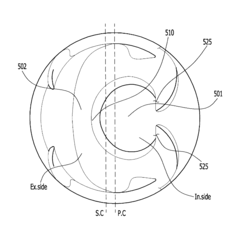
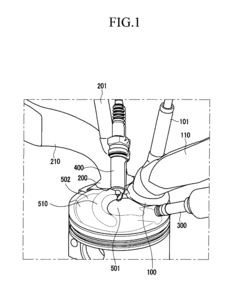
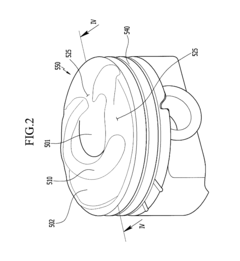
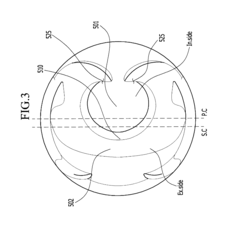
LPG direct injection engine
PatentWO2015155359A1
Innovation
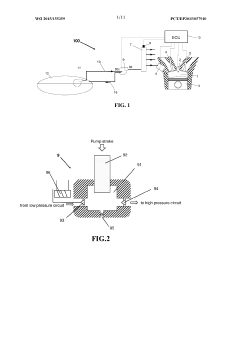
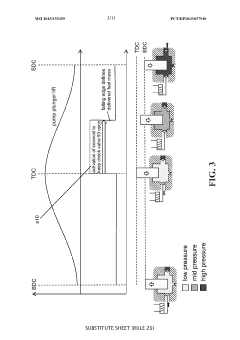
- An LPG direct injection engine with a high-pressure pump and electronic control unit for precise liquefied petroleum gas injection between 360° and 60° BTDC, optimized valve overlap, and cylinder deactivation system to reduce emissions and improve efficiency.
Emissions Compliance and Regulatory Considerations
Optimizing GDI engine turbo boost levels must be approached with careful consideration of emissions regulations, which vary significantly across global markets. The Environmental Protection Agency (EPA) in the United States, the European Union's Euro standards, and China's National standards represent the primary regulatory frameworks that manufacturers must navigate. These regulations establish strict limits on nitrogen oxides (NOx), particulate matter (PM), carbon monoxide (CO), and hydrocarbon emissions, all of which are directly affected by turbocharger boost pressure settings.
Higher boost pressures typically lead to increased combustion temperatures, which can significantly elevate NOx formation. This presents a fundamental challenge for engineers seeking to maximize performance while maintaining compliance. The trade-off between performance and emissions often necessitates sophisticated control strategies that dynamically adjust boost levels based on operating conditions and emissions control system status.
Real Driving Emissions (RDE) testing, implemented in Europe since 2017, has further complicated optimization efforts by requiring vehicles to demonstrate compliance during actual on-road driving rather than just in laboratory conditions. This shift has forced manufacturers to develop more robust boost control strategies that maintain emissions compliance across a wider range of operating conditions than previously necessary.
On-Board Diagnostics (OBD) requirements present another regulatory consideration. Modern OBD systems must monitor boost control systems for malfunctions that could lead to emissions exceedances. Any optimization strategy must therefore include comprehensive self-diagnostic capabilities to detect deviations from expected boost behavior that might impact emissions performance.
The regulatory landscape continues to evolve rapidly, with increasingly stringent standards being phased in across major markets. For instance, Euro 7 standards (expected implementation in 2025) will likely impose even tighter emissions limits and more comprehensive testing procedures. This evolving regulatory environment necessitates forward-looking boost optimization strategies that can accommodate future requirements through software updates rather than hardware modifications.
Certification testing procedures also influence optimization approaches. The Worldwide Harmonized Light Vehicles Test Procedure (WLTP) and supplementary tests like the US Federal Test Procedure (FTP) evaluate emissions across different driving cycles. Boost optimization must therefore consider performance across these standardized test cycles while still delivering satisfactory real-world performance.
Manufacturers increasingly employ selective catalytic reduction (SCR), gasoline particulate filters (GPF), and other aftertreatment technologies to manage emissions. Boost optimization strategies must be developed in concert with these systems, potentially incorporating predictive models that anticipate aftertreatment efficiency under various boost conditions to maintain overall emissions compliance.
Higher boost pressures typically lead to increased combustion temperatures, which can significantly elevate NOx formation. This presents a fundamental challenge for engineers seeking to maximize performance while maintaining compliance. The trade-off between performance and emissions often necessitates sophisticated control strategies that dynamically adjust boost levels based on operating conditions and emissions control system status.
Real Driving Emissions (RDE) testing, implemented in Europe since 2017, has further complicated optimization efforts by requiring vehicles to demonstrate compliance during actual on-road driving rather than just in laboratory conditions. This shift has forced manufacturers to develop more robust boost control strategies that maintain emissions compliance across a wider range of operating conditions than previously necessary.
On-Board Diagnostics (OBD) requirements present another regulatory consideration. Modern OBD systems must monitor boost control systems for malfunctions that could lead to emissions exceedances. Any optimization strategy must therefore include comprehensive self-diagnostic capabilities to detect deviations from expected boost behavior that might impact emissions performance.
The regulatory landscape continues to evolve rapidly, with increasingly stringent standards being phased in across major markets. For instance, Euro 7 standards (expected implementation in 2025) will likely impose even tighter emissions limits and more comprehensive testing procedures. This evolving regulatory environment necessitates forward-looking boost optimization strategies that can accommodate future requirements through software updates rather than hardware modifications.
Certification testing procedures also influence optimization approaches. The Worldwide Harmonized Light Vehicles Test Procedure (WLTP) and supplementary tests like the US Federal Test Procedure (FTP) evaluate emissions across different driving cycles. Boost optimization must therefore consider performance across these standardized test cycles while still delivering satisfactory real-world performance.
Manufacturers increasingly employ selective catalytic reduction (SCR), gasoline particulate filters (GPF), and other aftertreatment technologies to manage emissions. Boost optimization strategies must be developed in concert with these systems, potentially incorporating predictive models that anticipate aftertreatment efficiency under various boost conditions to maintain overall emissions compliance.
Thermal Management Challenges and Solutions
Thermal management represents one of the most critical challenges in optimizing GDI (Gasoline Direct Injection) engine turbo boost levels. As boost pressure increases, combustion temperatures rise significantly, creating potential issues with component durability, knock tendency, and overall engine efficiency. Modern GDI turbocharged engines typically operate at temperatures exceeding 900°C in the exhaust manifold during high-load conditions, placing extreme thermal stress on turbocharger components.
The primary thermal management challenges include heat soak in the turbocharger housing, thermal expansion differentials between components, intercooler efficiency limitations, and oil coking in bearing assemblies. These issues become particularly pronounced during rapid transient operations when boost levels change quickly, creating thermal gradients that can lead to premature component failure or reduced performance.
Advanced materials technology has emerged as a crucial solution pathway. Nickel-based superalloys and ceramic matrix composites (CMCs) are increasingly replacing conventional materials in turbine wheels and housings, offering temperature resistance up to 1050°C while reducing thermal mass. This allows for faster spool-up times and improved boost response while maintaining structural integrity under extreme thermal cycling.
Water-cooled turbocharger housings represent another significant advancement, with integrated cooling channels that maintain more consistent operating temperatures. Recent developments include dual-circuit cooling systems that prioritize turbocharger cooling during high-load operation and after engine shutdown to prevent heat soak damage. Data indicates these systems can reduce peak turbocharger housing temperatures by 15-20% during aggressive driving cycles.
Electronic thermal management systems have evolved substantially, with integrated boost control algorithms that factor in component temperatures. Modern engine control units (ECUs) now incorporate predictive thermal models that can preemptively adjust boost targets based on calculated component temperatures, preventing thermal damage before it occurs. These systems typically utilize multiple temperature sensors throughout the intake and exhaust system to create comprehensive thermal maps.
Intercooler technology has also advanced significantly, with dual-stage and water-injected designs becoming more common in high-performance applications. Variable-geometry intercooler systems that can adjust cooling capacity based on intake air temperature and boost pressure are showing promising results in prototype testing, with potential efficiency improvements of 8-12% compared to conventional fixed-geometry designs.
Heat shields and thermal barriers continue to evolve, with multi-layer reflective barriers and aerogel-based insulators providing superior heat rejection while adding minimal weight. These solutions help maintain more consistent intake air temperatures and protect surrounding components from radiant heat, contributing to more stable boost control and improved reliability under sustained high-load conditions.
The primary thermal management challenges include heat soak in the turbocharger housing, thermal expansion differentials between components, intercooler efficiency limitations, and oil coking in bearing assemblies. These issues become particularly pronounced during rapid transient operations when boost levels change quickly, creating thermal gradients that can lead to premature component failure or reduced performance.
Advanced materials technology has emerged as a crucial solution pathway. Nickel-based superalloys and ceramic matrix composites (CMCs) are increasingly replacing conventional materials in turbine wheels and housings, offering temperature resistance up to 1050°C while reducing thermal mass. This allows for faster spool-up times and improved boost response while maintaining structural integrity under extreme thermal cycling.
Water-cooled turbocharger housings represent another significant advancement, with integrated cooling channels that maintain more consistent operating temperatures. Recent developments include dual-circuit cooling systems that prioritize turbocharger cooling during high-load operation and after engine shutdown to prevent heat soak damage. Data indicates these systems can reduce peak turbocharger housing temperatures by 15-20% during aggressive driving cycles.
Electronic thermal management systems have evolved substantially, with integrated boost control algorithms that factor in component temperatures. Modern engine control units (ECUs) now incorporate predictive thermal models that can preemptively adjust boost targets based on calculated component temperatures, preventing thermal damage before it occurs. These systems typically utilize multiple temperature sensors throughout the intake and exhaust system to create comprehensive thermal maps.
Intercooler technology has also advanced significantly, with dual-stage and water-injected designs becoming more common in high-performance applications. Variable-geometry intercooler systems that can adjust cooling capacity based on intake air temperature and boost pressure are showing promising results in prototype testing, with potential efficiency improvements of 8-12% compared to conventional fixed-geometry designs.
Heat shields and thermal barriers continue to evolve, with multi-layer reflective barriers and aerogel-based insulators providing superior heat rejection while adding minimal weight. These solutions help maintain more consistent intake air temperatures and protect surrounding components from radiant heat, contributing to more stable boost control and improved reliability under sustained high-load conditions.
Unlock deeper insights with Patsnap Eureka Quick Research — get a full tech report to explore trends and direct your research. Try now!
Generate Your Research Report Instantly with AI Agent
Supercharge your innovation with Patsnap Eureka AI Agent Platform!