Lightweight nested virtualization implementation method based on physical resource penetration mechanism

A technology of nested virtualization and physical resources, applied in the field of lightweight nested virtualization based on the penetration mechanism of physical resources, can solve problems such as performance isolation of NUMA architecture, achieve performance isolation, avoid performance load, avoid The effect of performance overhead

CN103995733AActive Publication Date: 2014-08-20XI AN JIAOTONG UNIV
3 Cites 15 Cited by

Patent Information

Authority / Receiving Office
CN · China
Current Assignee / Owner
Publication Date
2014-08-20

Smart Images

  • Figure 1
    Figure 1
  • Figure 2
    Figure 2
  • Figure 3
    Figure 3
Patent Text Reader

Abstract

The invention discloses a lightweight nested virtualization implementation method based on a physical resource penetration mechanism. The lightweight nested virtualization implementation method is different from physical resource virtualization through a traditional nested virtualization technology, the method mainly emphasizes management and monitoring on physical resources, and extra performance expenditure caused by virtualization on the physical resources is avoided. Besides, through resource management and control based on NUMA codes, the performance isolation of the traditional virtualization technology on NUMA architecture is avoided. Due to the method, physical equipment is grouped by a host hypervisor, guest hypervisors directly run on different resource groups, and therefore not only can performance loads caused by resource scheduling and sharing be avoided, but also the MUNA characteristic can be fully used for improving the system performance and guaranteeing the performance isolation between different guest hypervisors.
Need to check novelty before this filing date? Find Prior Art

Description

technical field

[0001] The invention belongs to the technical field of nested virtualization systems, and in particular relates to a lightweight nested virtualization implementation method based on a physical resource penetration mechanism. Background technique

[0002] Nested virtualization technology is an extension of traditional virtualization technology. A host hypervisor using this technology can simultaneously run multiple guest hypervisors on a physical computer. Cloud service providers can not only provide virtualization system leasing services through nested virtualization technology, but also simplify the complexity of cloud migration. There are many security holes in the existing virtualization system. Researchers can ensure the control flow integrity of the virtualization system and prevent user privacy data leakage through nested virtualization technology. Nested virtualization technology can also make the development and debugging of virtual machines more eff...

Examples

Embodiment Construction

[0024] The present invention will be further described below in conjunction with accompanying drawing.

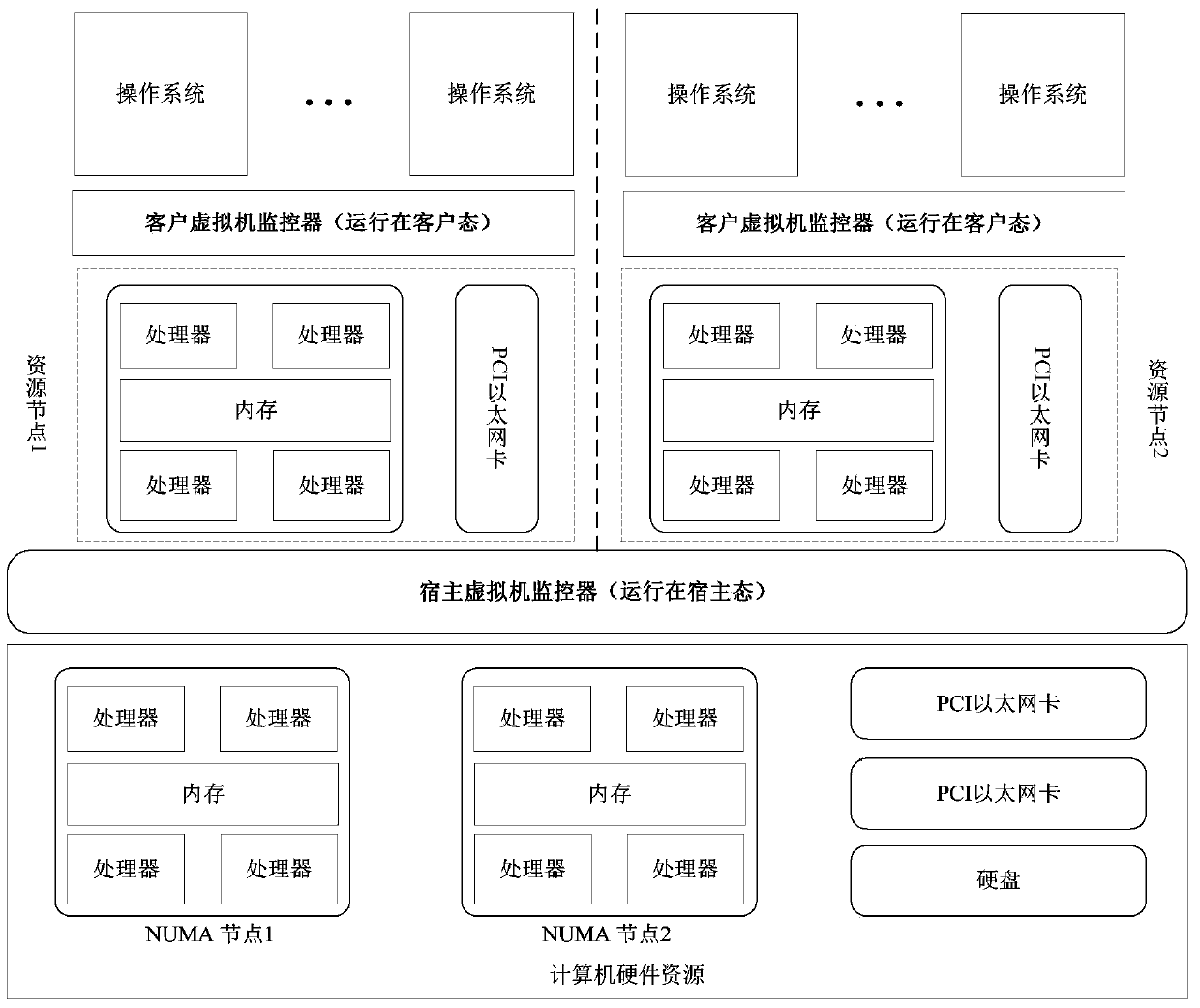
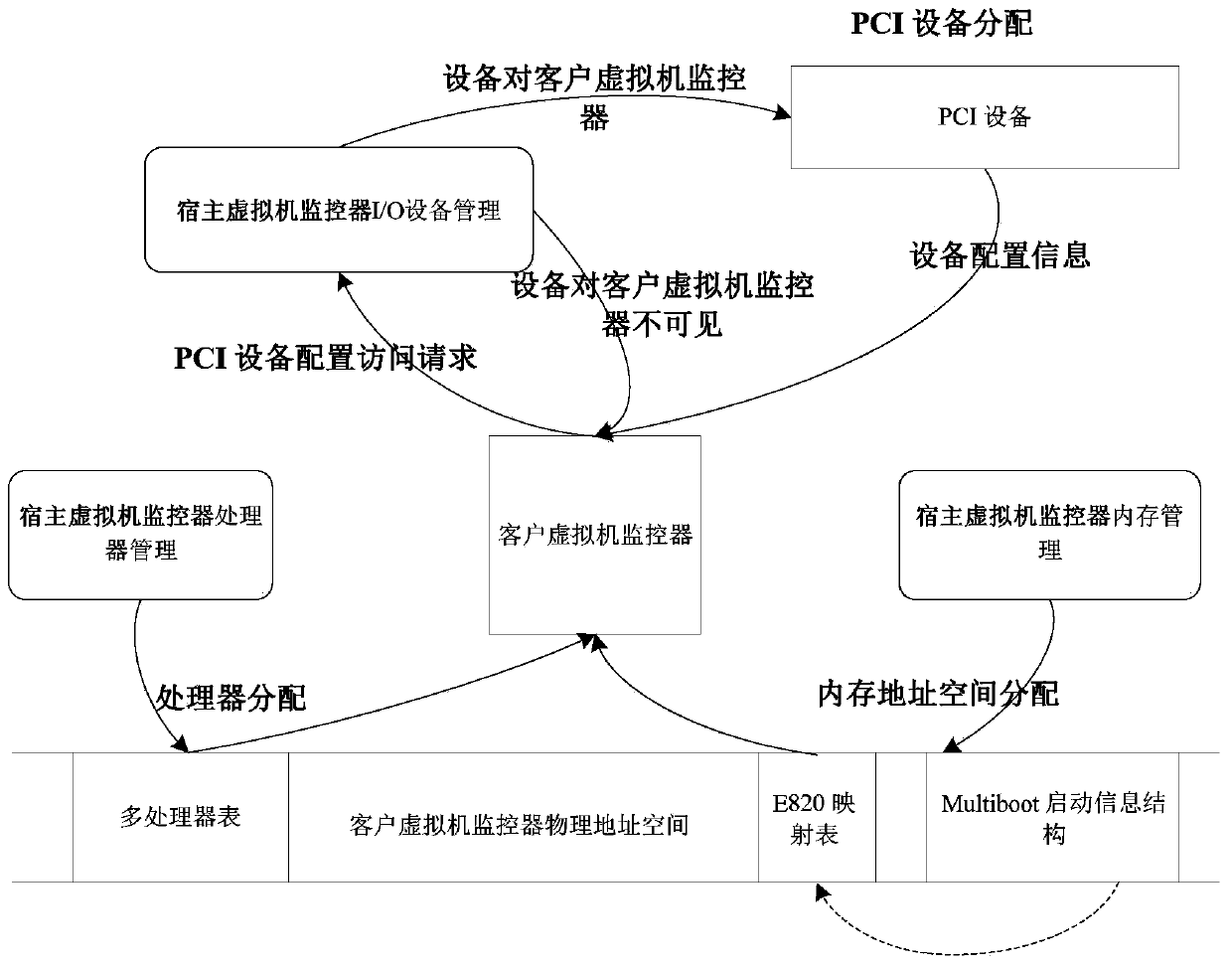
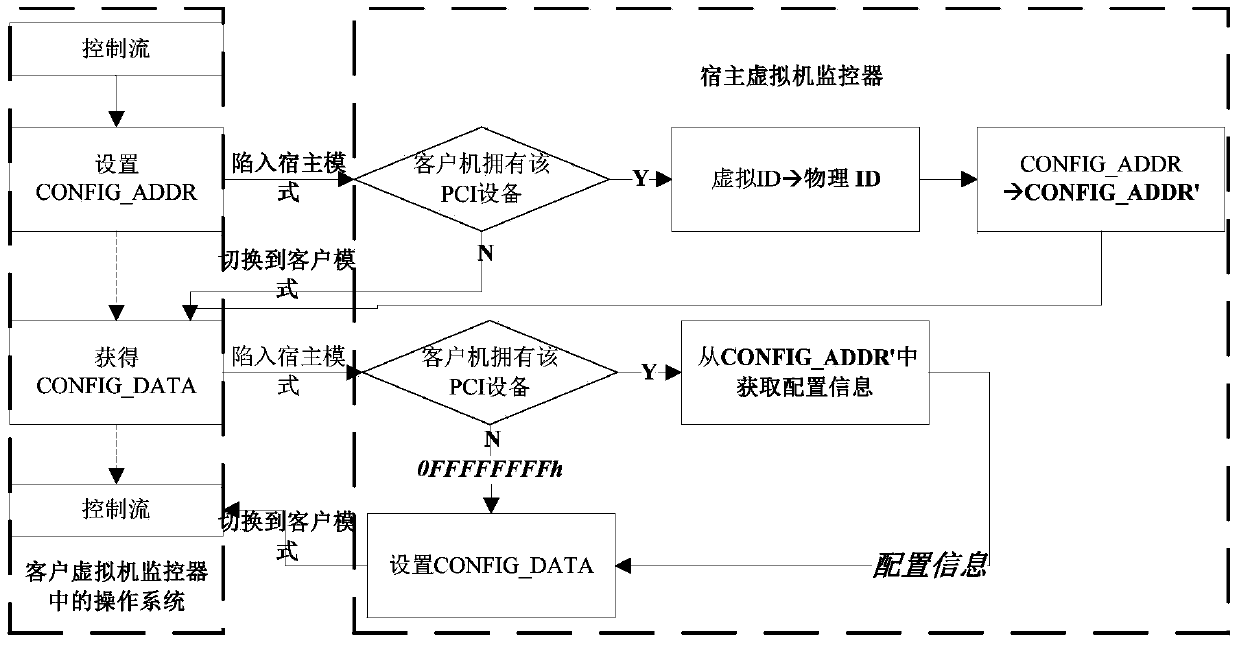
[0025] see Figure 1 to Figure 2 , the present invention comprises the following steps:

[0026] 1) System startup:

[0027] The host hypervisor runs in host mode of the processor, while the guest hypervisor runs in guest mode. The boot program first loads the host hypervisor to run, and the host hypervisor starts by simulating the boot program to load the guest hypervisor; the host hypervisor divides the available physical resources, and each guest hypervisor runs transparently on an independent processor, memory and PCI network card. There is no resource sharing between hypervisors;

[0028] 2) Acquisition of processor information:

[0029] Determine the NUMA topology information in the system through the SRAT-related resource affinity table provided by ACPI; probe the multi-processor table to obtain the processor information available in the machine;

[0030] 3) Acq...