
Data packet transmission and scheduling method and device based on interactive slope comparison
A transmission scheduling and data packet technology, applied in electrical components, wireless communication, etc., can solve the problem of failure to give the lowest energy consumption transmission scheduling
- Summary
- Abstract
- Description
- Claims
- Application Information
AI Technical Summary
Problems solved by technology
Method used
Image


Examples
Embodiment Construction
[0133] In order to make the technical problems, technical solutions and advantages to be solved by the present invention clearer, the following will describe in detail with reference to the drawings and specific embodiments.
[0134] At first, introduce the theoretical basis that the present invention relates to:
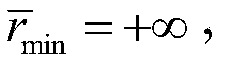
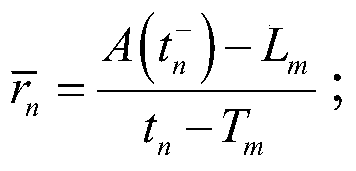
[0135] According to prior art 2, for the minimum energy consumption transmission curve with arrival constraint and cut-off constraint, any transmission segment has the minimum slope when intersection A(t) is prior to intersection D(t) (obviously At this time, the intersection point with A(t) must be a data packet arrival point), or it has the largest slope when the intersection D(t) precedes the intersection A(t) (obviously, the intersection point with D(t) must be is a packet cut-off point). Given the start point of a transmission segment, if the end point corresponds to the first case, set Then, between the start point and the end point of the transmission se...
PUM
 Login to View More
 Abstract
Description
Claims
Application Information
 Login to View More