
Effective method for regulating the appearance of skin
a skin appearance and effective technology, applied in the field of skin appearance regulation, can solve the problems of not providing a method for treating skin conditions, nor recommending or providing a method for using compositions based on extracts of i>phyllanthus
- Summary
- Abstract
- Description
- Claims
- Application Information
AI Technical Summary
Problems solved by technology
Method used
Image

Examples
example i
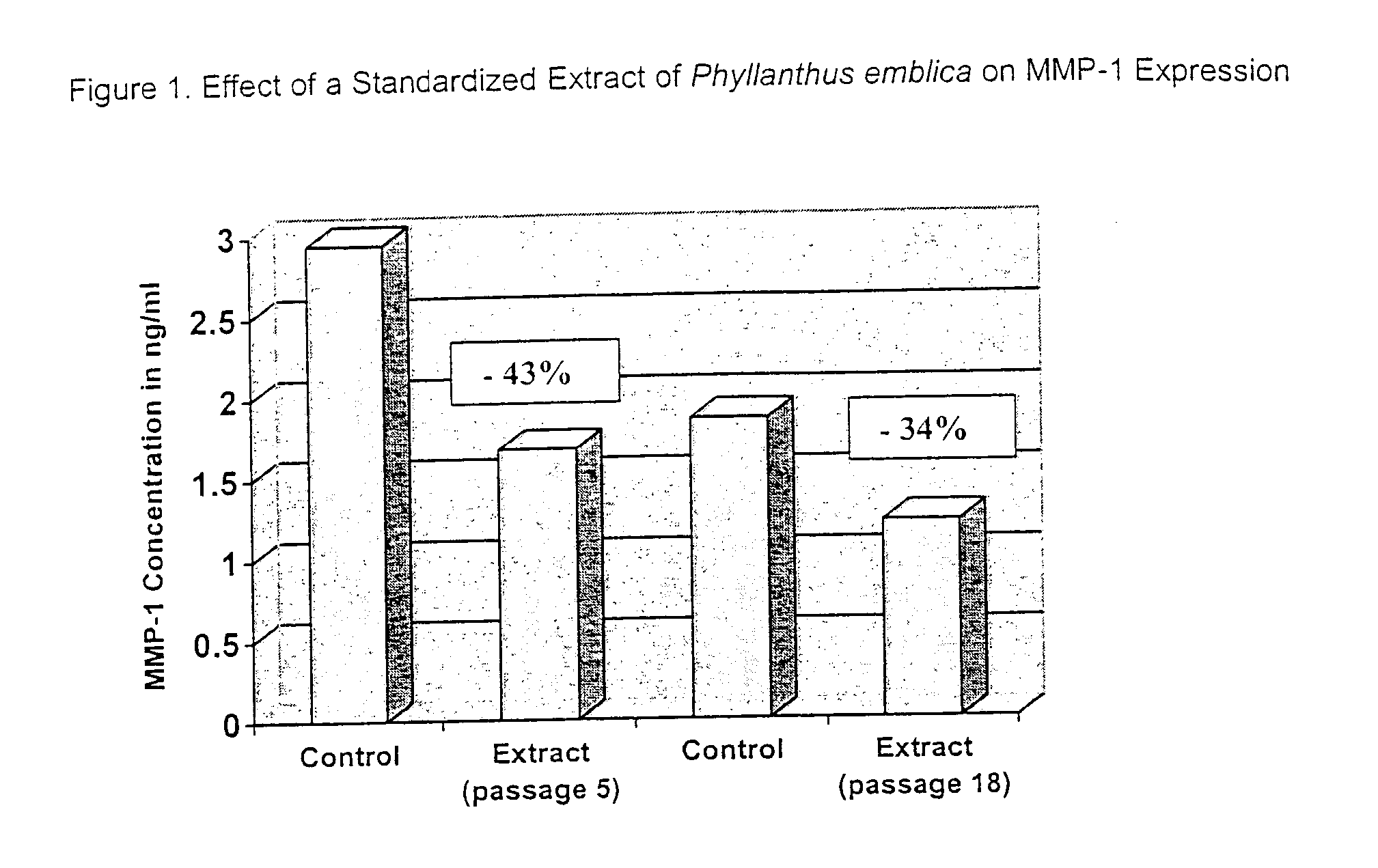
Measurement of Collagenase (MMP-1) Expression in Human Skin Fibroblast Cells in the Presence of a Standardized Extract of Phyllanthus emblica
[0038] The object of this study was to quantify the collagenase expression in human skin fibroblast cells after incubation with different concentrations of a standardized extract of Phyllanthus emblica using the MMP-1 ELISA kit from Oncogene.
[0039] The MMP-1 ELISA is a “sandwich” enzyme immunoassay employing two monoclonal antibodies. Specifically, a monoclonal antibody specific for human MMP-1 protein is immobilized onto the surface of the wells of a microtiter plate provided in the kit. The sample to be assayed (test samples and standards) are pipetted into the wells and any human MMP-1 protein present in the sample binds to the captured antibody. Unbound material is washed away and a monoclonal, horseradish peroxidase (HRP)-conjugate anti-MMP-1 antibody is added to the wells. Following an incubation period and a wash step with buffer, a ch...
example ii
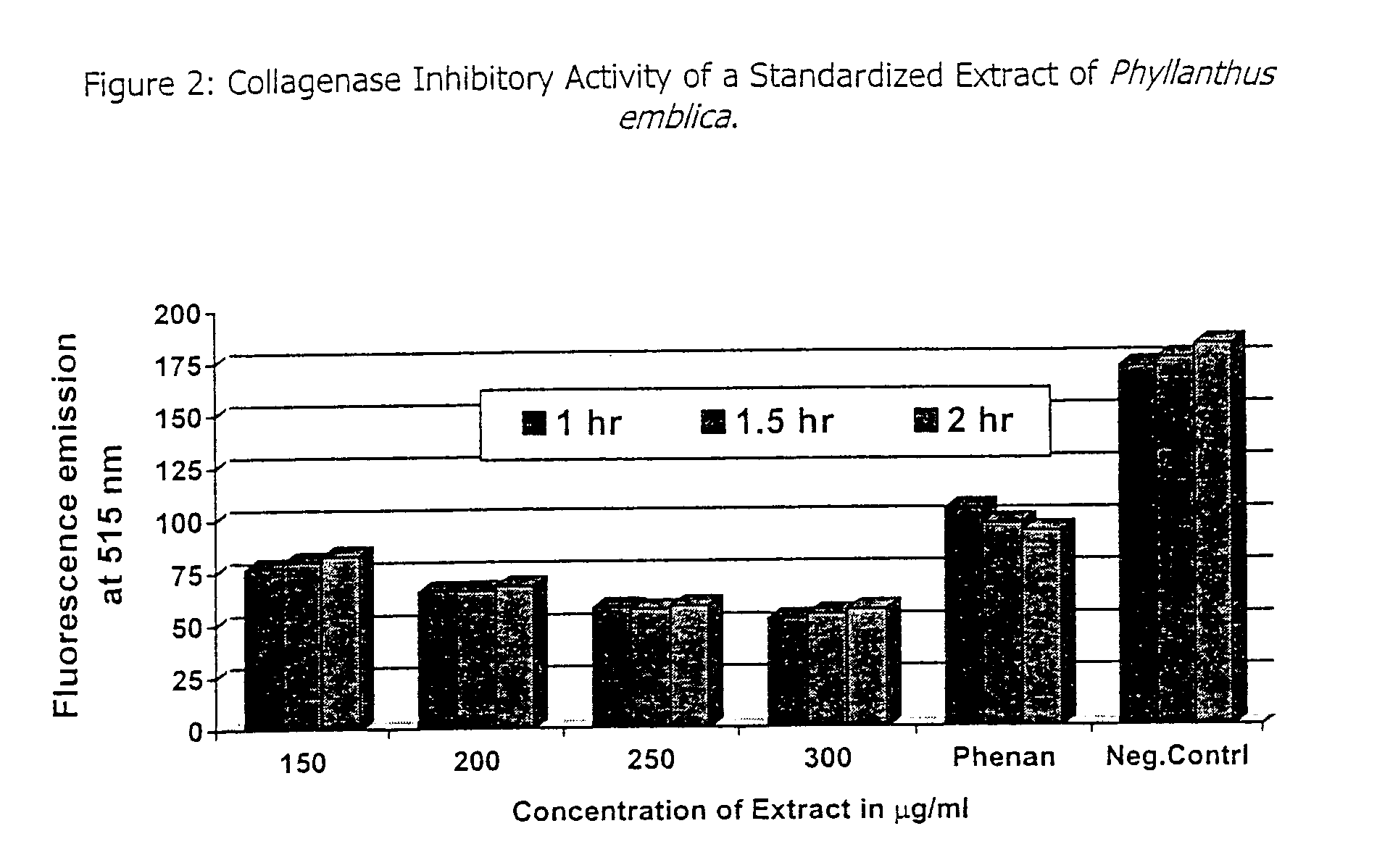
Measurement of the Collagenase Inhibitory Activity of a Standardized Extract of Phyllanthus emblica
[0067] The object of this study was to quantify the collagenase activity in human skin fibroblast cells after incubation with different concentrations of a standardized extract of Phyllanthus emblica using a gelatinase / collagenase assay kit from EnzChek®.
[0068] Molecular Probes' EnzChek® gelatinase / collagenase assay kit (E-12055) contains DQ ggelatin, fluorescein conjugate (gelatin is heavily labeled with fluorscein that the fluorescence is quenched). The increase of fluorescence is proportional to proteolytic activity and can be monitored with a fluorescence microplate reader. Using 100 μg / ml DQ gelatin and a two-hour incubation period, the assay can detect the activity of the enzyme down to a final concentration of 2×10⁻³ U / ml (7 ng of protein / ml). One unit if defined as the amount of enzyme required to liberate 1 mmole of L-leucine equivalents from collagen in 5 hours at 37° C., p...
PUM
| Property | Measurement | Unit |
|---|---|---|
| Fraction | aaaaa | aaaaa |
| Fraction | aaaaa | aaaaa |
| Fraction | aaaaa | aaaaa |
Abstract
Description
Claims
Application Information
 Login to View More