Hot and cold therapy device

US20080046047A1Inactive Publication Date: 2008-02-21JACOBS DANIEL
12 Cites 107 Cited by

Patent Information

Authority / Receiving Office
US · United States
Current Assignee / Owner
Publication Date
2008-02-21
Estimated Expiration
Not applicable · inactive patent

Smart Images

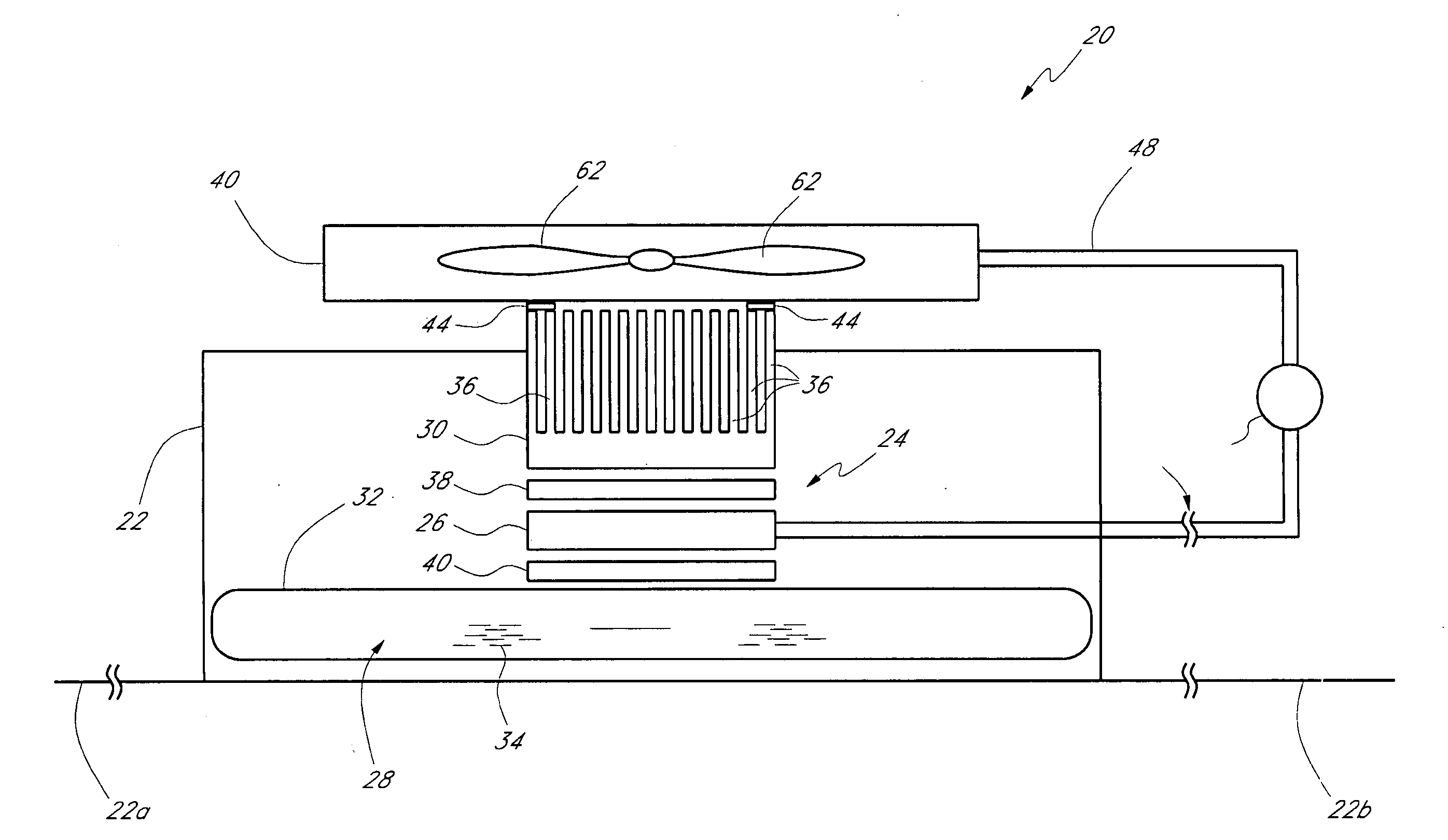
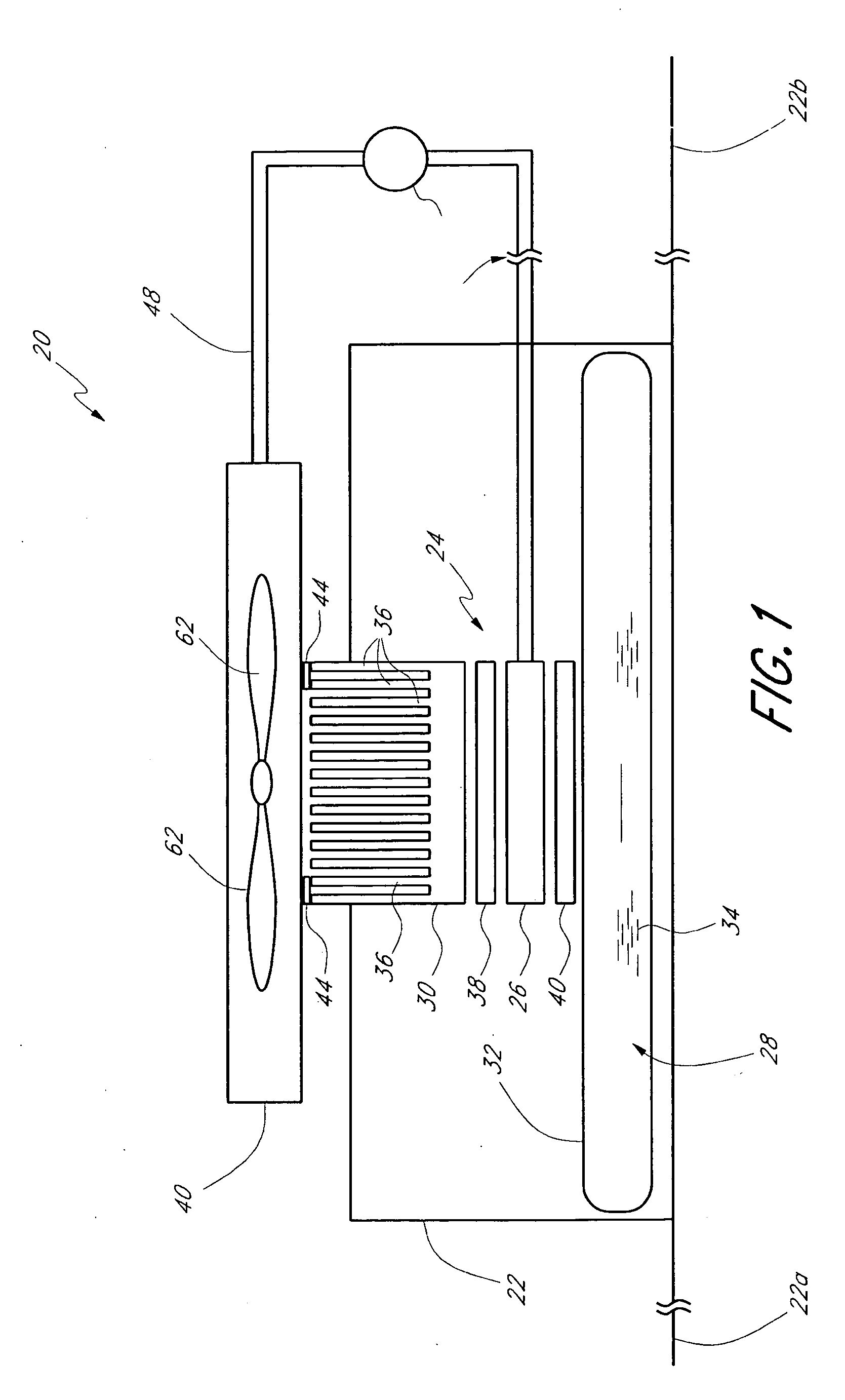
  • Figure 1
    Figure 1
  • Figure 2
    Figure 2
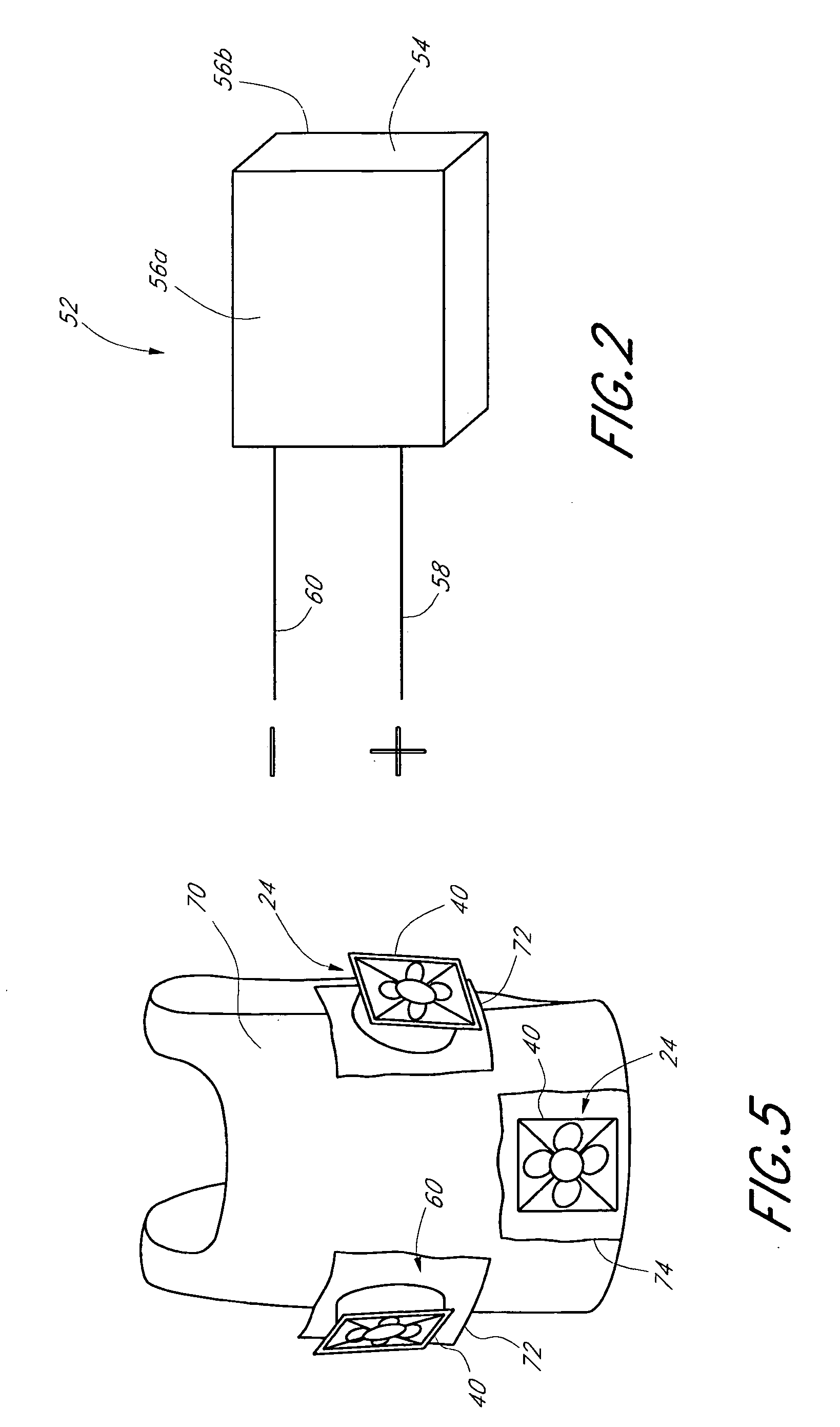
  • Figure 3
    Figure 3
Patent Text Reader

Abstract

A therapy device incorporating a thermoelectric (Peltier) cell to enable therapeutic temperatures to be applied to a body. As current passes through the cells, heat is transferred from one surface of the cell to the other. Opposite directional current changes the heat transfer direction. A heat sink may be in thermal communication with the thermoelectric cell to permit low temperatures to be achieved for a significant period of time without overheating of the thermoelectric cell. A fan may be positioned adjacent the heat sink to keep the heat sinks cool. In some arrangements, pouches containing a fluid are used as an intermediary between the thermoelectric cell and the body of the user. One arrangement includes multiple heating / cooling units installed into a vest for the targeted treatment of back problems.
Need to check novelty before this filing date? Find Prior Art

Description

BACKGROUND OF THE INVENTION

[0001] 1. Field of the Invention

[0002] The present invention relates generally to musculoskeletal therapy devices. More particularly, the present invention relates to a hot and cold therapy device that is relatively compact and offers good performance with relatively low power requirements.

[0003] 2. Description of the Related Art

[0004] Injuries to the musculoskeletal system of an animal or human can result from many activities or occurrences. For example, injuries due to participation in sporting activities are quite common. Sporting injuries often occur to the back, the knees, the shoulders, the wrist, and the forearm, among other areas of the human body, or similar areas of non-human animal bodies. Extensive rehabilitation therapy sessions are routinely a part of the injury recovery process from many injuries, such as severe muscle strains, for example.

[0005] Most rehabilitation processes involve the application of heat to the injured area, followed by the ap...

Examples

Embodiment Construction

[0021]An objective of a preferred embodiment of the therapy device is to simplify the rehabilitation process. Preferably, the preferred embodiments permit an injured individual (or animal) to complete the necessary steps of therapy without being forced to visit a trainer or doctor's office. As many injuries are specific to the back, one preferred embodiment is tailored to treatment of that area. However, the core technology is adaptable to an injury to any part of the body. Preferably, the preferred embodiments simulate the traditional therapies in both temperature and sensation.

[0022]Typical Rehabilitation

[0023]As discussed above, even among varied injuries, the typical therapy protocol breaks down into a simple four-step process: heat, stretch, strengthen and ice. Each of these processes requires a certain piece of equipment to complete. All of the necessary tools can typically be found in a trainer's office. For the first step of the process, heating, a trainer will typically mak...