
Nucleic acid molecule vaccine compositions and uses thereof
Patent Information
- Authority / Receiving Office
- US · United States
- Current Assignee / Owner
- Publication Date
- 2015-09-17
Smart Images
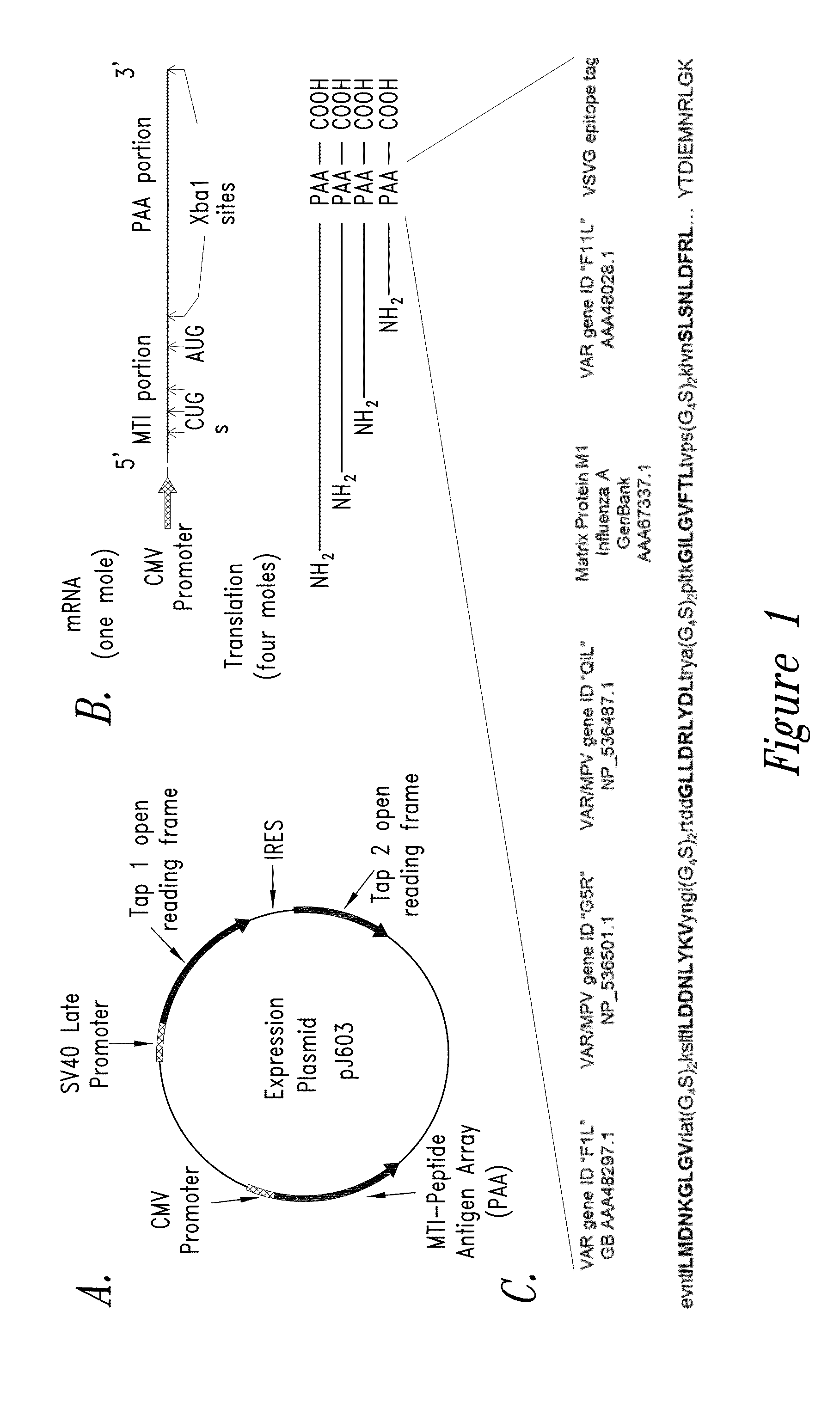
Figure 1 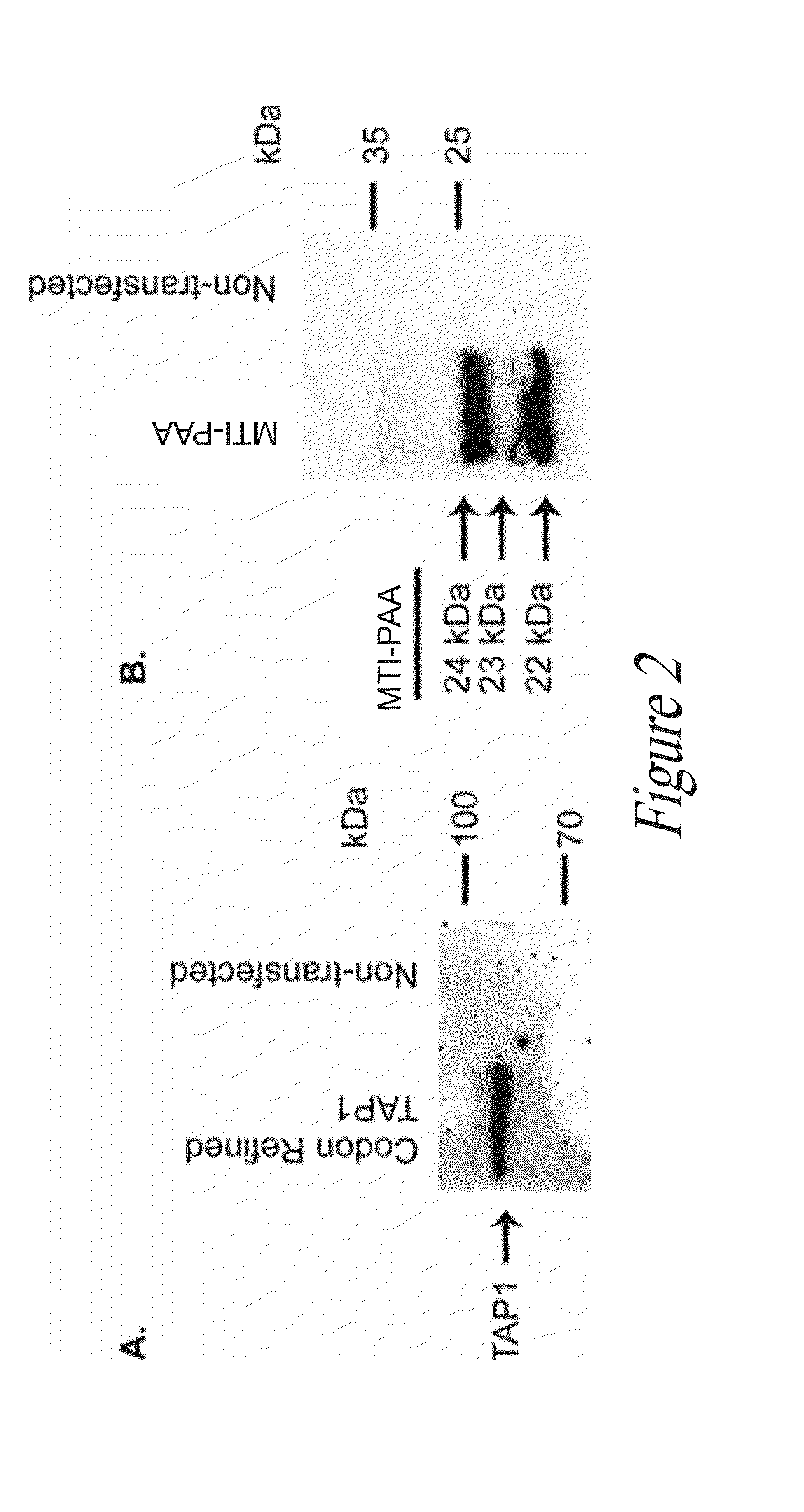
Figure 2 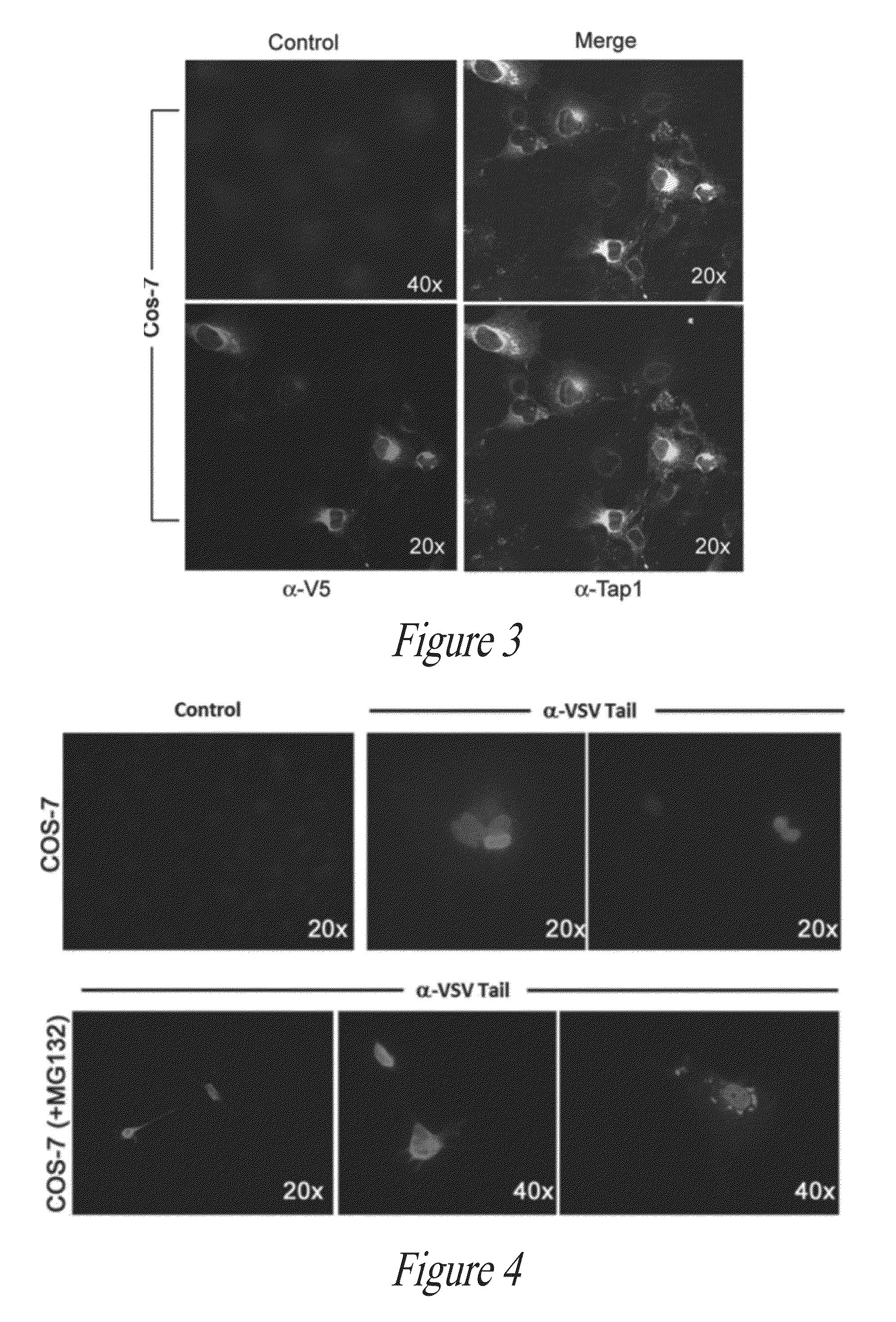
Figure 3
Abstract
Description
STATEMENT REGARDING SEQUENCE LISTING
[0001] The Sequence Listing associated with this application is provided in text format in lieu of a paper copy, and is hereby incorporated by reference into the specification. The name of the text file containing the Sequence Listing is 890079—401_SEQUENCE_LISTING.txt. The text file is 210 KB, was created on Mar. 17, 2015, and is being submitted electronically via EFS-Web.BACKGROUND
[0002] The immune system can be categorized into innate immunity, which involves numerous cellular and soluble factors that respond to all foreign challenges, and adaptive immunity, which responds specifically to precise epitopes from foreign or abnormal agents. The adaptive immune response includes a humoral arm, which involves the production of antibodies by B lymphocytes, and a cellular arm, which involves the killer activity of cytotoxic T lymphocytes (CTLs). A key mechanism for detecting and eliminating abnormal cells by the adaptive immune response is surveillance ...
Examples
example 1
Nucleic Acid Molecules Comprising a Multiplex Translation Initiation Sequence
[0153]FIG. 1 depicts an exemplary construction of a nucleic acid-based expression vector incorporating the MTI (based on FGF2 upstream multiplex translation initiation from CUG start codons) technology as disclosed herein. Expression vectors may comprise a plasmid vector or may comprise a nucleic acid molecule encoding peptide antigenic epitopes incorporated into one or more viral delivery systems. A first series of plasmid expression vectors encoding (a) MTI-PAA (PAA=peptide antigen array: see FIG. 1C), (b) codon-optimized and epitope tagged TAP1, and (c) codon-optimized TAP2. These MTI-PAA nucleic acid molecule-based systems may further include combinations of TAP1 and / or TAP2. The vector design allows the PAA portion to be easily excised as a cassette and replaced with the sequence corresponding to any series of T-cell epitopes, enabling incorporation of additional epitopes from other pathogens, cancer g...
example 2
Expression of Poly-Antigen Array Epitopes
[0159]TAP1, TAP2, and PolyStart™ MTI-PAA gene expression in transfected COS-1 cells have been observed by PCR (data not shown). The pJ603 expression plasmid was selected for these experiments. The CMV and / or SV40 late promoter contained in the plasmid drives transcription of downstream coding sequence and (in some cases) sequence deemed important for maintaining mRNA structure and appropriate recognition of CUG / AUG translation initiation codons. Accordingly, we have designed / prepared a first series of plasmid expression vectors encoding (a) MTI-PAA (smallpox peptides), (b) Tap1 only, (c) Tap2 only, (d) Tap1-IRES-Tap2, (e) Tap1 plus MTI-PAA, and (f) Tap2 plus MTI-PAA. A VSVG peptide-tag epitope tag was included at the COOH-terminal end of the MTI-PAA.
[0160]The expression vectors have been designed so that the PAA portion of the MTI-PAA can be easily excised and replaced with any codon-optimized DNA sequence encoding any PAA corresponding to an...
example 3
Expression and Immune Recognition of Poly-Antigen Array Epitopes
[0167]FIG. 6 demonstrates that peptide-specific T cells (from peptide vaccinated mice) recognize THP-1 cells transfected (Lipofectamine LTX, Invitrogen) with PolyStart™ MTI-PAA, confirming PAA-driven expression, processing, and presentation of immunogenic peptides. Furthermore, as illustrated in FIG. 7, co-expression of TAP1 in HEK PAA-transfected cells influences antigen recognition by T cells.