
Lossless multi-channel audio codec
- Summary
- Abstract
- Description
- Claims
- Application Information
AI Technical Summary
Benefits of technology
Problems solved by technology
Method used
Image

Examples
Embodiment Construction
[0027]The present invention provides a lossless audio codec in which compression performance is optimized subject to a maximum size constraint on each independently decodable unit of data. The audio coder scales as the number of channels in multi-channel audio continues to grow.
Lossless Audio Codec
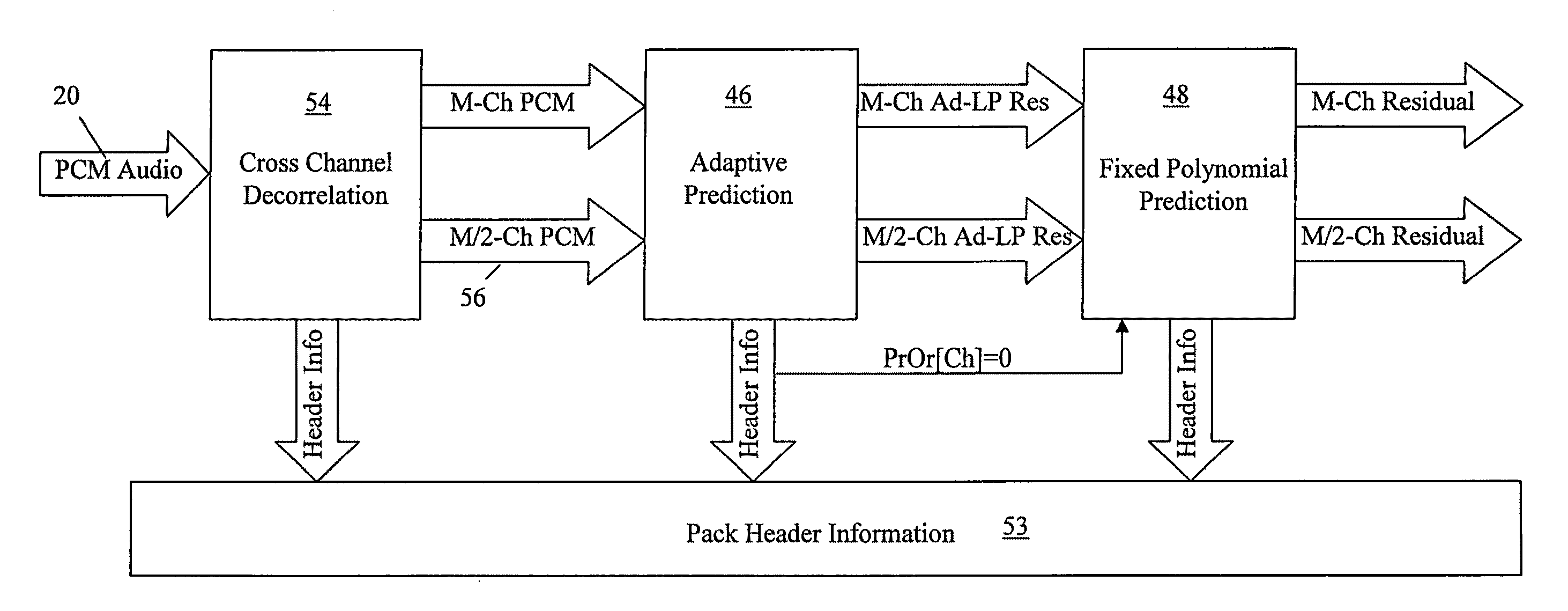
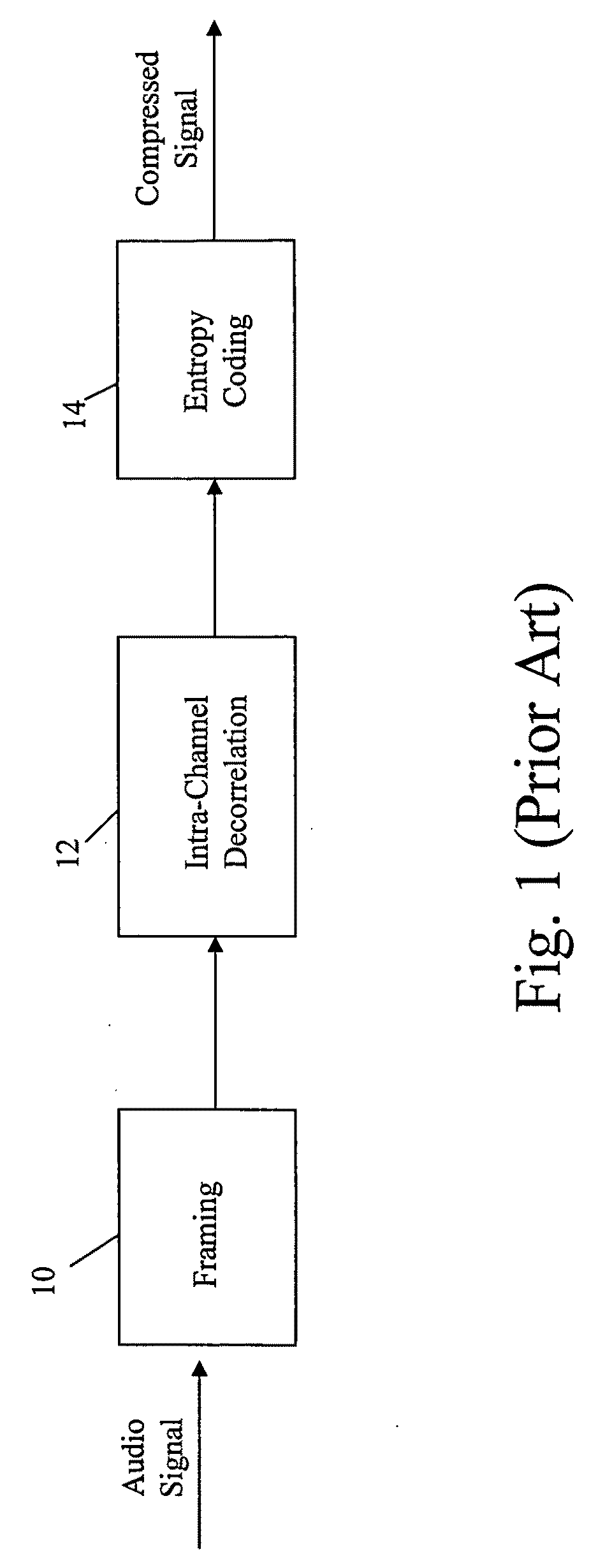
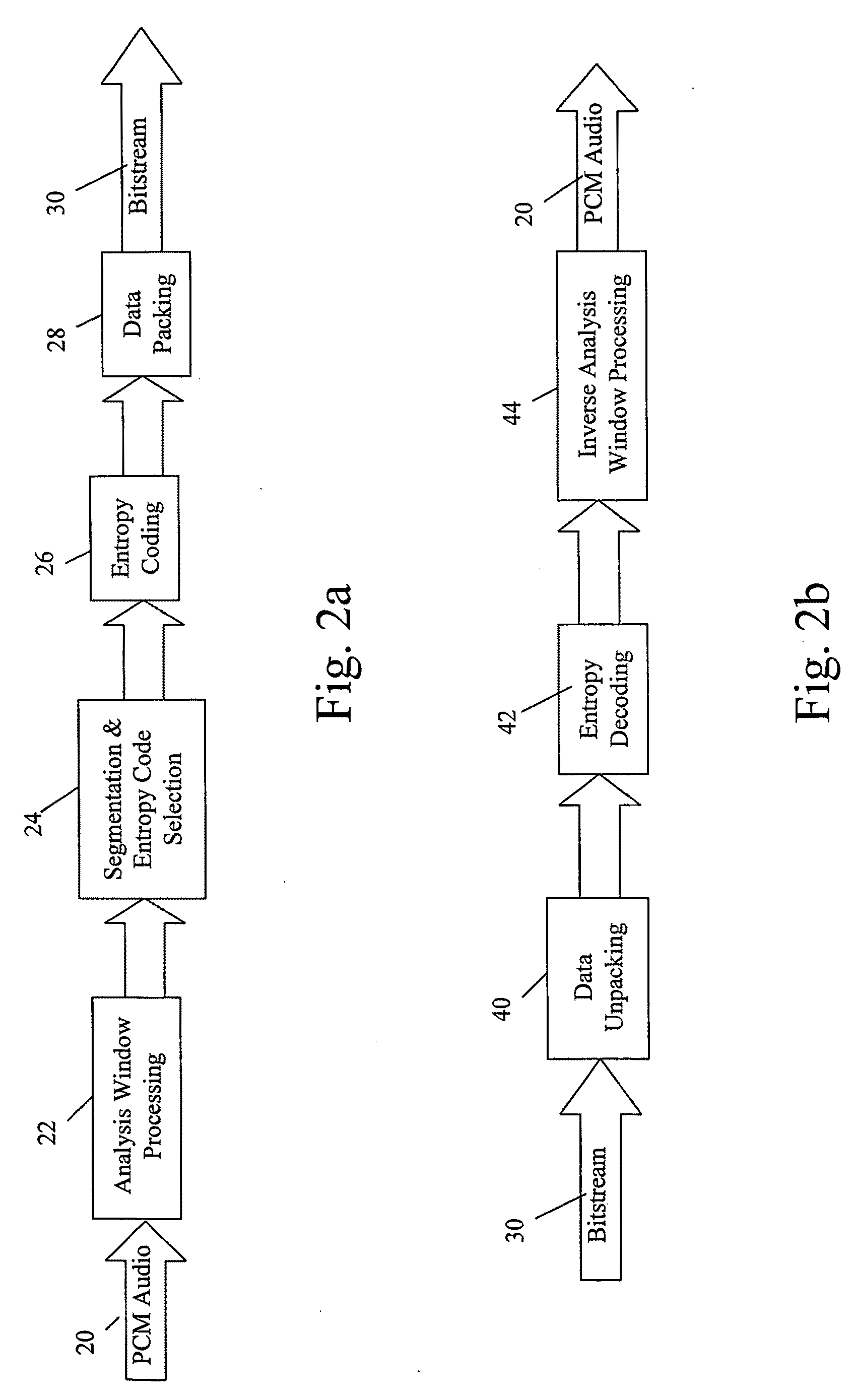
[0028]As shown in FIGS. 2a and 2b, the essential operational blocks are similar to existing lossless encoders and decoders with the exception of the segmentation and entropy code selection. The multi-channel PCM audio 20 is subjected to analysis window processing 22, which blocks the data in frames of a constant duration and removes redundancy by decorrelating the audio samples in each channel within a frame. Instead of entropy coding the residual signals directly, the present invention performs an optimal segmentation and entropy code selection process 24 that segments the data into a plurality of segments and determines the segment duration and coding parameters, e.g., the selection of a...
PUM
 Login to View More
 Abstract
Description
Claims
Application Information
 Login to View More