
Seneca valley virus based compositions and methods for treating disease
a composition and virus technology, applied in the field of seneca valley virus based compositions and methods for treating disease, can solve the problems of difficult to achieve the goal of inability to select radiation in that many normal cells are actively active, and inability to achieve complete removal of primary tumors. achieve the effect of high therapeutic index, safe, effective and new lin
- Summary
- Abstract
- Description
- Claims
- Application Information
AI Technical Summary
Benefits of technology
Problems solved by technology
Method used
Image

Examples
example 1
Amplification and Purification of Virus
[0271]Cultivation of SVV in PER.C6 cells: SVV is plaque purified once and a well isolated plaque is picked and amplified in PER.C6 cells (Fallaux et al., 1998). A crude virus lysate (CVL) from SVV infected PER.C6 cells is made by three cycles of freeze and thaw and used to infect PER.C6 cells. PER.C6 cells are grown in 50×150 cm2 T.C. flasks using Dulbecco's modified Eagle medium (DMEM, Invitrogen, Carlsbad, Calif., USA)) containing 10% fetal bovine serum (Biowhitaker, Walkersvile, Md., USA) and 10 mM magnesium chloride (Sigma, St Louis, Mo., USA). The infected cells harvested 30 hr after infection when complete CPE is noticed and are collected by centrifugation at 1500 rpm for 10 minutes at 4° C. The cell pellet is resuspended in the cell culture supernatant (30 ml) and is subjected to three cycles of freeze and thaw. The resulting CVL is clarified by centrifugation at 1500 rpm for 10 minutes at 4° C. Virus is purified by two rounds of CsCl gr...
example 2
Electron Microscopy
[0272]SVV is mounted onto formvar carbon-coated grids using the direct application method, stained with uranyl acetate, and examined in a transmission electron microscope. Representative micrographs of the virus are taken at high magnification. For the transmission electron microscope, ultra-thin sections of SVV-infected PER.C6 cells are cut from the embedded blocks, and the resulting sections are examined in the transmission electron microscope.
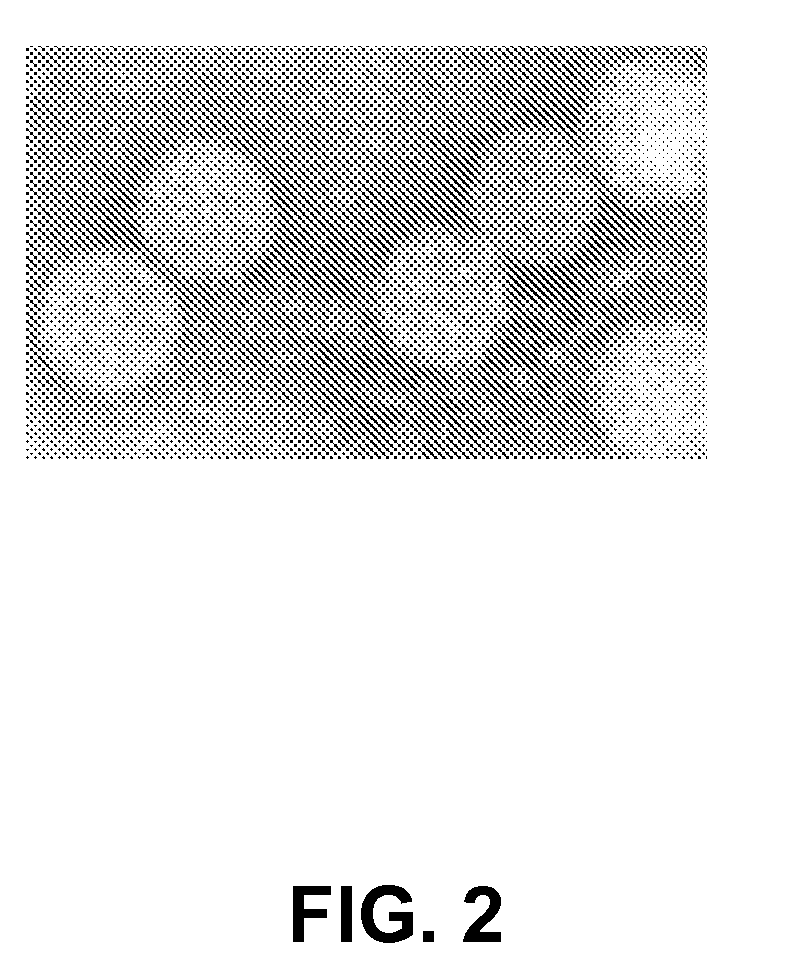
[0273]The purified SVV particles are spherical and about 27 nm in diameter, appearing singly or in small aggregates on the grid. A representative picture of SVV is shown in FIG. 2. In some places, broken viral particles and empty capsids with stain penetration are also seen. Ultrastructural studies of infected PER.C6 cells revealed crystalline inclusions in the cytoplasm. A representative picture of PER.C6 cells infected with SVV is shown in FIG. 3. The virus infected cells revealed a few large vesicular bodies (empty vesi...
example 3
Nucleic Acid Isolation of SVV
[0274]RNA Isolation: SVV genomic RNA was extracted using guanidium thiocyanate and a phenol extraction method using Trizol (Invitrogen). Isolation was performed according to the supplier's recommendations. Briefly, 250 μl of the purified SVV was mixed with 3 volumes TRIZOL and 240 μl of chloroform. The aqueous phase containing RNA was precipitated with 600 μl isopropanol. The RNA pellet was washed twice with 70% ethanol, dried and dissolved in DEPC-treated water. The quantity of RNA extracted was estimated by optical density measurements at 260 nm. An aliquot of RNA was resolved through a 1.25% denaturing agarose gel (Cambrex Bio Sciences Rockland Inc., Rockland, Me. USA) and the band was visualized by ethidium bromide staining and photographed (FIG. 4).
[0275]cDNA synthesis: cDNA of the SVV genome was synthesized by RT-PCR. Synthesis of cDNA was performed under standard conditions using 1 μg of RNA, AMV reverse transcriptase, and random 14-mer oligonucle...
PUM
 Login to View More
 Abstract
Description
Claims
Application Information
 Login to View More