Dynamically Displaying a Pitch Range

a pitch range and dynamic display technology, applied in the field of video games, can solve the problems of affecting the enjoyment of the game of the player, and the handling of multiple singers

US20100300266A1Active Publication Date: 2010-12-02HARMONIX MUSIC SYSTEMS
8 Cites 47 Cited by

Patent Information

Authority / Receiving Office
US · United States
Patent Type
Applications(United States)
Current Assignee / Owner
Publication Date
2010-12-02

Smart Images

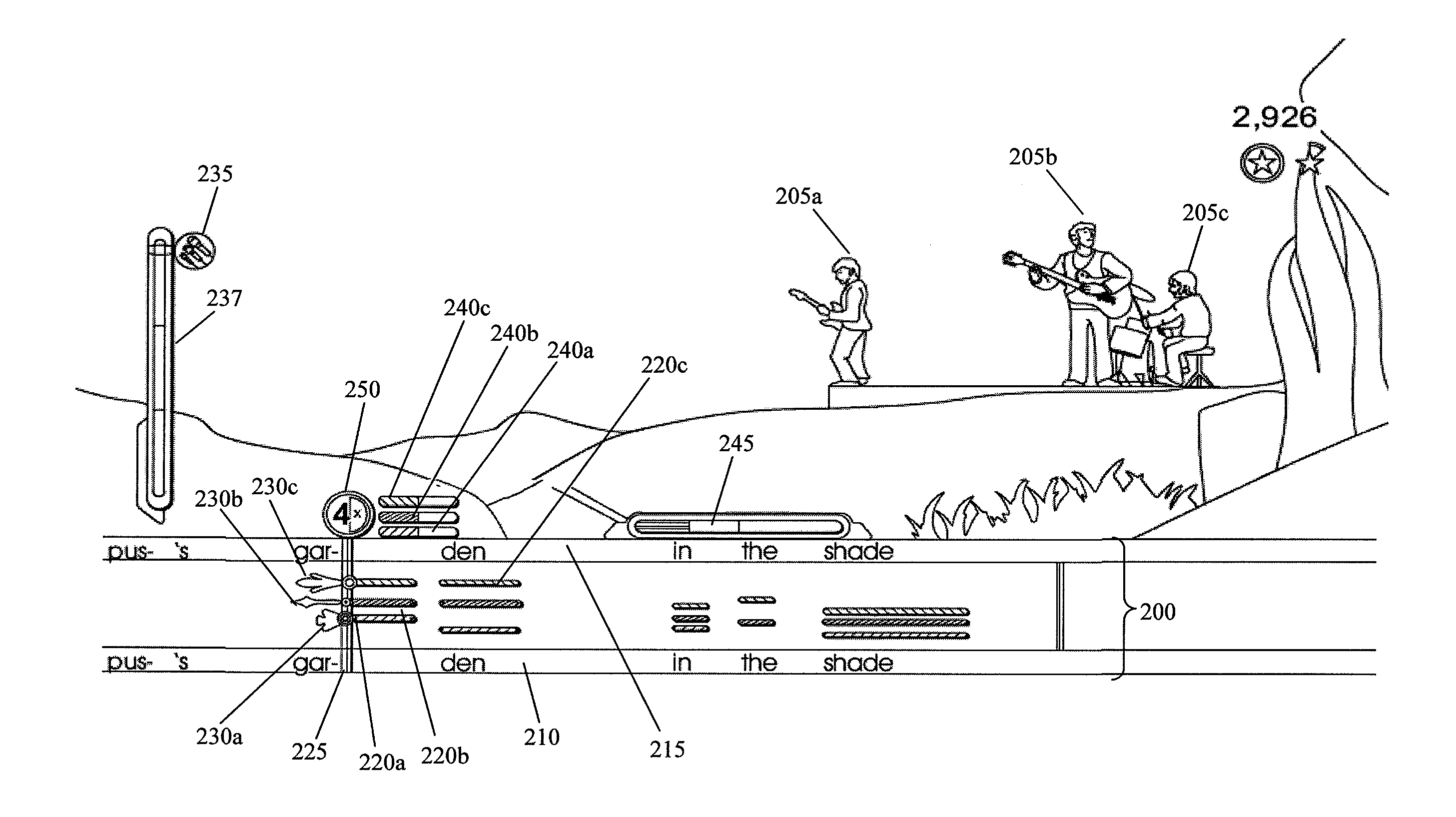
  • Figure 1
    Figure 1
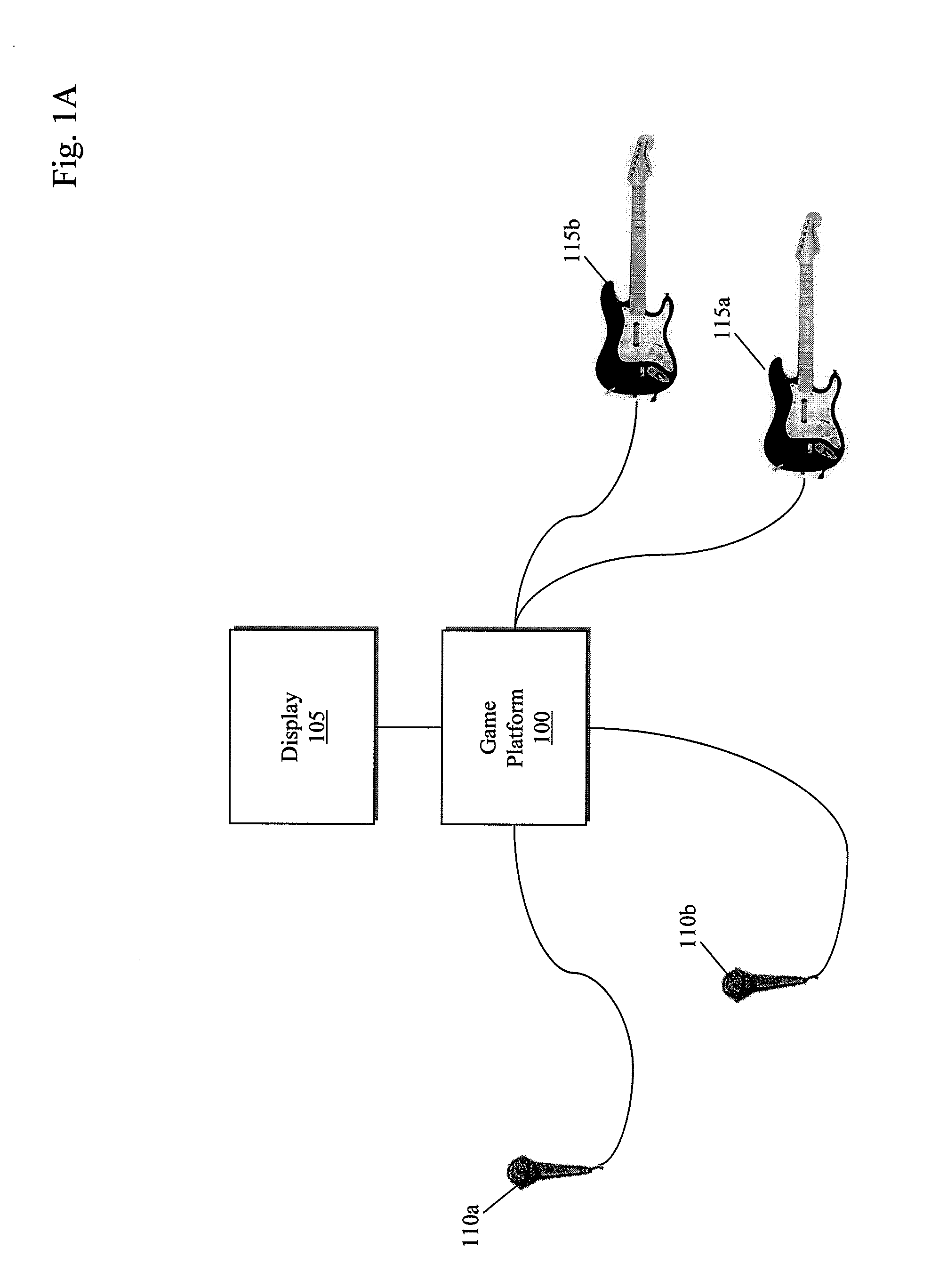
  • Figure 2
    Figure 2
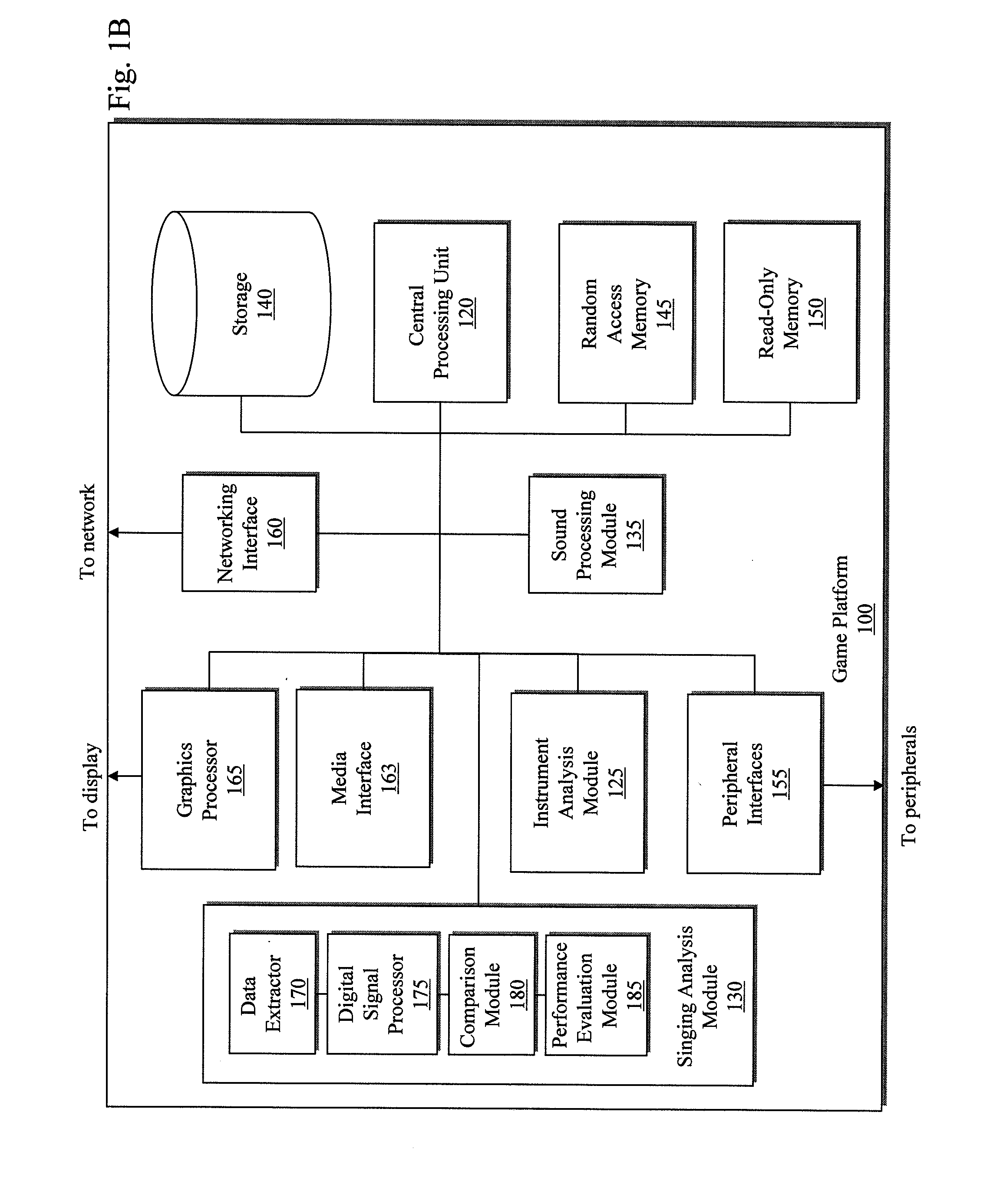
  • Figure 3
    Figure 3
Patent Text Reader

Abstract

Described are methods, systems, and apparatuses, including computer program products, for dynamically displaying a pitch range in a rhythm-action game. In one aspect this is accomplished by a game platform dividing a musical composition into a plurality of portions each comprising one or more notes. Then the game platform determines a pitch range between a highest note and a lowest note for each portion. Then the game platform determines a display density for each portion based on the pitch range of each portion, or alternatively, a display density for the entire song based on the greatest pitch range of all portions. Then, the game platform displays each portion within a viewable area. The viewable area has a density alterable based on the portion to be displayed or a position that is alterable based on the portion to be displayed, or has both an alterable position and alterable pitch density.
Need to check novelty before this filing date? Find Prior Art

Description

FIELD OF THE INVENTION

[0001] The present invention relates to video games, and, more specifically, rhythm-action games which simulate the experience of playing in a band.BACKGROUND

[0002] Music making is often a collaborative effort among many musicians who interact with each other. One form of musical interaction may be provided by a video game genre known as “rhythm-action,” which involves a player performing phrases from an assigned, prerecorded musical composition using a video game's input device to simulate a musical performance. If the player performs a sufficient percentage of the notes or cues displayed for the assigned part, the singer may score well for that part and win the game. If the player fails to perform a sufficient percentage, the singer may score poorly and lose the game. Two or more players may compete against each other, such as by each one attempting to play back different, parallel musical phrases from the same song simultaneously, by playing alternating musica...

Examples

Embodiment Construction

Architecture

[0068]FIG. 1A is a diagram depicting a game platform 100 for running game software and various components in signal communication with the game platform. Each player may use a game platform 100 in order to participate in the game. In one embodiment, the game platform 100 is a dedicated game console, such as: PLAYSTATION® 2, PLAYSTATION® 3, or PSP® manufactured by Sony Corporation; WII™, NINTENDO DS®, NINTENDO DSi™, or NINTENDO DS LITE™ manufactured by Nintendo Corp.; or XBOX® or XBOX 360® manufactured by Microsoft Corp. In other embodiments, the game platform 100 comprises a personal computer, personal digital assistant, or cellular telephone. Throughout the specification and claims, where reference is made to “the game platform 100” performing a function, “game platform 100” may, for some implementations, be read as “game platform 100 with game software executing on it.” References to the game platform 100 and omission of reference to the game software does not imply ab...