
Shutter glasses and shutter control method
a technology of shutter glasses and control methods, applied in the direction of instruments, color television details, electrical apparatus, etc., can solve the problems of complex mechanism of glasses, detrimental to user friendliness, filter not moving, etc., and achieve the effect of dark visual rang
- Summary
- Abstract
- Description
- Claims
- Application Information
AI Technical Summary
Benefits of technology
Problems solved by technology
Method used
Image

Examples
Embodiment Construction
Configuration Example of an Image Processing Apparatus
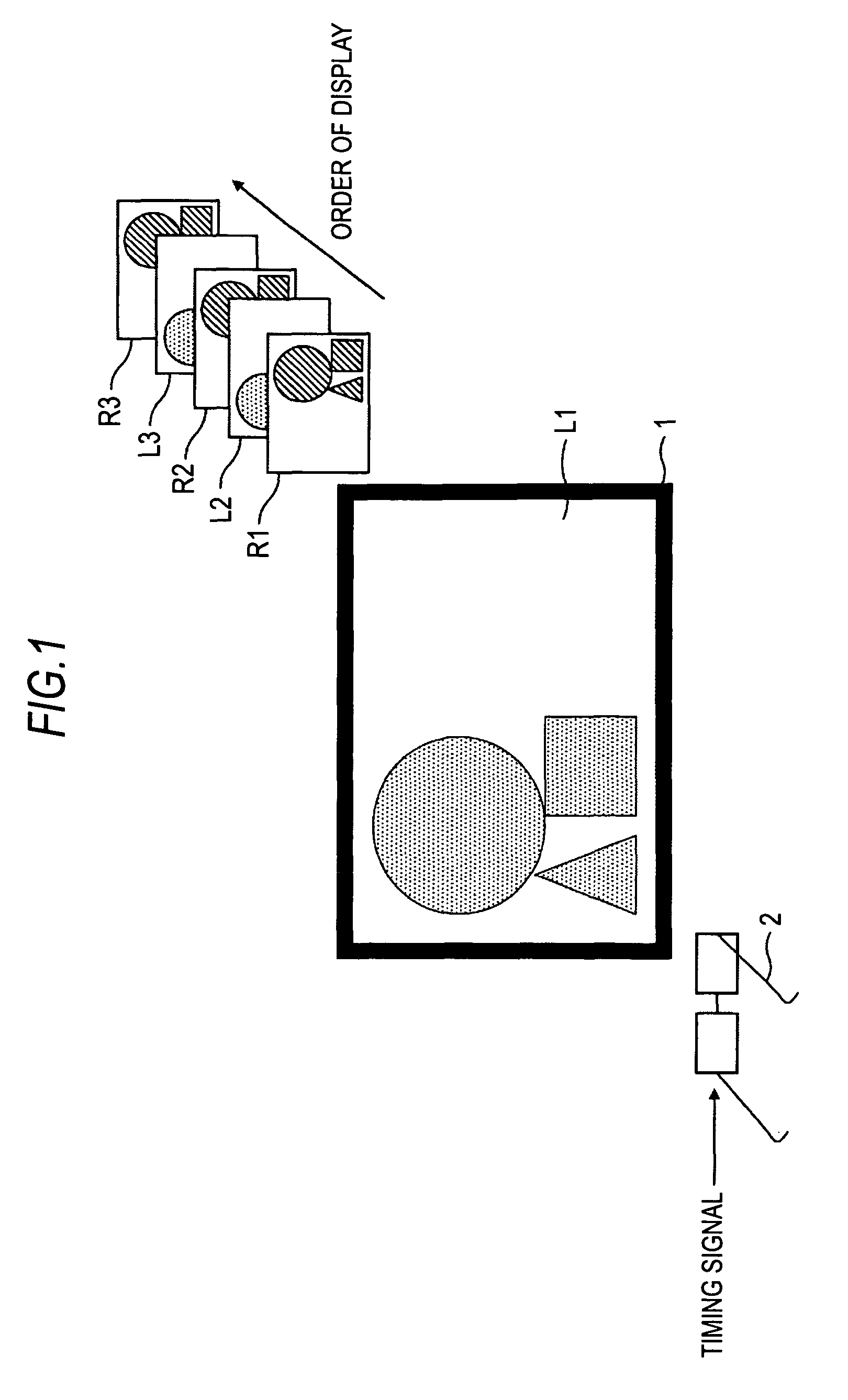
[0031]FIG. 2 shows a configuration example of a 3D video viewing system to which the invention is applied.
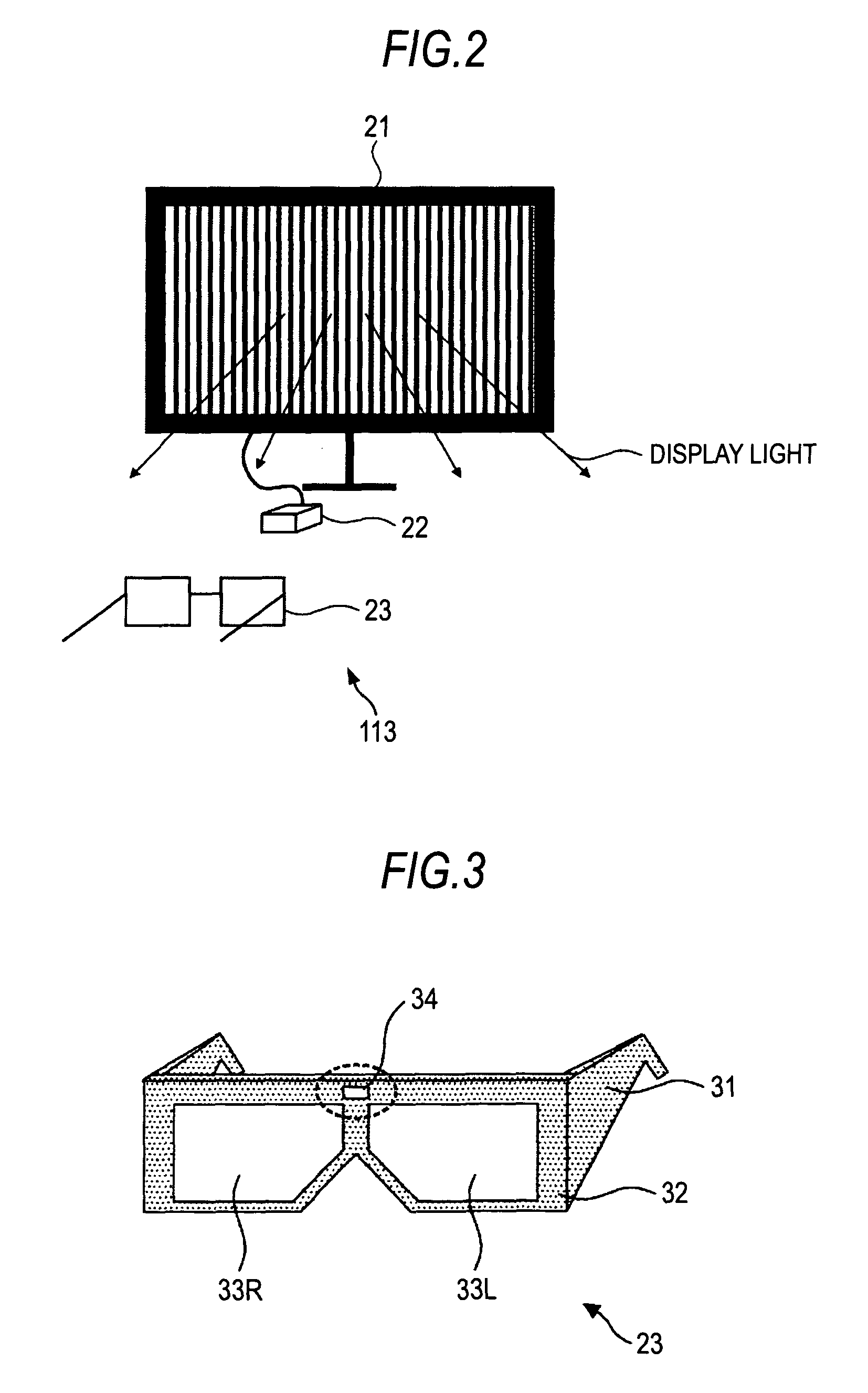
[0032]A 3D video viewing system 11 in FIG. 2 is a system for viewing 3D video by a glasses system using shutter glasses. The 3D video viewing system 11 includes a liquid crystal display 21 displaying 3D video, a transmitting device 22 transmitting a timing signal and shutter glasses 23.
[0033]The liquid crystal display 21 displays 2D video for allowing the user to perceive 3D video based on 3D video data. The 3D video data can be acquired by, for example, receiving a broadcasting signal by the liquid crystal display 21 or receiving a video signal played back in a recording / playback apparatus.
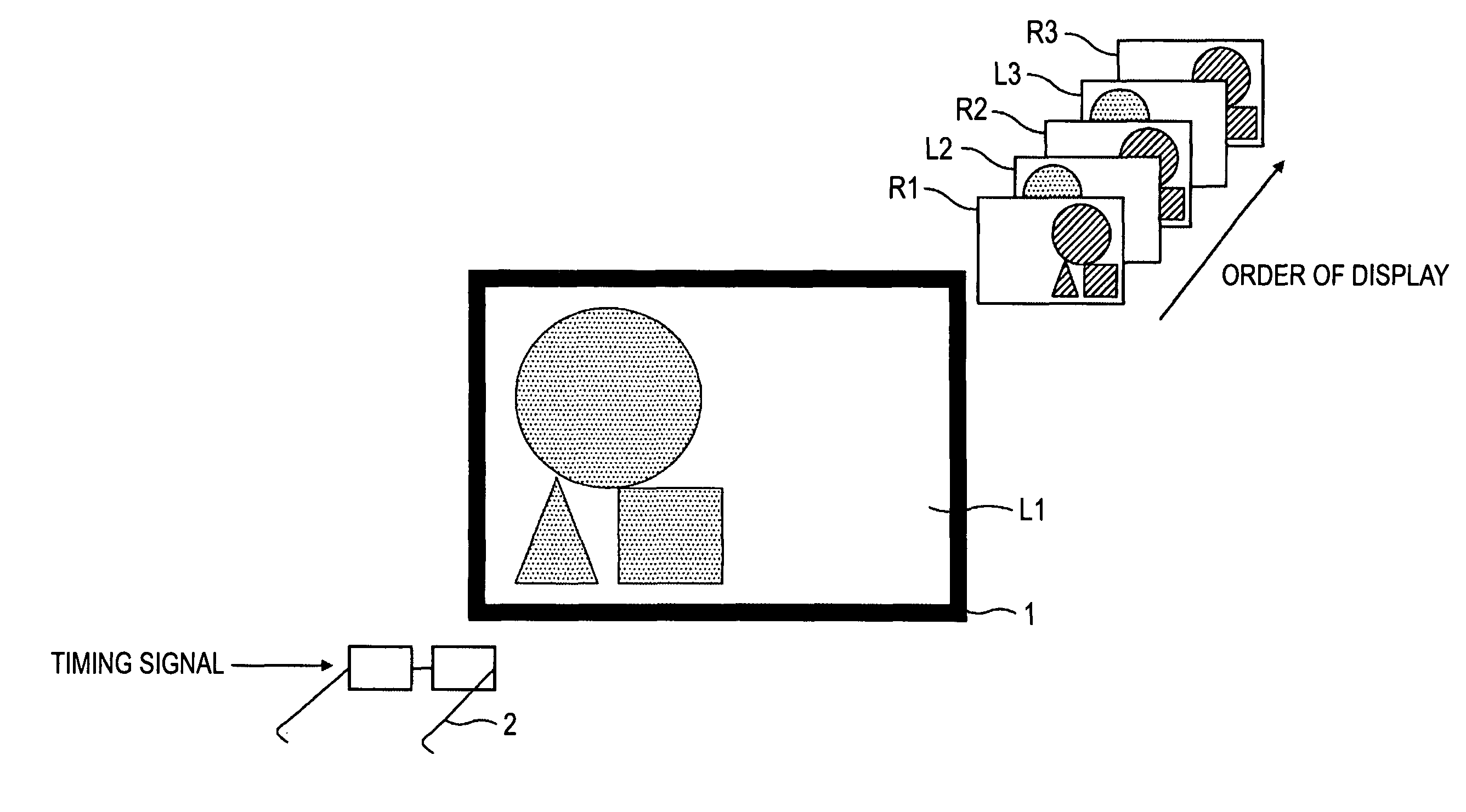
[0034]The 2D video displayed by the liquid crystal display 21 includes video for the left eye and video for the right eye as described with reference to FIG. 1, and the video for the left eye and video for the right eye are alternately dis...
PUM
 Login to View More
 Abstract
Description
Claims
Application Information
 Login to View More