
Process for preparing sorbic acid
A preparation process, sorbic acid technology, applied in the production process field of sorbic acid, can solve the problems of affecting heat transfer efficiency, long reaction time, high heating cost, etc.
Patent Information
- Authority / Receiving Office
- CN · China
- Patent Type
- Applications(China)
- Current Assignee / Owner
- Publication Date
- 2008-12-10
Smart Images
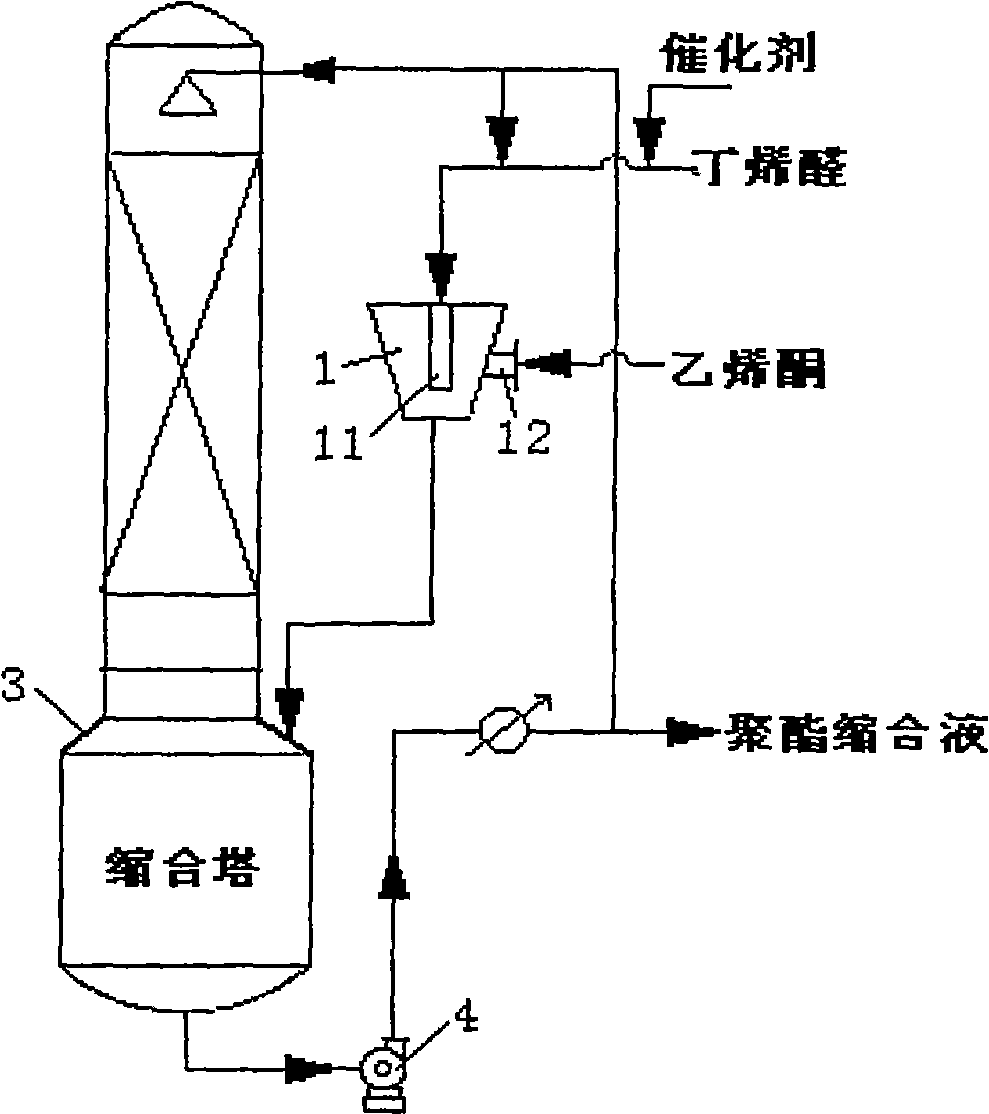
Figure 1 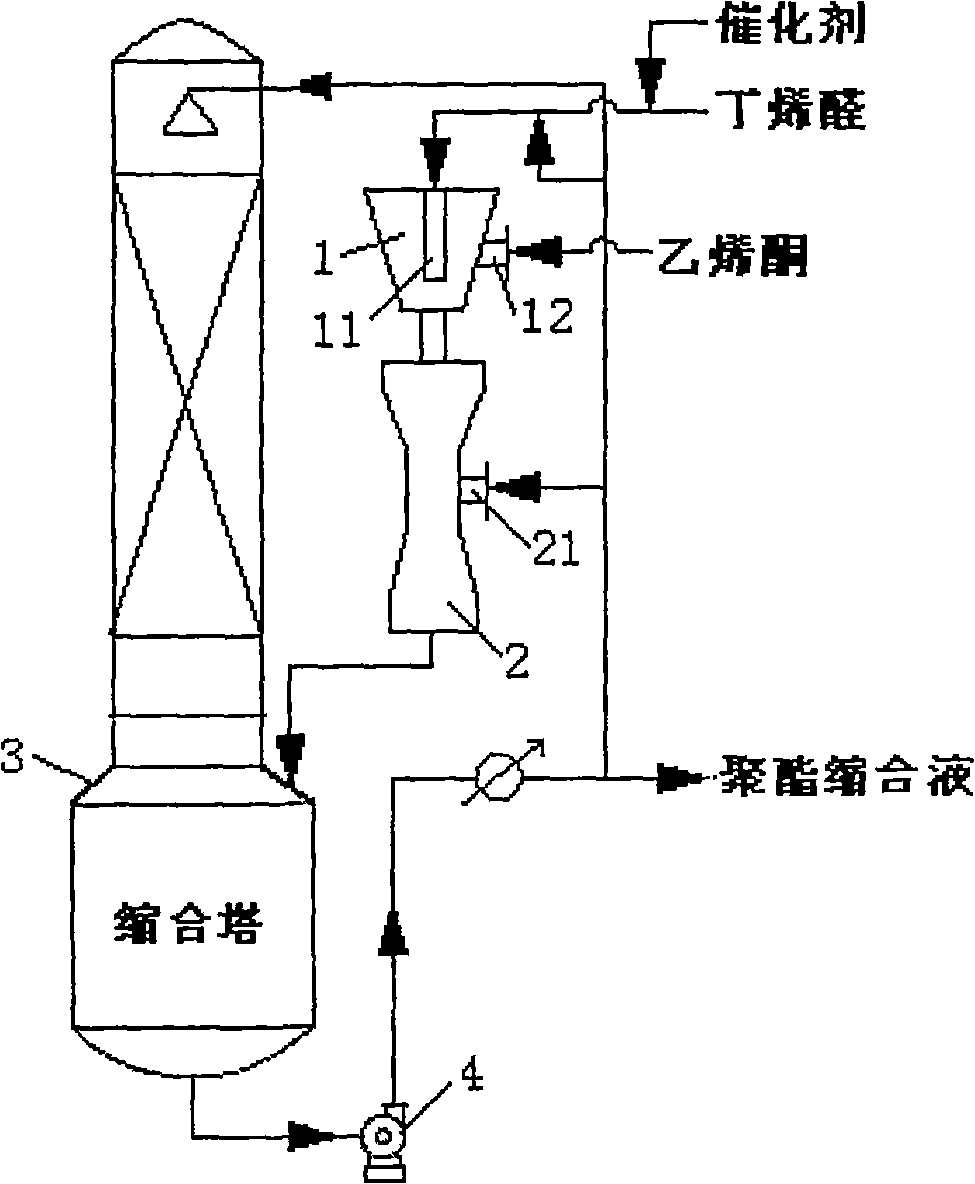
Figure 2 
Figure 3
Abstract
Description
technical field
[0001] The invention relates to a preparation of sorbic acid, in particular to a production process for preparing sorbic acid by using vinyl ketone and crotonaldehyde as raw materials through polymerization reaction and acid decomposition process. Background technique
[0002] Sorbic acid, the scientific name is 2,4-hexadienoic acid, the chemical structure is CH 3 CH=CHCH=CHCOOH, odorless or pungent, slightly soluble in water, easily soluble in organic solvents such as ethanol, melting point 133-135°C, white needle-like or powdery crystal, stable to light and heat , but it is easy to be oxidized and colored if it is placed in the air for a long time. Sorbic acid is an unsaturated fatty acid with conjugated dienes, which is an acidic preservative. When the pH is less than 6, its double bond can combine with the sulfhydryl group of microbial enzymes in food, thereby destroying many important enzyme structures and making it The enzyme loses its activity and pl...
Examples
Embodiment 1
[0037] The composition of the combined polymerization reactor is as follows figure 1 shown.
[0038] Raw material acetic acid and reclaimed acetic acid are formulated into 91.5% (volume) acetic acid solution, added in the acetic acid vaporizer with a flow rate of 700L / h, heated with steam to evaporate the acetic acid, and the formed acetic acid vapor enters the acetic acid cracking furnace, Simultaneously control weight ratio is that 0.28% triethyl phosphate (in terms of acetic acid) enters the cracking furnace together with the acetic acid vapor at the inlet of the cracking furnace pipeline by the acetic acid vapor. The temperature of the cracking furnace is controlled by DCS automatically adjusting the amount of coke oven gas burned. During the cracking process, the furnace temperature of the first stage is 783±1°C, the temperature of the second stage is 805±1°C, and the temperature of the third stage is 826±1°C, and is controlled by a vacuum pump. The vacuum degree in the ...
Embodiment 2
[0045] The composition of the combined polymerization reactor is as follows figure 2 shown, with figure 1 Compared with the addition of a pressurized absorption reactor 2 between the jet absorption reactor 1 and the packed tower 3, a feed liquid inlet 21 is also provided on the side of the pressurized absorption reactor.
[0046] Raw material acetic acid and reclaimed acetic acid are formulated into 91.0% (volume) acetic acid solution, are added in the acetic acid vaporizer with the flow rate of 680L / h, are heated and evaporated with steam, and the acetic acid vapor that forms enters in the acetic acid cracking furnace, while controlling the weight ratio to be 0.28% triethyl phosphate (in terms of acetic acid) enters the cracking furnace together with the acetic acid vapor at the inlet of the cracking furnace pipeline by the acetic acid vapor. During the cracking process, DCS automatically adjusts the amount of coke oven gas burned to control the temperature of the cracking ...