
Method for the production of (4s)-3, 4-dihydroxy-2,6, 6-trimethyl-cyclohex-2-enone and derivatives thereof
A technology of derivatives and hydroxyl, which is applied to the preparation of (4S)-3 by using the phenylethanol dehydrogenase of Azotoxabacterium, which can solve the problems of unsuitable industrial scale implementation and uneconomical
Patent Information
- Authority / Receiving Office
- CN · China
- Patent Type
- Applications(China)
- Current Assignee / Owner
- Publication Date
- 2009-09-16
- Estimated Expiration
- Not applicable · inactive patent
Smart Images
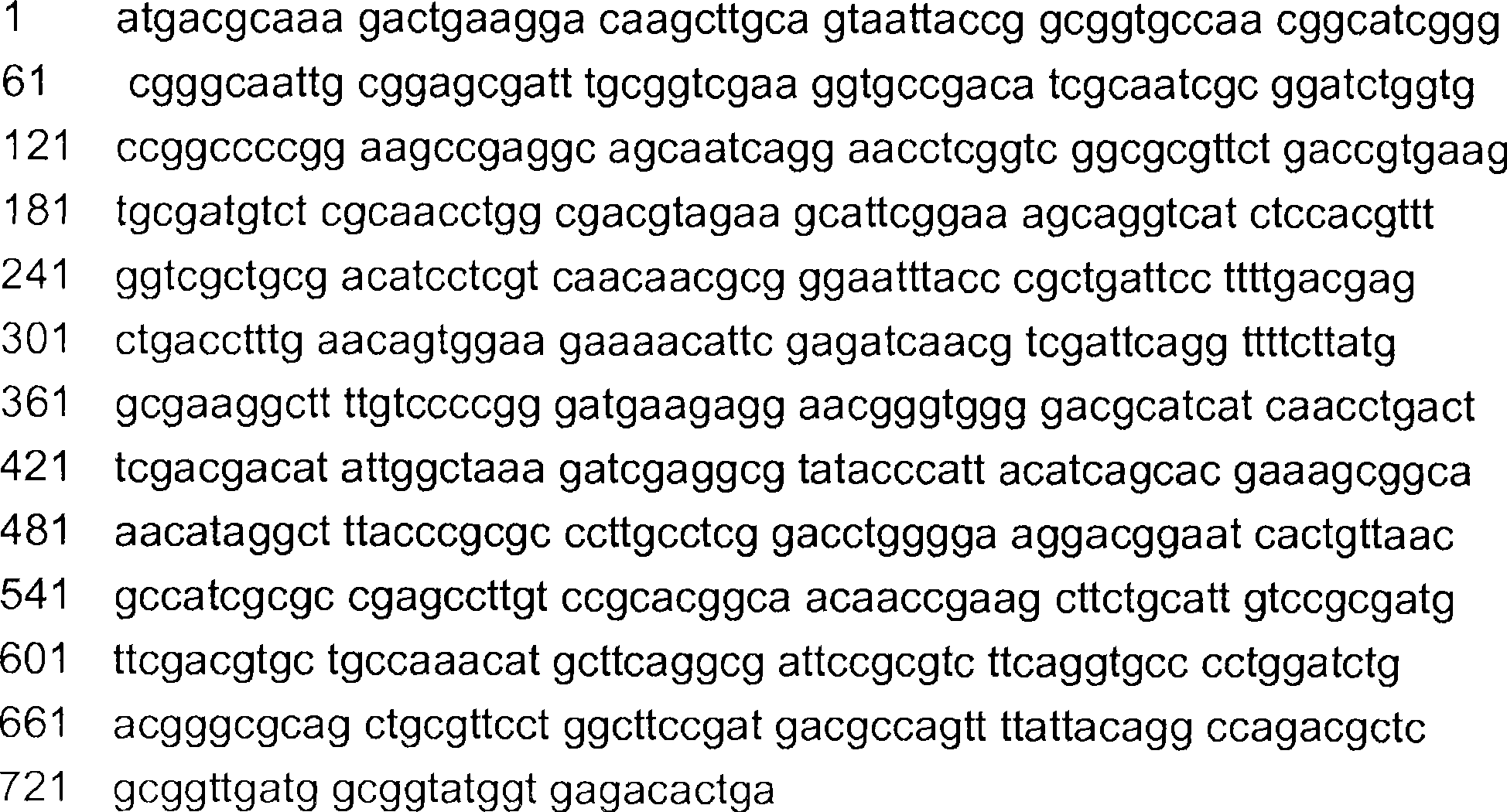
Figure 1 
Figure 2 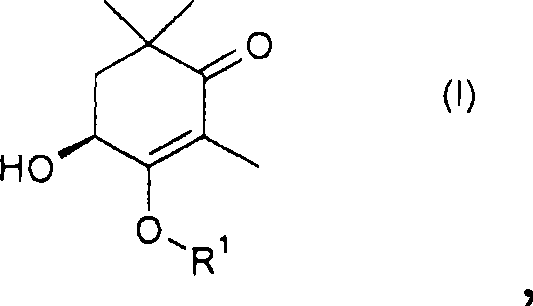
Figure 3
Abstract
Description
technical field
[0001] The invention relates to a method for preparing optically active (4S)-4-hydroxyl-2,6,6-trimethylcyclohex-2-en-1-one derivatives of formula (I) and (3S) of formula (III) , 3'S)-astaxanthin method, the latter method includes the former method.
[0002] Background technique
[0003] Since astaxanthin (3,3'-dihydroxy-β,β'-carotene-4,4'-dione) has two chiral centers at positions 3 and 3', it can be isomerized in the following configuration The body forms exist: (3S, 3'S), (3R, 3'R), (3S, 3'R) and (3R, 3'S). The two configurational isomers mentioned later are identical and represent the meso form (Carotenoids Handbook, 2004, Main List No. 405).
[0004] All three forms can be found in natural sources (Carotenoids Handbook, 2004, MainList Nos. 404, 405, 406). Total chemical synthesis starting with racemic precursors yields a 1:2:1 mixture of (3S,3′S)-astaxanthin, meso-astaxanthin, and (3R,3′R)-astaxanthin (The EFSA Journal, 2005, 291, 12, Deutsche Lebe...
Examples
Embodiment 1
[0088] Embodiment 1: Preparation of recombinant phenyl alcohol dehydrogenase
[0089] In a 100ml Erlenmeyer flask (baffle), Escherichia coli (E.coli) LU11558 prepared as described in WO 2005 / 108590 Examples 1 and 2 was dissolved in 20ml of LB-Amp / Spec / Cm (100 μg / l ampicillin Penicillin, 100 μg / l spectinomycin, 20 μg / l chloramphenicol), 0.1 mM IPTG, 0.5 g / L rhamnose, cultured at 37°C for 18 hours, and then cultured at 5000 * g for 10 min with 10 mM TRIS * Wash once with HCl (pH 7.0) and resuspend in 2 ml of the same buffer.
[0090] Cell-free crude protein extracts were prepared by disrupting E. coli LU11558 cell paste with 0.7 ml glass beads (d = 0.5 mm) in a vibrating ball mill (3 x 5 min, cooled on ice at intervals).
Embodiment 2
[0091] Example 2: Determination of the activity of the recombinant dehydrogenase obtained from Escherichia coli LU11558
[0092] 10 μl of cell-free crude extract (Example 1; approximately 10 mg / ml total protein) was shaken and incubated in 770 μl of 50 mM potassium phosphate buffer (with 1 mM MgCl 2 , pH 6.5), 100 μl of isopropanol, 100 μl of NADH solution (0.5M) and 20 μl of compound 1 (1M in DMSO). The mixture was analyzed analogously to Example 3. On average 0.13 mM of 3,4-dihydroxy-2,6,6-trimethylcyclohex-2-enone was formed. There was no detectable conversion in control experiments in which rhamnose was not added during incubation.
Embodiment 3
[0093] Embodiment 3: analysis compound 1 and compound 2
[0094] Precursor and product concentrations can be determined by HPLC. In addition to concentration, ee can also be determined based on the choice of stationary and mobile phases.
[0095] Stationary phase: Chiralpak AS-RH, 150*4.6mm, Daicel, equilibrated at 40°C
[0096] Mobile Phase: Eluent A: 10mM KH 2 PO 4
[0097] Eluent B: CH 3 CN
[0098] Gradient: Time [min] A[%] B[%] Flow rate [mL / min]
[0099] 0 90 10 0.5
[0100] 10 90 10 0.5
[0101] 11 60 40 0.5
[0102] 20 60 40 0.5
[0103] Flow rate: 0.5ml / min
[0104] Detection: UV detection at 260 nm
[0105] Dwell time:
[0106] (+)-3,4-dihydroxy-2,6,6-trimethylcyclohex-2-enone: about 9.3 minutes
[0107] (-)-3,4-dihydroxy-2,6,6-trimethylcyclohex-2-enone: about 9.8 minutes
[0108] 2-Hydroxy-3,5,5-trimethylcyclohex-2-ene-1,4-dione: about 17.6 minutes
[0109] Using authentic materi...