
Method for separating cephalomannine from taxol
A technology of cephalomannine and alkoxy cephalomannine, which is applied in the field of chemical separation to achieve the effects of mild reaction and treatment conditions, convenient separation, high product yield and purity
Patent Information
- Authority / Receiving Office
- CN · China
- Current Assignee / Owner
- Publication Date
- 2011-04-20
Smart Images
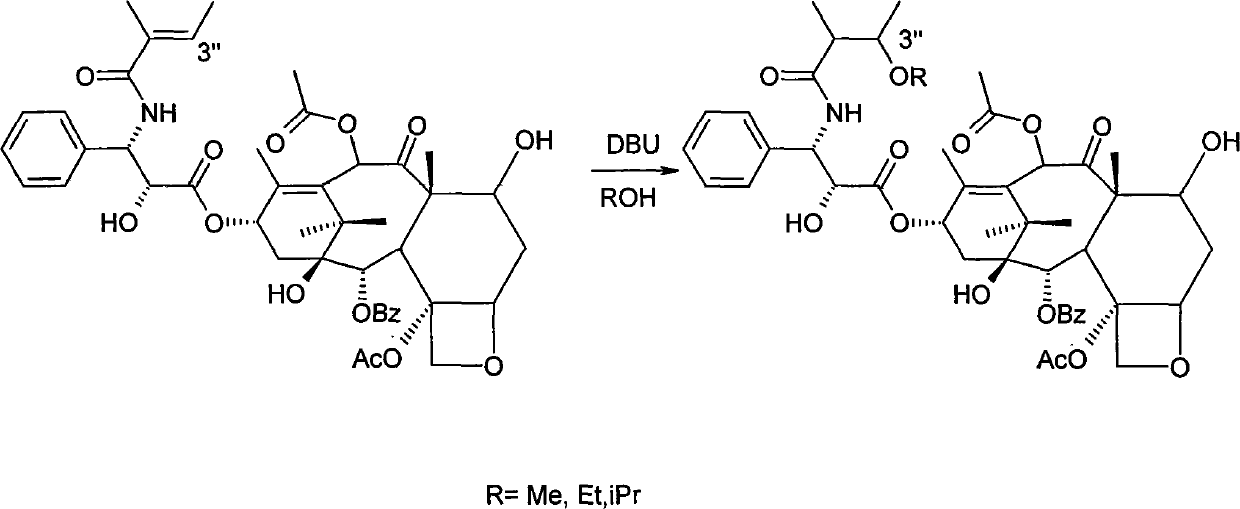
Figure 1 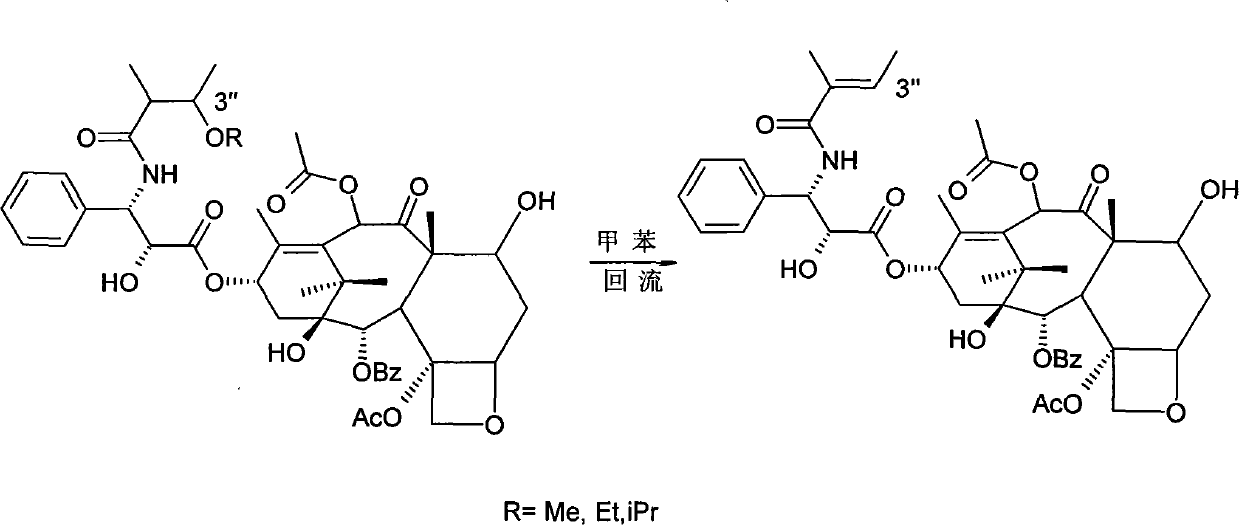
Figure 2
Abstract
Description
technical field
[0001] The invention relates to a chemical separation method, in particular to the separation method of two medicinal components. Background technique
[0002] Paclitaxel is a well-known chemotherapeutic drug for the treatment of various metastatic tumors. It has been approved by the U.S. Food and Drug Administration for the treatment of cancers such as ovarian and breast cancer.
[0003] Paclitaxel is a natural compound, which was first extracted and isolated from Pacific yew. At present, the main raw materials extracted are European yew, Tibetan yew, Yunnan yew, Chinese yew and southern Chinese yew. Paclitaxel can also be obtained by plant cell suspension culture and mold.
[0004] In various raw materials, the concentration of paclitaxel is particularly low, for example, in the bark of Taxus brevifolia, its content is between 0.0004-0.08% (by weight). From raw materials with such low content, it is very difficult to extract and purify compounds for cli...
Examples
Embodiment 1
[0021] 100g of cephalomannine and paclitaxel mixture material (containing paclitaxel 9.2%, cephalomannine 61.9% (74mmol) respectively) was dissolved in 0.7L methanol, and 90ml of 1,8-diazabicyclo- Bicyclo(5,4,0)-7-undecene (containing 0.85g, 5.55mmol) in methanol. After stirring for 30 minutes, it was concentrated. After passing through a silica gel column (1.5 kg of silica gel), the gradient elution ratio of the mobile phase ethyl acetate and petroleum ether was gradually increased from 1:1 to 2:1. 37.5 g of paclitaxel was obtained, with a content of 24.1%, and a yield of 98.2%; 62.3 g of 3"-methoxycephalomannine derivatives were obtained, with a purity of 99.8%, and a yield of 98.9%.
Embodiment 2
[0023] Dissolve 100g of cephalomannine and paclitaxel mixture material (respectively containing 7.2% of paclitaxel and 77.3% of cephalomannine (92.9mmol)) in 1.4L of isopropanol, add dropwise 150mL (containing 1.18g, 11.6mmol) A solution of N-methylmorpholine in isopropanol. After stirring for 30 minutes, it was concentrated. After passing through a silica gel column (1.5 kg of silica gel), the gradient elution ratio of the mobile phase ethyl acetate and petroleum ether was gradually increased from 1:1 to 2:1. 22.6 g of paclitaxel was obtained, with a content of 31.3% (8.3 mmol), and a yield of 98.2%; 81.2 g of 3"-isopropoxy cephalomannine derivatives were obtained, with a yield of 98.0%.
Embodiment 3
[0025] Add 100 g of edible activated carbon to 2 liters of concentrated nitric acid, cool with an ice-water bath during the addition, and stir for 20 minutes. Remove the ice bath and use a sonicator instead. After ultrasonic vibration for 10 hours, filter and wash 5 liters of washing filter cake with clear water. Put the filter cake into a vacuum oven and dry it at 60° C. for 24 hours. Then, the dried activated carbon was stored in a sealed metal bottle protected by nitrogen.