
Preparation method of conductive polypyrrole hollow compound microsphere sensitive to temperature
A technology of composite microspheres and polypyrrole, which is applied in the field of materials, can solve the problems of limited practical application, limited adjustable range of temperature or pH change, single structure and shape of composite polypyrrole materials, etc., and achieves significant volume swelling effect and sensitivity Adjustable, easy-to-synthesize effects
Patent Information
- Authority / Receiving Office
- CN · China
- Patent Type
- Patents(China)
- Current Assignee / Owner
- Publication Date
- 2013-06-12
- Estimated Expiration
- Not applicable · inactive patent
Smart Images
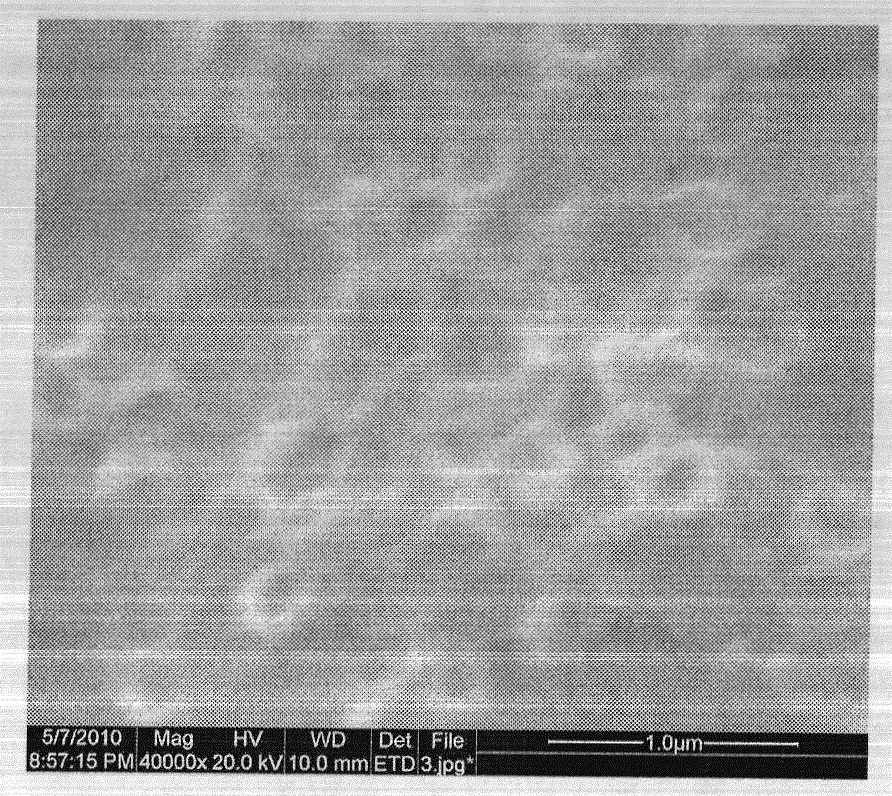
Figure 1 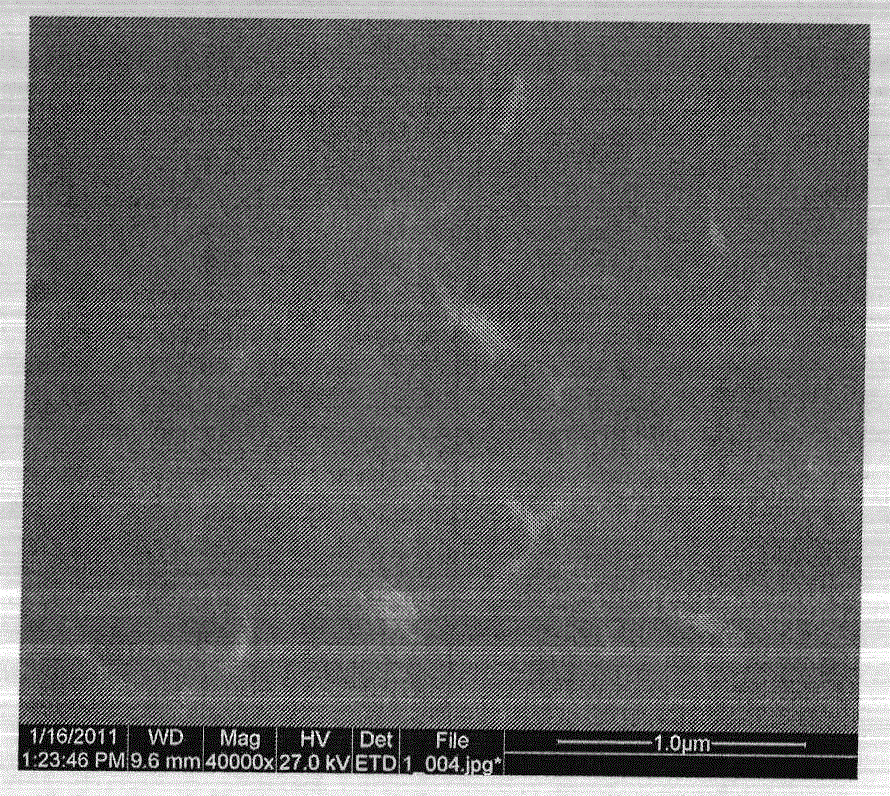
Figure 2 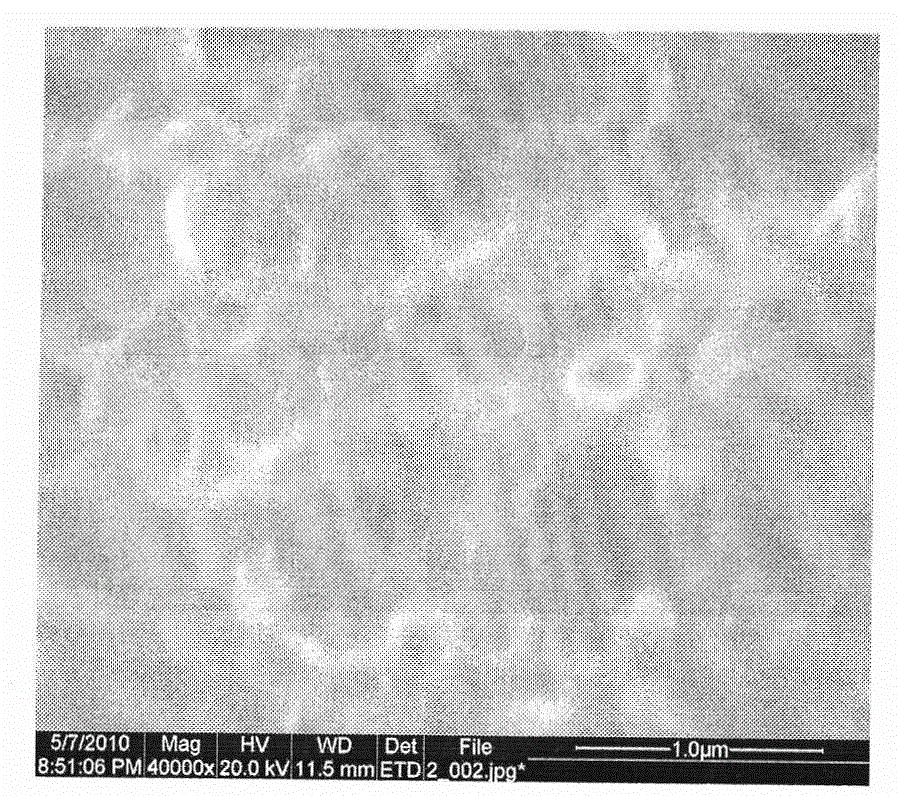
Figure 3
Abstract
Description
technical field
[0001] The invention belongs to the technical field of materials, and in particular relates to a preparation method of sensitive polypyrrole hollow microspheres. Background technique
[0002] At present, the preparation of conductive polypyrrole hollow microspheres mostly uses monodisperse silica microspheres or polystyrene microspheres as templates, and through appropriate surface modification or modification, the oxidation of polypyrrole is carried out on the surface of the modified template. Polymerize, and finally remove the core component to obtain polypyrrole hollow microspheres. This method for preparing polypyrrole hollow microspheres has disadvantages such as complicated surface modification process and single property of the prepared polypyrrole.
[0003] Composite polymer microgels with environmental sensitivity and conductive polymers in a certain way can obtain composite materials with both sensitive characteristics and conductive properties. T...
Examples
Embodiment 1
[0026] 1. Preparation of poly(N-isopropylacrylamide-styrene) copolymer microsphere dispersion
[0027] Under the protection of nitrogen, dissolve 0.2g of N-isopropylacrylamide monomer and 1.8g of styrene monomer in a 150mL three-neck flask filled with 90g of double-distilled water, stir at 400 rpm, and heat to 70°C in a water bath. Add 10.16g of potassium persulfate aqueous solution with a mass fraction of 1.57%, the mass ratio of N-isopropylacrylamide monomer to styrene monomer, double distilled water, and potassium persulfate aqueous solution is 1:9:450:50.8, and the temperature is constant After reacting for 8 hours, 102.16 g of poly(N-isopropylacrylamide-styrene) copolymerized microsphere dispersion liquid was prepared.
[0028] 2. Preparation of poly(N-isopropylacrylamide-styrene) / poly(N-isopropylacrylamide-methacrylic acid) core-shell composite microspheres
[0029]Under nitrogen protection, 0.96g N-isopropylacrylamide monomer, 0.23g methacrylic acid monomer, 0.094g sod...
Embodiment 2
[0036] In step 3 of preparing polypyrrole composite microspheres in this example, the pyrrole ethanol solution with a mass fraction of 1.8% was replaced with an equal mass fraction of 0.6% pyrrole ethanol solution, and other steps in this step were the same as in Example 1. The other steps were the same as in Example 1 to prepare polypyrrole hollow composite microspheres. The scanning electron micrographs of the prepared polypyrrole hollow composite microspheres are shown in figure 2 . Depend on figure 2 It can be seen that the prepared polypyrrole hollow composite microspheres have a red blood cell-like structure.
Embodiment 3
[0038] In step 3 of preparing polypyrrole composite microspheres in this embodiment, the pyrrole ethanol solution with a mass fraction of 1.8% was replaced with an equal mass fraction of 1.2% pyrrole ethanol solution, and other steps in this step were the same as in Example 1. The other steps were the same as in Example 1 to prepare polypyrrole hollow composite microspheres. The scanning electron micrographs of the prepared polypyrrole hollow composite microspheres are shown in image 3 . Depend on image 3 It can be seen that the prepared polypyrrole hollow composite microspheres have a red blood cell-like structure.