
Preparation method and application of molecular marker of rape male sterile restoring gene
A technology for male sterility and gene restoration, applied in the fields of rapeseed breeding and molecular biology, to achieve the effects of improving speed and identification efficiency, reducing workload, and improving efficiency and accuracy
Patent Information
- Authority / Receiving Office
- CN · China
- Patent Type
- Patents(China)
- Current Assignee / Owner
- Publication Date
- 2012-10-03
- Estimated Expiration
- Not applicable · inactive patent
Smart Images
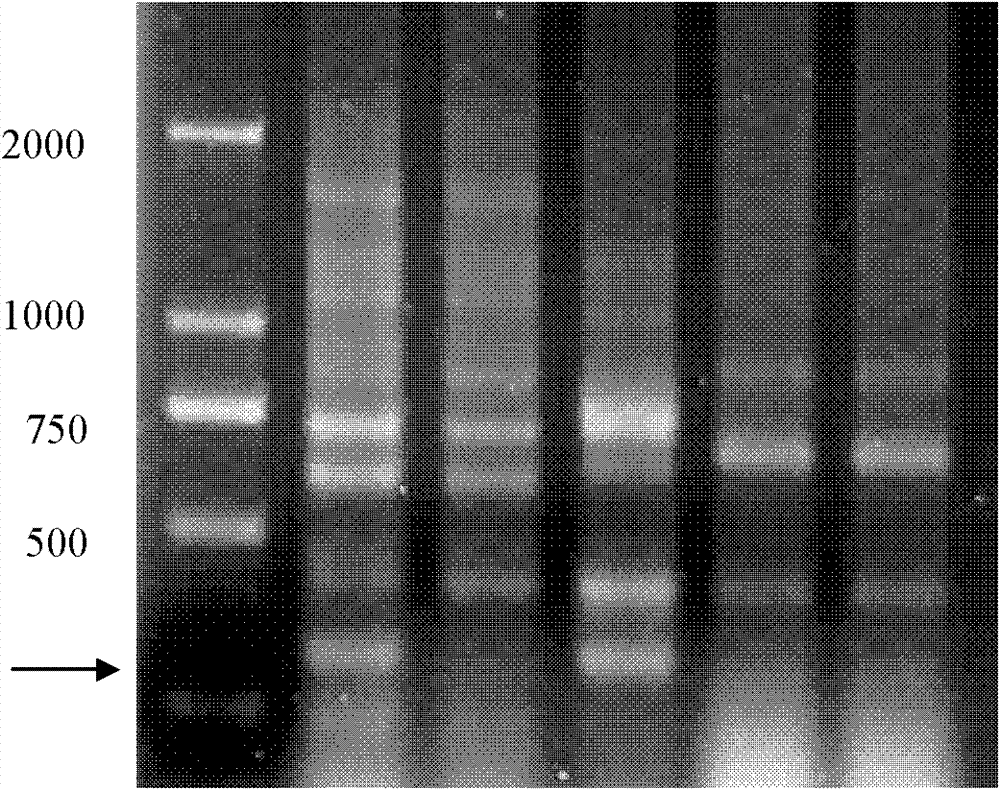
Figure 1 
Figure 2 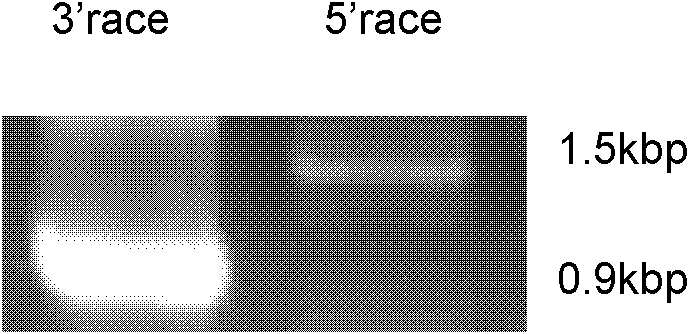
Figure 3
Abstract
Description
technical field
[0001] The invention belongs to the fields of rapeseed breeding and molecular biology, and more specifically relates to a method for preparing a molecular marker of a rapeseed heterologous cytoplasmic male sterility restoration gene, and also relates to a molecular marker of a rapeseed heterologous cytoplasmic male sterility restoration gene Application in parental selection of rapeseed hybrids. Background technique
[0002] At present, the promotion area of hybrid rapeseed has accounted for more than 60% of the total production area of rapeseed. Cytoplasmic male sterility is the main pollination control system for the production of rapeseed hybrids. About 70% of the miscellaneous rapeseed used in my country's production are cytoplasmic male sterile hybrids, which are basically formulated from Pol CMS, which was discovered by Huazhong Agricultural University in 1972 from the imported variety "Polima". . The fertility of Pol CMS is easily affected by tem...
Examples
Embodiment 1
[0036] A method for preparing a rapeseed male sterility restorer gene molecular marker, the specific steps are:
[0037] 1. Acquisition of relevant fragments of the cytoplasmic male sterility restoration gene of Brassica japonica
[0038] A. Experimental materials and population construction: CMS lines of wild mustard cytoplasmic male sterile (Nsa CMS) (both selfed or backcrossed progenies with Brassica napus, no wild mustard chromosomes in the nucleus), Zhongshuang 4 (for The maintainer line of Nsa CMS is also the original parent of Brassica napus for somatic cell hybridization), Yeyou 18 (the original wild mustard parent for somatic cell hybridization) and the male sterile line of Nsa CMS crossed with No. 1 restorer line (Huai 1) After the obtained fertile F1 generation single plant was crossed with the maintainer line, fertile plants and sterile plants in the fertile segregation population obtained after continuous backcrossing of the fertile plant and the maintainer line f...
Embodiment 2
[0066] The molecular markers of wild mustard cytoplasmic male sterility restoration gene and linkage detection of restoration traits, the specific steps are:
[0067] A. Construction of wild mustard cytoplasmic male sterile segregation population: the wild mustard cytoplasmic male sterile line (Nsa CMS) was pollinated with bagging self-bred Nsa restorer line for multiple generations, and F1 generation seeds were obtained. Bagging selfing of F1 to obtain a fertilely separated F2 population;
[0068] B. Fertility identification: During the full flowering stage of rapeseed, the fertility identification of each individual plant of the F2 population is carried out in the field. Since the Nsa CMS is completely sterile, it is easy to determine whether each individual plant is viable according to whether the petals are open or not and the amount of pollen. Fertile or sterile;
[0069] C. Sampling and extracting individual plant DNA: Sampling the sterile plants and fertile plants as i...
Embodiment 3
[0072] The application of the molecular marker of the wild mustard cytoplasmic male sterility restorer gene in parental selection of rapeseed hybrids, the specific steps are as follows:
[0073] A. The original restorer line Hui 1 obtained from the initial screening was used to cross with rapeseed lines 141 and TR008 with excellent agronomic properties and early maturity, and fertile plants were selected from the F2 generation for bagging and selfing to produce F3-F6 generation high-generation plants Tie;
[0074] B, from the F3 generation, according to the performance of agronomic traits, the field selects the excellent lines with neat growth, strong, many branches, and suitable flowering period, and gets 10 individual plant mixed samples to extract genomic DNA, and adopts the developed method of implementation example 2 The specific primers for the cytoplasmic male sterility restorer gene of Brassica japonica were amplified by PCR ( Figure 8), keep the strain that can ampl...