
Preservation method of biological enzyme preparation
A biological enzyme and preparation technology, applied in the field of bioengineering, can solve the problems of high production cost, low activity of immobilized enzyme, affecting reaction speed and production efficiency, etc., to maintain continuity, realize repeated long-term use, and convenient cleaning and disinfection and save the effect
Patent Information
- Authority / Receiving Office
- CN · China
- Patent Type
- Applications(China)
- Current Assignee / Owner
- Publication Date
- 2011-12-21
- Estimated Expiration
- Not applicable · inactive patent
Smart Images
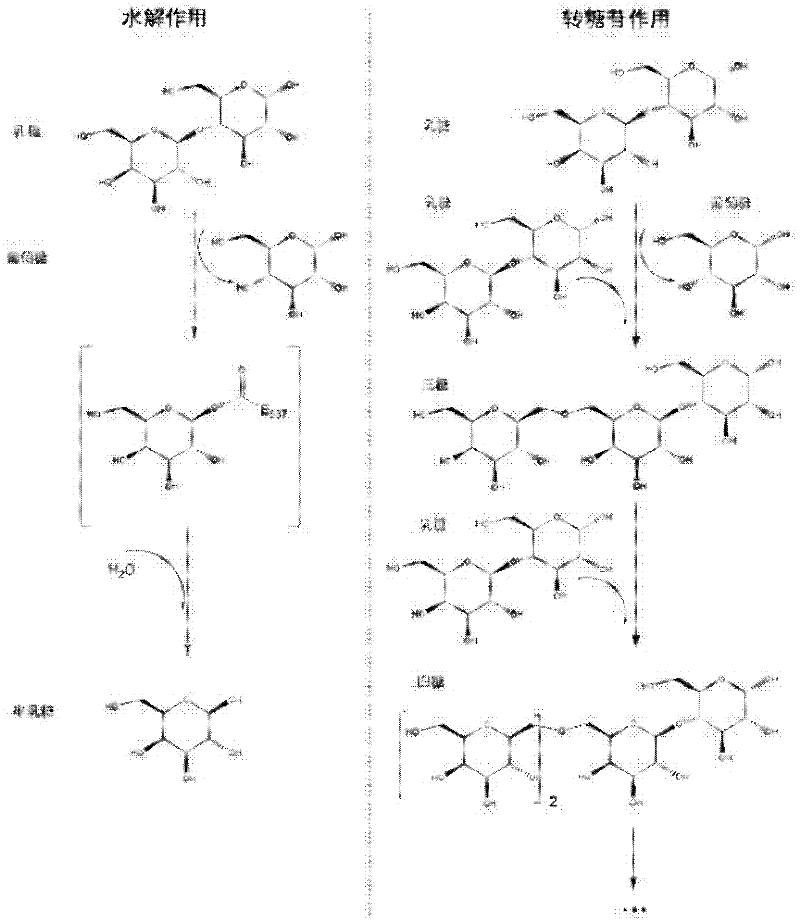
Figure 1 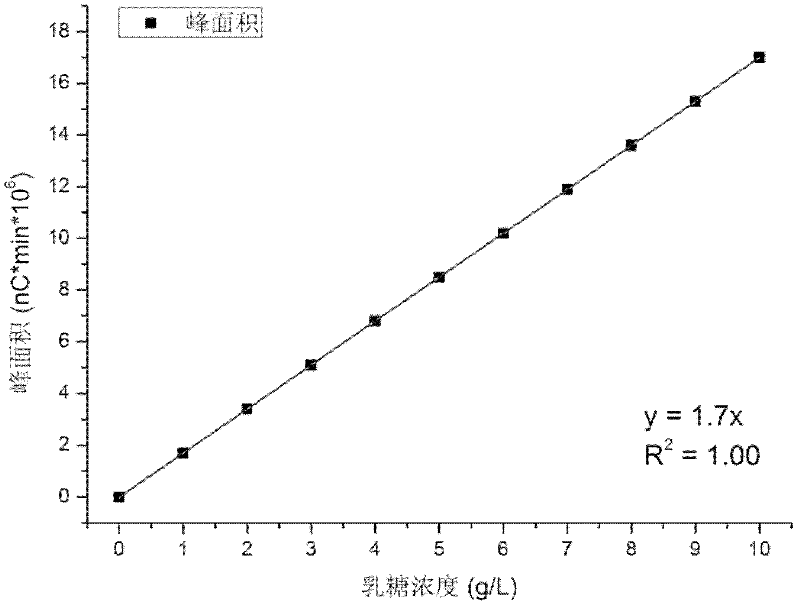
Figure 2 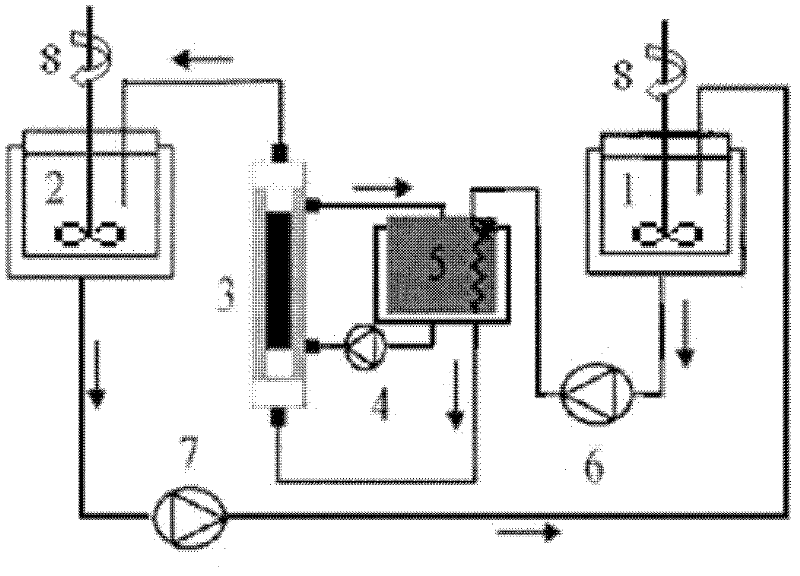
Figure 3
Abstract
Description
technical field
[0001] The invention relates to a method in the technical field of bioengineering, in particular to a method for preserving biological enzyme preparations. Background technique
[0002] β-galactosidase (β-galactosidase, EC3.2.1.23), scientific name β-galactoside galactohydrolase, is a white powder, tasteless and odorless, and becomes a light brown liquid after dissolution. β-galactosidase hydrolyzes galactosidic bonds under specific conditions, and can hydrolyze lactose into glucose and galactose that are easily absorbed by the small intestine. At the same time, β-galactosidase also has the function of transgalactoside, and transfers galactose to the galactose base of lactose to form a type of galactooligosaccharides containing 2 to 5 monosaccharide molecules. The molecular formula is (Gal) n-Glu, n=2-4. β-galactosidase hydrolyzes lactose and transglycosides as figure 1 shown.
[0003] Since β-galactosidase has the function of transgalactoside, it can gen...
Examples
Embodiment 1
[0040] Example 1: Application Results of Immobilized β-Galactosidase for Production of Lactose Decomposed Milk
[0041] Immobilization method of β-galactosidase: Weigh 2g chitosan beads → add 20ml 0.5% glutaraldehyde → cross-link for 40min (30°C, 80rpm) → wash to get activated chitosan beads → add 10ml of 1mg / ml enzyme solution, fix overnight → wash with water → store at 4°C.
[0042] Production of lactose-decomposed milk with immobilized β-galactosidase: use skim milk, after ultra-high temperature (140°C, 4s) sterilization treatment, determine the content of lactose, protein and fat, and cool it as the reaction substrate. Make the substrate milk pass through the reactor at a flow rate of 1L / h to react with the immobilized enzyme. After 4-5 cycles, the lactose is decomposed, the remaining lactose content is measured, and the lactose decomposition rate is calculated. When the decomposition of lactose reaches more than 80%, change to a new batch of substrate milk and operate a...
Embodiment 2
[0054] Example 2: Results of application of immobilized β-galactosidase to whey
[0055] The immobilization method of β-galactosidase is the same as that in Example 1.
[0056] Treat whey with immobilized β-galactosidase to produce galacto-oligosaccharides: Use desalted whey powder to prepare a whey solution with a lactose content of 10%, and after ultra-high temperature (140°C, 4s) sterilization, determine Lactose and protein content, cooled as reaction substrates. The substrate whey is passed through the reactor at a flow rate of 1 L / h to react with the immobilized enzyme, and after 4-5 cycles, lactose is decomposed to generate galacto-oligosaccharides. Using ion chromatography, using ion exchange and gradient elution methods, combined with pulsed amperometric detection system to detect lactose and galactooligosaccharides. When the decomposition of lactose reaches more than 80%, change to a new batch of substrate whey and then operate, continuous operation every day 12 hou...
Embodiment 3
[0059] Example 3: Application Results of Immobilized β-Galactosidase for Processing Lactose Solution
[0060] The immobilization method of β-galactosidase is the same as that in Example 1.
[0061] Process the lactose solution with immobilized β-galactosidase to produce galacto-oligosaccharides: use lactose to prepare a solution with a lactose content of 10%, after ultra-high temperature (140°C, 4s) sterilization, measure the lactose content, and cool it as Reaction substrate. The substrate whey is passed through the reactor at a flow rate of 1 L / h to react with the immobilized enzyme, and after 4-5 cycles, lactose is decomposed to generate galacto-oligosaccharides. Using ion chromatography, using ion exchange and gradient elution methods, combined with a pulsed amperometric detection system to detect lactose and galactooligosaccharides. When the decomposition of lactose reaches more than 80%, a new batch of substrate whey is used for operation, and the operation is continue...