
Artificial breeding and culturing method for horseshoe crabs
A breeding method and artificial technology, applied in the field of artificial seedling and breeding, can solve problems such as the inability to apply artificial seedlings, and achieve the effect of huge economic and social benefits
Patent Information
- Authority / Receiving Office
- CN · China
- Patent Type
- Patents(China)
- Current Assignee / Owner
- Publication Date
- 2013-09-04
- Estimated Expiration
- Not applicable · inactive patent
Smart Images
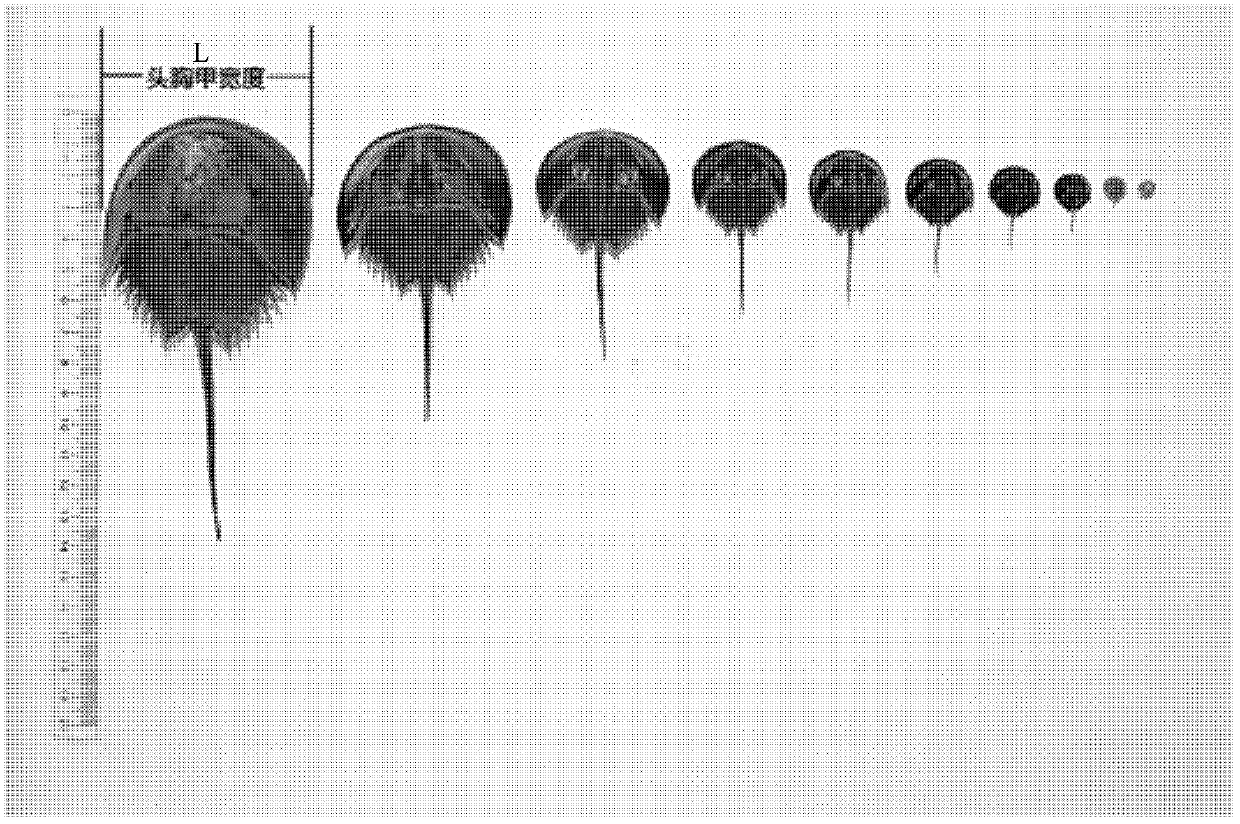
Figure 1 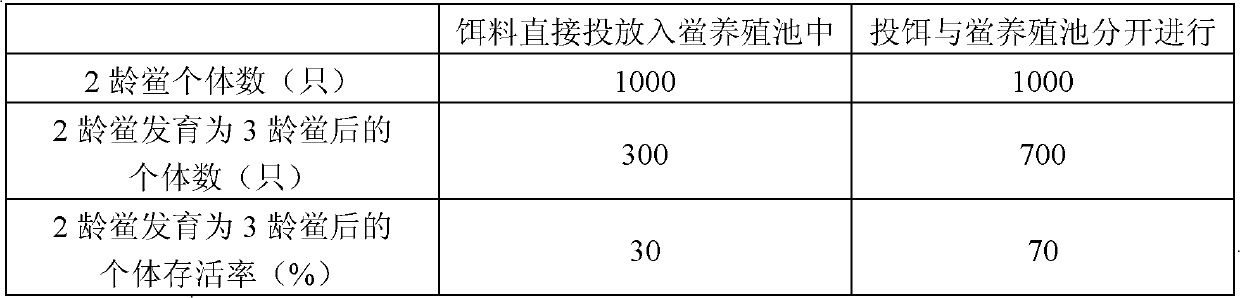
Figure 2 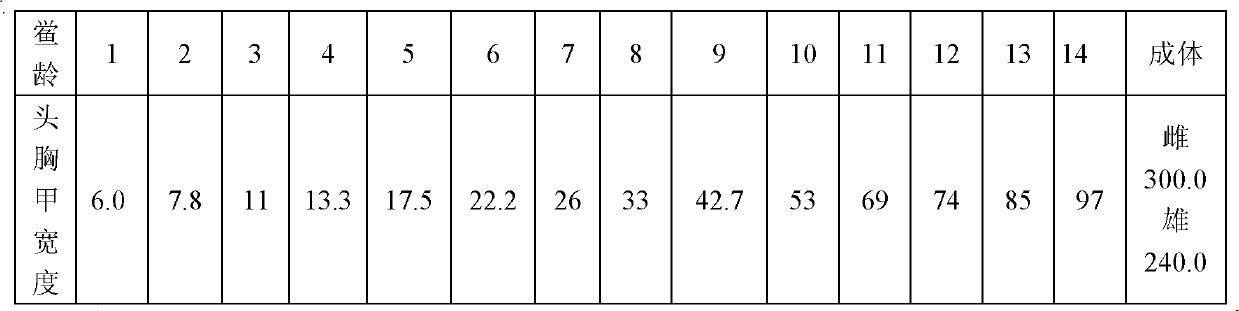
Figure 3
Abstract
Description
technical field
[0001] The invention relates to an artificial seedling raising and cultivating method, in particular to an artificial seedling raising and cultivating method of horseshoe crab. Background technique
[0002] Limulus, also known as horseshoe crab, belongs to Arthropoda, Merostomata, Xiphosurida, and Limuroidea. According to its shape and distribution characteristics, the existing Limulus in the world can be divided into two subfamilies, three genera and four types. Among them, the Limulinae subfamily has only one species, Limulus and Limulus polyphemus, which are distributed in eastern North America. Coastal waters; and Tachypleinae subfamily has two genera, distributed in the southeastern coast of Asia and the coastal waters of the east coast, of which there are two species of Tachypleus: Tachypleus tridentatus (also known as three-sting horseshoe crab, Chinese horseshoe crab or Japanese horseshoe crab) Limulus) and Tachypleus gigas (also called Giant Limulus...
Examples
Embodiment Construction
[0049] The following examples further illustrate the present invention.
[0050] 1. Artificial breeding
[0051] 1. The choice of pro-Limulus
[0052] The key to the success of artificial insemination is to choose a good horseshoe crab with good maturity. Scrub the male and female horseshoe crabs with sea water.
[0053] Open the reproductive cover of the abdomen of the female horseshoe crab, and a pair of reproductive holes can be seen. Squeeze the reproductive holes with hands. If mature eggs are discharged, the female horseshoe crab can be retained for insemination.
[0054] Open the genital cover of the male Limulus abdomen, use a syringe to extract hemolymph (containing semen) from the genital opening, drop it on the glass slide, add the same amount of seawater, cover the glass slide, and observe under a high-power microscope to confirm that there are a large amount of blood. The swimming sperm, the male horseshoe crab can be retained. If no motile sperm can be observ...