
Seed selection method and breeding method of yellow-bud pimento cytoplasmic male sterile line
A male sterile line and male sterile technology, applied in the field of plant breeding, can solve the problems of time-consuming and labor-consuming identification of hybrid purity, difficult operation, low yield of hybrid seed production, etc., and achieve the controllable breeding target traits and procedures , Breeding and isolation conditions are simple, and the effect of rapid identification of purity
Patent Information
- Authority / Receiving Office
- CN · China
- Patent Type
- Applications(China)
- Current Assignee / Owner
- Publication Date
- 2013-08-21
- Estimated Expiration
- Not applicable · inactive patent
Smart Images
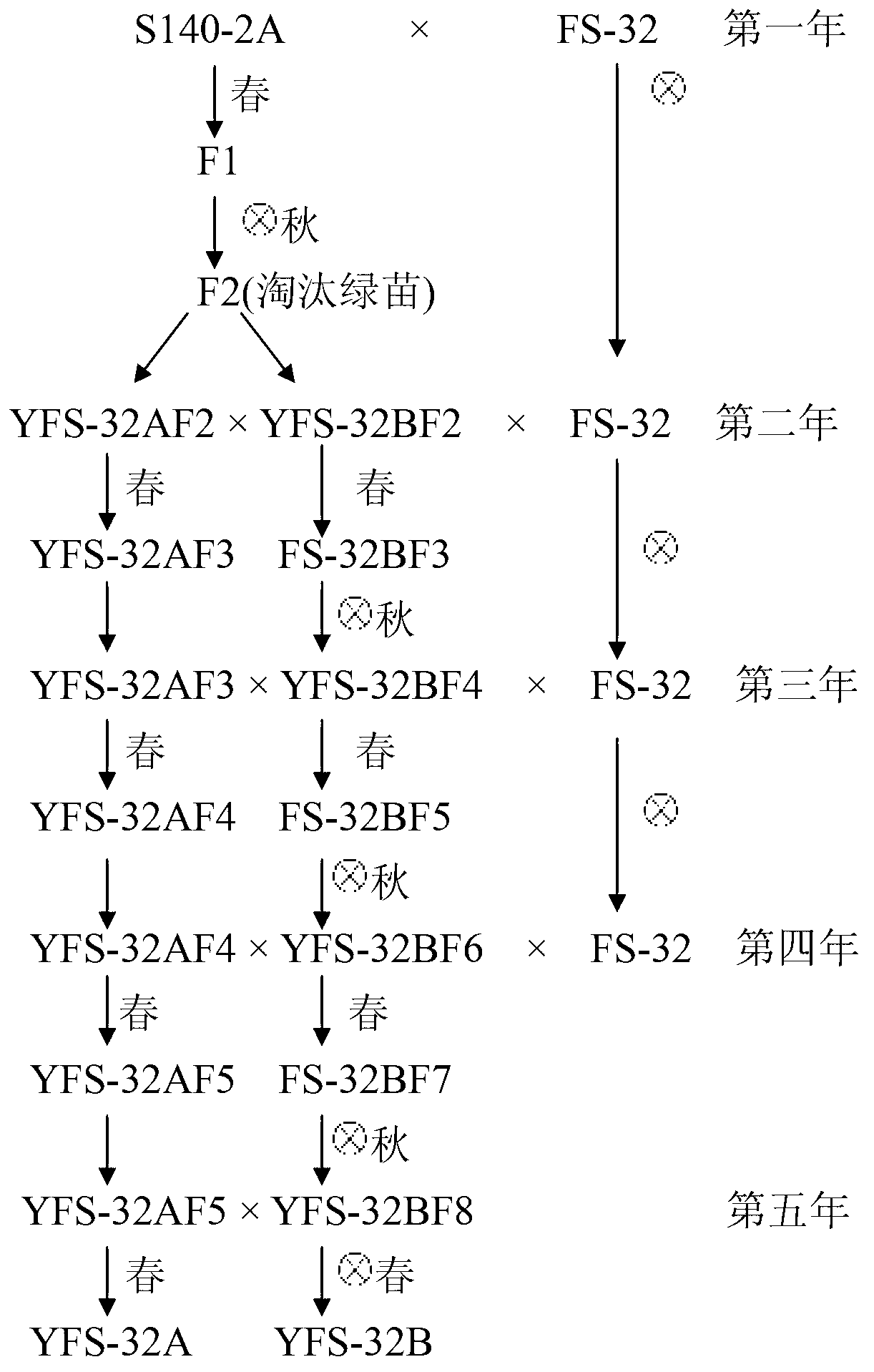
Figure 1
Abstract
Description
technical field
[0001] The invention relates to a method for selecting and breeding a cytoplasmic male sterile line of sweet pepper, in particular to a method for selecting and breeding a cytoplasmic male sterile line of bud yellow sweet pepper, and belongs to the technical field of plant cultivation. Background technique
[0002] As far as the applicant knows, sweet peppers have obvious heterosis. At present, the ways to utilize the heterosis of sweet pepper include artificial emasculation interspecific hybridization, double-cross, three-cross and male sterile line seed production, and male sterile line seed production is divided into male sterile dual-purpose line hybrid production There are two types of seed production and cytoplasmic male sterile line. Cytoplasmic male sterility (CMS) of sweet pepper has the advantage of stable sterility, but it is necessary to remove 50% of the female parent of the male sterile line at the initial flowering stage when producing swe...
Examples
Embodiment 1
[0027] In the first spring of this example, bud yellow sweet pepper cytoplasmic male sterile strain S140-2A (self-selected as a unit) was used as the female parent, and FS-32 sweet pepper (green seedling sweet pepper) was used as the male parent for artificial assisted pollination The first generation of hybrid F1 (green leaves of F1) is obtained by crossing. The first generation of hybrid F1 is sown in the autumn of the year, and the fertile plants (or part of the fertile plants) are selected by pollen microscope for self-crossing to obtain the first generation of self-bred F2. In the spring of the second year, the first generation F2 of the inbred species was sown, the green seedlings were eliminated, and the first generation of completely sterile plants (number FS-32AF2) and the first generation of fertile plants (number FS-32AF2) with bud yellow marks were selected by visual inspection and pollen microscope inspection. 32BF2), and using the first generation of Yahuang compl...