

DPP-4 (Dipepitidyl Peptidase-4) inhibitor compound
A compound and selected technology, applied in the field of DPP-4-related diseases, dipeptidyl peptidase IV (DPP-4) inhibitor compounds, can solve GLP-1 inactivation and other problems
Patent Information
- Authority / Receiving Office
- CN · China
- Current Assignee / Owner
- Publication Date
- 2014-05-07
Smart Images
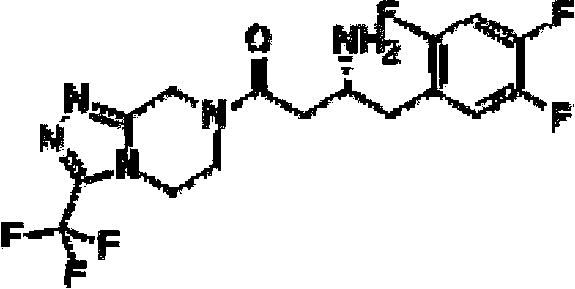
Figure 1 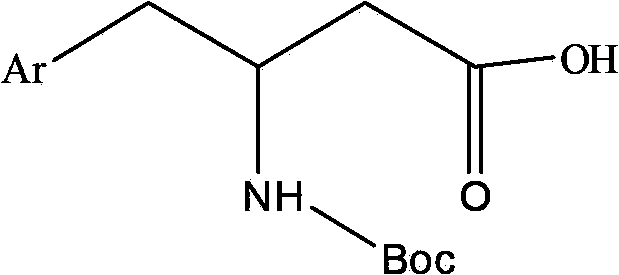
Figure 2 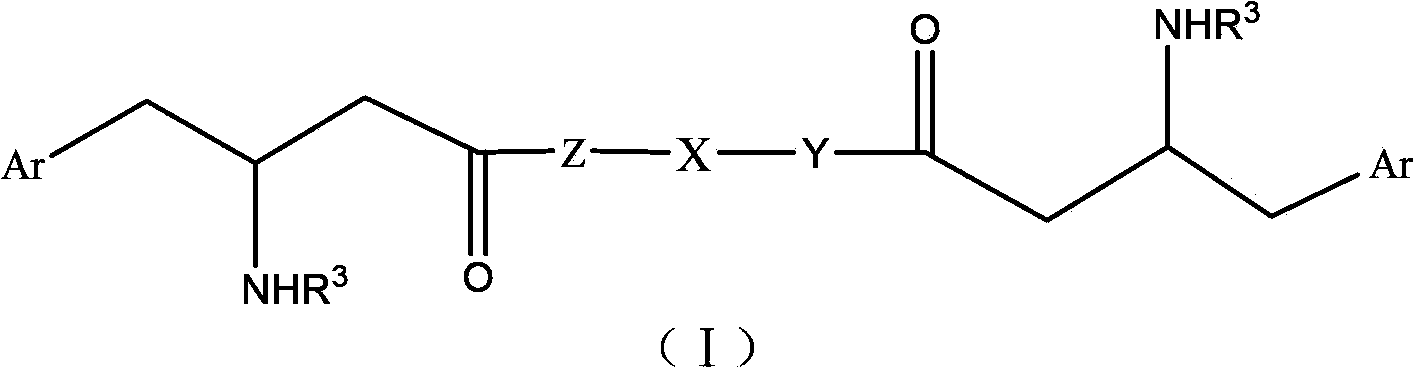
Figure 3
Abstract
Description
Technical field
[0001] The present invention belongs to the field of organic synthesis, and specifically relates to a novel dipeptidyl peptidase IV (DPP-4) inhibitor compound and its use for treating and preventing diabetes and other diseases related to DPP-4. Background technique
[0002] Diabetes mellitus is a chronic metabolic disease caused by various pathogenic factors such as genetic factors, immune dysfunction, microbial infections and their toxins, free radical toxins, and mental factors. It is clinically characterized by high blood sugar. It can be divided into type 1 diabetes (insulin-dependent), type 2 diabetes (non-insulin-dependent), gestational diabetes and other special types of diabetes. Among diabetic patients, type 2 diabetes accounts for about 95%.
[0003] At present, the main oral hypoglycemic drugs are: sulfonylureas (SU), biguanides, α-glucosidase inhibitors, non-sulfonylureas insulin secretion drugs and insulin sensitizers: thiazolidinediones. These drugs ...
Examples
Embodiment 1
[0073]
[0074] experiment procedure:
[0075] first step:
[0076] Method A
[0077] Weigh Boc-(R)-3-amino-4-(2,4,5-trifluorophenyl)butyric acid (1.0g, 3.0mmol), anhydrous piperazine (0.26g, 3.0mmol), HBTU( 2.27g, 6.0mmol) was added to a 100ml round bottom flask, dissolved with 20ml of DMF, then DIEA (0.78g, 6.0mmol) was added to the reaction solution, and the reaction was stirred at room temperature for 1.5 hours. TLC detection (petroleum ether: ethyl acetate = 4:1), the reaction is over, the reaction solution is added to 10 times the amount of water, a white solid precipitates out, filtered, the filter cake is washed with water, and the solid obtained is dried.
[0078] Method B
[0079] Weigh Boc-(R)-3-amino-4-(2,4,5-trifluorophenyl)butyric acid (1.0g, 3.0mmol), anhydrous piperazine (0.26g, 3.0mmol), DCC( 6.0mmol) and HoBt (6.0mmol) were added to a 100ml round bottom flask, dissolved in 20ml DMF, and then DIEA (12.0mmol) was added to the reaction solution, and the reaction was st...
Embodiment 2
[0085] Chemical reaction formula:
[0086]
[0087] Experimental process: The specific experimental process of compound 2 is similar to that of Example 1, refer to Example 1.
[0088] MSm / z(ESI): 613.5[M+Na]
[0089] 1 H-NMR (500MHz, deuterated DMSO): δ7.31~7.38(m,2H), 7.13~7.22(m,2H), 4.01~4.15(m,2H), 4.42(m,1H), 3.67(s ,3H), 2.80~2.91(m.4H), 2.59~2.72(m,4H).
Embodiment 3
[0091] Chemical reaction formula:
[0092]
[0093] Experimental process: The specific experimental process of compound 3 is similar to that of Example 1, refer to Example 1.
[0094] MSm / z(ESI): 539.3[M+H]
[0095] 1 H-NMR (500MHz, deuterated DMSO): δ7.60~7.65(m,4H), 7.31~7.38(m,2H), 7.13~7.22(m,2H), 4.42(m,1H), 4.01~4.15 (m, 2H),, 3.67(s, 3H), 2.80~2.91(m.4H), 2.59~2.72(m, 4H).