
Synthetic method of 2,4-difluorobenzene methylamine
A technology of difluorobenzylamine and a synthesis method, which is applied in the fields of synthesizing and using as medicine and agricultural chemicals, can solve the problems of unsafe reagents, expensive raw materials, expensive reducing agents, etc., and achieves cheap raw materials and reagents, and simple and convenient operation method. Effect
Patent Information
- Authority / Receiving Office
- CN · China
- Patent Type
- Applications(China)
- Current Assignee / Owner
- Publication Date
- 2015-11-04
- Estimated Expiration
- Not applicable · inactive patent
Smart Images
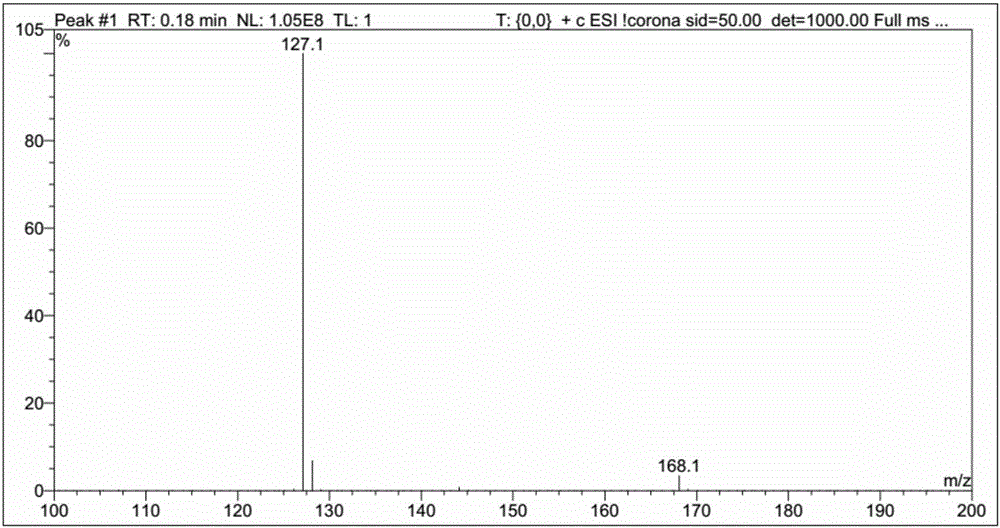
Figure 1 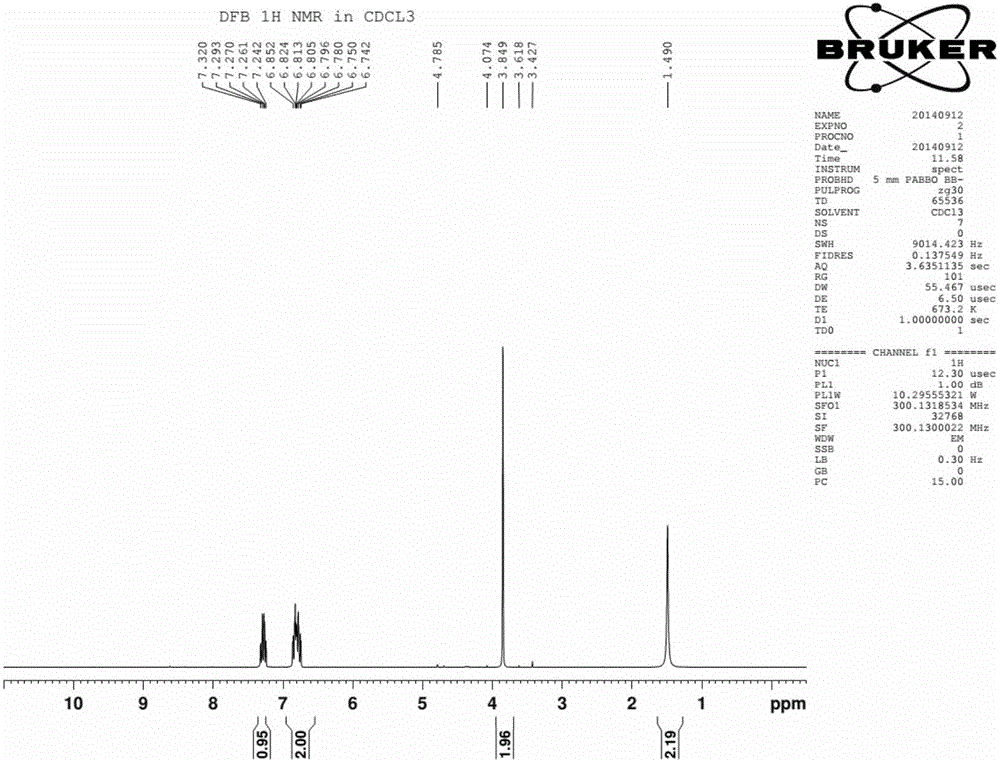
Figure 2 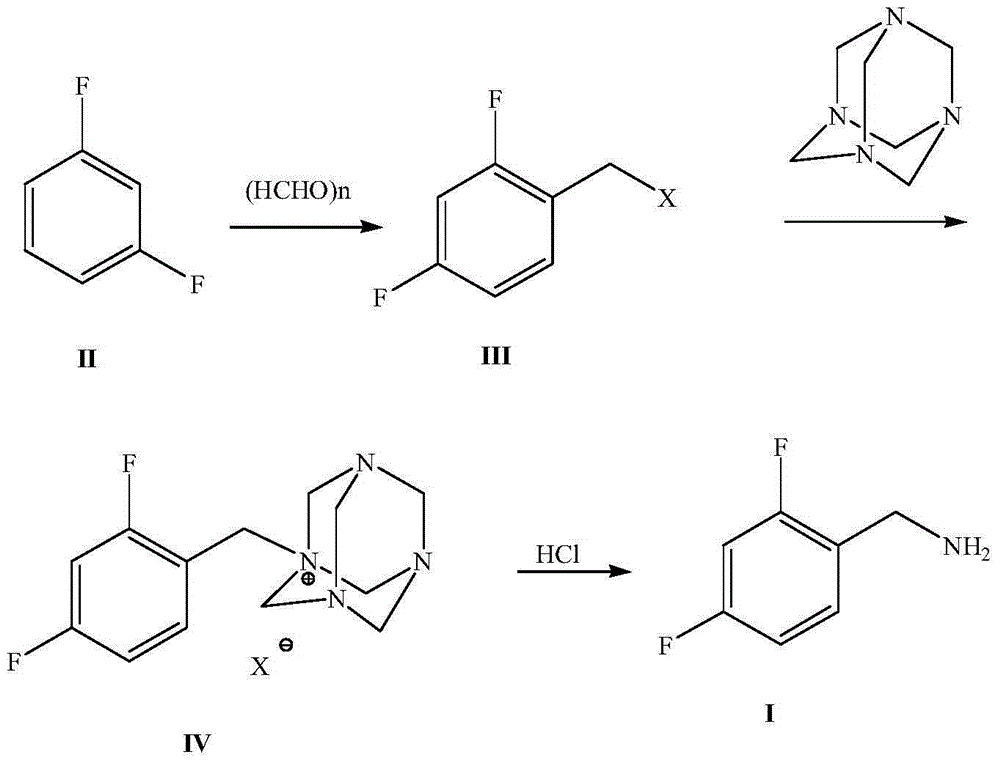
Figure 3
Abstract
Description
technical field
[0001] The invention relates to the field of synthesis of medicines and agricultural chemicals, in particular to a synthesis method of an intermediate 2,4-difluorobenzylamine. Background technique
[0002] 2,4-Difluorobenzylamine is an important pharmaceutical intermediate, and one of its uses is to synthesize Dolutegravir, a new anti-AIDS drug. In August 2013, the FDA approved Dolutegravir in combination with other antiretroviral agents for previously treated or newly treated HIV-1 adults and children aged 12 and over weighing at least 40 kg. Analysts predict that dolutegravir is expected to become a blockbuster drug with annual sales of billions of dollars.
[0003] The existing 2,4-difluorobenzylamine synthesis routes are basically obtained through reduction reactions, as follows:
[0004] 1. The synthetic method of 2,4-difluorobenzylamine (US5068371 and Chemistry-AEuropeanJournal, 2013, vol.19, #14p.4437-4440) that has been reported so far, is formed by...
Examples
Embodiment 1
[0037] The synthetic method of 2,4-difluorobenzylamine comprises the following three steps:
[0038] Synthesis of compound (Ⅲ)
[0039]
[0040] Add 250ml of acetonitrile, 35g (1.17mol) octa-formaldehyde and 45g (0.39mol) m-difluorobenzene into a 500ml four-necked flask, slowly pour 200ml (2.4mol) of 33% concentrated hydrochloric acid under stirring, then add 21g (0.16 mol) of zinc chloride, and the mixture was slowly heated to reflux, and the solid gradually dissolved and reacted for 8 hours. After the HPLC detection was complete, the temperature was lowered to room temperature, and acetonitrile was removed under reduced pressure at 45°C to obtain a two-phase mixture. Chloromethane was extracted twice, and the organic layers were combined, dried with anhydrous sodium sulfate, then filtered with suction, and the filtrate was concentrated under reduced pressure to obtain a transparent liquid, and then distilled under reduced pressure with a refrigerant at -5°C-0°C, and colle...
Embodiment 2
[0051] The synthetic method of 2,4-difluorobenzylamine comprises the following three steps:
[0052] Synthesis of compound (Ⅲ)
[0053]
[0054] Add 250mL THF, 35g (1.17mol) pentaformaldehyde and 45g (0.39mol) m-difluorobenzene into a 500ml four-neck flask, slowly pour 200mL (2.4mol) of 33% concentrated hydrochloric acid under stirring, then add 25g (0.19mol) mol) of zinc chloride, and the mixture was slowly heated to reflux, and the solid gradually dissolved and reacted for 6 hours. After the HPLC detection was complete, the temperature was lowered to room temperature, and THF was removed under reduced pressure at 45°C to obtain a two-phase mixture. Extracted twice with methyl chloride and combined the organic layers, dried with anhydrous sodium sulfate, then filtered with suction, and concentrated the filtrate under reduced pressure to obtain a transparent liquid, then distilled under reduced pressure with a refrigerant at -5°C-0°C, collected 60°C / 10mmHg The distillate o...
Embodiment 3
[0062] The synthetic method of 2,4-difluorobenzylamine comprises the following three steps:
[0063] Synthesis of compound (Ⅲ)
[0064]
[0065] Add 250mL of dioxane, 45.5g (1.52mol) of paraformaldehyde and 45g (0.39mol) of m-difluorobenzene in a 500ml four-necked flask, and slowly pour 300mL of 47% hydrobromic acid (2.63mol) under stirring, Then add 32g (0.20mol) of ferric chloride, and slowly heat the mixture to reflux, the solid gradually dissolves and reacts for 7 hours, after HPLC detects that the reaction is complete, cool to room temperature, and remove dioxane under reduced pressure at 45°C to obtain The two-phase mixture was extracted twice by adding 150ml of dichloromethane, and the organic layers were combined, dried with anhydrous sodium sulfate, and then filtered with suction, and the filtrate was concentrated under reduced pressure to obtain a transparent liquid, which was then decompressed with a refrigerant at -5°C-0°C. Pressure distillation, collecting fra...