
A thermally sprayed self-adhesive metal alloy powder with clad composite structure
A composite structure, metal alloy technology, applied in metal processing equipment, metal material coating technology, coating and other directions, can solve the problem of metallurgical self-bonding reaction difficult to obtain a dense coating between particles, and achieve strong interface bonding. Effect
Patent Information
- Authority / Receiving Office
- CN · China
- Patent Type
- Patents(China)
- Current Assignee / Owner
- Publication Date
- 2018-10-30
Smart Images
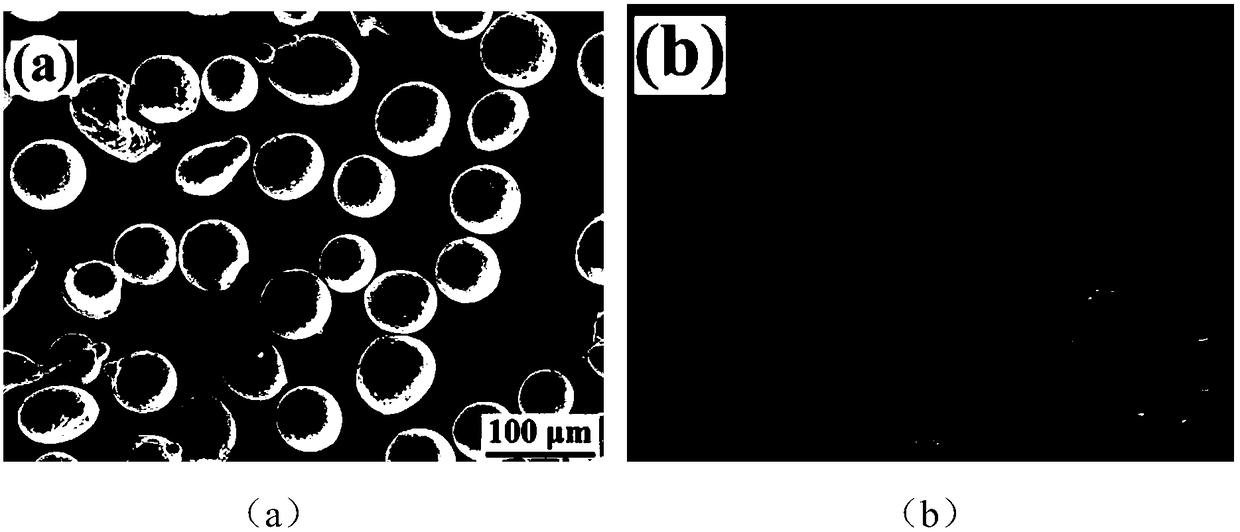
Figure 1 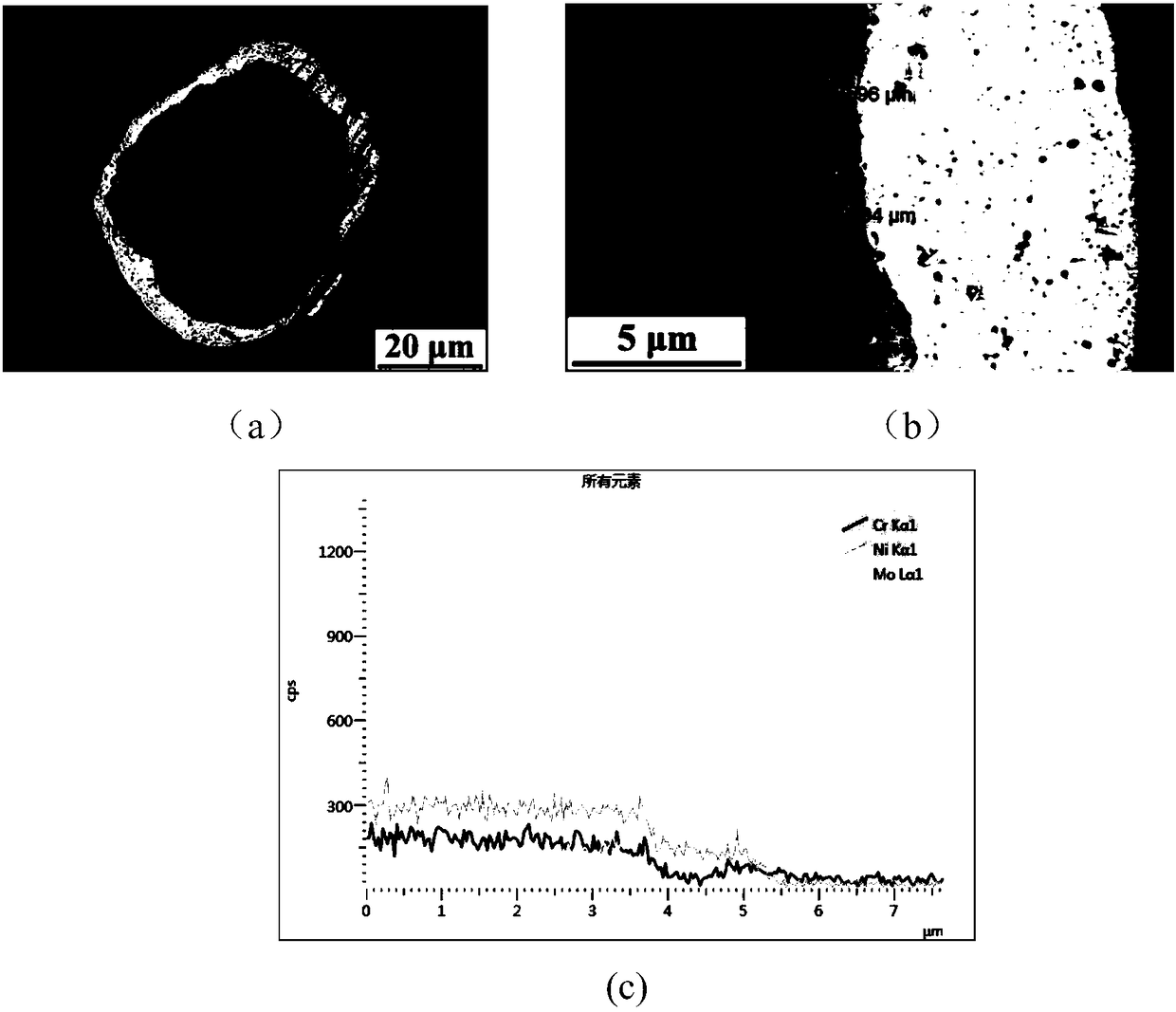
Figure 2 
Figure 3
Abstract
Description
technical field
[0001] The invention belongs to the technical field of material processing, and relates to thermal spraying self-adhesive metal alloy powder with cladding composite structure. Background technique
[0002] Plasma spraying and powder flame spraying are important methods for preparing metal alloy coatings and improving the service performance of metal materials using spraying powder as raw materials. Since the coating is to send powder of a certain composition and structure into a heat source such as a plasma jet or a combustion flame through a powder feeding mechanism, heat sources such as a plasma jet heat the powder to a molten or nearly molten state, and then collide with the substrate in turn. Formation, the bonding strength of the coating and the substrate affects and determines the load that the coating can bear, thus affecting the integrity of the coating system. When the load is large, for the coating with low bonding strength, the service loading may ...
Examples
Embodiment 1
[0027] as figure 1 (a) Spherical Ni20Cr powder with a particle size between 50-75 μm and figure 1 (b) The submicron Mo powder shown in (b) is the original powder. After the two are mixed uniformly at a mass ratio of 25 / 75, the ball milling method is used to perform ball milling coating under the protection of an argon atmosphere. After the coating treatment, the result after heat treatment at 1000°C for 30 minutes in a protective atmosphere is as follows: figure 2 shown by figure 2 (a) The cross-sectional morphology of the coated powder shows that the Mo powder is uniformly and densely coated on the outer layer of the Ni20Cr powder with a thickness of about 10 μm. figure 2 (b) It can be seen that a diffusion layer is formed between the cladding layer (in white contrast) and the NiCr alloy, that is, the Mo cladding layer and the coated NiCr are metallurgically bonded together, figure 2 (c) Powder energy spectrum analysis shows that there is a Mo diffusion layer between t...
Embodiment 2
[0032] Using Mo with a diameter of 0.5 μm to 2 μm and nickel-based self-fluxing alloy powder (Ni35 powder) with a diameter of 50-100 μm, in N 2 Under a protective atmosphere, it was grinded by mechanical alloying for 5 hours, and the Mo particles were evenly covered on the surface of the nickel-based alloy, and heat-treated at 900°C for 6 hours under a hydrogen atmosphere to obtain Ni35 powder firmly coated with metal Mo.
Embodiment 3
[0034] Use the hydroxyl Ni powder with the original particle size of submicron and the Zn powder with the particle size of 40-100 μm as the original powder, mix them at a mass ratio of 15 / 85, and grind for 4 hours by mechanical alloying under the protective atmosphere of Ar. Ni Uniform coating on the surface of the nickel-based alloy to obtain metal Ni-coated Zn spray powder.