

A Method for Evaluating Drying Stress of Sawn Timber for Timber Quality Control
A technology for wood drying and evaluation methods, which is applied in the direction of wood testing, measuring devices, and material inspection products, and can solve problems such as low technical precision, inability to control drying quality, and shorten drying cycle
Patent Information
- Authority / Receiving Office
- CN · China
- Patent Type
- Patents(China)
- Current Assignee / Owner
- Publication Date
- 2018-11-06
Smart Images
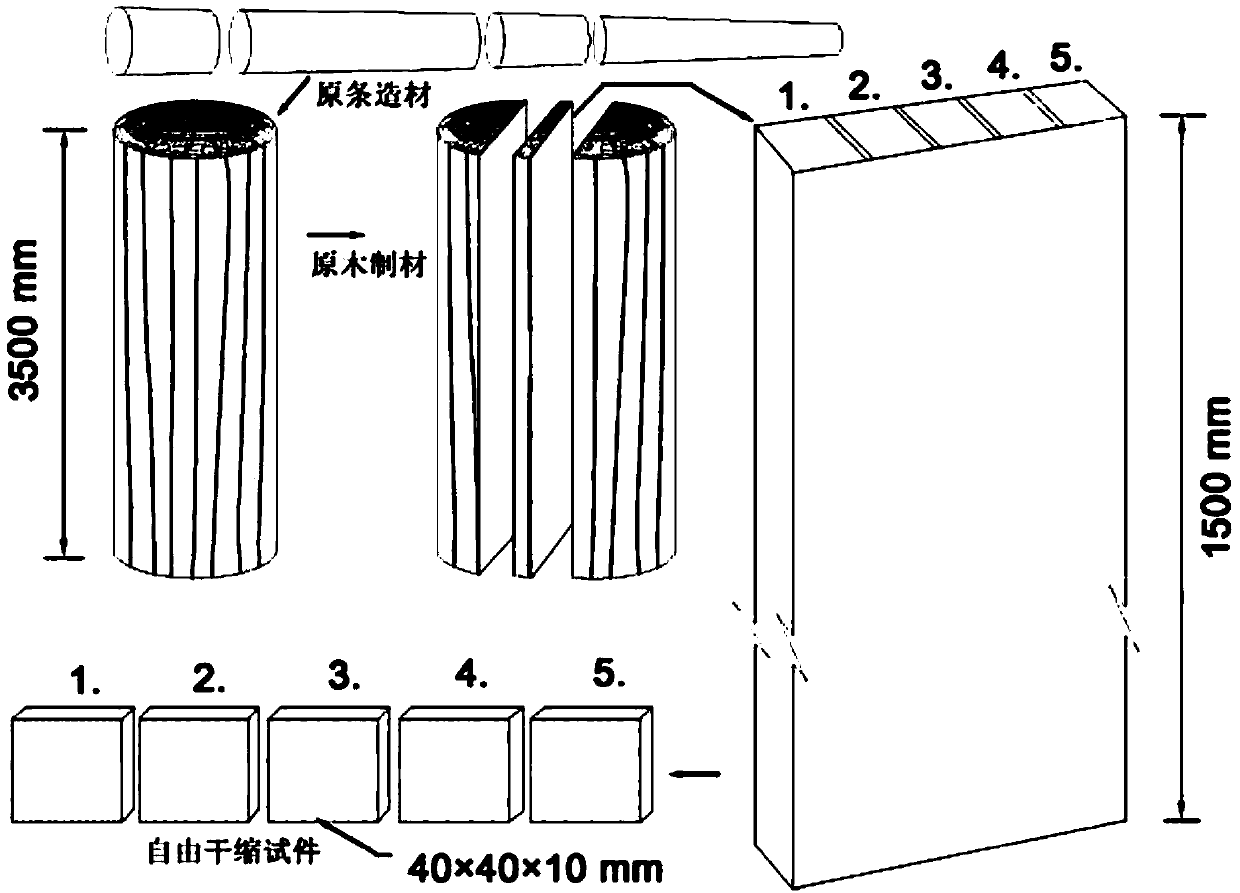
Figure 1 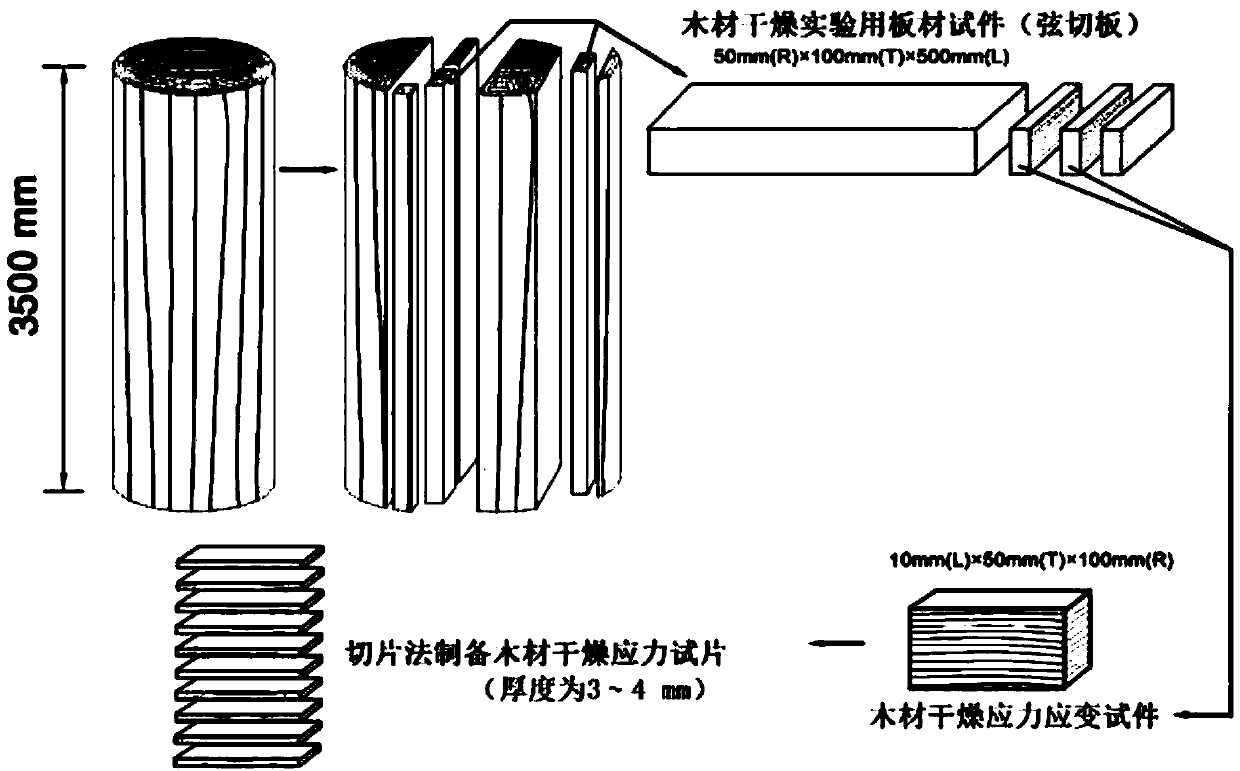
Figure 2 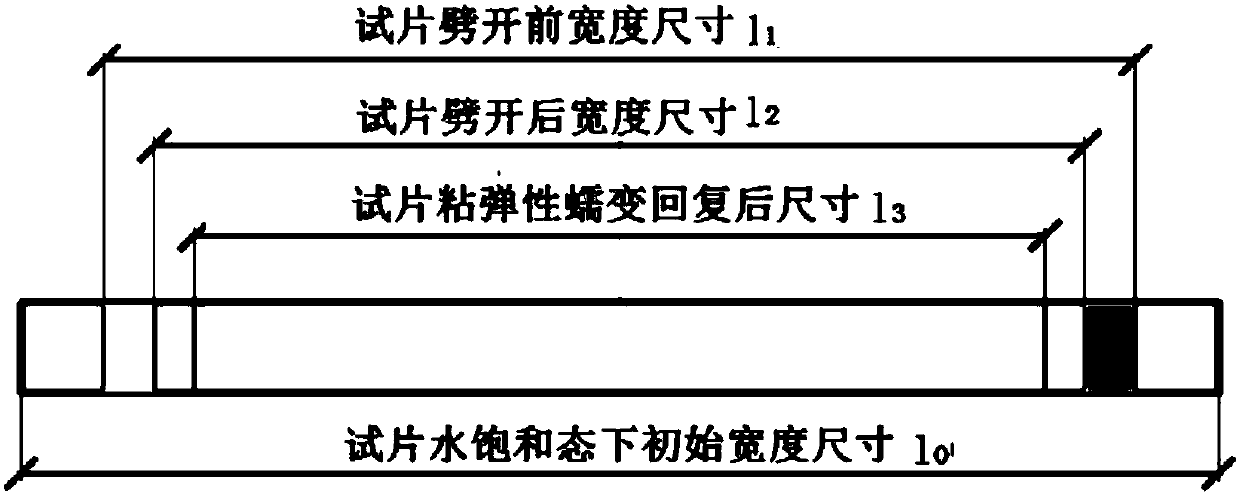
Figure 3
Abstract
Description
technical field
[0001] The invention relates to a sawn timber drying stress evaluation method for timber quality control. Background technique
[0002] In the application of commercial sawn timber engineering, the evaluation and analysis of wood drying stress and deformation characteristics is one of the key technical measures to ensure the quality and grading of end products. In wood drying and subsequent high-temperature heat treatment process, due to the inherent characteristics of the material, the dynamic deformation transformation mechanism in the heat and moisture transfer process, and the unreasonable execution of the drying modification process, a large amount of drying internal stress will remain inside the wood. From the perspective of material mechanical properties, the key to avoiding plate cracking and destructive deformation lies in the prediction and analysis of drying stress.
[0003] In the past 30 years, in view of various bottleneck technical difficultie...
Examples
specific Embodiment approach 1
[0024] Specific embodiment one: a kind of sawn timber drying stress evaluation method for timber quality control comprises the following steps:
[0025] Step 1: Obtain the free drying shrinkage strain ε based on the principle of wood drying rheology fs The calculation formula is:
[0026] ε fs =ε N +ε e +ε ve +ε ms (1)
[0027] where the ε N is the shrinkage strain, ε e is the instantaneous elastic strain, ε ve is the time-varying viscoelastic strain, ε ms is the mechanically adsorbed creep strain associated with wood moisture changes;
[0028] Step 2: Obtain the mechanical adsorption creep strain difference between the wood surface layer and the core layer area according to Step 1;
[0029] Step 3: Obtain the relationship between the drying stress and the mechanical adsorption creep strain parameters of the wood surface and core regions according to Step 2;
[0030] Step 4: According to Step 3, the gradient variable corresponding to the difference of drying stres...
specific Embodiment approach 2
[0031] Specific implementation mode two: the difference between this implementation mode and specific implementation mode one is: image 3 It is a schematic diagram of cutting and deformation components of wood drying strain specimens determined based on previous research work. The detailed manufacturing process and details of wood free shrinkage specimens and wood drying strain specimens can be found in figure 1 and figure 2 shown. The mathematical calculation methods of the above wood drying deformation components are shown in the following formulas:
[0032] In the step one, ε N , ε e , ε ve , ε fs and ε ms The mathematical calculation method of is:
[0033]
[0034]
[0035]
[0036]
[0037]
[0038] in image 3 And the symbols in the formulas (1)~(6) represent the following variables, the said l 0 is the initial width of planed board in green state, l 1 is the length of the dry deformed specimen before cutting, l 2 is the length of the dry defo...
specific Embodiment approach 3
[0040] Specific embodiment three: the difference between this embodiment and specific embodiment one or two is: the specific process of obtaining the mechanical adsorption creep strain difference of the wood surface layer and the core layer area in the described step two is:
[0041]So far, the importance of the mechanical adsorption creep mechanism in the wood drying process is that it is the main supporting factor leading to the release of drying stress. However, the theoretical and thorough expression method for the relationship between wood drying stress and mechanical adsorption mechanism variables is far from perfect, so the drying (or residual) stress state parameters inside the chamber-drying board have not yet been effectively quantitatively expressed and dried. Quality rating. In view of the research status of wood drying stress-strain and its application in commercial wood production, this paper proposes a new concept, namely, the mechanical adsorption creep gradien...