
Preparation method and application of phi29 DNA polymerase
A polymerase and double-enzyme cleavage technology, applied in the field of phi29DNA polymerase preparation, can solve the problems of no disclosure of Phi29DNA polymerase preparation method, no disclosure of high-yield Phi29DNA polymerase preparation method, etc., to achieve low cost, stable quality, and distribution uniform effect
Patent Information
- Authority / Receiving Office
- CN · China
- Patent Type
- Applications(China)
- Current Assignee / Owner
- Publication Date
- 2017-02-01
- Estimated Expiration
- Not applicable · inactive patent
Smart Images
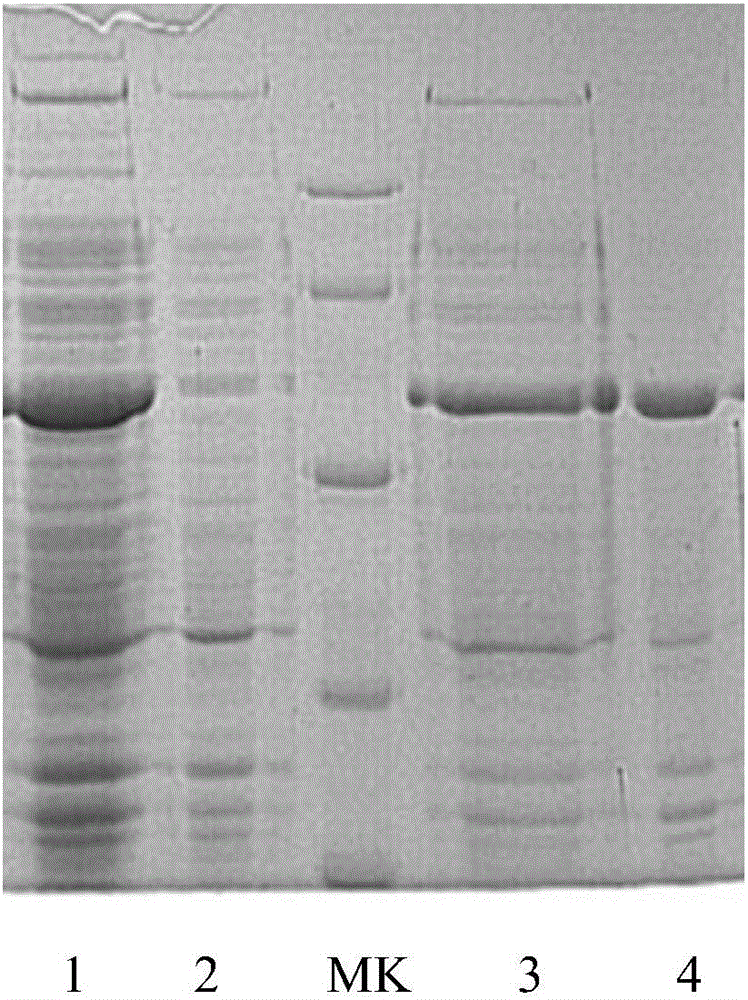
Figure 1 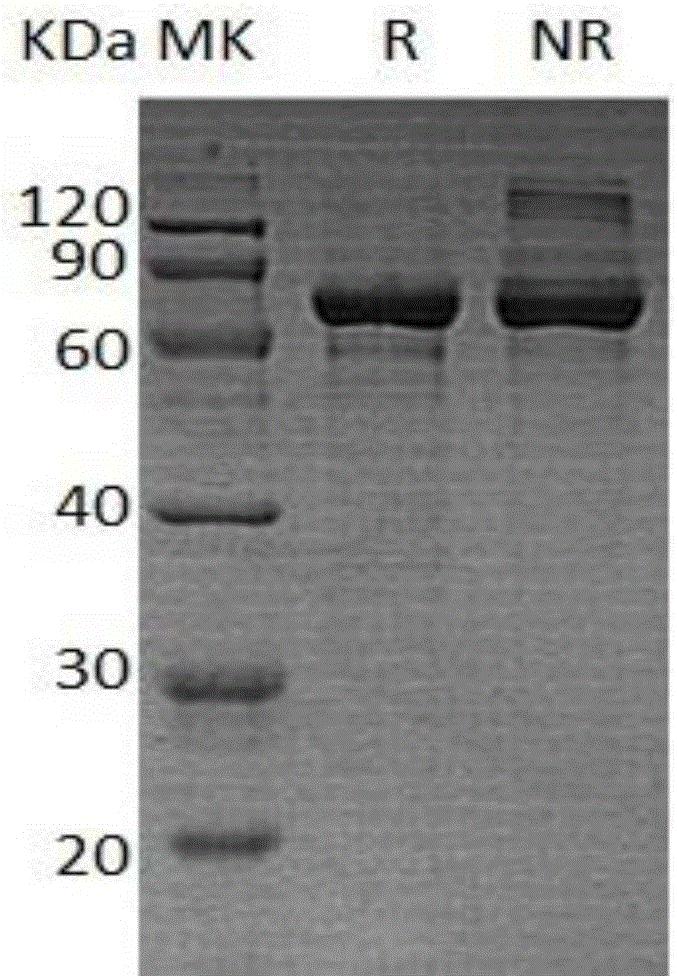
Figure 2 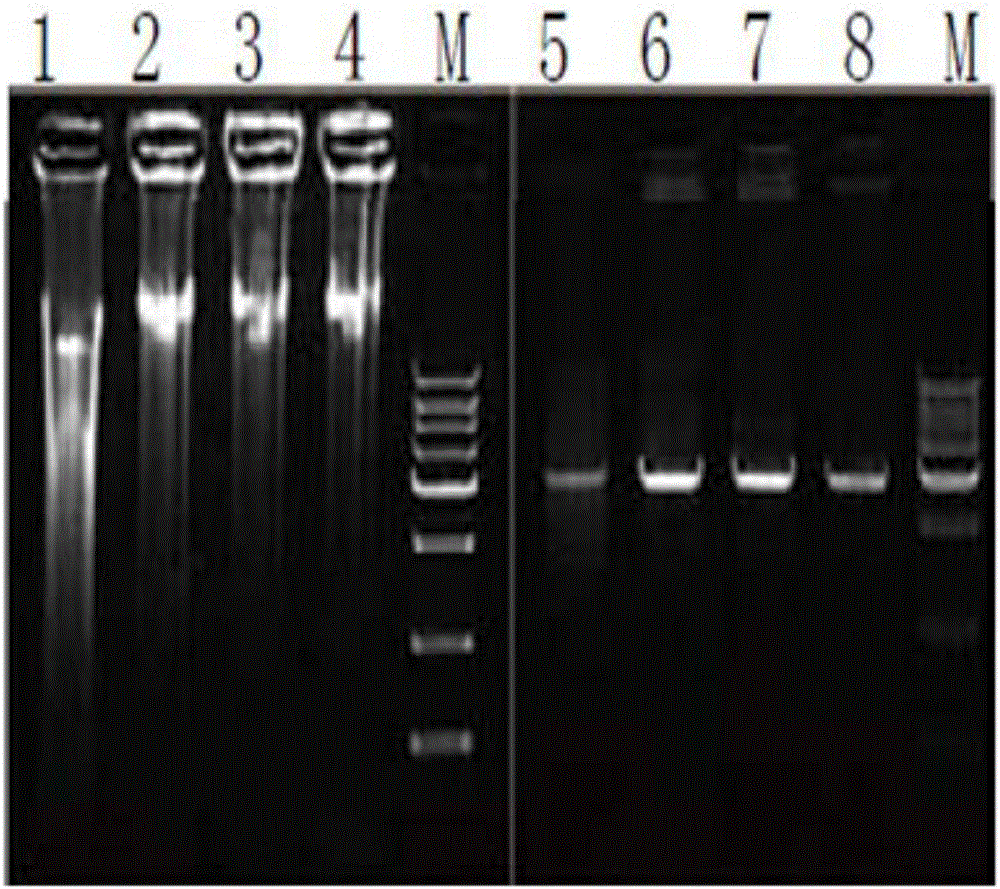
Figure 3
Abstract
Description
technical field
[0001] The invention belongs to the field of molecular biology reagents, in particular to a preparation method and application of phi29 DNA polymerase. Background technique
[0002] DNA Marker is a mixture of DNA fragments with known molecular weights, used to indicate the molecular weight of unknown samples in nucleic acid electrophoresis, and is one of the most commonly used molecular biology reagents in the field of life sciences. However, the preparation of DNA Markers requires a large number of plasmid templates, and the preparation of plasmid templates is very time-consuming. The current template preparation methods are time-consuming and labor-intensive. The use of phi29 DNA polymerase to prepare plasmid templates can save a series of cumbersome steps such as cell culture, collection and lysis of bacteria, and separation and purification of plasmid DNA. Using phi29 DNA polymerase, cell culture fluid, colonies or a small amount of plasmids can be direc...
Examples
Embodiment 1
[0034] The preparation of embodiment 1.phi29DNA polymerase
[0035] 1. Construction of phi29 expression plasmid
[0036] The amino acid sequence of phi29 DNA polymerase is as shown in SEQ ID NO: 2. First, the gene sequence of phi29 DNA polymerase is synthesized from the whole gene, that is, the phi29 gene (SEQ ID NO: 1), and the synthetic phi29F (SEQ ID NO: 3:
[0037] CGCATATGATGAAGCACATGCCGCGCAAG) primers and phi29R (SEQIDNO:4:CGCTCGAGCTTGATGGTGAAGGTATC) primers were used for PCR amplification, and the PCR products were recovered and connected to the pET21a expression vector digested with NdeI and XhoI, transformed into Escherichia coli DH5α, and sequenced to obtain the correct clone plasmid.
[0038] 2. Expression of phi29 recombinant protein
[0039] The obtained correct cloning plasmid is transformed into the host bacteria, and the transformed monoclonal bacteria are inoculated in the test tube.
[0040] (1) Shake the monoclonal cells at 37°C for 4 hours, add 0.5mM IP...
Embodiment 2
[0066] Embodiment 2.Amplification of DNA Marker template plasmid
[0067] 1. Sample pre-denaturation: take the DH5α bacterial liquid containing the PUC19 plasmid, and refer to the following reaction system for thermal denaturation;
[0068] 2. Plasmid amplification: proceed according to the following reaction conditions;
[0069]
[0070] 3. Heat inactivation: 65°C, 10 minutes;
[0071] 4. Sequencing: Take 2 μl of the above reaction solution, add 8 μl of double distilled water, and perform direct sequencing.
[0072] The result is as image 3 shown, from image 3 It can be seen that directly using the bacterial liquid as a template, a small amount of bacterial liquid (0.5 μl) can be amplified to obtain a large number of plasmid templates, which saves time and is easy to operate.
[0073] 5. Using the PUC19 plasmid obtained from the above amplification as a template, different primer pairs were designed by PCR method to amplify DNAs of 5kb, 3kb, 2kb, 1.5kb, 1kb, 750bp,...
Embodiment 3
[0074] Embodiment 3, the amplification of DNA Marker template plasmid
[0075] 1. Sample pre-denaturation: take the frozen DH5α bacterial liquid containing pPIC9k plasmid, and refer to the following reaction system for thermal denaturation;
[0076] 2. Plasmid amplification: proceed according to the following reaction conditions.
[0077]
[0078] 3. Heat inactivation: 65°C, 10 minutes.
[0079] 4. Sequencing: Take 2 μl of the above reaction solution, add 8 μl of double distilled water, and perform direct sequencing.
[0080] The result is as Figure 5 shown, from Figure 5 It can be seen that directly using the glycerol bacterial liquid as a template, a small amount of glycerol bacterial liquid (0.5 μl) can be amplified to obtain a large number of plasmid templates, which saves time and is easy to operate.
[0081] 5. Using the pPIC9k plasmid obtained by the above amplification as a template, different primer pairs were designed by PCR method to amplify DNA fragments...