
Melting furnace for byproduct industrial salt treatment and treatment method
A technology for by-product industry and melting furnace, which is applied to the melting furnace for by-product industrial salt treatment and the processing field, can solve the problems of poor effect of by-product industrial salt, and achieve the effect of ensuring quality and improving treatment effect.
Patent Information
- Authority / Receiving Office
- CN · China
- Current Assignee / Owner
- Publication Date
- 2017-05-03
Smart Images
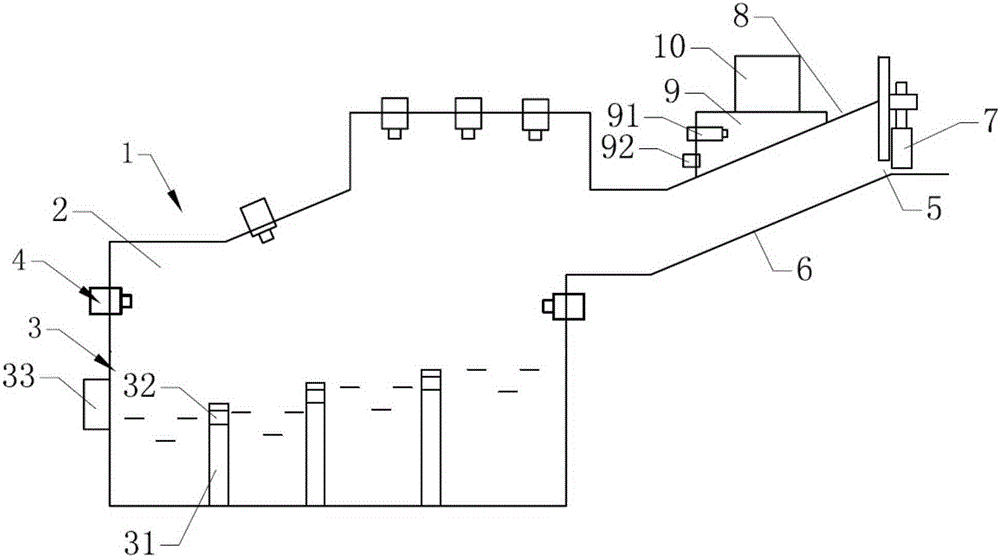
Figure 1 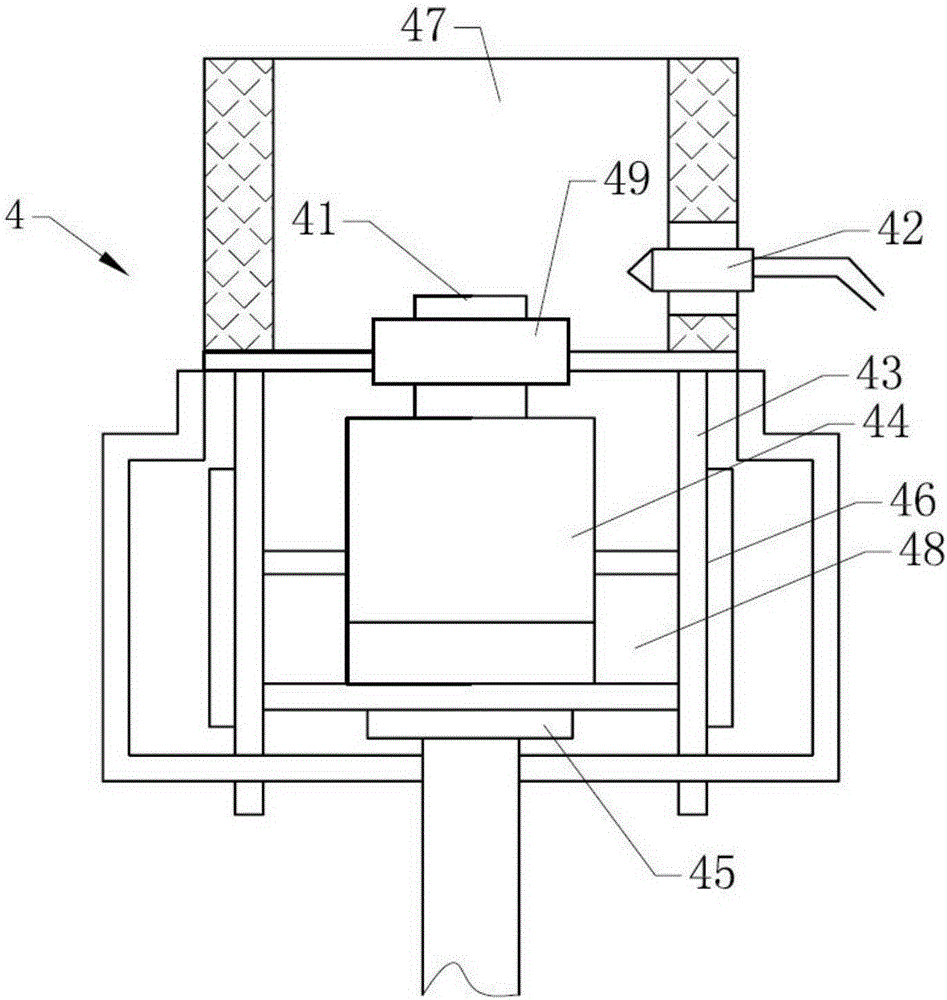
Figure 2
Abstract
Description
technical field
[0001] The invention relates to the technical field of by-product industrial salt treatment, in particular to a melting furnace and a treatment method for by-product industrial salt treatment. Background technique
[0002] At present, the by-product industrial salt contains a small amount of organic matter, which is difficult to be effectively treated and utilized, and cannot be directly used as a raw material for downstream products. Most manufacturers can only stockpile it or send it to a solid waste treatment center for processing. At present, the treatment cost of the solid waste treatment center is as high as 3,000-4,000 yuan / t, which is unbearable for enterprises, and the landfill is mainly treated with anti-corrosion and anti-seepage treatment before landfilling. This treatment method not only occupies land, but is also a great waste of resources, and there is a potential risk of posing a huge threat to the environment. Once the anti-corrosion and ant...
Examples
Embodiment 1
[0041] The processing method of by-product industrial salt of the present invention comprises the steps:
[0042] (1) Rinse the by-product industrial salt with deionized water and dry it, and be pulverized into particles with a particle diameter of 2mm,
[0043] (2) Use the feeding port to send the granular by-product industrial salt into the feeding channel, and at the same time, use the restraint of the gate on the feeding port to make the granular by-product industrial salt form a waterfall flow on the surface of the feeding channel, and control The thickness of the by-product industrial salt flow material is 0.9cm. The auxiliary heating chamber above the feed channel is used to preliminarily heat the by-product industrial salt. The heating temperature of the auxiliary heating chamber is 700°C. Part of the organic matter is decomposed, and the decomposed products The gas is fully burned inside, and the gas is discharged through the exhaust port;
[0044] (3) The by-product...
Embodiment 2
[0050] The processing method of by-product industrial salt of the present invention comprises the steps:
[0051] (1) Rinse the by-product industrial salt with deionized water and dry it, and be pulverized into particles with a particle diameter of 3mm,
[0052] (2) Use the feeding port to send the granular by-product industrial salt into the feeding channel, and at the same time, use the restraint of the gate on the feeding port to make the granular by-product industrial salt form a waterfall flow on the surface of the feeding channel, and control The thickness of the by-product industrial salt stream is 0.8cm. The auxiliary heating chamber above the feeding channel is used to preliminarily heat the by-product industrial salt. The heating temperature of the auxiliary heating chamber is 900°C. Part of the organic matter is decomposed, and the decomposed products are heated in the auxiliary heating chamber. The cavity is fully burned, and the gas is discharged through the exhau...
Embodiment 3
[0059] The processing method of by-product industrial salt of the present invention comprises the steps:
[0060] (1) Rinse the by-product industrial salt with deionized water and dry it, and be pulverized into particles with a particle diameter of 2.5mm,
[0061] (2) Use the feeding port to send the granular by-product industrial salt into the feeding channel, and at the same time, use the restraint of the gate on the feeding port to make the granular by-product industrial salt form a waterfall flow on the surface of the feeding channel, and control The thickness of the by-product industrial salt stream is 0.8cm. The auxiliary heating chamber above the feeding channel is used to preliminarily heat the by-product industrial salt. The heating temperature of the auxiliary heating chamber is 800°C. The cavity is fully burned, and the gas is discharged through the exhaust port;
[0062] (3) The by-product industrial salt flows into the melting chamber, and the furnace wall of the...