
Nanometer bainite spring steel and preparation method thereof
A technology of nano-bainite and spring steel, applied in the field of spring steel and its preparation, to achieve the effects of easy control of process parameters, high production efficiency, and simple and easy production process
Patent Information
- Authority / Receiving Office
- CN · China
- Patent Type
- Applications(China)
- Current Assignee / Owner
- Publication Date
- 2017-05-10
Smart Images
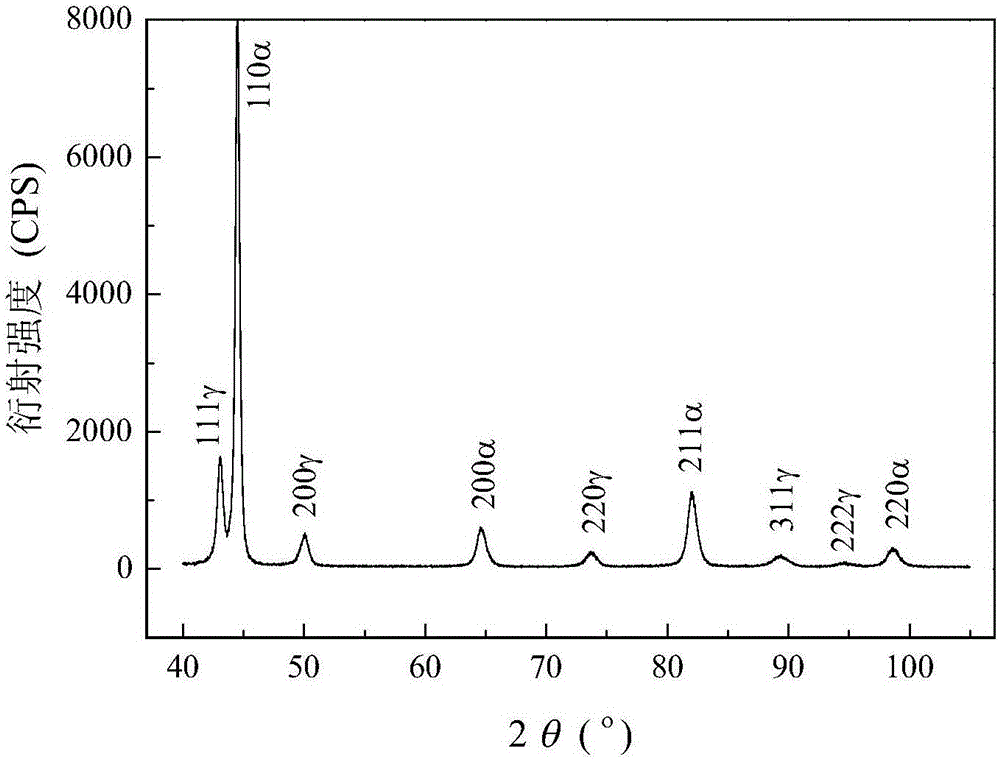
Figure 1 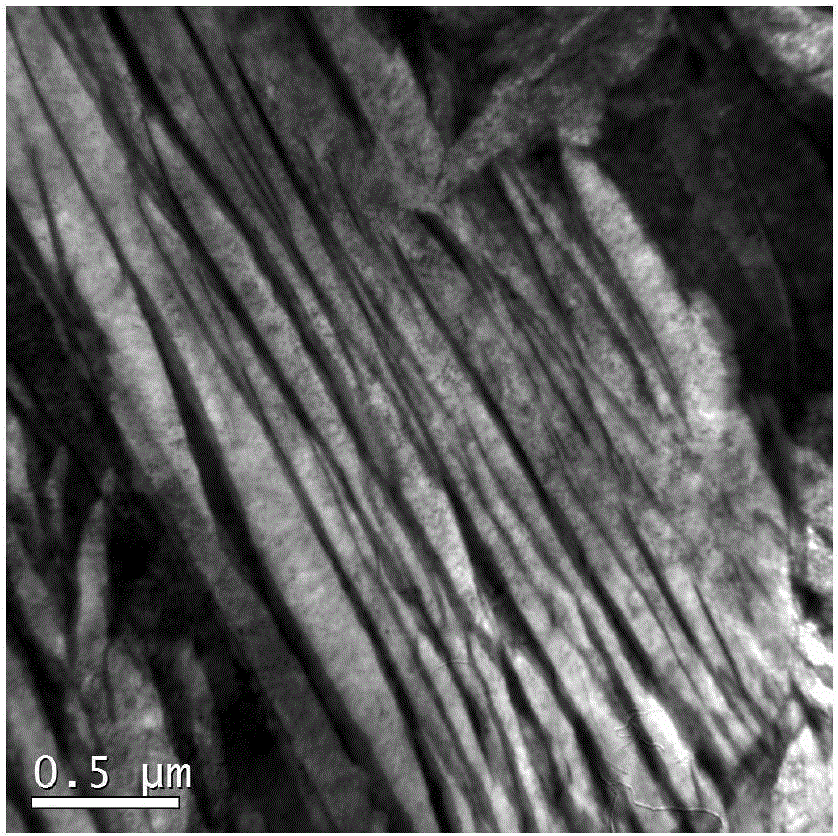
Figure 2 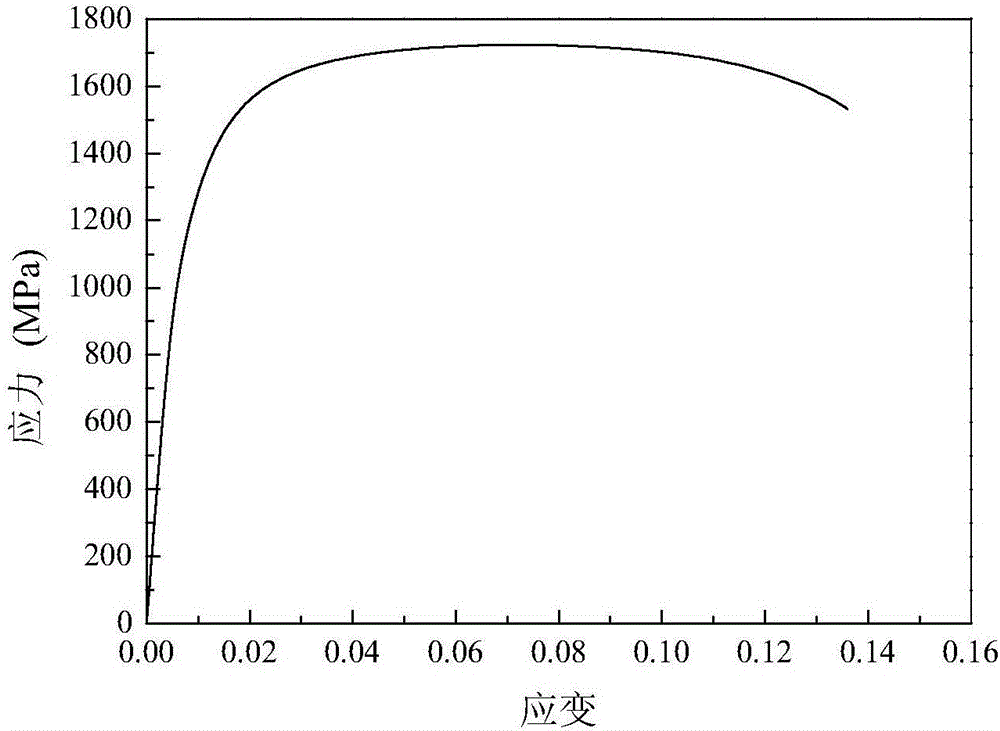
Figure 3
Abstract
Description
technical field
[0001] The invention relates to a spring steel and a preparation method thereof. Background technique
[0002] The heat treatment of traditional spring steel adopts quenching + medium temperature tempering to obtain tempered troostite structure. Martensite is obtained by quenching, the structure stress is large, and quenching cracks are easy to occur. After tempering, the plasticity and toughness are low, and the fatigue life is not high. For this reason, it was proposed to use austempering method to obtain lower bainite + a small amount of martensite structure, reduce quenching stress and improve toughness, but lower bainite contains carbide hard and brittle phase, which has an adverse effect on fatigue performance. The invention patent with the application number 201210214862.5 discloses a heat treatment method for high-strength plastic springs, that is, after austenitization, cool in quenching oil to room temperature ~ 100°C and hold it for 10 ~ 200s for ...
Examples
Embodiment 1
[0019] Step 1: According to the mass percentage, it is C 0.63, Si 1.7, Mn 0.8, Cr 1.03, Ni0.76, Al0.89, W0.7, P 0.008, S≤0.004, and the rest is the ratio of Fe and inevitable impurities , calculate the feeding ratio, melt in a vacuum intermediate frequency induction furnace, and pour into a cylindrical steel ingot with a diameter of 170mm.
[0020] Step 2 Annealing and hot rolling: heat the steel ingot to 1220°C for 4 hours for homogenization treatment, then air cool to 1190°C to start rolling, the final rolling temperature is 885°C, after 6 passes of rolling, after rolling, air cool to room temperature to obtain 20mm Thick hot-rolled slabs.
[0021] Step 3 heat treatment: heat the hot-rolled slab to 890° C., keep it warm for 40 minutes, then quickly put it in a salt bath furnace at 300° C. for 1.5 hours, and then take it out of the furnace and air-cool it to room temperature.
[0022] Carry out X-ray diffraction and transmission electron microscope analysis to the sheet mate...
Embodiment 2
[0027] Step 1: According to the mass percentage of C 0.67, Si 1.96, Mn 1.05, Cr 0.82, Ni 0.51, Al 1.17, W 0.92, P 0.006, S 0.003, the rest is the ratio of Fe and unavoidable impurities, calculate the feeding ratio , Melted in a vacuum intermediate frequency induction furnace, and poured into a cylindrical steel ingot with a diameter of 170mm.
[0028] Step 2 Annealing and hot rolling: heat the steel ingot to 1220°C for 4 hours for homogenization treatment, then air cool to 1190°C to start rolling, the final rolling temperature is 885°C, after 6 passes of rolling, after rolling, air cool to room temperature to obtain 20mm Thick hot-rolled slabs.
[0029] Step 3 heat treatment: heat the hot-rolled slab to 860° C., keep it warm for 60 minutes, then quickly put it into a salt bath furnace at 280° C. for 2 hours, and then take it out of the furnace and air-cool it to room temperature.
[0030] Carry out X-ray diffraction analysis and measure V to the plate that the present embodim...
Embodiment 3
[0033]The difference from Example 1 is that in step 3, the hot-rolled slab was heated to 890°C, kept for 30 minutes, then quickly placed in a salt bath furnace at 260°C for 4 hours, and then air-cooled to room temperature.
[0034] X-ray diffraction and transmission electron microscope analysis and tensile and impact tests were carried out on the plates prepared in this example, and the results are shown in Table 1.
[0035] The results show that: nano-bainite steel is prepared in this example, the thickness of bainitic ferrite lath in the structure is less than 100nm, nano-bainite structure is obtained, and it has high strength and high plastic toughness, and the tensile curve shows Obvious work hardening can be used to make springs that withstand large shock loads and are easy to use under overload conditions.