
Denitration method for FCC (Fluid Catalytic Cracking) device regenerated fume
A technology for regenerating flue gas and denitrification, applied in the field of flue gas denitrification, can solve the problems of low utilization rate of reactors, achieve stable reaction effect, reduce cost, and achieve good mixing effect
Patent Information
- Authority / Receiving Office
- CN · China
- Patent Type
- Applications(China)
- Current Assignee / Owner
- Publication Date
- 2017-05-17
- Estimated Expiration
- Not applicable · inactive patent
Smart Images

Figure 1 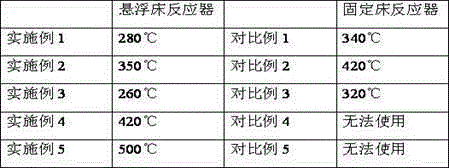
Figure 2
Abstract
Description
technical field
[0001] The invention belongs to the technical field of flue gas denitrification, and in particular relates to a denitrification method for regenerated flue gas of an FCC device. Background technique
[0002] Nitrogen oxides, collectively referred to as NOx, are one of the main sources of air pollution. The most harmful ones are: NO, NO 2 . The main hazards of NOx are as follows: (1) toxic to the human body; (2) toxic to plants; (3) can form acid rain and acid fog; (4) form photochemical smog with hydrocarbons; (5) destroy the ozone layer .
[0003] In recent years, with the rapid development of my country's economy, the demand for energy has become more and more prosperous, and the oil resources that occupy a major position in the energy structure are in short supply. In order to produce clean fuels to meet the growing demand, oil must be deeply processed. Catalytic cracking (Fluid Catalytic Cracking, referred to as FCC) is an essential process of petroleu...
Examples
Embodiment 1
[0040] FCC regeneration flue gas flow rate is 150,000 Nm 3 / h, temperature is 650°C, pressure is 10kPa, NOx concentration is 600mg / Nm 3 , SO 2 The concentration is 1000mg / Nm 3 , SO 3 The concentration is 20mg / Nm 3 , the dust content is 200mg / Nm 3 . NOx emission standard is 200 mg / Nm 3 .
[0041] The active components of granular catalyst particles are V oxides, Ti oxides, W oxides and Mo oxides. The active components are calculated as oxides. The catalyst is a microsphere carrier, and the mass ratio is as follows: V is 0.01 wt%, Ti is 99wt%, W is 0.1wt%, Mo is 0.02wt%; the catalyst particle size is 0.1-0.6mm, preferably 0.5mm; the bulk density is 0.4-0.8g / cm 3 , the specific surface area is 40~60m 2 / g, the adsorption capacity is 0.2~0.3g / g.
[0042] First, the FCC regenerated flue gas passes through the boiler to take heat, and the temperature is lowered from 650°C to the SCR denitrification reaction temperature of 280°C; the flow rate of the mixed gas containing am...
Embodiment 2
[0044] FCC regeneration flue gas flow rate, temperature and pressure are the same as in Example 1, and the NOx concentration is 600mg / Nm 3 , SO 2 The concentration is 2000mg / Nm 3 , SO 3 The concentration is 200mg / Nm 3 , the dust content is 200mg / Nm 3 . NOx emission standard is 100 mg / Nm 3 .
[0045] Catalyst composition is the same as embodiment 1.
[0046] First, the FCC regenerated flue gas passes through the boiler to obtain heat, and the temperature is lowered from 650°C to the SCR denitrification reaction temperature of 350°C; the flow rate of the mixed gas containing ammonia provided by the raw material supply area is 1000 Nm 3 / h, where the ammonia concentration is 3v%, and the concentration of the catalyst in the gas-solid mixture is 450ppm; the catalyst and the mixed gas containing ammonia pass through the mixing zone, and the mixing time is 0.5s; the present embodiment adopts an upflow reactor, preferably 4m / h s, the residence time of the reactor is 2s, and t...
Embodiment 3
[0048] FCC regeneration flue gas flow rate, temperature and pressure are the same as in Example 1, and the NOx concentration is 400mg / Nm 3 , SO 2 The concentration is 600mg / Nm 3 , SO 3 The concentration is 10mg / Nm 3 , the dust content is 100mg / Nm 3 . NOx emission standard is 200 mg / Nm 3 .
[0049] Catalyst composition is the same as embodiment 1.
[0050] First, the FCC regenerated flue gas passes through the boiler to obtain heat, and the temperature is lowered from 650°C to the SCR denitrification reaction temperature of 260°C; the flow rate of the mixed gas containing ammonia provided by the raw material supply area is 2000 Nm 3 / h, wherein the ammonia concentration is 2.8v%, and the concentration of the catalyst in the gas-solid mixture is 450ppm; the catalyst and the mixed gas containing ammonia pass through the mixing zone, and the mixing time is 0.2s; the present embodiment adopts an upflow reactor, preferably 12m / s, the residence time of the reactor is 1s, the...