
Austenitic stainless steel sheet
A soft nitriding part, non-quenching and tempering technology, applied in the direction of centrifugal force-resistant rotating parts, furnace types, bearings, etc., can solve problems such as surface cracks, and achieve high bending fatigue strength and excellent bending correction effect.
Patent Information
- Authority / Receiving Office
- CN · China
- Patent Type
- Applications(China)
- Current Assignee / Owner
- Publication Date
- 2017-08-18
Smart Images
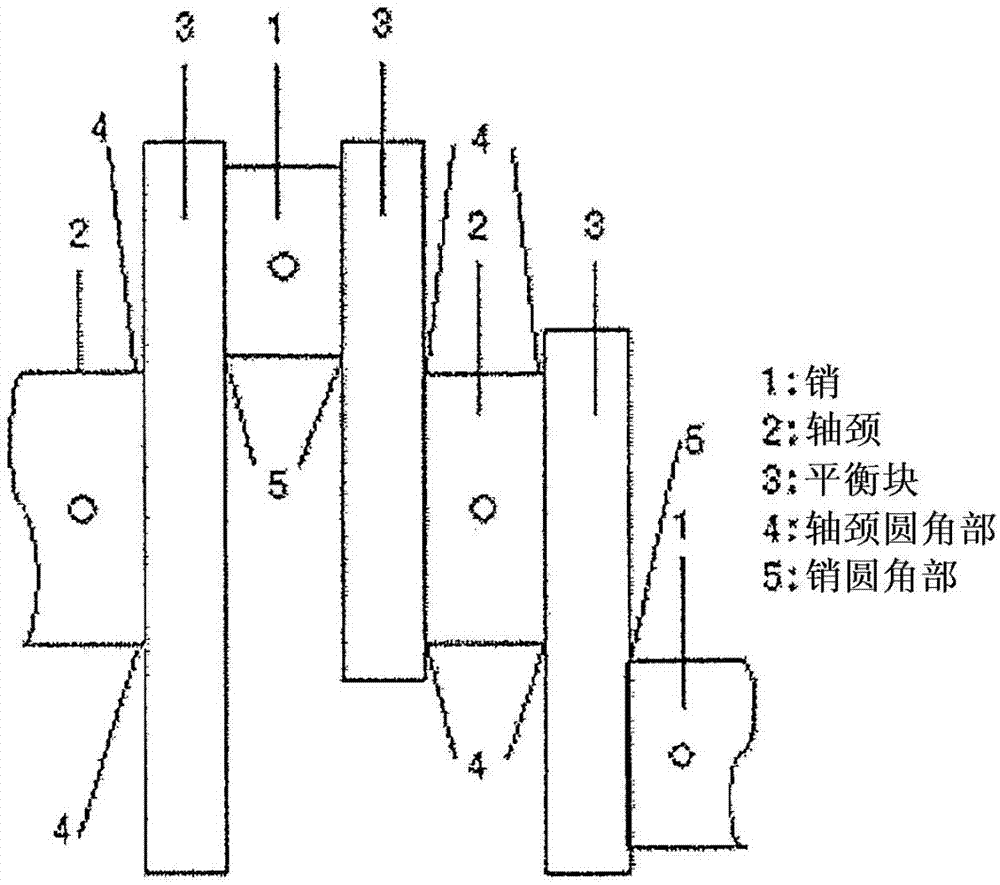
Figure 1 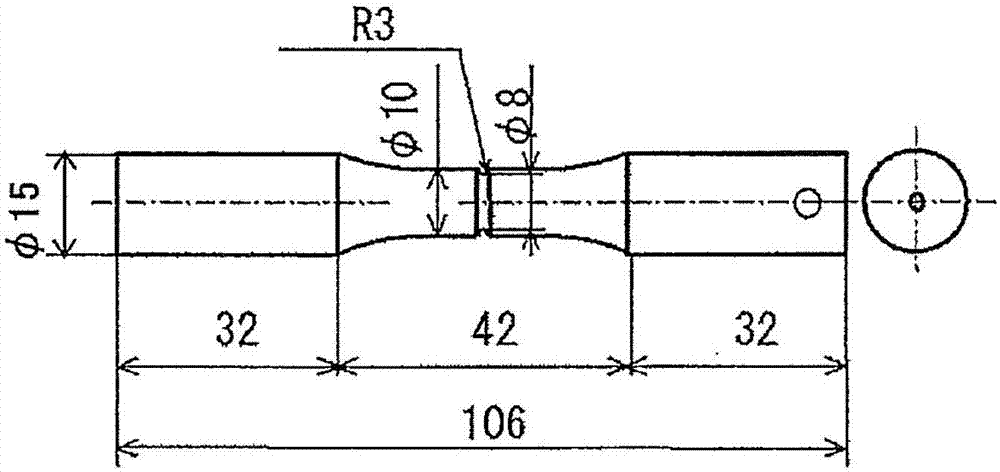
Figure 2 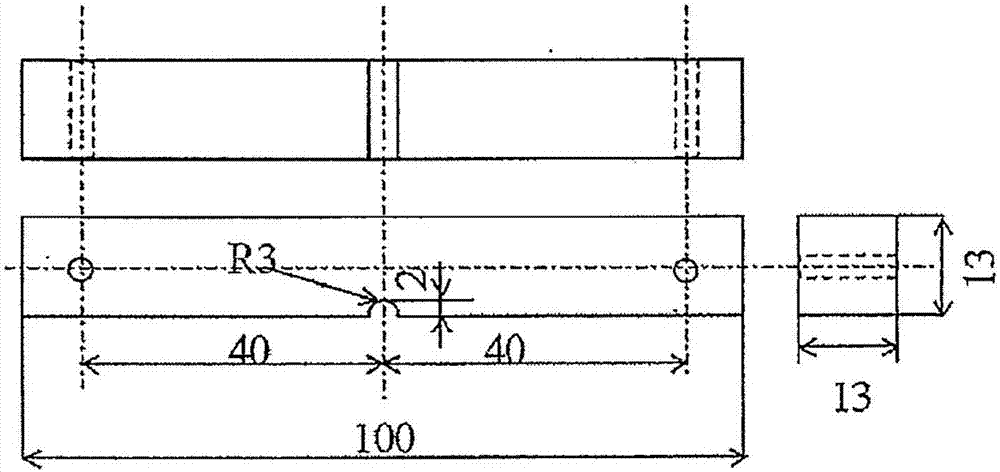
Figure 3
Abstract
Description
technical field
[0001] The invention relates to non-tempered nitrocarburized parts. More specifically, it relates to a non-tempered nitrocarburized part having high bending fatigue strength and excellent bending straightening properties.
[0002] "Non-tempered nitrocarburized part" refers to a part that is subjected to nitrocarburized treatment without undergoing the so-called "tempering treatment", that is, "quenching-tempering treatment" after machining. Hereinafter, the above-mentioned "parts subjected to nitrocarburization treatment" will be simply referred to as "soft nitrocarburized parts". Background technique
[0003] Crankshafts, connecting rods, etc. used in automobiles, industrial machinery, and construction machinery are manufactured by forging and machining into desired shapes, and then performing nitrocarburizing instead of quenching and tempering. . In particular, in the manufacture of automobile parts requiring high fatigue strength, wear resistance, etc.,...
Examples
Embodiment
[0132] Steels A to N having the chemical compositions shown in Table 1 were smelted in a 70-ton converter, continuously cast, and then initially rolled into billets with cross-sectional dimensions of 180 mm×180 mm.
[0133] Next, each billet was hot-forged at a heating temperature of 1200° C. and a final temperature of 1000 to 1050° C., and processed into a steel bar with a diameter of 90 mm. The steel bar after hot forging is left to cool in the atmosphere and cooled to room temperature.
[0134] Steels A to H in Table 1 are steels whose chemical compositions are within the range specified in the present invention, and steels I to N are steels whose chemical compositions are outside the range specified in the present invention.
[0135] [Table 1]
[0136] Table 1
[0137]
[0138] The steel bar with a diameter of 90 mm thus obtained was heated to 1200° C., and hot forged at a final temperature of 1,000 to 1,050° C. to produce a steel bar with a diameter of 50 mm. The st...