
Immune cell cryopreservation liquid, and preparation method, cryopreservation method and application thereof
A technology of immune cells and cryopreservation method, applied in the field of cell preservation, can solve the problems of reducing the possibility of animal pathogen contamination, low survival rate of immune cells in frozen liquid, etc., to protect from freezing damage, maintain physiological functions and biological functions , Good freezing effect
Patent Information
- Authority / Receiving Office
- CN · China
- Current Assignee / Owner
- Publication Date
- 2018-03-13
- Estimated Expiration
- Not applicable · inactive patent
Smart Images
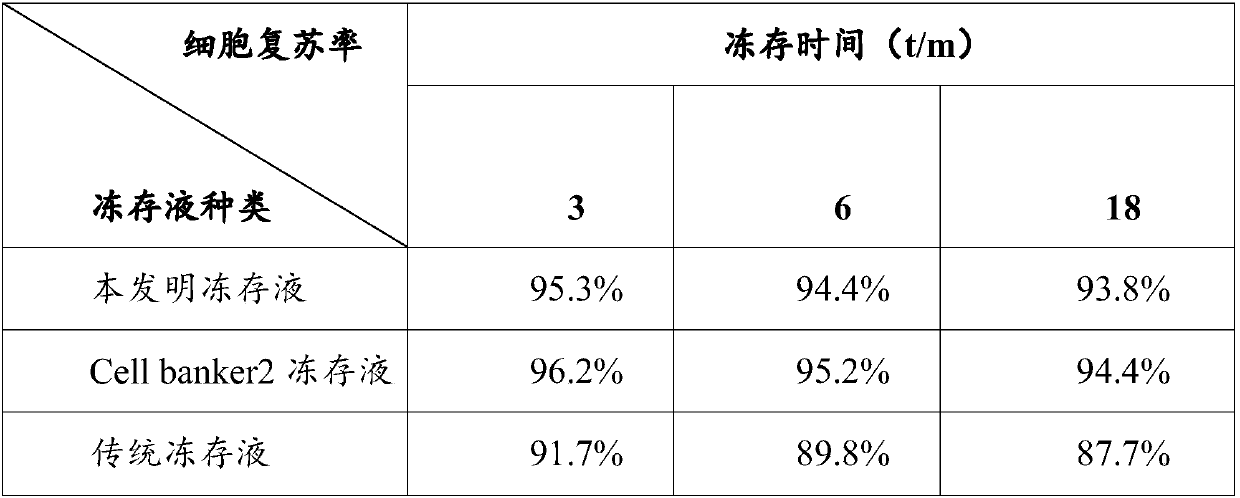
Figure 1 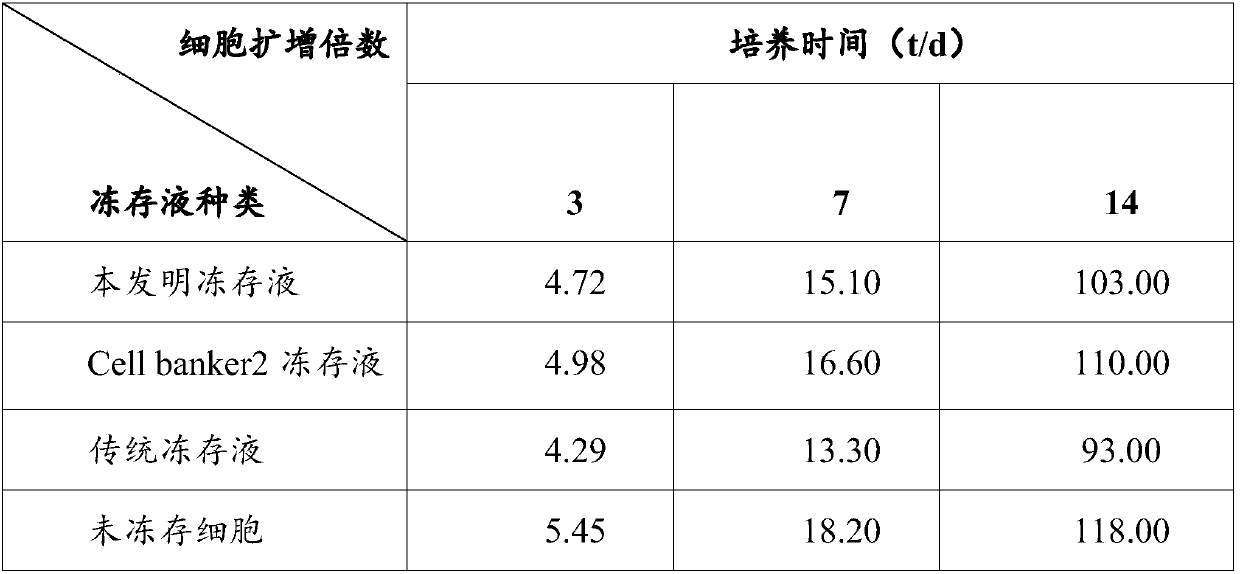
Figure 2
Abstract
Description
technical field
[0001] The invention belongs to the technical field of cell preservation, and in particular relates to an immune cell cryopreservation solution, its preparation method, cryopreservation method and application. Background technique
[0002] In recent years, immunotherapy techniques for tumors and viruses have been gradually applied clinically. Such as tumor vaccines and adoptive immunotherapy, these methods mainly improve the immunity of patients through in vitro stimulation, culture, expansion and reinfusion of autologous immune cells. At present, such cells mainly include dendritic cells (DC), cells Factor-induced killer cells (CIK), natural killer cells (NK), dendritic cell-induced killer cells (DC-CIK), chimeric antigen receptor T cells (CAR-T), etc. The initial cell sources of these induced and expanded immune cells are mononuclear cells from peripheral blood or umbilical cord blood, and they are directly isolated and cultured.
[0003] As the age incre...
Examples
Embodiment 1
[0027] Embodiment 1 The composition of immune cell cryopreservation liquid
[0028] By weight: 5% DMSO, 8% propylene glycol, 6% trehalose, 8% methylcellulose, 0.3% glutathione, 0.06% sodium pyruvate, 72.64% human donor plasma.
Embodiment 2
[0029] Example 2 Composition of Immune Cell Cryopreservation Solution
[0030] By weight: 12% DMSO, 4% propylene glycol, 6% trehalose, 7% methylcellulose, 1% glutathione, 0.12% sodium pyruvate, 69.88% human donor plasma.
Embodiment 3
[0031] Example 3 Composition of Immune Cell Cryopreservation Solution
[0032] By weight: 10% DMSO, 3% propylene glycol, 5% trehalose, 6% methylcellulose, 0.8% glutathione, 0.1% sodium pyruvate, 75.1% human donor plasma.