
A battery electrolyte additive, electrolyte and high-nickel ternary lithium-ion battery with both high and low temperature performance
An electrolyte additive and additive technology, applied in electrical components, secondary batteries, circuits, etc., can solve the problems of high and low temperature performance of the battery, and achieve the effects of improving room temperature cycle performance, increasing rate performance, and reducing direct contact
Patent Information
- Authority / Receiving Office
- CN · China
- Patent Type
- Patents(China)
- Current Assignee / Owner
- Publication Date
- 2020-11-06
Smart Images
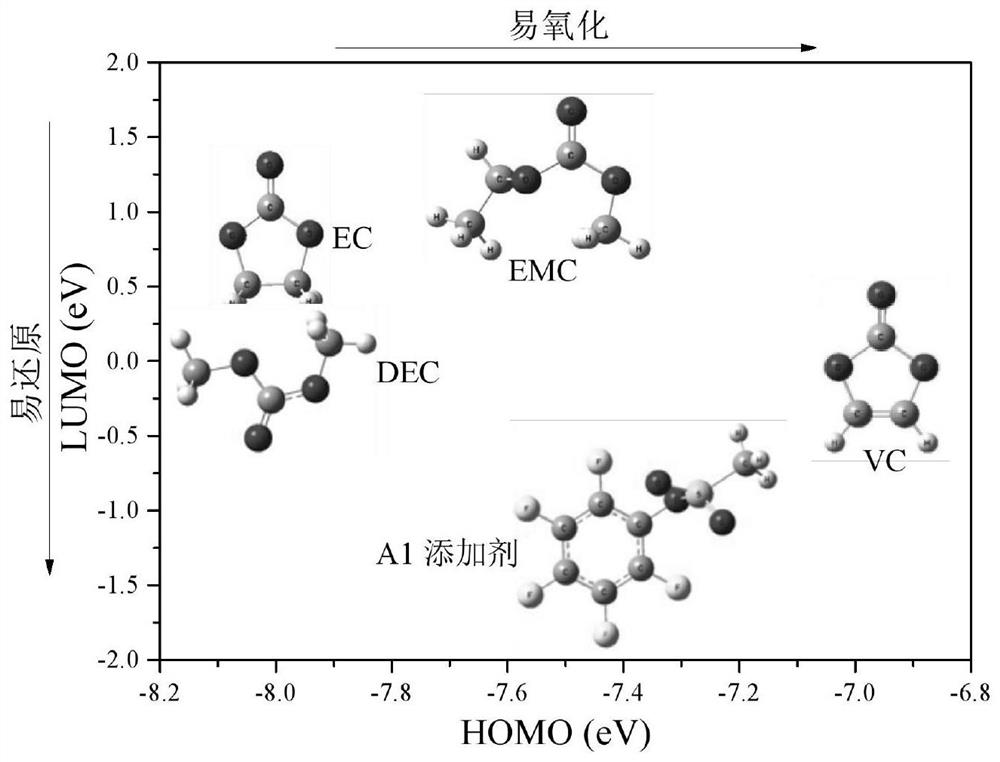
Figure 1 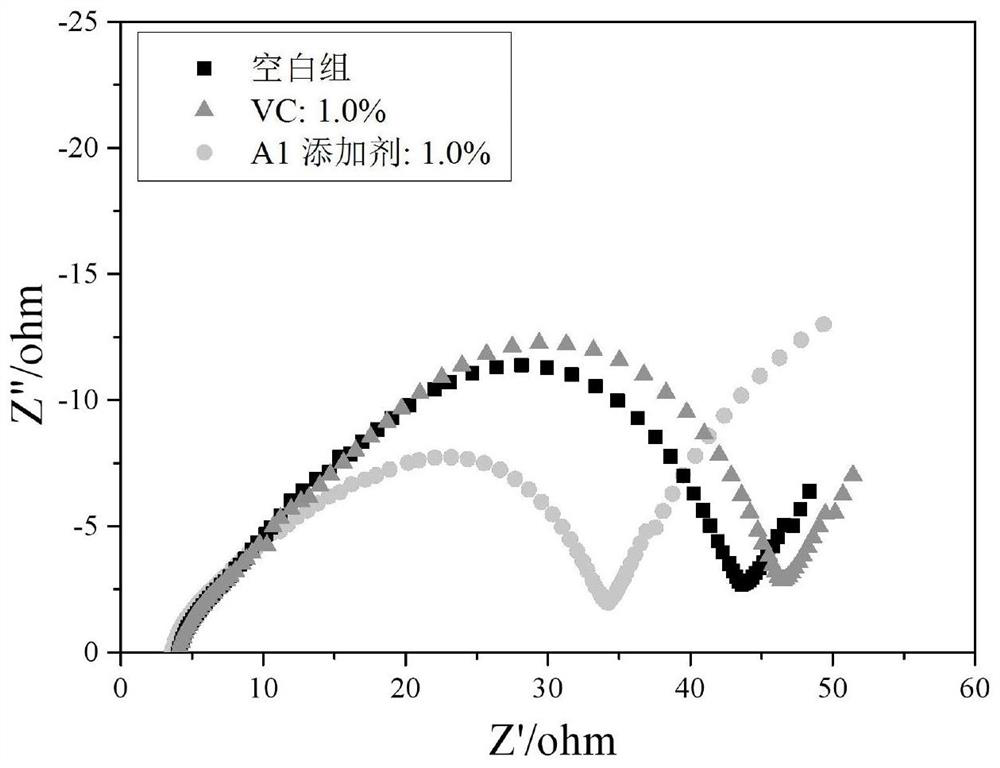
Figure 2 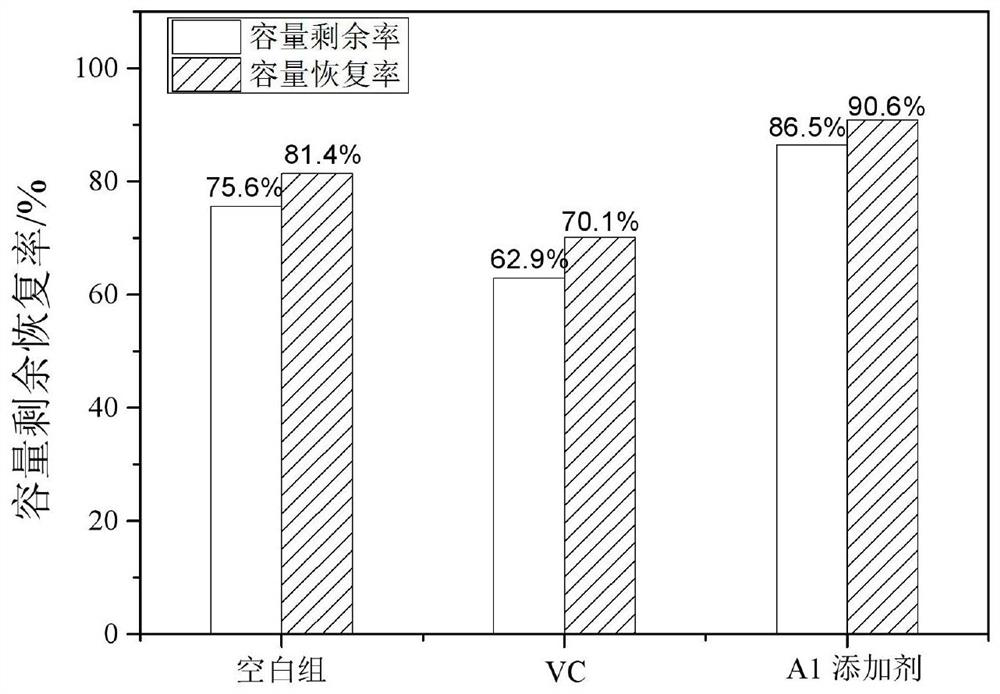
Figure 3
Abstract
Description
technical field
[0001] The invention relates to the field of lithium-ion batteries, in particular to a battery electrolyte additive, electrolyte and a high-nickel ternary lithium-ion battery with both high and low temperature performance. Background technique
[0002] my country's new energy automobile industry is booming along with the policy warm wind, and the power battery market has a broad space. However, the current power battery is still dominated by lithium iron phosphate, which has limited specific energy, and it will be difficult to meet the needs of passenger vehicles in terms of cruising range in the future. Therefore, the pursuit of high specific energy performance indicators is an important research and development direction of lithium-ion power batteries.
[0003] Due to its high reversible specific capacity, low price and environmental friendliness, high-nickel materials have become a research hotspot in materials and energy disciplines, and are also the pre...
Examples
Embodiment 1
[0050] Electrolyte preparation: In a glove box filled with argon, mix ethylene carbonate, dimethyl carbonate and propylene carbonate according to the mass ratio of EC:DMC:EMC=1:1:1, and then slowly add to the mixed solution Add 12.5wt% lithium hexafluorophosphate (LiPF 6 ), 0.5wt% lithium difluorophosphate (LiPO 2 f 2 ) and 2.5wt% lithium bisfluorosulfonimide (LiFSI) based on the total weight of the electrolyte, and finally add 1.0wt% compound A with the structure shown in formula I and 0.5wt% compound A with the formula II based on the total weight of the electrolyte Compound B of the structure (see Table 1 for the specific selection of compound A and B), 1.0wt% fluoroethylene carbonate (FEC) and 2.0wt% vinyl sulfate (DTD), and the lithium-ion battery of Example 1 was obtained after uniform stirring electrolyte.
[0051] Preparation of soft-pack battery: stack the prepared positive electrode sheet, separator, and negative electrode sheet in order, so that the separator is ...
Embodiment 2-9
[0053] Embodiment 2-9 and comparative example 1-5
[0054] In Examples 2-9 and Comparative Examples 1-5, except that the composition ratio of the components of the electrolyte is in accordance with the additives shown in Table 1, the others are the same as in Example 1.
[0055] Table 1 Embodiment 1-9 and the composition ratio of each component of the electrolyte of comparative example 1-5
[0056]
[0057]
[0058] Performance Testing
[0059] Carry out performance test to the full battery that embodiment 1-9 and comparative example 1-5 make:
[0060] (1) Cycling performance test at room temperature: At 25°C, charge the divided battery to 4.2V at 1C constant current and constant voltage, with a cut-off current of 0.05C, then discharge at 1C constant current to 3.0V, and cycle accordingly. / After 1000 cycles of discharge, calculate the 1000th cycle capacity retention rate, the calculation formula is as follows:
[0061] 1000th cycle capacity retention rate (%)=(1000t...