
Electric-conduction ink containing graphene complex, and preparation method thereof
A technology of conductive ink and graphene, which is applied in ink, household utensils, applications, etc., can solve the problems of limited practical application and expensive graphene, and achieve the effects of improved stripping efficiency, good crystallization, and simple synthesis method
Patent Information
- Authority / Receiving Office
- CN · China
- Patent Type
- Applications(China)
- Current Assignee / Owner
- Publication Date
- 2019-08-30
Smart Images
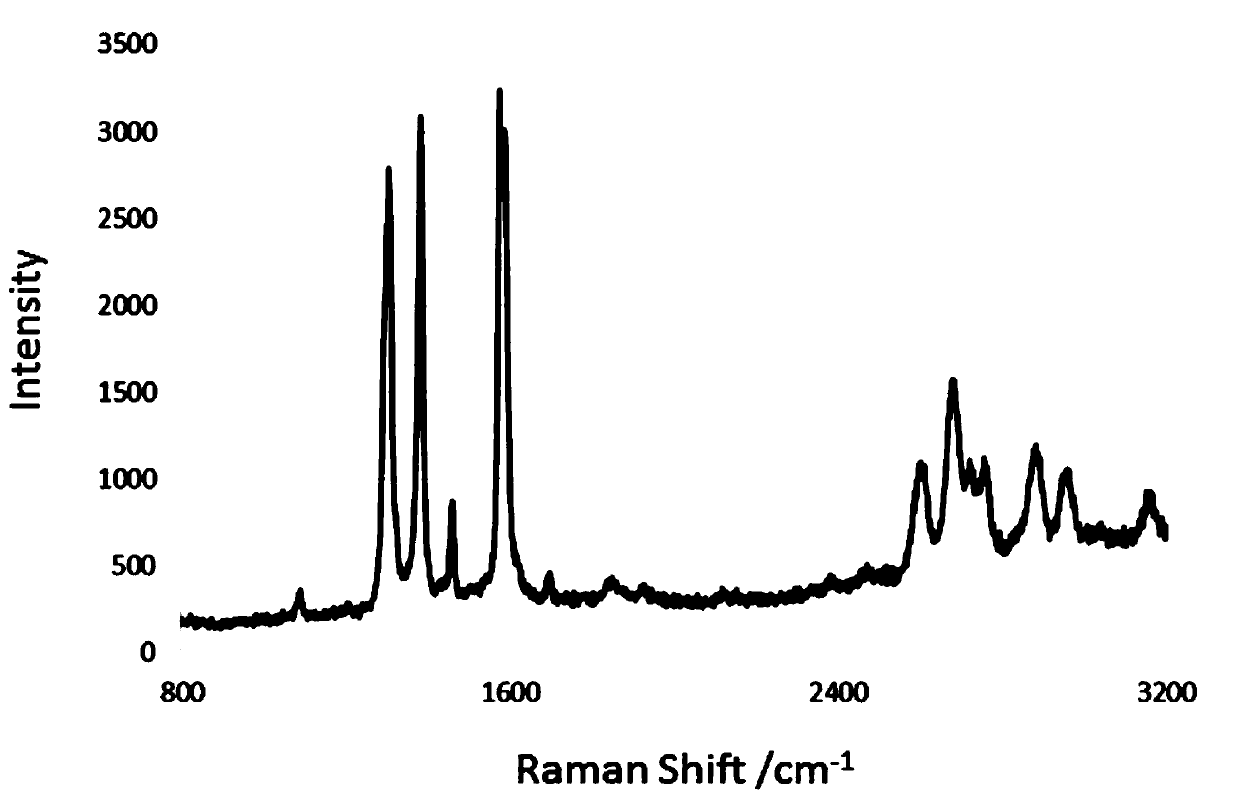
Figure 1 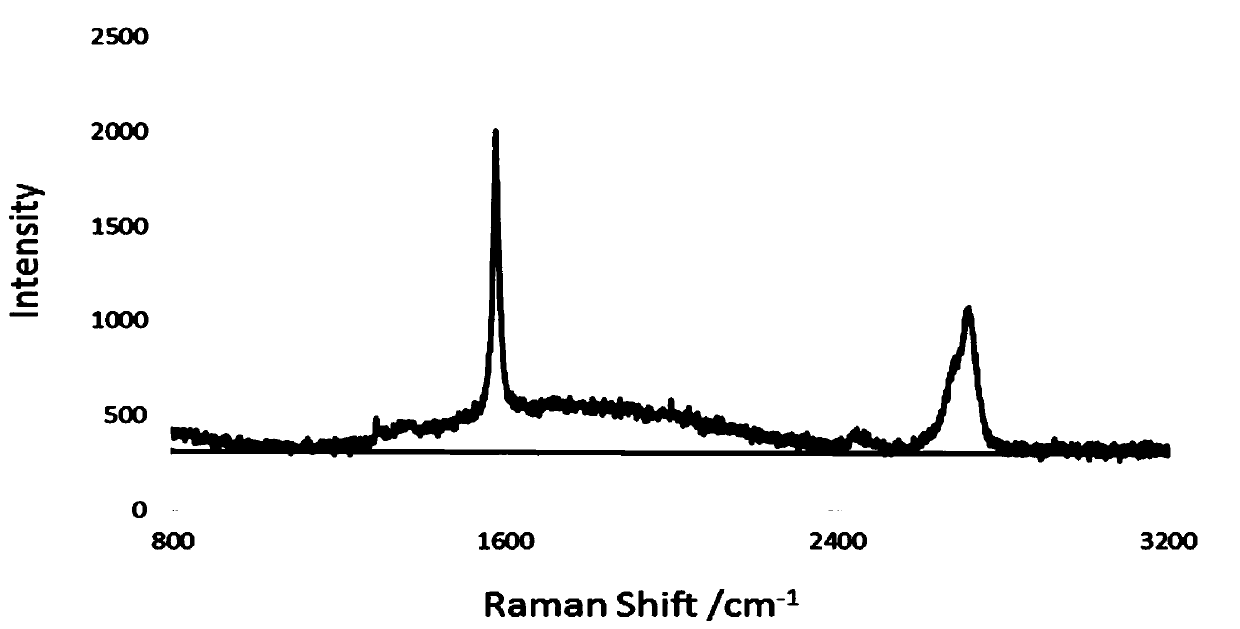
Figure 2 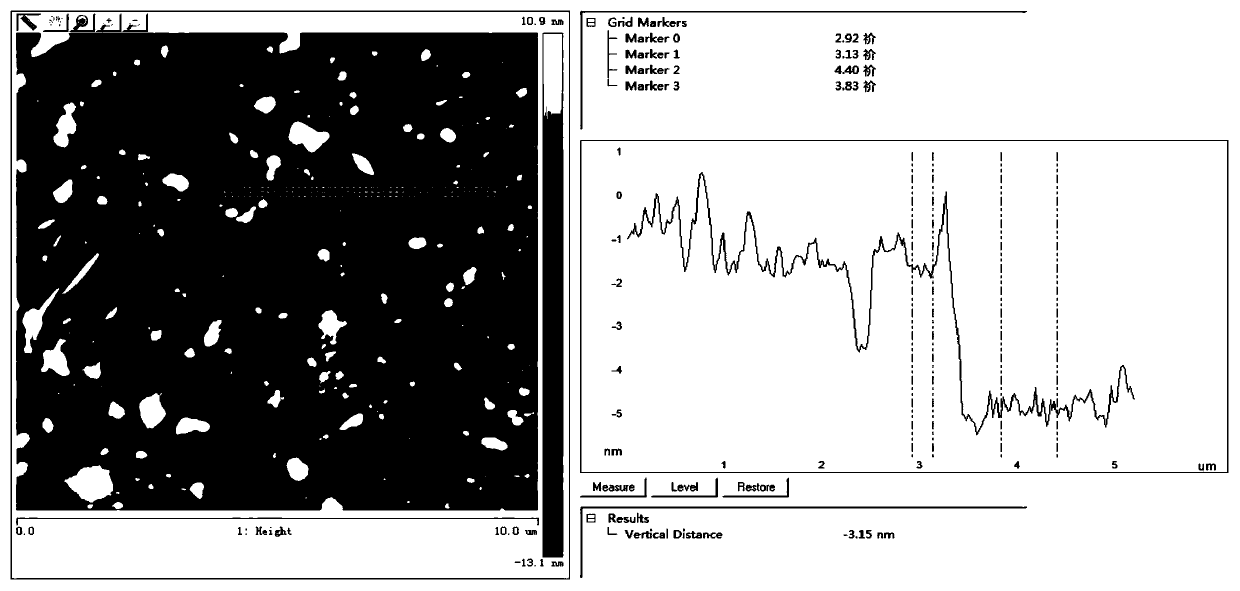
Figure 3
Abstract
Description
technical field
[0001] The invention relates to the field of special inks, in particular to a conductive ink containing a graphene compound and a preparation method thereof. Background technique
[0002] Conductive ink is a conductive composite material composed of conductive fillers, adhesives, solvents and additives. It belongs to functional special inks. It is usually printed on specific printing materials and has the function of conducting current. According to the types of conductive fillers, conductive inks can be divided into metal-based and carbon-based conductive inks. Metal-based (gold, silver, copper) conductive inks and carbon-based conductive inks have been successfully used in commercial fields such as crystal and thin-film solar photovoltaic panels, radio frequency identification antennas, touch screen displays, and electronic circuit boards. However, gold and silver conductive inks are expensive, and copper conductive inks are easily oxidized, so the applica...
Examples
preparation example Construction
[0033] The preparation of graphene composite: adding graphite, graphene stripping agent, acid, distilled water and zirconium beads with a particle size of 0.6-0.8mm into the container and mixing to obtain a mixed solution, ultrasonic stripping is carried out under the assistance of ultrasonic waves (per 1g graphene The ultrasonic unit power is 300-700W, and the peeling time is 10-50h); after the peeling, the zirconium beads are separated, centrifuged at 2000-4000rpm for 10-30min, and the supernatant liquid of the graphene composite is taken, filtered, washed and dried A graphene composite is obtained. Wherein, the mass ratio of the graphite, graphene stripping agent, distilled water and zirconium beads is 1: 0.1-0.2: 50-200: 50-500; the amount of the acid added is such that the pH of the mixed solution is 6.0-6.5 .
[0034] Preparation of conductive ink: Mix the graphene composite with other raw materials, and disperse them by ultrasonic vibration for at least 24 hours to obt...
Embodiment 1
[0036] Preparation of graphene stripping agent:
[0037] Add 1.0 grams of graphite, 0.15 grams of graphene stripping agent A, 100 grams of distilled water in a glass reaction vessel, adjust the mixed solution to pH=6.0-6.5 with hydrochloric acid, and then add 200 grams of 0.6-0.8mm zirconium beads .
[0038] Graphene stripper A
[0039] Use a 500-watt ultrasonic cleaner for 16 hours of ultrasonic peeling. After the stripping is completed, the zirconium beads are separated and centrifuged at 3000 rpm for 20 minutes. Take the graphene composite supernatant. Filter with a polytetrafluoroethylene membrane, wash with distilled water until the filtrate is colorless and neutral, collect the solid, then disperse in 50 ml of distilled water, and freeze-dry to obtain 0.16 g of graphene composite 1. The obtained graphene composite 1 tests the Raman spectrum, and obtains the Raman spectrum as figure 1 As shown, 1303, 1383, 1584cm -1 The peak is the Raman absorption peak of graphen...
Embodiment 2
[0043] Preparation of graphene stripping agent:
[0044] Add 1.0 grams of graphite, 0.15 grams of graphene stripping agent B, 100 grams of distilled water, adjust the dispersion to pH=6.0-6.5 with hydrochloric acid, and then add 200 grams of 0.6-0.8mm zirconium beads .
[0045] Graphene stripper B
[0046] Use a 500-watt ultrasonic cleaner for 16 hours of ultrasonic peeling. After the stripping is completed, the zirconium beads are separated and centrifuged at 3000 rpm for 20 minutes. Take the graphene composite supernatant. Filter with a polytetrafluoroethylene filter membrane, and wash with distilled water until the filtrate is colorless and neutral, collect the solid, then disperse in 50 ml of distilled water, and freeze-dry to obtain 0.14 g of graphene composite 2.
[0047] Production of conductive ink:
[0048] Into a 5ml glass bottle, add 0.083g of graphene composite 2, 0.017g of ethyl cellulose, 0.25g of pine oil, 0.3ml of xylene, and 0.2ml of methanol, and dispe...