
D(pi-A)2 type small molecular donor material based on pyrazine indole terminal receptors, and preparation method and application thereof
A technology of small molecule donor, pyrazine indole, which is applied in semiconductor/solid-state device manufacturing, electrical solid-state devices, semiconductor devices, etc., can solve problems such as low carrier mobility, narrow absorption spectrum, and poor stability, and achieve Effects of high mobility, broad absorption, and enhanced absorption
Patent Information
- Authority / Receiving Office
- CN · China
- Patent Type
- Applications(China)
- Current Assignee / Owner
- Publication Date
- 2019-11-22
Smart Images
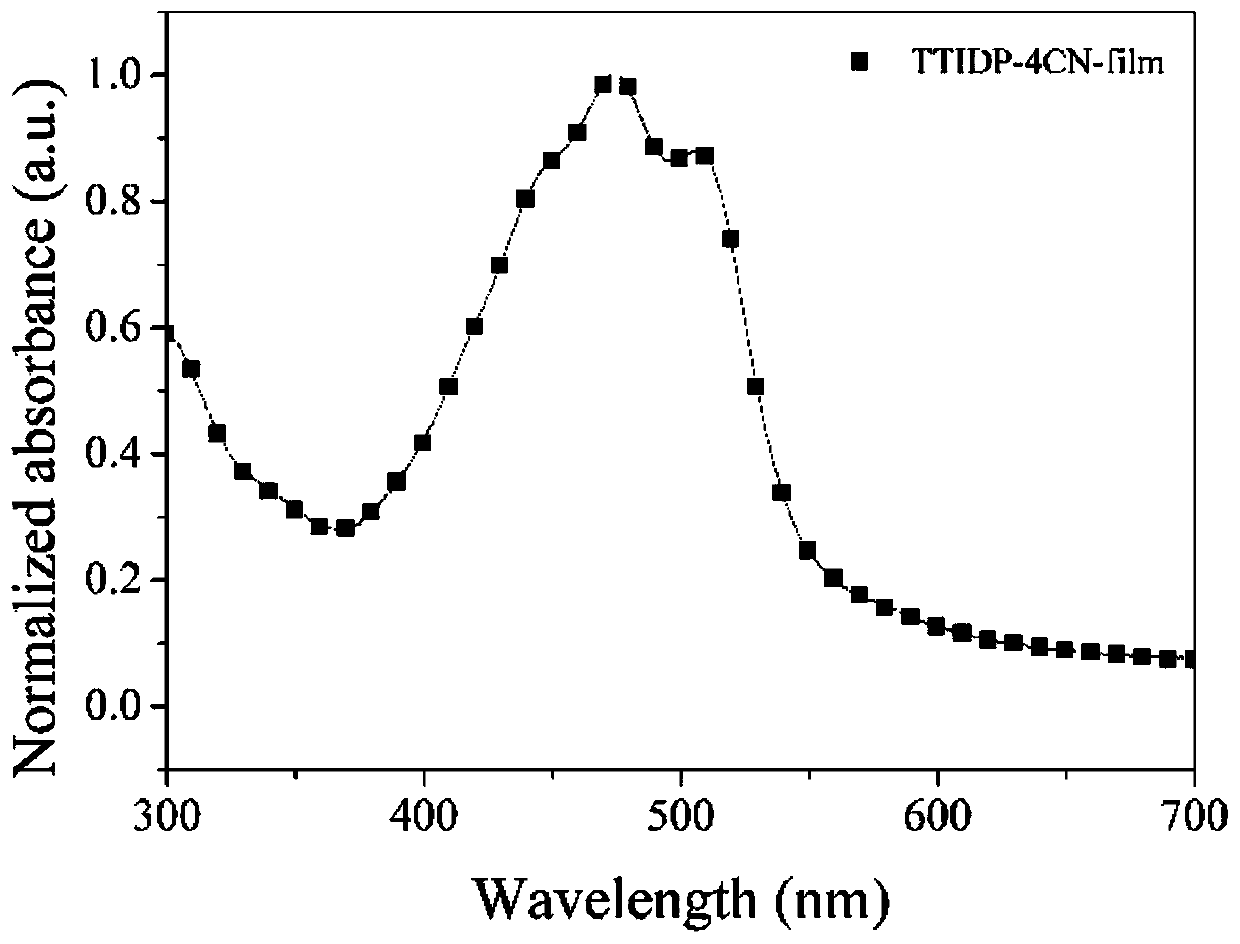
Figure 1 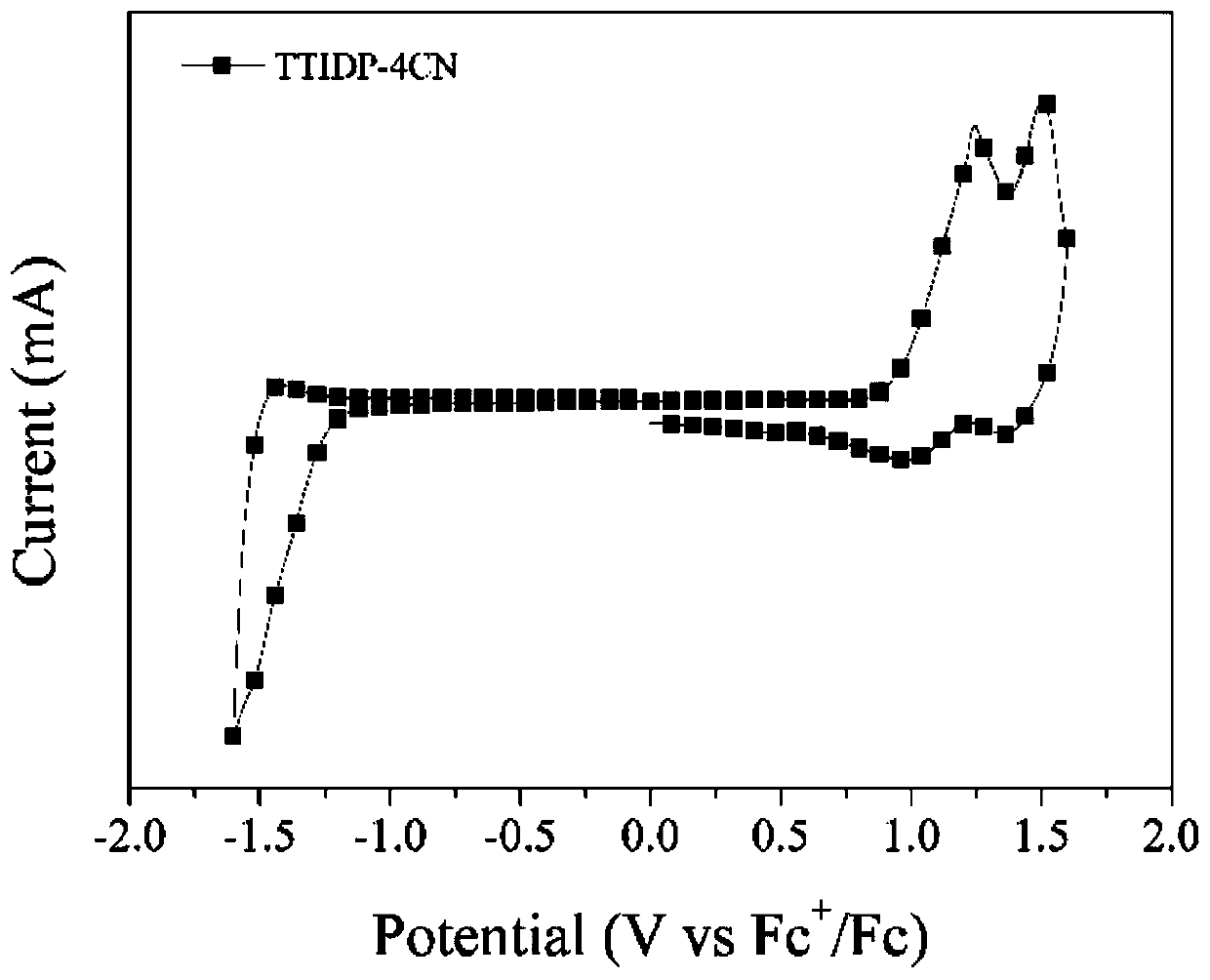
Figure 2 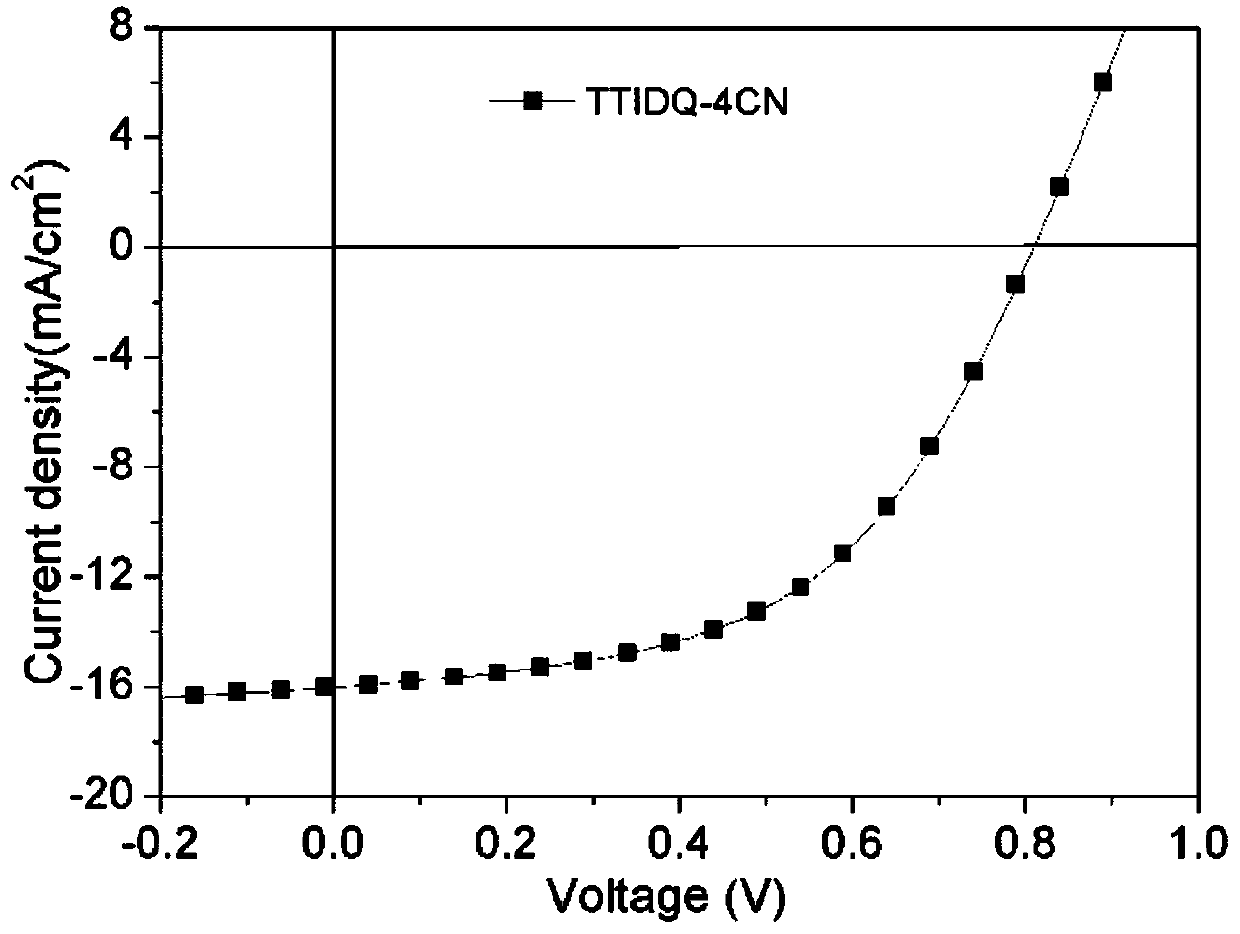
Figure 3
Abstract
Description
technical field
[0001] The invention belongs to the field of organic small molecule solar cells, in particular to a class of D(π-A) based on pyrazine indole terminal acceptors 2 Type small molecule donor material and preparation method, as well as the application of the material in the field of organic optoelectronic technology. Background technique
[0002] Organic solar cells have become a research hotspot in the field of organic photovoltaics due to their advantages of low cost, light weight and large area preparation. As an organic small molecule donor material in the photosensitive active layer that absorbs sunlight and converts it into electrical energy, it has great market application prospects.
[0003] However, organic small molecule solar cell materials still have problems such as narrow absorption spectrum, low carrier mobility, low efficiency and poor stability, so it is necessary to develop new high-performance small molecule donor materials.
[0004] Since t...
Examples
Embodiment 1
[0063] D(π-A) 2 Synthesis of small molecule donor material intermediates and target molecules (M1, M2, M3, M4, M5, IDP-2CN, IDQ-2F, IDQ-2Cl, TTIDP-2CN, TTIDP-2F and TTIDP-2Cl) Synthetic, its synthetic route is as follows:
[0064]
[0065] 1.1 Synthesis of 3,6-bis(octylthio)-thieno[3,2-b]thiophene (M1):
[0066]
[0067] Add 3,6-dibromothiophene[3,2-b]thiophene (5.0g, 16.9mmol) in a 200mL single-necked bottle, n-C 8 h 17 SH(1-octylthiol) (5.4g, 36.9mmol), DIEA (4.8g, 36.9mmol), DPPF (370mg, 0.7mmol), Pd 2 (dba) 3 (310mg, 0.3mmol), add 80mL toluene, vacuumize three times, under the protection of nitrogen, reflux and stir at 110°C for 24h, after the reaction is completed, the reactant is cooled to room temperature, the mixture is poured into water, extracted with dichloromethane (3 ×50mL), washed three times with water, dried with anhydrous magnesium sulfate, filtered, and the organic solvent was removed under reduced pressure, and the product was separated by column ...
Embodiment 2
[0089] Example 2 Synthesis of Small Molecule Donor TTIDP-4CN
[0090]
[0091] In a 100mL two-necked flask, sequentially add compound M4 (0.2g, 0.218mmol), compound IDP-4CN (0.189g, 0.479mmol), three (dibenzylideneacetone) dipalladium (5.98mg), three (o-tolyl ) phosphorus (7.94mg), toluene 10mL, under the condition of nitrogen protection, stirred and refluxed in an oil bath at 110°C for 24h. Stop the reaction, cool to room temperature, pour the reaction solution into 40mL water, extract with dichloromethane (3×25mL), dry over anhydrous magnesium sulfate, filter, spin off the organic solvent under reduced pressure, and pass the crude product through absolute ethanol / chloroform Recrystallization gave a red solid (282 mg, yield 84.9%). 1 H NMR (400MHz, CDCl 3 )δ8.46(d, J=2.2Hz, 1H), 7.97(dd, J=8.8, 2.1Hz, 1H), 7.44(d, J=9.0Hz, 1H), 7.32(s, 2H), 4.32( s,2H),2.89(s,2H),1.87(s,2H),1.66-1.14(m,30H),0.86(d, J=35.9Hz,7H).
Embodiment 3
[0092] Example 3 Synthesis of Small Molecule Donor TTIDQ-4F
[0093]
[0094] In a 100mL two-necked flask, sequentially add compound M4 (0.2g, 0.218mmol), compound IDQ-2F (0.214g, 0.479mmol), tris(dibenzylideneacetone) dipalladium (5.98mg), tris(o-tolyl ) Phosphorus (7.94mg), toluene 10mL, under the condition of nitrogen protection, stirred and refluxed in an oil bath at 110°C for 24h. Stop the reaction, cool to room temperature, pour the reaction solution into 40mL water, extract with dichloromethane (3×25 mL), dry over anhydrous magnesium sulfate, filter, spin off the organic solvent under reduced pressure, and pass the crude product through anhydrous ethanol / trichloro Recrystallization from methane gave a red solid (225 mg, 78.1% yield). 1 H NMR (400MHz, CDCl 3 ) δ8.68(s,1H),8.07-7.97(m,2H),7.85(d,J=19.4Hz,1H),7.51-7.45(m,2H),7.36 (d,J=3.9Hz,1H ),4.46(s,2H),2.98(t,J=7.3Hz,2H),1.95(s,2H),1.66(s,2H), 1.40(s,7H),1.25(s,21H),0.84 (d,J=20.9Hz,8H),0.07(s,14H).