
Method for preparing acrylate cross-linked copolymer by one-step method
A technology of acrylates and cross-linked copolymers, which is applied in the field of preparation of cross-linked polymers, can solve problems such as the inability to obtain cross-linked polymers, and achieve the effect of simple synthesis conditions and convenient synthesis
Patent Information
- Authority / Receiving Office
- CN · China
- Patent Type
- Applications(China)
- Current Assignee / Owner
- Publication Date
- 2020-10-09
Smart Images
Figure 1 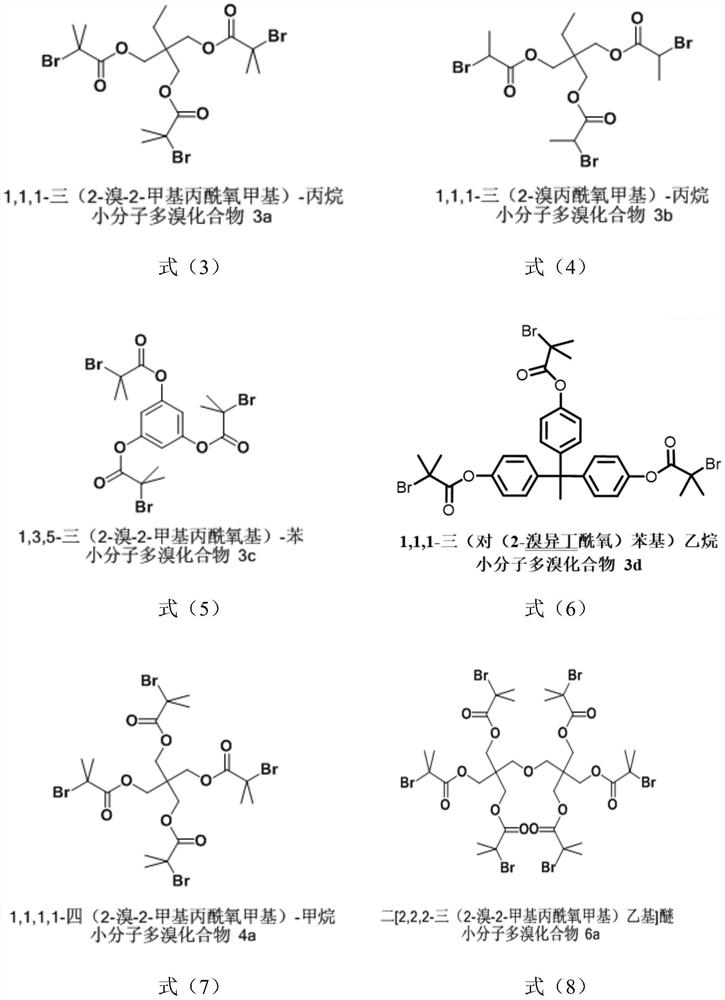
Figure 2 
Figure 3
Abstract
Description
technical field
[0001] The present invention relates to the field of preparation of cross-linked polymers, in particular to a method for preparing acrylate-based cross-linked copolymers by one-step method. Background technique
[0002] Compared with linear polymers, cross-linked polymers have a more complex three-dimensional network structure, and their mechanical properties, thermal stability, abrasion resistance, solvent resistance and creep resistance are significantly different. , adhesives, drug controlled release and other fields have important applications.
[0003] Crosslinked polymers can be prepared by condensation polymerization of polyfunctional monomers or by copolymerization of vinyl monomers with a small amount of divinyl monomers. Polycondensation of polyfunctional monomers can be used to prepare well-defined cross-linked polymers. The monomers involved can be either small-molecule multifunctional monomers or multifunctional macromonomers. For example, by ...
Examples
Embodiment 1
[0050] The synthesis of embodiment 1 polyamine ligand TPEN
[0051] Dissolve 13.12 g (0.08 mol) of 2-chloromethylpyridine hydrochloride in 30 mL of deionized water, cool in an ice bath, slowly add 15 mL of an aqueous solution containing 0.08 mol of sodium hydroxide, and the solution turns pink. After adding 60 mL of a DCM solution containing 1.2 g (0.02 mol) of ethylenediamine, it was warmed to room temperature. Within 50 hours, 15 mL of an aqueous solution in which 0.08 mol of sodium hydroxide was dissolved was added. The reaction was stopped, the organic phase was washed with 3×10 mL of 15% aqueous NaOH solution, and the organic phase was dried over anhydrous magnesium sulfate. The filtrate obtained after filtration was concentrated in vacuo and extracted with boiling ether to obtain the crude product. The crude product was crystallized three times from ether to give pale yellow needles. Vacuum dried to constant weight, weighed and yield calculated (37%). 1 H NMR (400MHz...
Embodiment 2
[0052] Example 2 Synthesis of Small Molecular Polybrominated Compound 3a
[0053] 2.7g (2×10 -2 mol) 1,1,1-trimethylol-propane, 8mL (6×10 -2 mol) triethylamine and 50 mL of DCM were mixed, placed in a 250 mL three-necked flask, and cooled in an ice bath. will contain 8.2 mL (6.6 x 10 -2 mol) 2-bromo-2-methylpropionyl bromide in DCM (50 mL) was dropped into the three-necked flask dropwise, and a white precipitate appeared during the dropwise addition. After the dropwise addition, the temperature was raised to room temperature (25° C.), and the reaction was continued for 18 hours. The filtrate obtained by filtration was washed three times with 50 mL of 1mol / L HCl solution, saturated NaHCO 3 washed three times with aqueous solution, three times with 50 mL of deionized water, once with 50 mL of saturated NaCl, and then washed with anhydrous MgSO 4 Dry overnight. The filtrate obtained after filtration was concentrated to obtain a yellow viscous liquid. The crude product was ...
Embodiment 3
[0054] Example 3 Synthesis of Small Molecule Polybrominated Compound 3b
[0055] The 2-bromo-2-methylpropionyl bromide in Example 2 was replaced with 7 mL (6.6×10 -2 mol) 2-bromopropionyl bromide, and all the other operation steps are the same as in Example 2. White crystals were obtained (73% yield). 1 H NMR (400MHz, CDCl 3 )δ(ppm): 4.68-4.73(3H,q,O=C-CH-),3.94(6H,s,CH 2 -O-C=O),1.91-1.97(9H,d,O=C-CH(CH 3 )-), 1.63-1.73(2H,q,CH 3 -CH 2 -),0.84-0.95(3H,t,CH 3 -CH 2 -). Elemental analysis: measured value (theoretical value): C, 33.29 (33.42); H, 4.31 (4.30).